
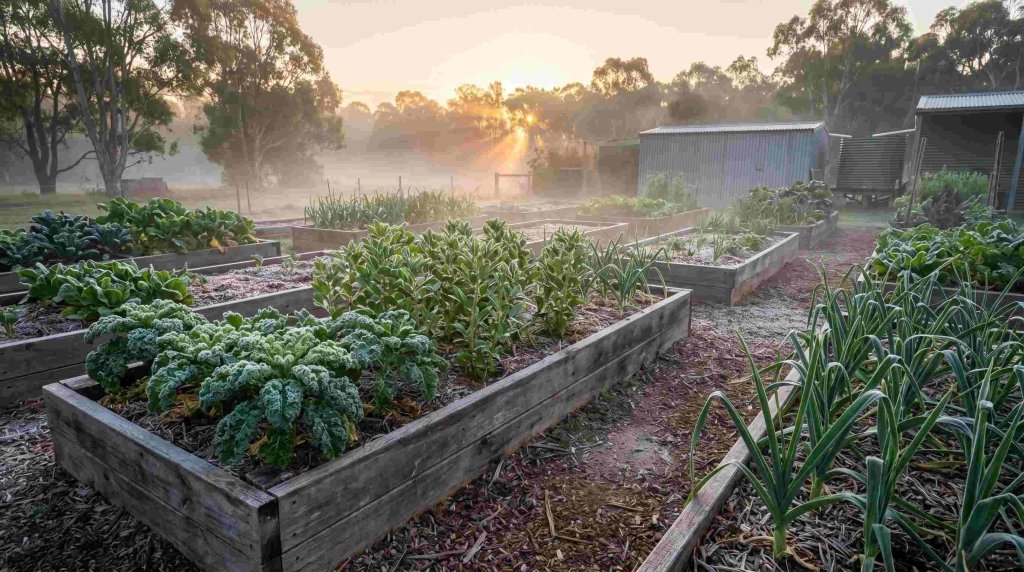
In Australia, winter is a key planting and preparation season, not a dead one. It is time to plant bare-rooted and dormant stock such as strawberry runners, rhubarb and horseradish crowns, and Jerusalem artichokes, and, from late winter, seed potatoes, while also feeding the soil, improving drainage, protecting tender plants, and planning the year ahead. What you can plant depends on your climate zone.
It is easy to write winter off as the off-season. The beds are bare, the days are short, and the garden seems to be doing nothing at all. But the gardeners who pull in the best summer harvests are often the ones quietly at work through the cold months.

Why winter is the secret growing season
Winter is one of the best times to plant dormant, bare-rooted stock, because the plant can settle in before spring growth begins. When you plant into cool, workable soil, the plant has no leaves to feed and no fruit to carry. Its energy can go into settling in and building roots underground. By the time the days lengthen and the soil warms, it is already better anchored and ready to grow away strongly, while anything planted in spring is still finding its feet. It is the horticultural version of getting in early, and a few months of quiet root growth over winter is worth far more than a frantic start in spring.
What to plant in winter while the garden rests
Winter is the season for bare-rooted and dormant stock. Strawberry runners, rhubarb and horseradish crowns, and tubers such as Jerusalem artichokes can all be planted in suitable winter conditions, and most will reward you for years from a single planting. One word of warning on Jerusalem artichokes: they are wonderfully easy, but also vigorous, and any tuber left in the ground will resprout. Give them a contained spot where they cannot take over the patch.
Seed potatoes work to a similar rhythm. In most temperate gardens they go in from late winter, once the worst of the frosts have eased, for a harvest that carries through the warmer months. A few weeks spent sprouting them indoors first, a step called chitting, can give them an earlier and more even start. If you have not chitted before, our short guide walks you through it.

Five winter gardening jobs worth doing now
The cold months are not only about what you plant. A handful of small jobs now will pay off for the rest of the year.
- Clear and compost. Pull out spent crops and clear fallen debris, which is where many pests and diseases overwinter. A tidy bed in winter can mean fewer problems in summer, and all that material can go straight onto the compost heap to break down over the cold months.
- Feed your soil. Empty beds do not have to sit idle. A quick-growing cover crop sown in winter protects bare soil, holds back weeds and feeds the bed when you dig it in before spring. It is one of the cheapest ways to lift your soil, and we cover how to do it here.
- Fix the drainage. Winter rain shows you exactly where water pools. If a bed stays soggy, the safest first steps are working in plenty of organic matter, keeping off the soil while it is wet, and raising the bed where you can. On sodic or dispersive clay, gypsum can help improve the structure, though it is not a fix for every heavy soil.
- Protect what is tender. Move container plants to a sheltered, sunny spot, and keep frost cloth, cloches or even an old sheet on hand for cold nights. If frost does catch a plant, resist the urge to prune the damaged growth straight away. Leaving it in place helps shield the plant from the next cold snap, and you can tidy it up in spring.
- Plan the year ahead. Winter is the one time you can see the garden clearly, with nothing demanding to be watered, picked or staked. Walk the beds and ask the useful questions. Where does the low winter sun actually fall? Which corner stays wet? Is the layout still working? Sketching out where each crop will go also lets you plan a simple rotation, so the hungry feeders do not land in the same bed two years running. An afternoon of planning in winter is worth a great deal once the busy months arrive.

What to plant in winter, by Australian climate zone
Australia is a continent of very different winters, so the right jobs depend on where you garden.
Temperate (Sydney, Melbourne, Adelaide): prime time for bare-rooted stock and, from late winter, seed potatoes. In most temperate gardens you can still sow cool-season crops such as broad beans, peas, onions, spinach, lettuce and Asian greens.
Subtropical (Brisbane, coastal northern New South Wales): one of the most comfortable growing windows of the year. Alongside the cool-season favourites, you can keep a wide range of vegetables going through a mild winter.
Tropical (far north Queensland, Northern Territory): the dry season is your peak growing time. Make the most of it with a broad sweep of vegetables while the weather is on your side.
Mediterranean (Perth and southern Western Australia): a mild, wet winter is excellent for sowing peas, broad beans, brassicas, lettuce and other cool-season crops, and for getting beds ready. Many spring-flowering bulbs can still go in early in winter, depending on the variety and your local conditions. Note that WA quarantine requirements for potato tubers are strict, so we cannot ship seed potatoes to Western Australia. There is still a huge range of vegetables, herbs and flowers you can grow from seed.
Cool and alpine (Tasmanian highlands, southern tablelands): this is mainly planning and protection season. Keep hardy crops going under cover, shelter tender plants from frost, and prepare beds whenever the soil is workable so you are ready to move the moment it warms.

The garden is not asleep
It is getting ready. The quiet work you do over the cold months, the crowns settled in, the soil fed, the beds planned, is what shows up on the plate when the weather warms. Winter is not the pause before the growing season. It is the start of it.
Frequently asked questions
Is winter a good time to plant in Australia? Yes. Winter is one of the best times to plant dormant, bare-rooted stock such as strawberry runners, rhubarb and horseradish crowns and Jerusalem artichokes, because they can settle in and build roots before spring growth begins. It is also the season for soil preparation and planning.
What can I plant in my vegetable garden in winter? In most temperate gardens you can sow cool-season crops such as broad beans, peas, onions, spinach, lettuce and Asian greens, plus bare-rooted stock. Seed potatoes go in from late winter once the worst frosts have eased. Milder subtropical and tropical zones can grow a wider range.
What does chitting seed potatoes mean? Chitting means letting seed potatoes begin to sprout before planting, usually by standing them in a cool, bright, frost-free spot for a few weeks. It can give the crop an earlier and more even start, though it is not always essential.
Can you ship seed potatoes to Western Australia? No. WA quarantine requirements for potato tubers are strict, so seed potatoes cannot be shipped to Western Australia. There is still a huge range of vegetables, herbs and flowers WA gardeners can grow from seed.
What is the best cover crop to sow in winter? A simple mix of a legume and a cereal works well. Legumes such as field peas and faba beans add nitrogen, while cereals such as oats and cereal rye add bulk and break up the soil. Dig the crop in a few weeks before spring planting.
When should I plant seed potatoes in Australia? In most temperate gardens, plant seed potatoes from late winter, once the worst of the frosts have eased, for a harvest through the warmer months. Warmer zones can plant earlier.
3 comments
Sue Gray
Also arid areas such as central West Queensland weren’t mentioned either in your ‘when to plant’
Diana Blakeman
Very disappointed! my state, Victoria, did not even rate a mention in your ‘when to plant’
Diana Blakeman
Very disappointed! my state, Victoria, did not even rate a mention in your ‘when to plant’