
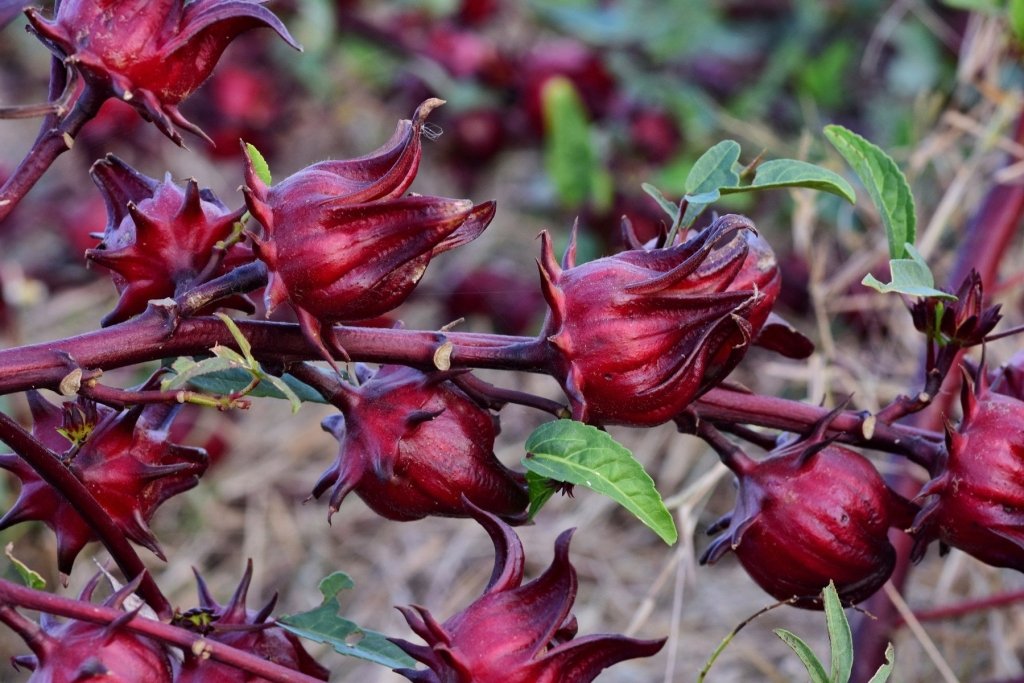
Rosella (Hibiscus sabdariffa) is a warm-season annual grown for its tart red calyces, the fleshy part left behind when the flower drops, which cook down into a glorious crimson jam. Sow it in spring once the soil is warm, give it a long hot run, and pick the calyces young in autumn while they are still plump. It is happiest in the subtropics and tropics; in cooler southern gardens it is a race against the first frost.
There is a fair chance you typed "rosella" looking for the parrot. This is the other one: a tall plant in the hibiscus family, grown across warmer parts of Australia for the ruby-red calyces that go into jam, cordial and tea. It is also a different plant from our native rosella, Hibiscus heterophyllus. The one on this page is the jam-maker, and the payoff is vivid: a few flat seeds in spring become, months later, a saucepan of deep red jam that tastes a little like cranberry and rhubarb had a very good idea together.

What rosella actually is, and what you eat
The part you harvest is the calyx, not the flower or a true fruit. After each pale yellow flower fades and drops, it leaves behind a swollen red calyx wrapped around a green seed pod. You snap it off, slip the pod out, and what remains is the fleshy, tart, jewel-coloured cup that does all the work in the kitchen.
Seed packets and old recipes often call the whole thing the "fruit", so if a relative hands you a bag of "rosella fruit", they mean the calyces. The young leaves are edible too, sharp and lemony, but the jam is why most people plant it.

Where rosella grows well in Australia
Rosella does best where the season is long and genuinely hot. South-east Queensland is close to ideal, along with the subtropics and tropics where it grows for months without a cold snap to check it.
By zone:
- Tropical (Darwin, Cairns, Townsville): the easiest place to grow it, though sowing near the start of the warm run gives the strongest plants.
- Subtropical (Brisbane, Gold Coast, Coffs Harbour): reliable. Sow in spring and it crops into autumn.
- Arid (Alice Springs, Mildura, Broken Hill): workable with steady watering through the heat.
- Temperate (Sydney, Melbourne, Canberra): possible but on a tighter clock, so sow as early as the soil allows.
- Mediterranean (Perth and southern WA, Adelaide): much like temperate. Dry summers are fine; the trick is a long enough warm run before the cool returns.
- Cool and alpine (Tasmanian highlands, Ballarat, Orange, the southern tablelands): the hardest case, since frost often arrives before the calyces are ready. Start seed under cover and treat any harvest as a bonus.
In short, rosella loves the north and tolerates the south. One honest caveat for the far north: in the monsoonal tropics, including parts of northern WA and the NT, rosella has escaped gardens and is treated as an environmental weed along waterways. A contained bed in suburban Perth or Adelaide is low risk, but in the wet tropics keep it in a controlled spot, away from creeks and bush, and do not let the seed scatter.

Why timing is everything
Rosella is a short-day plant, which is a tidy way of saying it holds off flowering while the days are long and only sets buds as they shorten heading into autumn. That single habit shapes everything else.
It needs spring and summer to build leaf and frame before it crops, then frost-free weeks afterwards for the calyces to fill out. In the warm north there is room for all of that. In a cool southern garden, frost can arrive while the plant is still only thinking about flowering. So sow early enough that it is large and settled before autumn.
Sowing rosella from seed
Sow in spring once frost has passed and the soil has genuinely warmed, since the seed sulks in cold ground. In the subtropics and tropics that can be from September. In temperate and Mediterranean gardens it is usually better to wait until the soil is warm to the touch, often October, and in cool zones a head start indoors with some bottom heat helps.
Give it a sunny, open spot and rich, free-draining soil. Rosella grows into a large bushy shrub, often between one and two metres tall and nearly as wide, so it needs more elbow room than people expect. A common first-timer mistake is tucking it in among the lettuces like a quick salad crop. It is a months-long resident that wants space, sun and patience.

Feeding and watering
Rosella is not a hungry plant. Healthy soil with some compost worked in beforehand carries it a long way, and an occasional drink of a fish and seaweed blend through the growing months is plenty.
Steady water matters more than steady feeding, especially in the dry inland and through a hot Mediterranean summer in Perth, southern WA and Adelaide. Mulch around the base holds moisture while the plant is flowering and filling its calyces. Go easy on rich nitrogen late in the season, or you push soft leafy growth at the expense of the calyces. Rosella is generally trouble-free, though sap-sucking insects sometimes cluster on the stems; a firm jet from the hose moves small numbers of soft pests, while heavier scale may need a horticultural oil.
Harvesting the calyces
Pick rosella calyces while they are young, plump and glossy, soon after each flower drops, because that is when they are tender and full of flavour. Left too long, they turn dry, woody and stringy. The plant sets calyces over a long stretch, so you wander out every few days and pick what is ready.
Snap the calyx from the stem, then push the green seed pod out from the centre. A small apple corer or a short length of clean pipe makes quick work of this if you have a big pick to get through. Save a few of the best pods, let them dry on the plant, and you will have your own seed for next spring.

From calyces to jam, safely
Rosella jam is one of the easier preserves to make at home, because the calyces are naturally high in acid, and that acidity keeps it in the safer group for home bottling. High-acid jams and jellies are far more forgiving than low-acid foods such as plain vegetables or meats, which carry a real botulism risk if bottled at home without proper equipment.
The calyces are simmered with sugar, then set, jarred and stored by following a tested jam recipe. The green seed pods are a good source of pectin, so many cooks simmer the pods in a little water on the side, strain off that liquid, and stir it back in to help the jam set. The colour as it cooks is genuinely something, a deep cranberry red that stains the spoon.

For safe practice, including sterilising jars and which foods are safe to bottle at home, follow the advice from Food Standards Australia New Zealand. If a jar looks bulging, smells off or seems spoiled, do not taste it; throw it out. Treat this as general information and check a current, authoritative source before you preserve. If jam is not your thing, the same calyces make a tart cordial or a deep-red tea, and they freeze well raw.

A last word on patience
Rosella is grown from seed each year as an annual, so there is no bulb or tuber to store, just a handful of seeds and a long warm season. If you would like to grow your own, you can browse rosella seeds and sow a few in spring; one packet goes a long way given how large each plant gets.
It asks for patience more than almost anything else in the warm-season patch: you sow in spring and do not really see the point of it until autumn. If you are still finding your feet with edible growing, our guide to starting your first edible garden in Australia is a gentle way in. A jar of rosella jam, made from a plant you raised from seed and picked yourself, is a small thing, and one of the more quietly pleasing ones a home garden can hand you.
Frequently asked questions
Is this the same rosella as the parrot?
No. The bird and the plant share a name but are unrelated. This is the edible plant Hibiscus sabdariffa, grown for its tart red calyces. It is also different from the Australian native rosella, Hibiscus heterophyllus.
Where does rosella grow best in Australia?
In the subtropics and tropics, with south-east Queensland close to ideal. It can be grown in temperate and Mediterranean zones, including Perth and southern WA, if you sow once the soil is warm, but in cool and alpine areas frost usually arrives before the calyces are ready.
When do you pick rosella?
In autumn, while the calyces are young, plump and glossy, soon after each flower drops. Older calyces turn dry and woody, so pick a little early rather than too late, and harvest every few days as more ripen.
What part of rosella do you use?
The fleshy red calyx left behind when the flower falls, after removing the green seed pod. The young leaves are also edible and taste sharp and lemony. The calyx is what goes into jam, cordial and tea.
Is rosella jam safe to make at home?
Rosella jam is high in acid, which puts it in the safer group for home bottling compared with low-acid foods. Still use clean, freshly sterilised jars, follow current guidance from Food Standards Australia New Zealand, and discard any jar that looks or smells spoiled.
How big does a rosella plant get?
A large bushy shrub, often around one to two metres tall and nearly as wide in a good season. Give it room and a sunny position, and do not crowd it with smaller vegetables.
Does rosella come back every year?
It is best treated as an annual, and anywhere with frost it finishes once the cold arrives. In frost-free tropical and subtropical gardens it can sometimes run a second year if cut back in winter, though many growers sow fresh each spring.
Ready to plant? Browse our Vegetable Seeds.