

How to Grow Aubretia in Australia
Sow aubretia seed in autumn, pressed onto moist seed raising mix and barely covered, at 18 to 21°C. Plant 25 to 30 cm apart in full sun and gritty, free-draining soil, pH 6.5 to 7.5. A cold winter brings the spring flowers, so it suits cool, temperate, Mediterranean and arid gardens, not the tropics or humid subtropics. Shear by half after flowering.
| Sun | Full sun, 6 hours or more |
|---|---|
| Water | Low; water when dry past the first knuckle |
| Soil | Gritty, free-draining, pH 6.5 to 7.5 |
| Feed | Minimal; worm castings at planting |
| Spacing | 25 to 30 cm |
| Depth | On the surface, barely covered |
| Germination | 8 to 21 days at 18 to 21°C |
| Harvest | Spring, after a winter chill |
| Container | Yes, 40 cm pot, about 20 L |
| Frost | Hardy to about -15°C |
| Use | Walls, rockeries, edging and pots |
| Pets and people | No known harm to cats, dogs or people |
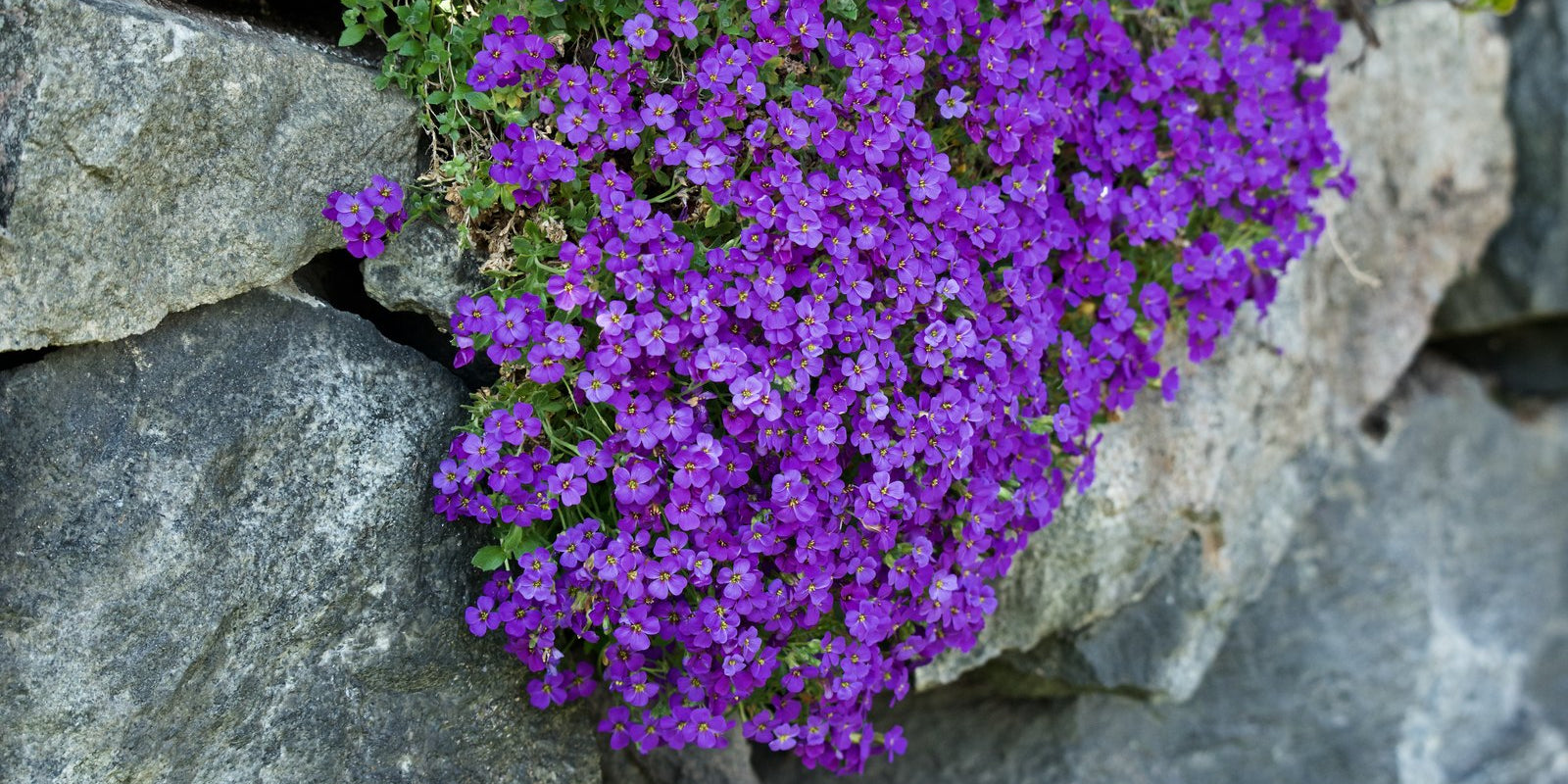
Aubretia (Aubrieta × cultorum) is a mat-forming evergreen perennial in the cabbage family, Brassicaceae, grown for sheets of purple, blue and pink flowers in spring. It suits dry-stone walls, rockeries and pots in cool, temperate, Mediterranean and dry inland gardens, where it shrugs off frost and dry spells. Soil that stays wet is what most often kills it, because the crown rots.
Three mistakes that matter
- Planting where water lingers. The crown (where stems meet roots) rots in soil that stays wet after rain, above all in humid summers and wet winters. Plant on a slope, a wall top or a raised rockery, with coarse sand or fine gravel mixed into the hole.
- Expecting flowers in the first summer. A full flush needs a well-grown plant followed by several weeks of winter cold, so seedlings rarely bloom before their first winter. Sow in autumn for flowers the following spring, and treat a spring sowing as a plant for the next year.
- Leaving the mat untrimmed. An unshorn mat turns straggly and often goes bald in the centre, with flowers only around the rim. Shear it by about half as the last flowers fade (see Trimming and Shaping).
When to plant
Seed germinates best when the mix sits at 18 to 21°C, and it will start from 15°C. After an autumn sowing, the young plant needs a winter chill to flower well. Growers hold it at 4 to 10°C for 6 to 10 weeks. One sowing is enough: the plant is perennial and flowers every spring once established.
| Zone | Example cities | Sow | Flowering | Notes |
|---|---|---|---|---|
| Tropical | Darwin, Katherine NT; Cairns, Townsville QLD; Broome WA | Not recommended | Not recommended | No winter chill for flowering: Darwin's coolest nights average about 19°C, and the wet season can rot crowns. |
| Subtropical | Brisbane, Gold Coast, Sunshine Coast QLD; Coffs Harbour, Lismore NSW | Not recommended | Not recommended | Winters are too mild for a full chill and humid summers can rot crowns. Stanthorpe gardens follow Cool and alpine. |
| Arid and semi-arid | Alice Springs NT; Broken Hill NSW; Mildura VIC; Kalgoorlie WA | Mar-Apr and Aug-Sep | Aug-Oct | Sow as summer heat breaks; cold inland nights give a full chill. Shade mats from December to February. |
| Temperate | Sydney, Newcastle, Wollongong NSW; Melbourne, Geelong VIC | Mar-Apr and Aug-Sep | Sep-Nov | Melbourne winters chill plants well; coastal Sydney is milder and more humid, so flowering can be lighter. |
| Mediterranean | Perth, Bunbury WA; Adelaide and the SA coast | Mar-May and Aug-Sep | Aug-Oct | Perth waits for April as the heat eases; Adelaide starts in March. Give afternoon shade through dry summers. |
| Cool and alpine | Hobart, Launceston TAS; Canberra ACT; Ballarat VIC; Orange NSW; Stanthorpe QLD | Feb-Mar and Sep-Nov | Oct-Dec | The most reliable zone. Sow by March so plants size up before frost; spring sowings go under cover. |
Sow early in your zone's autumn window, so plants have 10 to 13 weeks to fill out before the cold. In most districts that means before Anzac Day, though Perth, where autumn heat lingers, sows into May.
Site, soil and setup
Light shade is tolerated but thins the flowering, except in hot inland and Mediterranean districts, where afternoon shade through summer protects the mat from scorch.
| Get the site right | What to do |
|---|---|
| Sun | At least 6 hours a day; afternoon shade from December to February where summers run hot |
| Soil | Sandy, gravelly, loamy or limestone soil; no manure or rich compost |
| pH | 6.5 to 7.5; below 6.5, garden lime at 100 to 200 g per square metre, 4 weeks before planting |
| Drainage | Mix coarse sand or fine gravel into each planting pocket at about equal parts with the soil |
| Base feed | A handful of worm castings per planting hole, and nothing more |
| Finish | A collar of fine gravel around the neck, so leaves rest on a dry surface |
| Rotation | Not where white blister (Albugo candida) has struck aubretia or a cabbage-family crop recently |
Check soil pH before adding lime, since alkaline ground needs none. Ground where puddles linger after rain is waterlogged soil, so plant high instead (see Three mistakes that matter).

Container growing
Aubretia grows about 10 to 15 cm tall and spreads 30 to 45 cm, trailing over the rim of a pot. Give one plant a pot or trough at least 40 cm across, holding about 20 L, with plenty of drainage holes. Fill it with potting mix blended half and half with coarse sand or fine gravel, then top it with gravel. Any of the aubretia seeds suit pots: 'Hybrida Blue', 'Hybrida Pink', 'Hybrida Purple' or the mixed colours.
- Water: when the mix is dry a third of the way down, fill to the rim, let it soak in and fill again. In hot spells that can mean every day or two.
- Feed: worm castings at planting, then fish and seaweed blend at 25 mL per 9 L fortnightly from early spring until flowering ends.
- Position: full sun from autumn to spring, moved into afternoon shade for summer in hot districts. Empty saucers within a few hours of watering.
Sowing Seeds
Start aubretia in a tray or punnet under cover, where you can hold warmth and moisture steady around the fine seed.
Starting under cover
- Fill a tray with fresh seed raising mix in a clean container and water it before sowing.
- Drop 2 or 3 seeds into each cell, or scatter them thinly, and press them onto the surface.
- Leave the seed bare or barely cover it with a sprinkle of fine mix, because light helps it germinate.
- Mist gently and keep the mix moist but not soggy; seedlings appear in 8 to 21 days.

Sowing direct
In the autumn window, seed can go straight into a fine, weed-free pocket of gritty soil where it is to grow. Mix it with dry sand so it spreads evenly (see sowing tiny seeds), press it onto the surface and mist whenever the surface dries.
Transplanting
- Prick out (lift and separate) seedlings into 8 cm pots once the seed leaves are firm enough to hold; handle them by the leaves.
- Plant out about 6 to 8 weeks after sowing, once roots hold the mix together.
- Harden off (accustom plants raised under cover to sun, wind and cooler air) over about 2 weeks.
- Space plants 25 to 30 cm apart, with the top of the root ball level with or just above the soil.
- Water in with seaweed solution at 30 mL per 9 L.
Care by growth stage
Drainage and a cold winter decide this plant, far more than feeding. Weeks count from an autumn sowing and shift between zones.
| Stage | Water | Feed | Watch for |
|---|---|---|---|
| Seedlings, weeks 1 to 6 | Evenly moist with a fine mist; never let the mix dry out completely | Nothing until the first true leaves, then seaweed solution at half strength, 15 mL per 9 L, fortnightly | Damping off (seedlings rotting and collapsing at soil level) in crowded trays; stretching in poor light |
| Young plants, weeks 6 to 12 | When the soil is dry past the first knuckle, soak it and let it dry again | Worm castings in the planting hole; seaweed solution at 30 mL per 9 L when planting out | Weeds creeping into the mat; scorch on hot afternoons |
| Winter chill, weeks 12 to 24 | Only in long dry spells, by the same knuckle test | None: soft growth made in cold weather invites disease | Aphids (Aphididae) on shoot tips from late winter; fallen leaves lying on the mat |
| Flowering and seed set, weeks 24 to 36 | Keep to the knuckle test through flowering and pod ripening, watering the soil, not the flowers | Garden plants none; pots fish and seaweed blend at 25 mL per 9 L fortnightly | Grey mould (Botrytis cinerea) on spent flowers after rain; white blister on leaf undersides |
| Summer rest, after flowering | A deep soak in heatwaves, then let the soil dry | None | Crown rot after summer storms; scorch on inland and Perth walls |
If growth stalls in very poor soil, scratch in a light dose of all-purpose controlled release granular (NPK around 14-5-10) in early spring. Grow seedlings in bright light at about 14 to 18°C, which keeps them short and sturdy.

Trimming and Shaping
Trim straight after flowering, while the plant has the whole growing season to make new shoots. Cutting later in the year can cost flowers the next spring, so leave the mat alone through winter.
- Young, compact mats: a light trim of up to 5 cm with shears, keeping the cushion tight.
- Established mats: cut back by about half, which stops seeding and closes up the centre.
- Straggly or bald mats: a hard cut to near the base, so fresh growth fills the gap.
- Stems kept for seed: leave a few near the edge uncut until the pods ripen, then trim them too.
Some varieties reward the trim with a light second flush of flowers.
Companion planting
The best partners share full sun, gritty soil and a dislike of wet feet.
Grows well with
- Arabis, another low wall and rockery plant that tolerates hot, dry conditions and poor soil.
- Houseleeks (Sempervivum), succulents that store water and want the same lean, fast-draining pocket.
- Dwarf bulbs, whose short upright stems rise through the low mat without competing for light.
Keep apart
- Cabbage-family vegetables, which host cabbage aphid (Brevicoryne brassicae) and white blister.
- Thirsty bedding plants, whose daily watering keeps aubretia crowns wet.
- Vigorous groundcovers, which run over the mat and smother it.
Flowering and Seed Saving
Flowering starts in spring after the first winter, when short stems rise above the leaves and the mat can almost disappear under colour.
- Watch the pods form along the stems left uncut (see Trimming and Shaping).
- Pick the pods on a dry day once they look ripe; unripe pods do not ripen once picked.
- Drop them straight into a paper bag and label it.
- Dry the bag somewhere warm and airy until the pods split and the seed falls free.
- Sieve out the chaff and blow away the dust.

Store the seed in a labelled paper envelope inside an airtight container, somewhere cool and dry. Bees move pollen between colours, so seed from a blue grown beside a pink may not come true. A cutting keeps a colour exactly (see Tips).
Common problems
Few or no flowers. A mild winter or a spring sowing gives the plant too little cold, and part shade thins the flush further; see When to plant.
Mat rotting after rain. Wet soil around the crown; see Three mistakes that matter.
Leggy seedlings. Weak light or too much warmth after germination stretches the stems. Read more
Brown, crisped patches in summer. Afternoon sun on a hot wall or dry pot scorches the mat; move pots and shade walls from December to February.
Pests and diseases
Insects rarely trouble aubretia; wet weather brings most of its problems.
Aphids (Aphididae). Soft insects up to 3 mm long that cluster on shoot tips and flower stems from late winter into spring. Squash small colonies or hose them off, and leave ladybirds, lacewings and hoverflies to finish the job. Read more
Grey mould (Botrytis cinerea). Fuzzy grey-brown mould spreading from dead flowers and leaves in cool, damp or dewy weather. Pick off spent flowers and fallen leaves promptly, and keep water off the mat.
White blister (Albugo candida). White, powdery pustules on leaf undersides and stems in wet weather, with distorted shoots. Cut off affected parts and bin them, since resting spores stay in the soil for several months.
Root and crown rot (Pythium and Rhizoctonia species). Shoots wilt and die back while the roots blacken in wet soil. Lift and bin dead plants, then replant somewhere with sharper drainage.
Damping off (Pythium, Rhizoctonia and other soil fungi). Seedlings collapse at soil level in wet, crowded, stale trays. Read more
Prevention first
- Plant into gritty, fast-draining soil with a gravel collar around each neck.
- Water the soil early in the day, never the mat, so leaves dry before evening.
- Clear fallen leaves and spent flowers off the mat after wet weather.
- Bin diseased material, because home compost heaps rarely get hot enough to kill spores.
Tips
- To keep a favourite colour, take softwood cuttings 5 to 10 cm long after the spring trim. Under a clear cover they root in 2 to 4 weeks.
- Mature mats often throw small plantlets around their edges; pot them up and plant them out once they have a good root system.
- The flowers draw bees, so a mat on a wall beside the vegie patch brings them past the crops in spring.
Questions
When should I plant aubretia seeds in Australia?
Sow mainly in autumn, so plants grow before a cold winter and flower the next spring. Cool areas sow February to March, temperate and arid areas March to April, Adelaide March to May and Perth April to May. Spring sowings under cover flower the following spring.
Can aubretia grow in Brisbane or other humid areas?
It struggles. Brisbane winters are too mild for the chill that brings a full flush of flowers, and humid summers can rot the crowns. The tropics are warmer still. Stanthorpe and other high, cool districts suit it well.
Why is my aubretia not flowering?
Usually it has not had enough cold. A well-grown plant needs a winter chill to flower well; growers give it 6 to 10 weeks at 4 to 10°C. A spring sowing, a mild coastal winter or part shade all mean fewer flowers.
Should I cut back aubretia after flowering?
Yes. Shear established mats by about half as the last flowers fade. It keeps the cushion compact, stops seeding and helps close a bald centre. Give young mats a light trim of up to 5 cm. Cutting later in the year can cost next spring's flowers.
Does aubretia seed need light to germinate?
Light helps. Press the seed onto moist seed raising mix and leave it bare or barely covered. Keep it at 18 to 21°C and mist it gently. Seedlings appear in 8 to 21 days.
Can I grow aubretia in a pot?
Yes. Use a pot or trough at least 40 cm across, about 20 L, with drainage holes. Fill it with potting mix blended half and half with coarse sand or gravel. Water when the mix is dry a third of the way down, and shade it through summer in hot districts.
Grow it
Tap Add beside a size to put it in your cart. You stay on this page.
- Aubretia - Hybrida Blue seedsFrom $2.99
- Aubretia - Hybrida Mix seedsFrom $2.99
- Aubretia - Hybrida Pink seedsFrom $2.99
- Aubretia - Hybrida Purple seedsFrom $2.99


More flowers to sow in October
All flowers
Ageratum
Grow ageratum from seed in Australia: surface sowing, months for six climate zones, spacing, pots, deadheading, weed and livestock cautions and pests to watch.
| Position | Full sun, 6 hours or more |
|---|---|
| Depth | Surface, 1 mm at most |
| Spacing | 30 cm; Red Flint 40 cm |
| First flowers | 12 to 14 weeks from sowing |

Alyssum
Grow alyssum from seed in Australia: sowing months for six climate zones, surface sowing, spacing, pots, shearing for more flowers, and the pests to watch.
| Position | Full sun or part shade |
|---|---|
| Depth | Surface sow, press in |
| Spacing | 15 to 20 cm |
| First flowers | 8 to 9 weeks from sowing |
Amaranth Flower
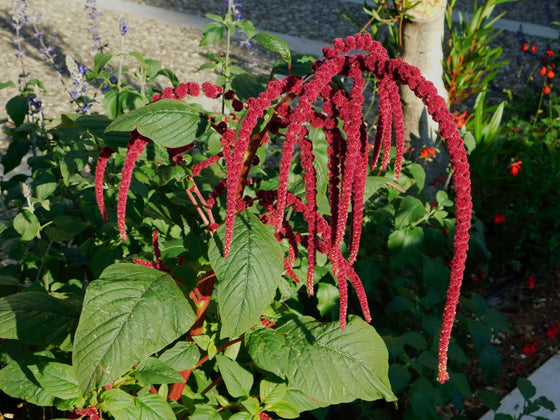
Grow ornamental amaranth from seed in Australia: love-lies-bleeding, plumes and Joseph's coat, sowing months for six zones, staking, drying and weed status.
| Position | Full sun, out of strong wind |
|---|---|
| Depth | 2 to 5 mm |
| Spacing | 40 to 80 cm |
| First flowers | 14 to 16 weeks |

Aster
Grow China asters in Australia: sowing months for six climate zones, spacing, pots, watering, Fusarium wilt and thrips, and cutting blooms for the vase.
| Position | Full sun, 6 hours minimum |
|---|---|
| Depth | 6 mm |
| Spacing | 30 to 40 cm |
| First flowers | 13 to 16 weeks |