
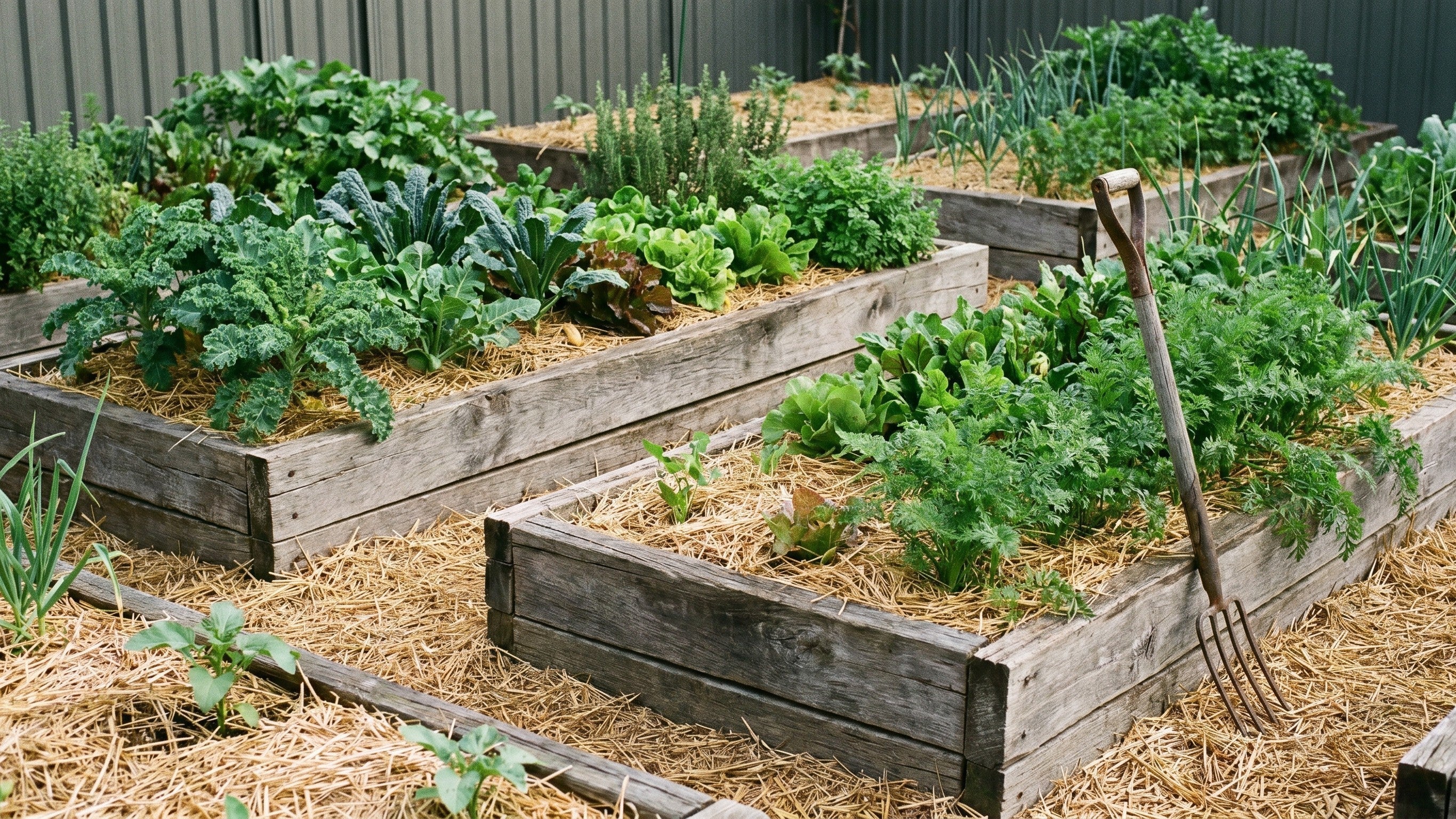
Organic weed control is about staying ahead of weeds, not wiping them out, and the methods that work best are preventive. A thick organic mulch is usually the most useful one. Back it with hand weeding while weeds are small, dense planting that crowds them out, and never letting a weed set seed. Disturb the soil as little as you can, since digging brings buried seeds up to sprout. Boiling water, a flame weeder and organic herbicides registered for the purpose have a place on paths. They knock back top growth more than roots.
A weed is just a vigorous plant growing where you do not want it. The goal is not a sterile garden, which is neither realistic nor healthy, but a patch you can manage and stay on top of.
Once you accept that, weeding stops feeling like a losing battle. A few organic habits, kept up little and often, do more than any heroic clearing session.

What actually works for organic weed control?
Prevention beats cure, so the best methods stop weeds before they get going. Mulching, weeding while plants are tiny, planting densely and running down the soil seed bank usually matter more than any spray.
Think of it as a layered approach rather than one silver bullet. You are making life hard for weeds at every stage, from seed to seedling to flowering plant. None of this sterilises the garden, and that is the point. A few weeds are simply part of a living system.
Mulch: usually your most useful preventive
A thick organic mulch is usually the most effective weed preventive a gardener has. It blocks the light that many weed seeds need to germinate, and it makes the few that do appear easier to pull.
Use a generous layer of an organic mulch such as sugarcane, lucerne, pea straw or coarse wood chip. A thin scatter does little. Lay it thick enough to shade the soil, and top it up as it breaks down.
For a brand new bed, sheet mulching is often hard to beat. Lay overlapping cardboard or thick newspaper over the area, wet it down, then pile compost and mulch on top. This smothers most existing growth and gives you a much cleaner bed to plant into, though tough perennials may still push through.
Mulch also holds soil moisture and feeds soil life as it rots. There is more on this in our guide to water-wise gardening.

Weed while they are small, and never let them seed
Hand weeding and hoeing work best when weeds are tiny and well before they flower. A small weed pulls out cleanly, while a large one fights back and may have already seeded.
Run a sharp hoe through the top centimetre or two of soil on a dry day, and most seedlings will usually wilt and die. This is quick, needs no chemicals, and barely disturbs the bed.
The golden rule is to never let a weed set seed. One plant can shed thousands of seeds that last years in the soil. Removing it before it flowers slowly runs down this seed bank.

Crowd weeds out and stop digging them up
Dense planting and minimal soil disturbance are two quieter strategies that pay off over time. Weeds colonise bare, disturbed ground, so give them less of it.
Close spacing, ground covers and cover crops can shade the soil and outcompete weeds for light. A bed of cover crops usually holds a fallow patch better than bare soil. Green manure mixes do the same while feeding the soil.

A no-dig approach helps too. Each time you turn the soil you can bring buried seeds up to the light, where many will sprout. Adding compost and mulch on top instead keeps that seed bank buried and quiet.

Boiling water, flame weeders and organic herbicides
Heat and organic herbicides have their place, but mainly on paths and paving rather than in your beds. Boiling water poured onto weeds in cracks ruptures the plant cells, and a flame weeder passed briefly over a weed does the same.
Treat the flame weeder as a fire hazard and boiling water as a scald risk. Keep a flame weeder well away from dry mulch and fences, and never use it on a hot or windy day. Check your local council fire restrictions first, and handle boiling water carefully.
Organic herbicides based on acetic acid or plant oils knock down green top growth, but often do not kill the roots, so perennials regrow. They are also non-selective and burn whatever they touch. Use only products registered for the purpose and follow the label. Household salt and ordinary vinegar are not safe shortcuts. Salt poisons the soil, and neither is registered for the job. This post leaves synthetic herbicides aside.
The stubborn perennials, and weeds you must not spread
Some perennial weeds regrow from the smallest fragment, so they need patience rather than a quick fix. Couch grass (Cynodon dactylon) and kikuyu (Cenchrus clandestinus) spread by tough runners. Nutgrass (Cyperus rotundus), also called nutsedge, resprouts from tiny underground tubers, and soursob (Oxalis pes-caprae) grows back from masses of little bulbils.
With these, keep removing top growth so the roots slowly starve, and dig carefully so you do not scatter tubers or bulbils. It usually takes repeated effort over a season or more. For a badly infested bed, soil solarisation can help. Cover moist soil with clear plastic through the hottest part of summer for several weeks. The trapped heat can kill many weeds and seeds, and you can add compost to restore soil life afterwards.
A few weeds carry an extra responsibility. Some are declared or environmental weeds whose control or disposal is regulated. One is wandering trad (Tradescantia fluminensis), which grows back from any node and smothers bushland. Never dump garden waste in bushland or over the back fence. A cool home compost may not kill bulbils, tubers or seed heads, so dispose of those as your council directs rather than composting them. Your state or local authority can tell you what is declared in your area. The Queensland government guide to controlling weeds on your property is a useful start.
Weeds through the Australian seasons and zones
Weed pressure shifts with the seasons and varies a lot across the country, so timing your effort matters. Many weeds tend to be either summer weeds or winter weeds, though some germinate whenever warmth and moisture allow.
In temperate gardens such as Sydney, Melbourne and Canberra, winter weeds like bindii (Soliva sessilis) and soursob get going in the cooler months. A different set takes over in summer. In tropical and subtropical areas, from Darwin to Brisbane, the warmth and humidity let weeds grow almost year round. Mulch and dense planting do a lot of quiet work there.
In Mediterranean zones, including Perth and southern Western Australia, soursob is a classic weed of the mild, wet winters. A thick mulch laid before the autumn rains pays off here. In arid and cool or alpine areas the windows are shorter, so focus your weeding on the active growing season.
Frequently asked questions
What is the best organic way to control weeds?
A thick organic mulch is usually the single most effective method, since it blocks the light weed seeds need to sprout. Pair it with regular hand weeding while weeds are small, dense planting that crowds weeds out, and never letting a weed set seed.
Does mulch really stop weeds?
A thick layer can suppress most weed seedlings by shading the soil, though it works best over a clean or sheet-mulched bed. Lay it generously, top it up as it breaks down, and pull the occasional weed that pushes through.
Do vinegar and salt kill weeds safely?
They are not the harmless options they are often made out to be. They mainly burn off top growth, salt can poison the soil so nothing grows for a long time, and neither is registered for the job. Use only herbicides registered for the purpose and follow the label.
How do I get rid of nutgrass, couch or oxalis organically?
These perennials regrow from tubers, runners or bulbils, so there is no instant fix. Keep removing top growth so the roots starve, and dig carefully to avoid spreading them. For a badly infested bed, consider solarising it over summer.
Is it safe to use a flame weeder or boiling water?
On paths and paving, yes, with care. A flame weeder is a fire risk and boiling water can scald, so keep flame away from dry mulch and structures, avoid hot or windy days, and check your local council fire restrictions before you start.
Why should I stop digging if I want fewer weeds?
Digging can bring buried weed seeds up to the surface, where many germinate. A no-dig approach that adds compost and mulch on top keeps that seed bank buried, so fewer new weeds appear over time.
Staying on top of weeds is less about hard graft and more about good habits kept up little and often. Mulch well, weed while they are small, plant densely, and do not let anything go to seed. The job usually gets easier each season. For more on building a resilient patch, see our guide to crop rotation in the home garden.
Related growing guides
- Preparing garden beds for planting and Achieving Maximum and Healthy Production
- What Makes a Good Seed Starting Mix? Tips from a Master Gardener
- Brassica Biofumigation: A Home Gardener’s Guide to Natural Soil Disease Control
Ready to plant? Browse our Vegetable Seeds.