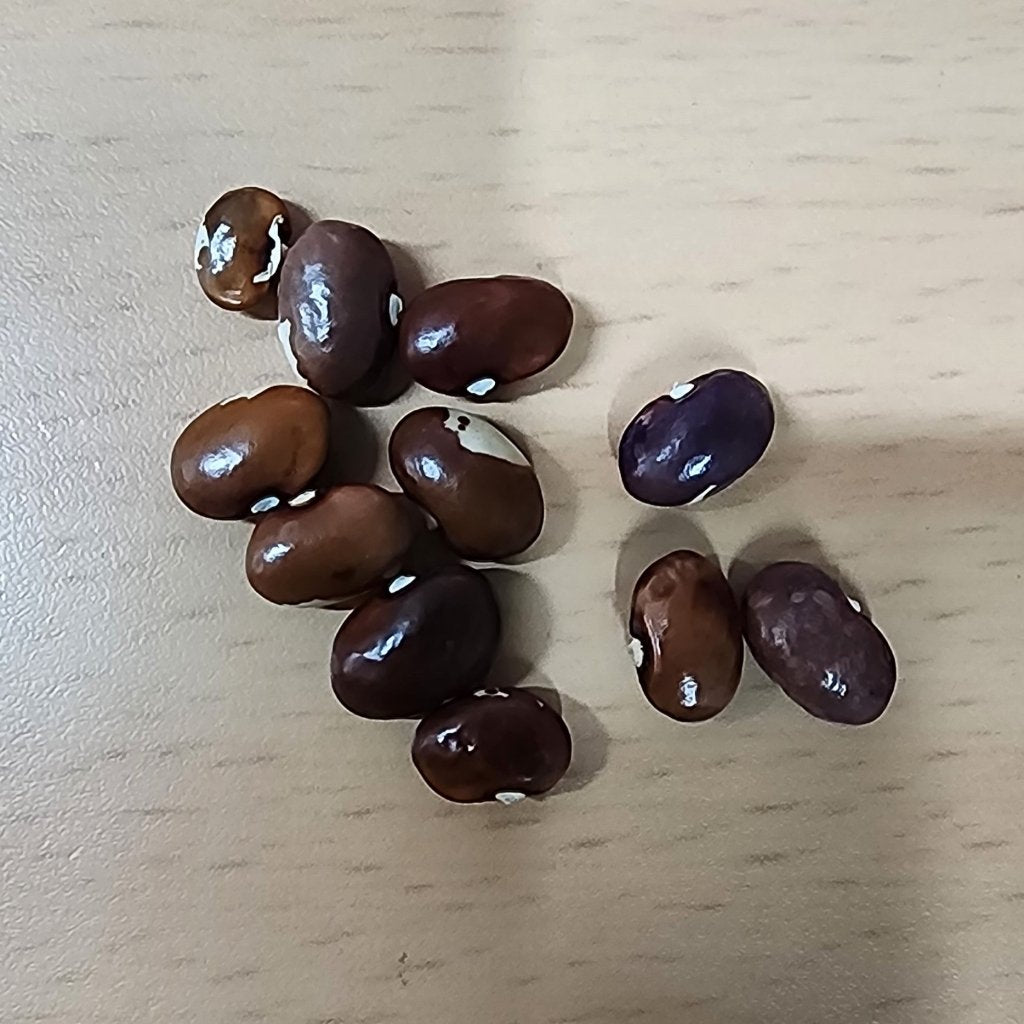
Bean Climbing - Portuguese Butter - 10 seeds
Phaseolus vulgaris
Portuguese Butter is a traditional climbing bean that provides long, tender pods with a buttery flavour. The pods are flat, broad, and stringless when harvested young, making them ideal for fresh eating or light cooking. This variety is highly productive and produces a sustained crop over an extended season when harvested regularly. When mature, the dried pods contain attractive purple and cream mottled seeds suitable for drying as beans.
Growth Habit
This vigorous climbing variety can reach 2 metres or more, so it will need support such as a trellis, tripod, or bean netting. The vines grow quickly in warm weather and provide a steady harvest if kept well-watered and picked often.
How to Grow
-
Sowing depth: 20-25 mm deep
-
Plant spacing: 20-25 cm apart
-
Row spacing: 70-90 cm between rows
-
Soil type: Well-drained, fertile soil with plenty of compost. Neutral to slightly acidic soil (pH 6.0-6.5) is best.
-
Watering: Keep soil evenly moist, especially during flowering and pod set. Avoid waterlogging.
-
Fertiliser: Beans fix nitrogen, so avoid high-nitrogen fertilisers. Enrich soil with compost or a general-purpose fertiliser before sowing.
-
Germination: 7-10 days in warm soil (18-25 °C).
-
Sunlight: Full sun. Beans need warmth and will not germinate in cold soil.
Companion Planting
-
Good companions: Sweet corn, cucumber, radish, and carrots.
-
Avoid: Alliums (onion, garlic, shallot), as they can stunt bean growth.
Harvest
-
Harvest pods when young and tender, usually 10-12 weeks from sowing.
-
Pick regularly to encourage continuous cropping.
-
Can be eaten fresh, lightly steamed, stir-fried, or frozen for later use.
Kitchen Uses
-
Eat whole as a tender green bean.
-
Slice into stews or soups for a rich, buttery taste.
-
Excellent in Mediterranean-style dishes, paired with olive oil, garlic, and tomatoes.