Living Mulch & Food Forest Understory Mix
NOT to WA & TAS
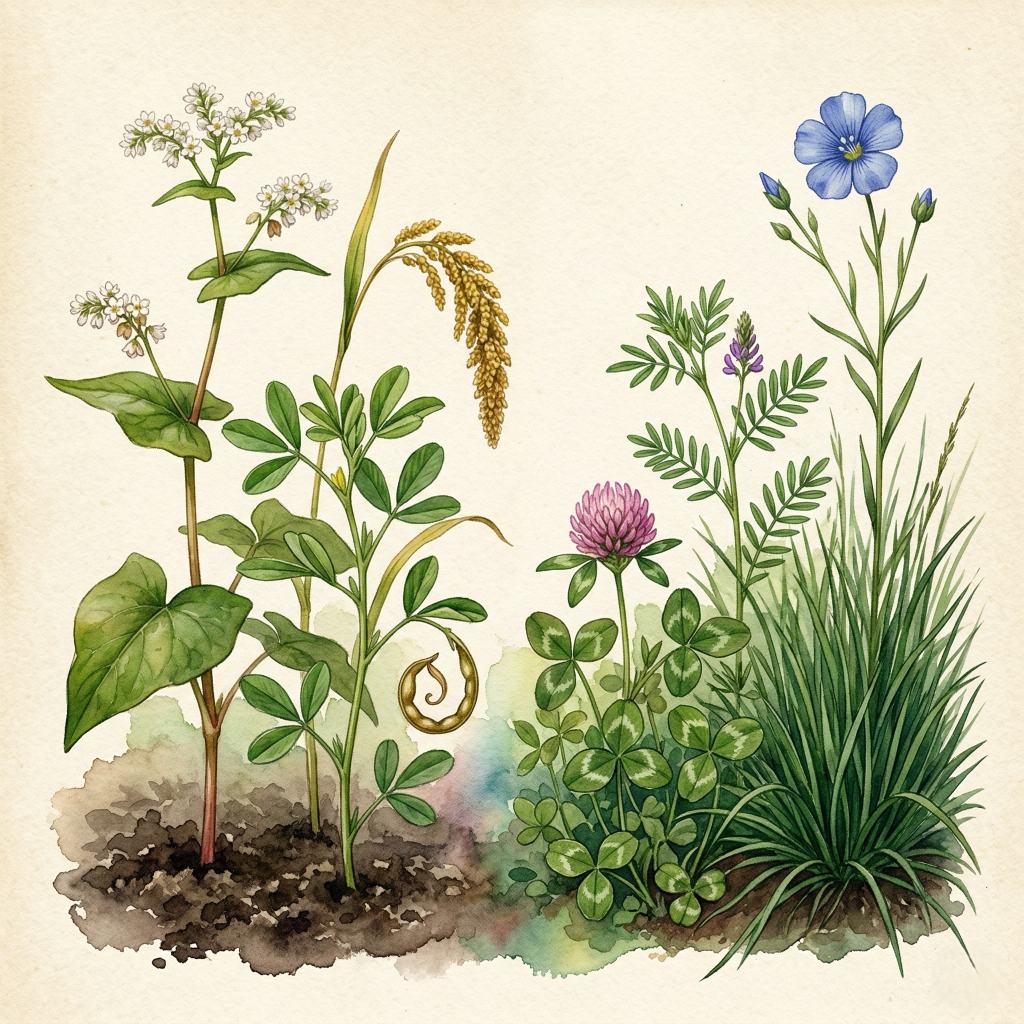
Trifolium pratense, Medicago sativa, Lolium perenne, Trigonella foenum-graecum, Fagopyrum esculentum, Panicum miliaceum, Linum usitatissimum
Suitable for: Permaculture designers, food forest growers, orchardists (citrus, stone fruit, avocado), vineyard managers, perennial garden designers, regenerative farmers
Sowing rate: Under fruit trees: 20-40 g/sqm in a 1-2m radius. Orchard alleyways: 15-25 kg/ha. Food forest understory: 30-50 g/sqm.
Season: All Australian zones. Best established in autumn (cool/temperate) or early wet season (tropical). Clover, alfalfa, and rye grass tolerate frost. Millet provides warm-season cover.
Contains: Red Clover, Alfalfa, Rye Grass, Fenugreek, Buckwheat, Millet, Brown Linseed
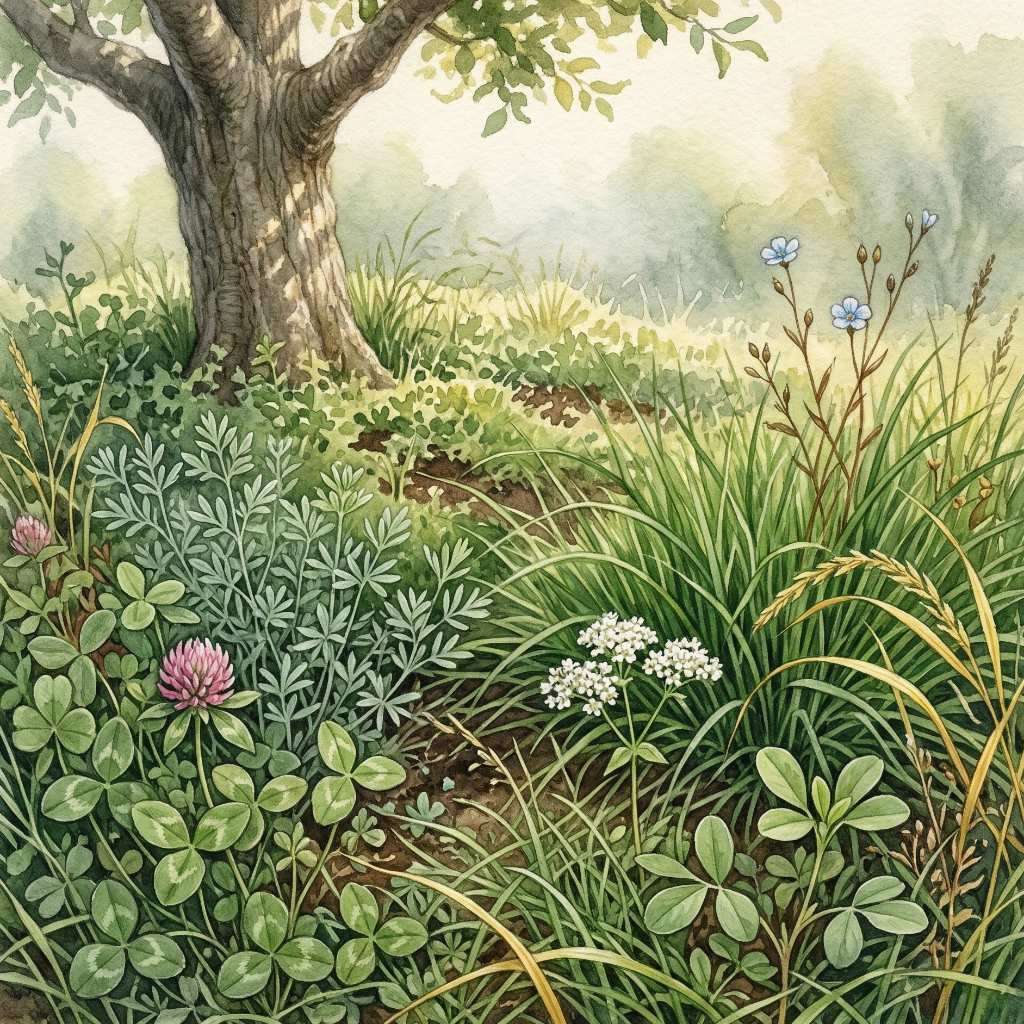
The bare soil under your fruit trees, between food forest guilds, or in your orchard alleyways is costing you - in lost nitrogen, wasted water, and erosion. Our Living Mulch mix replaces bare soil with a permanent, self-sustaining carpet of nitrogen-fixing and mineral-mining plants that actively feeds your trees while suppressing weeds.
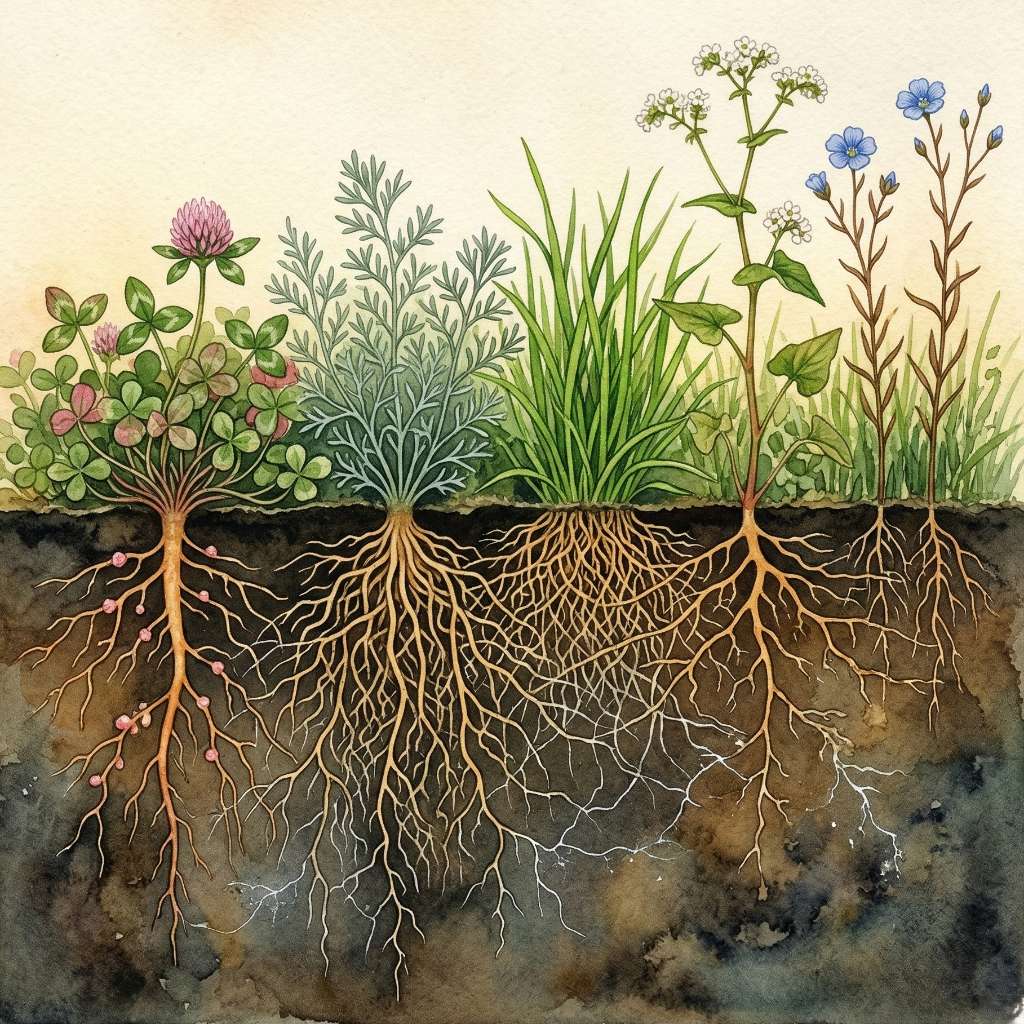
This mix uses a two-phase strategy. In phase one (weeks 1-8), the fast-growing nurse crops - buckwheat, fenugreek, and millet - rapidly cover bare ground, prevent erosion, and suppress weeds while the slower perennials establish. In phase two (months 3+), red clover, alfalfa, and rye grass take over as the permanent ground cover, forming a dense, self-regenerating carpet that fixes nitrogen year after year. Rye grass adds a tough, traffic-tolerant turf layer that handles foot traffic during harvest and maintenance. Brown linseed contributes delicate blue flowers that attract pollinators into the understory, and its mucilaginous roots improve soil structure and water retention around tree root zones.
Unlike traditional mulch that breaks down and needs replacing, a living mulch is self-sustaining - it regenerates continuously, fixes its own nitrogen, attracts pollinators to improve fruit set, and creates habitat for predatory insects that control orchard pests.
Sowing Instructions
1. Clear existing weeds under trees or in alleyways. Light cultivation to 3-5 cm depth is ideal.
2. Broadcast seed at 20-40 g/sqm around established trees (keep 30 cm clearance from trunks).
3. For food forest guilds: scatter in the understory spaces between shrubs and trees.
4. Rake lightly to settle seeds into soil surface and water in well.
5. Keep moist for 2-3 weeks during establishment. Buckwheat and millet emerge first (3-7 days).
6. Do not mow for the first 12 weeks to allow perennial species to establish root systems.
7. After 3 months, mow to 10-15 cm height when growth exceeds 30 cm. Leave clippings in place as surface mulch.
8. In the first year, the mix transitions from annual nurse crops to perennial clover-alfalfa-rye grass dominance.
9. Oversow thin patches in the second autumn with additional clover and rye grass seed.