Pollinator & Beneficial Insect Seed Mix
NOT to WA & TAS
Fagopyrum esculentum, Helianthus annuus, Trifolium pratense, Medicago sativa, Trigonella foenum-graecum, Linum usitatissimum
Suitable for: Home gardeners, veggie growers wanting better pollination, orchardists, permaculture, beekeepers, schools, eco-conscious families, council biodiversity projects
Sowing rate: Garden borders/strips: 30-50 g/sqm (1 kg covers 25-35 sqm), Under fruit trees: 50g per tree in a 1m radius. Large pollinator strips: 20-30 kg/ha.
Season: Sep-Feb (temperate); Mar-May (tropical/subtropical). Best sown in spring (Sep-Nov) in temperate/cool regions, or autumn (Mar-May) in tropical/subtropical zones. Buckwheat is frost-sensitive; clover and alfalfa tolerate frost.
Contains: Buckwheat, Sunflower, Red Clover, Alfalfa, Fenugreek, Golden Linseed
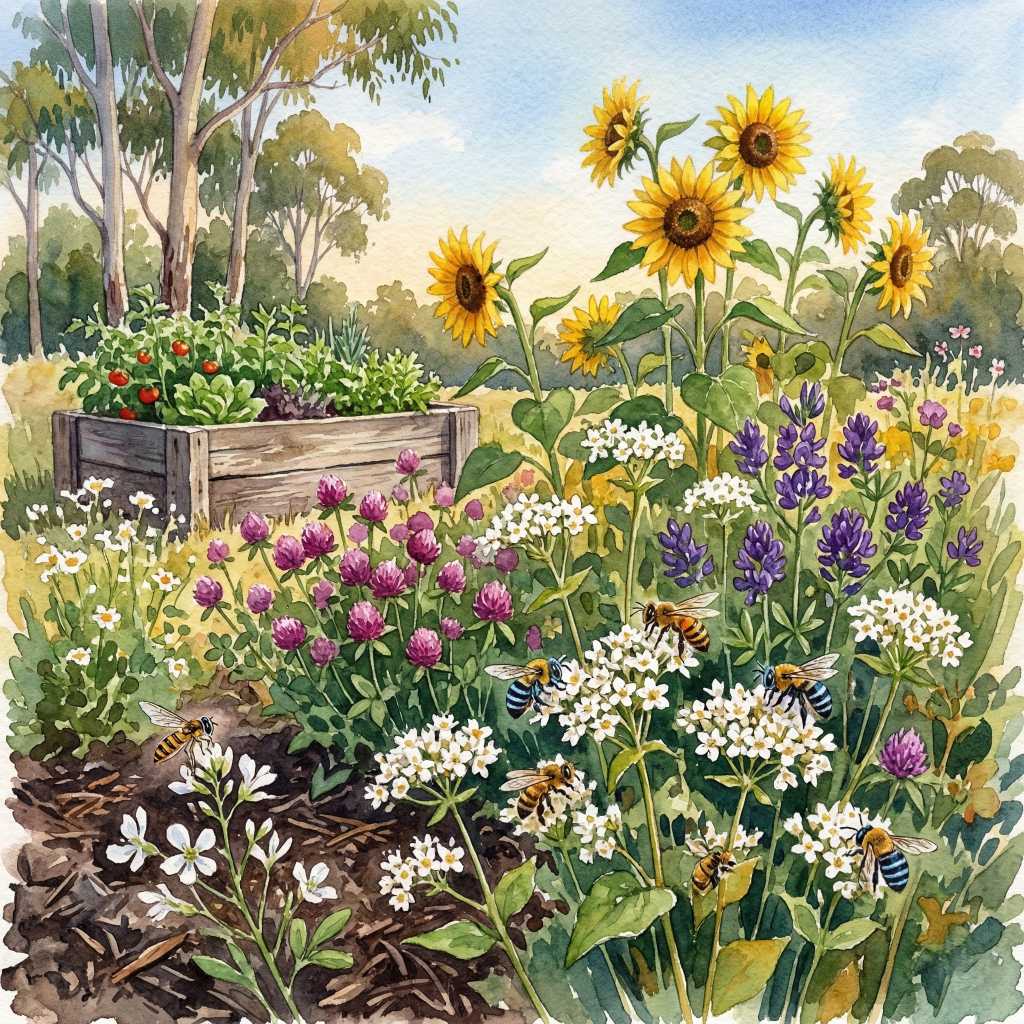
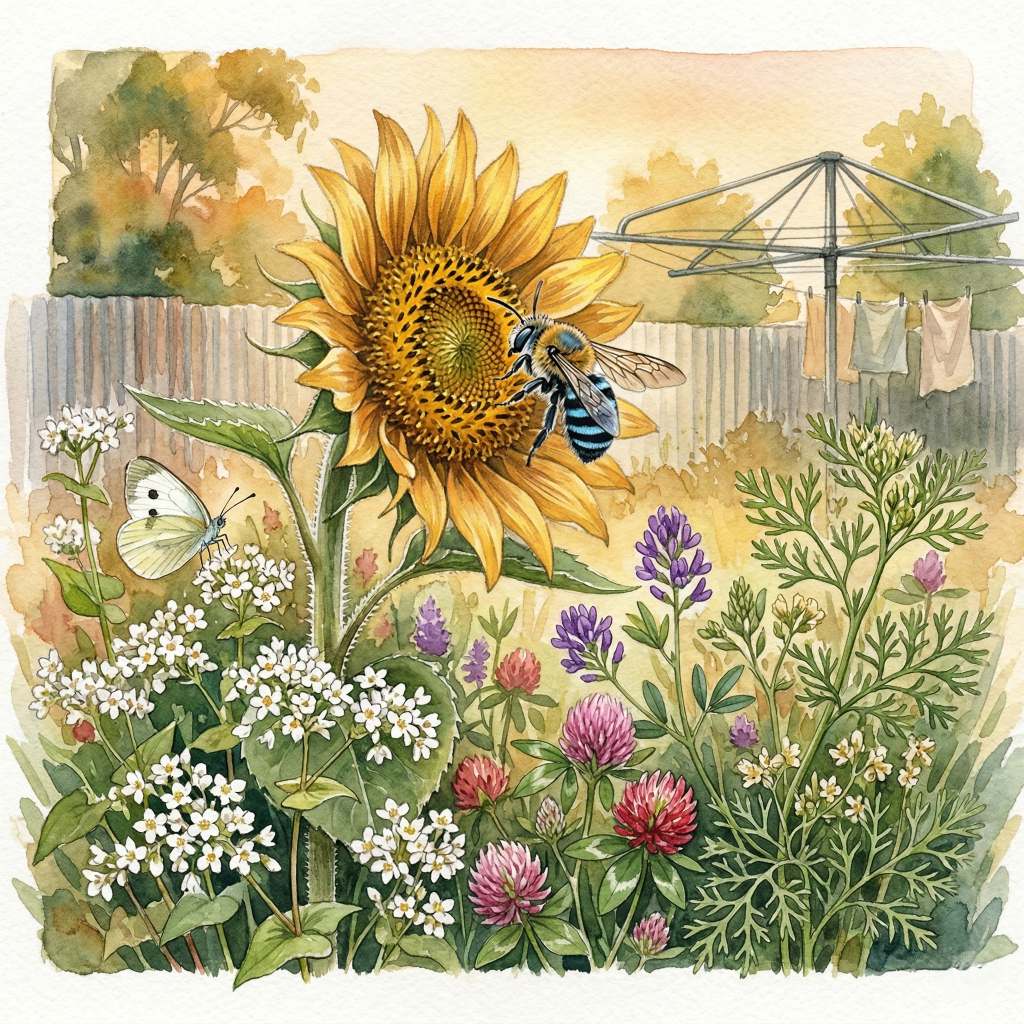
Create a buzzing, blooming haven for bees, butterflies, and beneficial insects right in your garden. Australia’s native bees and European honeybees pollinate a majority of our food crops - and they’re under increasing pressure from habitat loss and pesticide use. This mix gives them exactly what they need: continuous, diverse flowering from as little as 30 days after sowing.
Buckwheat is the superstar - it flowers within a month and produces nectar all day long, making it one of the highest-value bee forage plants on the planet. Red clover (a short-lived perennial lasting 2-4 years) and alfalfa are legumes that persist for multiple seasons without resowing, providing a reliable nectar source while simultaneously fixing nitrogen in your soil. Sunflowers add dramatic height and large landing-pad flowers that bees and butterflies love. Fenugreek attracts beneficial predatory insects (hoverflies, parasitic wasps) that naturally control garden pests such as aphids and whiteflies. Golden linseed produces delicate blue flowers that are irresistible to native bees, extending the bloom period and adding a splash of colour between the white buckwheat and yellow sunflowers.
Sow along garden borders, between veggie beds, under fruit trees, in dedicated pollinator strips, or in any bare patch. Three of the six species are nitrogen-fixing legumes that enrich your soil while they bloom. This isn’t just a pretty flower mix - it’s a working part of your garden ecosystem.
Sowing Instructions
1. Choose a sunny spot (at least 6 hours of direct sun) - pollinators prefer warm, open areas.
2. Prepare soil by removing weeds and loosening the top 5 cm. No fertiliser needed - the legumes fix their own nitrogen.
3. Broadcast seeds evenly at 30-50 g/sqm. For garden borders, scatter a thick band 30-60 cm wide.
4. Rake lightly to cover seeds 1-2 cm deep and water gently.
5. Keep moist for 7-14 days. Buckwheat emerges first (3-5 days), clover and alfalfa last (10-14 days).
6. No ongoing maintenance needed. Allow plants to flower freely - do not deadhead or mow during bloom.
7. Buckwheat flowers from 4 weeks and continues for 6-8 weeks. Sunflowers bloom at 8-12 weeks.
8. After buckwheat and sunflower finish, the perennial clover and alfalfa continue flowering into autumn.
9. Allow some plants to self-seed for next season. Cut back dead growth in late autumn - clover and alfalfa return in spring.