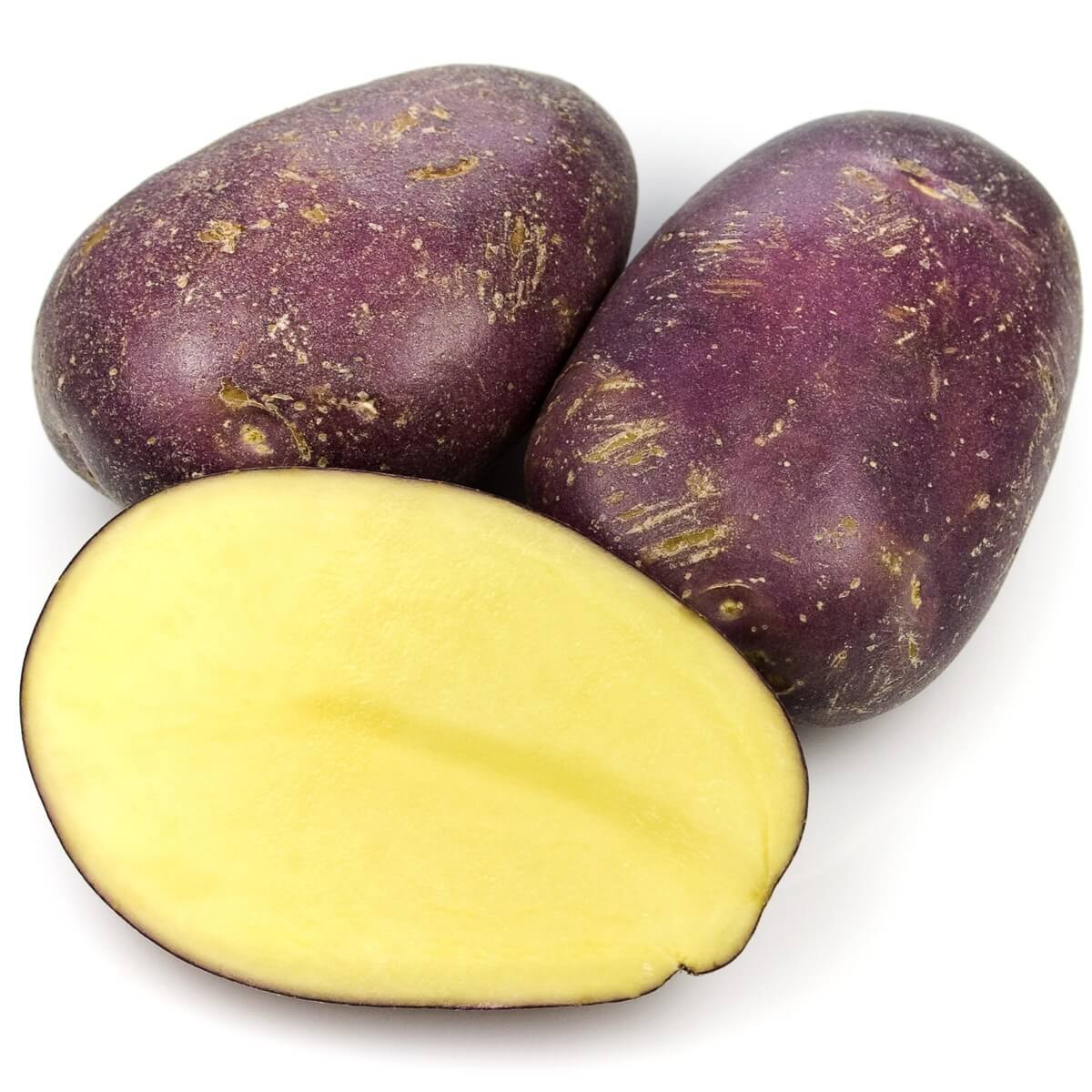
Seed Potato - Royal Blue - 1kg
Solanum tuberosum (NOT to WA, TAS & Kangaroo Island)
Indeterminate variety
Certified Seed Potato
Important: Seed potatoes are live tubers, not dry seed. They may arrive dormant, break dormancy, and sprout lightly or actively, depending on variety and seasonal timing. Please read our Seed Potato Growing and Storage Guide before ordering, especially if you live in a cooler region and need to hold tubers before planting. If you require completely dormant seed potatoes for long-term storage, please contact us before ordering. Read more
Royal Blue potatoes are oval-shaped with a dusky purple skin and creamy yellow flesh. Known for their slightly sweet, nutty flavour, these versatile potatoes are perfect for salads, boiling, mashing, roasting, and making delicious chips.
Planting
Choose a sunny position in the garden with well-drained, friable soil. Prepare the planting bed deeply, working the soil to at least 25 cm to allow the tubers room to develop evenly. Incorporating compost or well-rotted organic matter before planting will help to improve soil structure and drainage. Plant seed potato tubers in furrows approximately 10 cm deep, spacing them 25 cm apart within the row and allowing 75 cm between rows. Larger seed potatoes can be cut into sections before planting, provided each piece retains at least one healthy eye or sprout. Allow cut surfaces to dry for a day or two before planting to reduce the risk of rot.
When to Plant in Australia
Cool and Alpine Regions (TAS, VIC highlands, NSW tablelands): After the last frost, typically August to October. Soil temperature should be at least 8 to 10 degrees Celsius before planting.
Temperate Regions (Melbourne, Sydney, Adelaide, Perth): Mid July to October. In milder coastal areas, earlier plantings from mid July can get a head start.
Subtropical Regions (Brisbane, coastal NSW): April to August. Cooler autumn and winter months provide the best growing conditions in subtropical zones.
Tropical and Arid Regions (Far North QLD, NT, inland WA): April to August, during the dry season when temperatures are cooler. Select a position with some afternoon shade in warmer areas to prevent heat stress.
Watering and Care
Water regularly to keep the soil consistently moist but not waterlogged, particularly once the plants begin to flower and tubers start forming underground. Avoid overhead watering where possible, as wet foliage can encourage fungal diseases. As the plants grow, mound soil or mulch around the base of the stems to cover developing tubers and prevent greening from sunlight exposure. Fertilise well at planting time and side-dress with a potassium-rich feed as the plants grow.
Harvesting
Potatoes are ready to harvest once the foliage begins to yellow and die back. For new or baby potatoes, you can carefully dig around the base of the plant a few weeks earlier. Use a garden fork to gently lift the tubers, taking care not to pierce them. Allow harvested potatoes to cure in a cool, dry, well-ventilated spot out of direct sunlight for a few days before storing in a cool, dark, dry place.