Triple Cereal Carbon Builder & Weed Suppressor
NOT to WA & TAS
Glycine max, Vigna radiata, Helianthus annuus, Helianthus annuus, Fagopyrum esculentum, Panicum miliaceum
Suitable for: All gardeners needing fast biomass, weed suppression before planting, winter cover crop, organic farmers, market gardeners (cool-season bed prep), orchardists (winter alleyway cover), and new garden preparation
Sowing rate: Garden beds: 80-120 g/sqm (1 kg covers 8-12 sqm). Paddocks: 80-100 kg/ha. Maximum weed suppression: 120-150 g/sqm.
Season: Cool-season product. All three species grow best at 10-20°C. Tolerate frost. Growth slows above 25°C. In tropical zones, sow during the dry/cool season only. Best Mar-Aug (cool season). Can sow Feb-Oct in most zones.
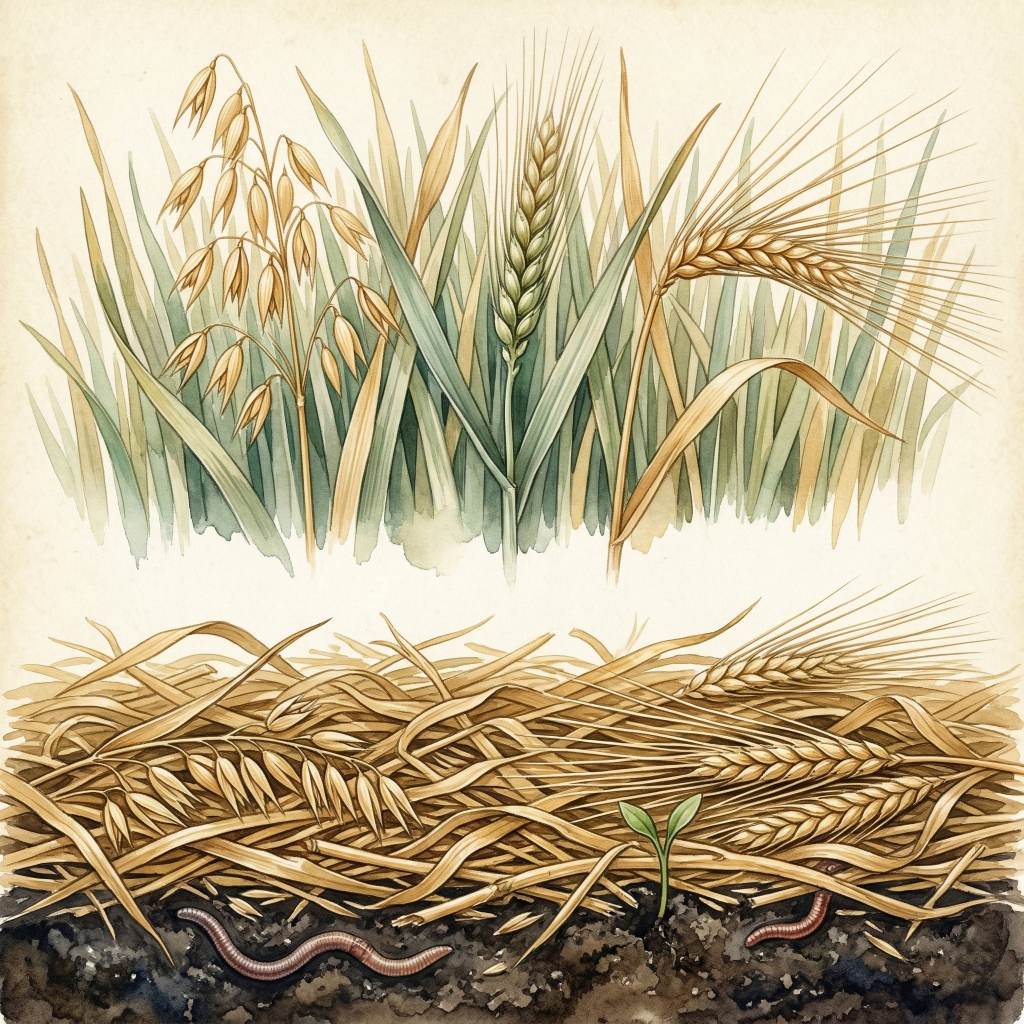
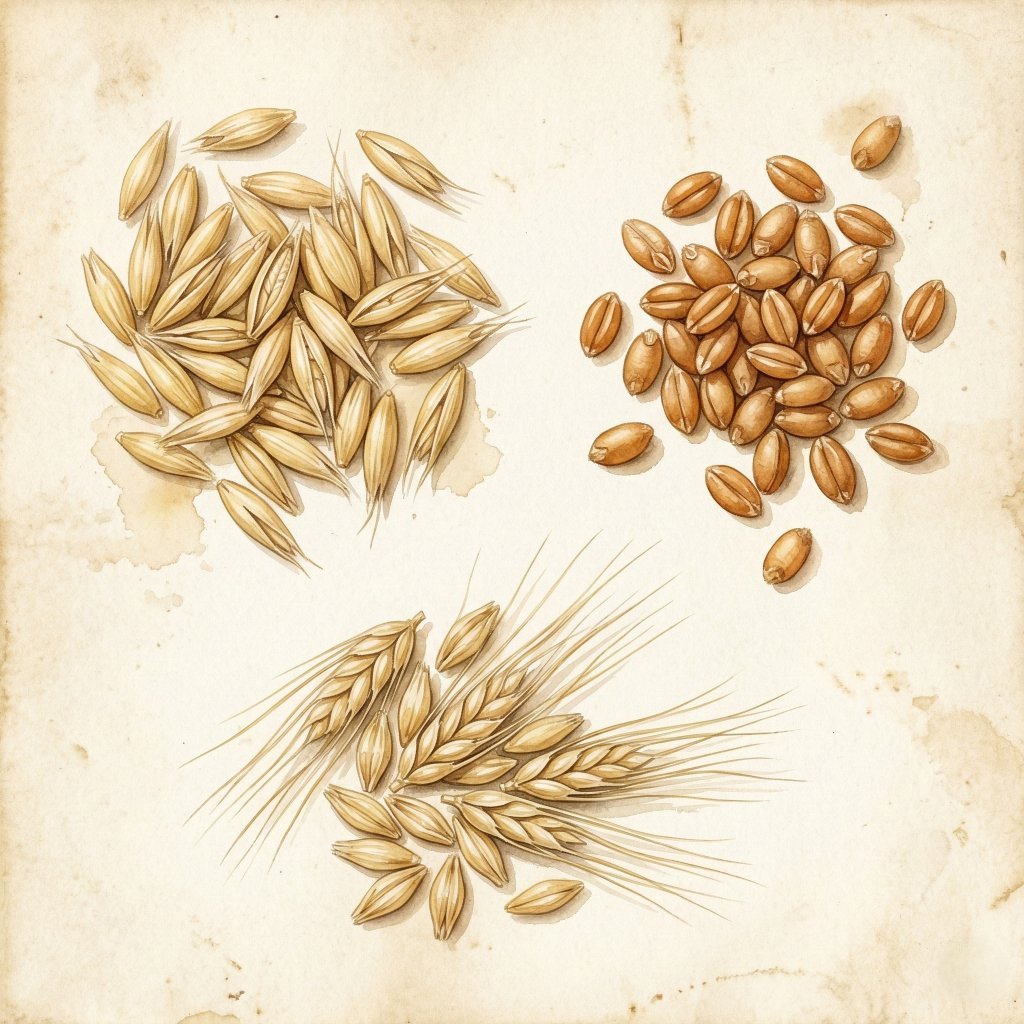
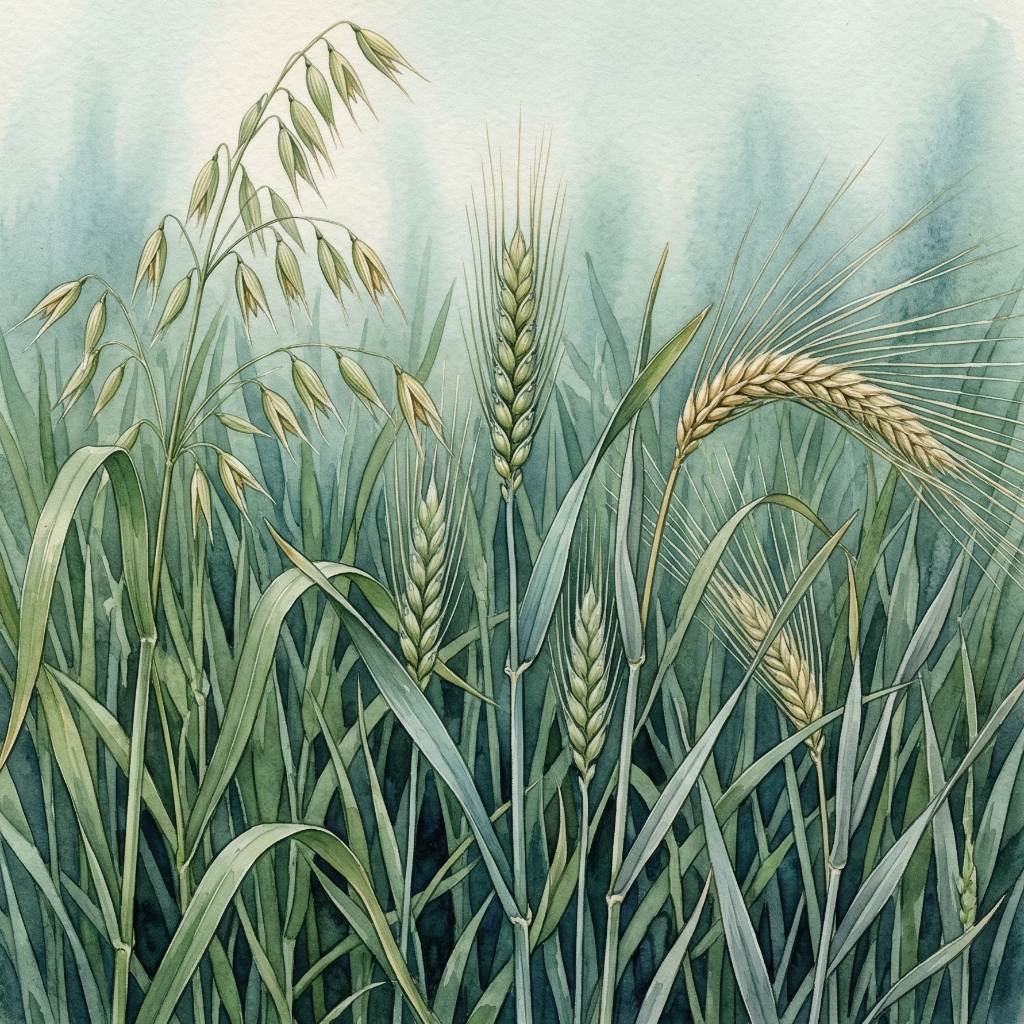
Contains: Oats, Wheat, Barley.
This is your dedicated cereal cover crop - three species, one job: build carbon, suppress weeds, and protect soil through winter.
Why a separate cereal product? Wheat, barley, and oats are kept isolated from all other mixes in this range. This means you can sell them as a standalone winter cover crop product - the fastest-moving seasonal item in the cover crop category - without any crossover into your longer-shelf-life legume and brassica products.
What cereals do that no other cover crop can: allelopathy. All three species release chemical compounds from their roots that actively suppress weed seed germination - reducing weed pressure for your next cash crop by up to 50-70% compared to bare fallow. This is a scientifically documented effect that no legume, brassica, or broadleaf cover crop can replicate.
Oats are the biomass champion, producing the most above-ground material for mulching. Wheat produces the densest root mat for soil structure. Barley is the most drought-tolerant and has the strongest allelopathic effect. Use the Triple Cereal in autumn. Winter, then follow with warm-season products in spring. Summer for year-round soil building.
Sowing Instructions
1. Best sown March. August (cool season) when soil temperature is 8-20°C.
2. Prepare bed by removing spent summer crops. Light rake to create seed bed.
3. Broadcast at 80-120 g/sqm (heavy rate for maximum weed suppression and biomass).
4. Rake to 2-3 cm depth. Water in if no rain expected within 48 hours.
5. Germination in 5-7 days. Dense canopy closure within 3-4 weeks.
6. Allow to grow 8-12 weeks. For maximum carbon: let grow until early grain formation.
7. For weed suppression: slash at boot stage (just before seed heads emerge) when allelopathic effect peaks.
8. Terminate by: (a) slashing and incorporating, (b) crimp-rolling for no-dig (excellent as a rolled-down mulch mat), or (c) mowing and leaving as surface mulch.
9. If incorporating, wait 2-3 weeks before planting. The high C:N ratio means nitrogen tie-up is possible - follow with a nitrogen-fixing crop (Products 2, 4, or 9).
10. For continuous soil building: Triple Cereal (autumn. Winter) → Quick Flip or Summer Builder (spring. Summer) → repeat.