Winter Pasture & Green Cover Mix
NOT to WA & TAS
Lolium perenne, Pisum sativum, Trifolium pratense, Trigonella foenum-graecum
Suitable for: Home gardeners (winter fallow beds), orchardists (winter alleyway cover), market gardeners (winter bed prep), small acreage farmers, hobby farmers, permaculture, school gardens
Sowing rate: Garden beds: 40-70 g/sqm (1 kg covers 15-25 sqm). Orchard alleyways: 20-40 kg/ha. Small acreage: 30-50 kg/ha.
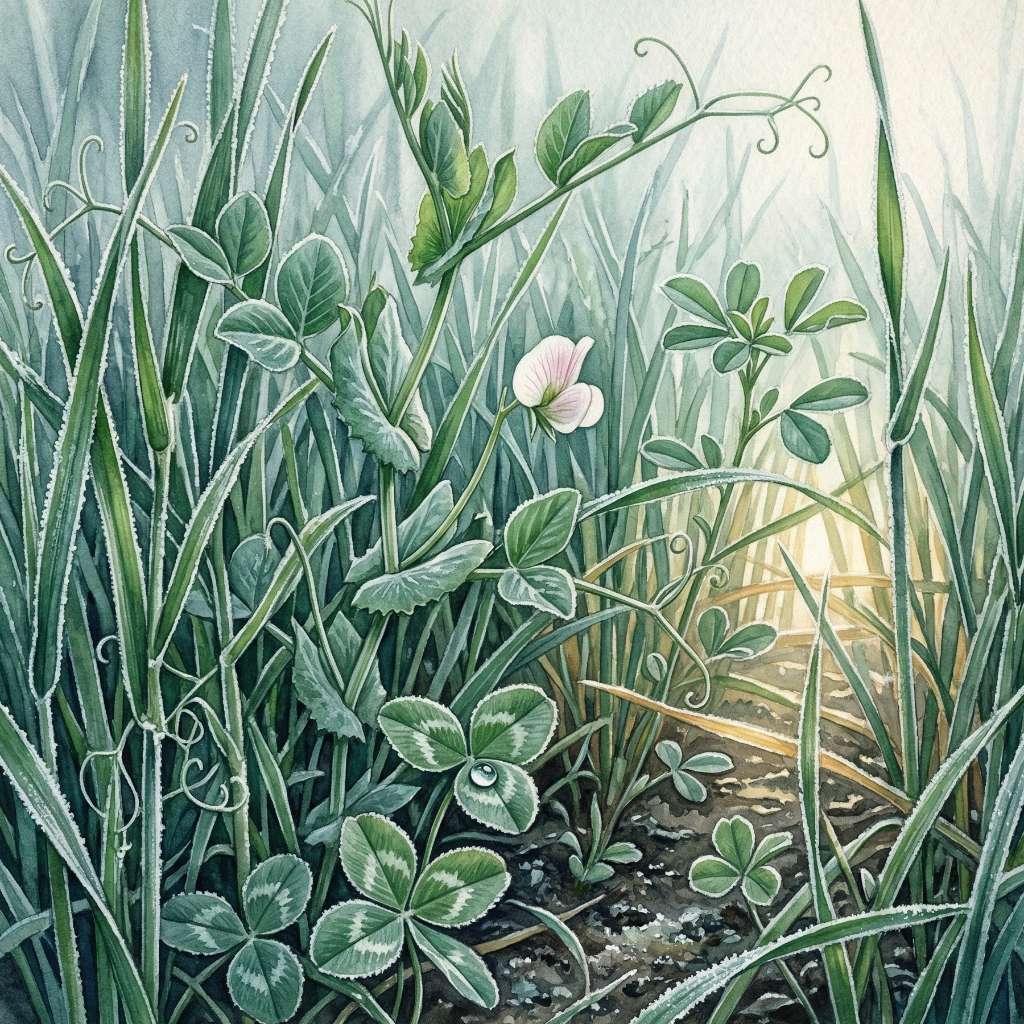
Season: Mar-Aug (cool season). Best sown when soil temp is 8-18°C. Cool-season product designed for temperatures 5-18°C. All four species tolerate frost. Rye grass actively grows in winter. In tropical zones, sow during dry/cool season. Not suitable for hot summer sowing
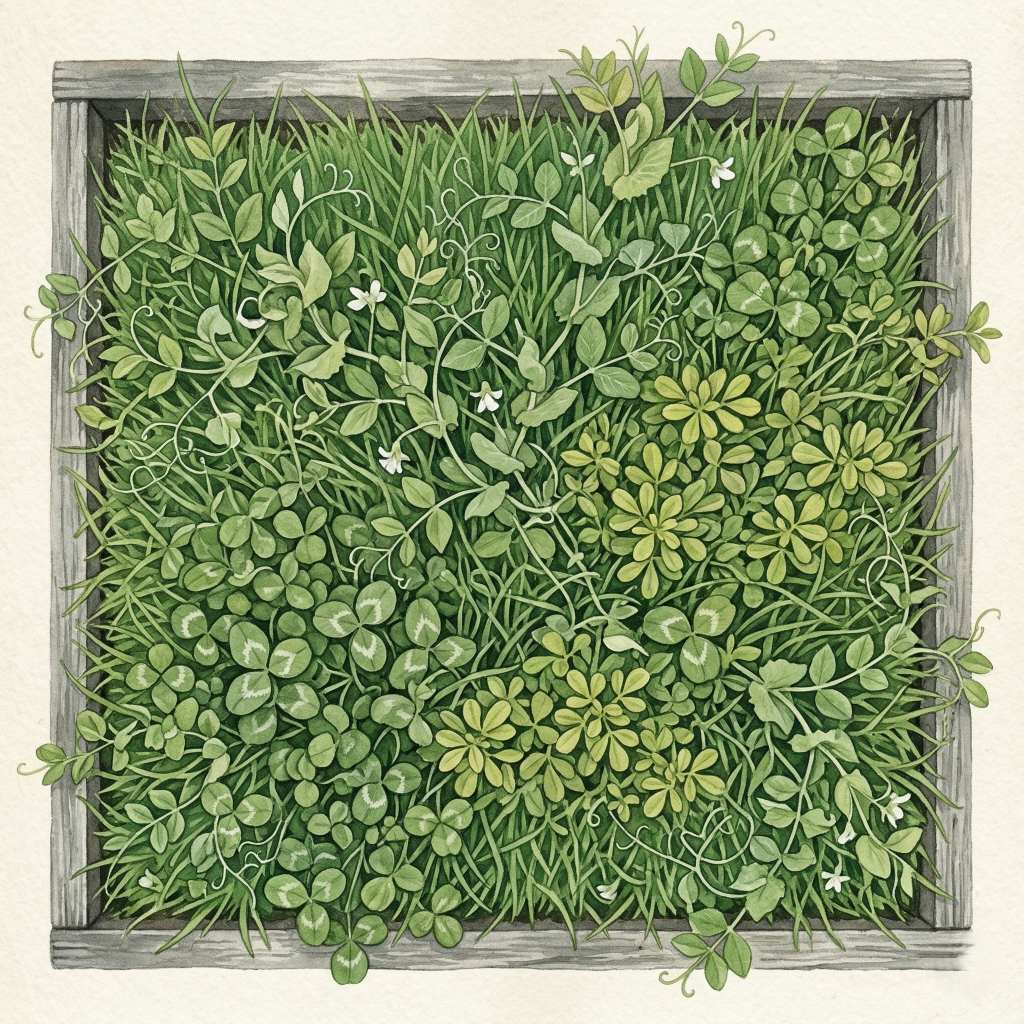
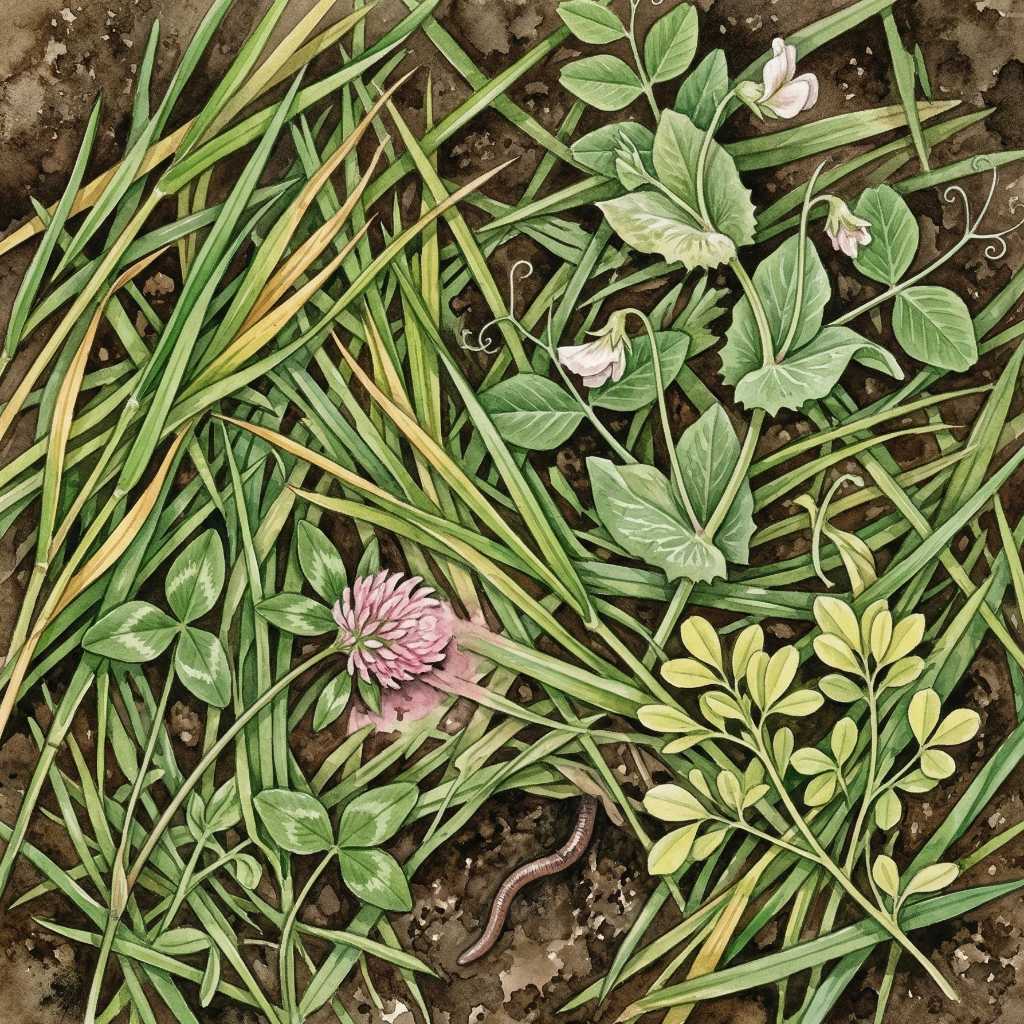
Contains: Rye Grass, Field Blue Pea, Red Clover, Fenugreek
Winter is when most Australian gardens and farms sit bare - and that’s exactly when your soil is most vulnerable. Rain leaches nutrients, weeds establish, and soil biology goes dormant without living roots to feed it. Our Winter Pasture mix keeps your soil alive, protected, and actively improving through the coldest months.
Rye grass is the star of this mix - it’s one of the few species that actively grows in cold weather, staying bright green when everything else has gone dormant. Its dense fibrous root system holds topsoil, prevents erosion, and feeds soil fungi through winter. At 40% of the mix, it provides the reliable base layer of ground cover.
The three legume species (Field blue pea, red clover, and fenugreek) add nitrogen fixation to the mix. Field blue peas scramble up through the rye grass, adding height and heavy biomass. Red clover is a short-lived perennial (2-4 years) that provides the first flowers of late winter, feeding early-season pollinators. Fenugreek establishes fastest and fills gaps while the slower perennials develop.
This is the perfect cool-season companion to Quick Flip and Summer Soil Builder. Use Winter Pasture in autumn. Winter, then follow with warm-season products in spring. Summer for year-round soil building.
Sowing Instructions
1. Best sown March. June as temperatures cool and autumn rains begin.
2. Remove spent summer crops. Light rake to create a seedbed - minimal tillage.
3. Broadcast at 40-70 g/sqm. Rye grass is a small-seeded mix with dry sand for even coverage if hand-broadcasting.
4. Rake lightly to 1-2 cm depth. Water in if no rain is expected within 48 hours.
5. Rye grass emerges in 5-7 days. Fenugreek in 5-7 days. Peas in 7-10 days. Clover in 10-14 days.
6. Allow to grow through winter. The mix stays green when most other plants are dormant.
7. In late winter/early spring, red clover will bloom first - early food for emerging pollinators.
8. Terminate in early spring: slash at early flowering and incorporate for a nitrogen boost before spring planting.
9. Alternative: leave rye grass and clover as permanent ground cover and transplant spring crops directly through them.
10. For year-round soil building: Winter Pasture (autumn. Winter) → Quick Flip or Summer Builder (spring. Summer) → repeat.