
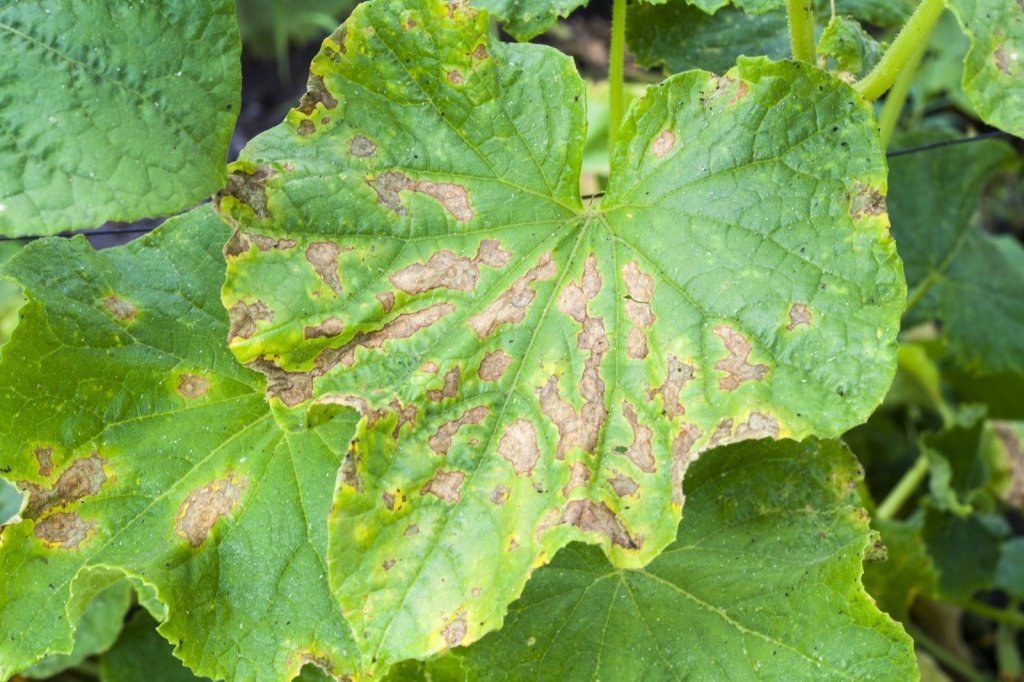
The short version: Downy mildew shows as pale yellow, angular patches on top of a leaf with a greyish or purplish fuzz on the underside, and it takes hold in cool, wet, humid weather. It is not the same as powdery mildew, and the milk and bicarb sprays used for that do not reliably control it. Space plants for airflow, water at the base early in the day, grow resistant varieties, and remove affected leaves promptly.
Downy mildew is one of those problems that looks minor for a day or two, then takes a whole bed of lettuce or a row of cucumbers with it after a run of damp, still weather.
Getting the diagnosis right is half the battle, because downy mildew and powdery mildew look nothing alike up close and call for different responses.
What downy mildew actually is
Downy mildew is caused by a group of organisms called oomycetes, or water moulds, which are more closely related to algae than to true fungi. That detail matters, because many fungus remedies do little against it.
It is a different disease from powdery mildew, and the two are easy to mix up by name alone. Powdery mildew is a true fungus that likes warm, dry weather and coats the upper leaf in a white, talc-like powder that wipes off. Downy mildew likes it cool and wet, and grows partly inside the leaf.
How to tell it apart
Downy mildew has a distinctive calling card. Look for pale yellow, angular patches on the upper surface of the leaf, their edges boxed in by the leaf veins so they look almost quilted. Turn the leaf over, and on the matching patches underneath you will often find a soft grey, purple or brown down, clearest on a humid morning. The patches later brown off and die.
This underside growth is the surest way to separate downy mildew from powdery mildew, which sits as white powder on top of the leaf. It also rules out look-alikes such as a magnesium shortage or spider-mite stippling, neither of which produces that downy layer beneath.
Which crops it affects
Downy mildews turn up on lettuce, brassicas, cucurbits such as cucumber, zucchini and pumpkin, grapes, onions and spring onions, peas, spinach and silverbeet, and basil.
One reassuring point is that these downy mildews are largely host-specific. The one that attacks your lettuce is a different species from the one on your basil or your grapevine, so it will not jump from a sick grapevine across to the lettuce bed.
How to keep it in check
Downy mildew is managed rather than cured, and prevention does most of the work. Because it needs wet leaves and humid, still air to get going, the aim is to deny it those conditions.
- Space and thin plants so air moves freely between them, and choose an open, sunny spot.
- Water at the base early in the day, with a can or drip line rather than over the leaves, so the foliage dries quickly. Late-afternoon overhead watering is the classic trigger.
- Grow resistant varieties where they are offered, which is now common for lettuce, cucurbits and basil.
- Remove and bin affected leaves promptly, and do not compost them, since resting spores can survive a home heap. Rotate crops so the same family is not in the same bed each year.
If a susceptible crop is worth protecting, a copper-based fungicide registered for that crop can help as a preventive, applied by the label. Use copper sparingly, as it builds up in the soil over time. What does not work well is the milk or bicarbonate-of-soda spray many gardeners keep for powdery mildew. Because downy mildew grows inside the leaf, these surface sprays are unreliable against it, so do not lean on them, and never reach for an unregistered chemical. Our guide to watering vegetables so the roots go down covers how to keep water off the leaves while still giving the plant a deep drink.
Downy mildew across Australia's climate zones
The risk follows the wet and humid weather, so it shifts with the season and the region.
- Tropical (Darwin, Cairns): the warm, wet season and high humidity favour cucurbit and basil downy mildew, so airflow and resistant varieties matter most.
- Subtropical (Brisbane, northern NSW): a risk in humid summer storms and mild, wet winters, especially on cucurbits, brassicas and basil.
- Arid and semi-arid (Alice Springs, Mildura): low risk except under irrigation, and base watering usually keeps it away.
- Temperate (Sydney, Melbourne, Canberra): the main risk runs autumn to spring on lettuce, brassicas, peas, onions and grapes.
- Mediterranean (Perth, southern WA and Adelaide): the cool, wet winter and spring drive lettuce, brassica and grape downy mildew, while summer is generally low risk.
- Cool and alpine (Tasmanian highlands, the tablelands): cool, damp, humid conditions favour it through a long, wet season, so spacing and airflow are key.
Frequently asked questions
What is the difference between downy and powdery mildew?
Downy mildew shows as yellow angular patches on top of the leaf with a fuzzy grey growth underneath, and it likes cool, wet, humid weather. Powdery mildew is a white powder on the upper surface that wipes off, and it likes warm, dry weather. They need different management.
Is it safe to eat leaves with downy mildew?
The organism infects plants, not people, so lightly affected leaves are generally fine once you trim off the diseased parts and wash them. Discard any heavily infected or rotting leaves.
Will downy mildew kill my plant?
It can. A severe infection strips the leaves a plant needs, and in crops like lettuce and grapes it can cause serious losses if left unchecked. Catching it early and improving airflow usually keeps it manageable.
Can I compost infected leaves?
It is better not to. Bin them instead, as the spores and resting structures can survive a home compost heap that does not get hot enough to kill them.
Does milk or bicarb spray work on downy mildew?
Not reliably. Those sprays are used for powdery mildew, which sits on the leaf surface. Downy mildew grows inside the leaf, so surface sprays do little, and airflow, dry leaves and resistant varieties do far more.
Does it live in the soil?
Some downy mildews leave long-lived resting spores in plant debris and soil, which is why removing infected material and rotating crops both help to break the cycle.
Read the leaf, keep the air moving and the foliage dry, and downy mildew becomes a passing setback rather than the end of the crop.
Related growing guides
- Powdery mildew, blossom end rot and other common vegetable troubles
- How to water vegetables so the roots go down
- Organic pest control in Australia
Ready to plant? Browse our lettuce seeds, cucumber seeds and herb seeds.