
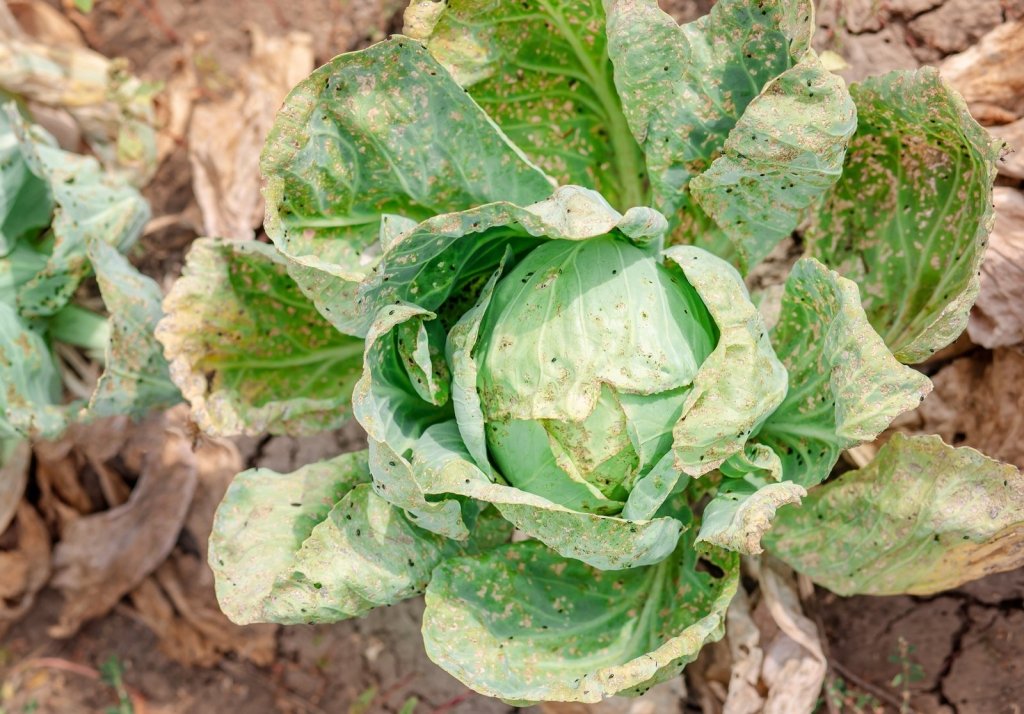
The short version: The holes in your cabbages and broccoli are almost always the work of two pests: the velvety green caterpillar of the cabbage white butterfly, and the small, wriggly caterpillar of the diamondback moth. The most reliable fix is fine netting fitted before the butterflies arrive, backed up by hand-picking and a caterpillar-specific spray, Bacillus thuringiensis, that is safe for bees and people. Chasing them with harsh sprays tends to fail, since diamondback moth in particular resists many chemicals.
Brassicas are among the most rewarding cool-season crops, and also the most reliably chewed. A row of young cabbages can go from perfect to lace within a week of the first white butterflies drifting through.
Knowing which caterpillar you are dealing with, and getting a barrier up early, turns a frustrating crop into an easy one.
Which caterpillar is eating my brassicas?
Two culprits do most of the damage in Australian gardens, and it helps to tell them apart.
The cabbage white butterfly (Pieris rapae) is the familiar white butterfly with one or two dark spots on each wing. Its caterpillar is velvety green with a faint yellow stripe, up to about 30 millimetres long, and it feeds slowly and openly on the leaves.
The diamondback moth (Plutella xylostella) is a small greyish moth, and its caterpillar is much smaller, around 10 millimetres, slender and pale green. The giveaway is its behaviour: touch it and it wriggles violently, then drops from the leaf on a fine silk thread.
Both leave ragged holes and windows in the leaves, working from the edges inward, and both foul the heart of the plant with green droppings, or frass, which is often the first thing you notice.
Which crops are at risk
Everything in the brassica family is fair game: cabbage, broccoli, cauliflower, kale, Brussels sprouts, kohlrabi, turnip, radish, rocket, mustard and Asian greens such as pak choy and wombok. Self-sown brassica weeds keep the caterpillars going between crops, so they are worth pulling too.
How to protect your plants
Exclusion is the single most effective step, and the one most gardeners skip.
- Net early, before the butterflies arrive. Fine insect-exclusion mesh over a frame, sealed at the edges, keeps both pests off. The mesh needs to be genuinely fine, as diamondback moths are tiny, and it is worth checking there are no eggs already on the plants before you cover them.
- Hand-pick and squash the eggs. A daily look at the leaf undersides and the heart of the plant, squashing the small yellow eggs and any caterpillars, keeps numbers down on a few plants.
- Spray Bacillus thuringiensis if you need to. This naturally occurring soil bacterium, sold as Dipel and similar, affects only caterpillars and is safe for bees, pets and people. The caterpillars must eat treated leaf, so cover the foliage well, and reapply after rain and roughly every one to two weeks while they are active. Check the label for any withholding period.
Let the helpers do some of the work
A garden that welcomes beneficial insects carries far fewer caterpillars. Small parasitic wasps such as Cotesia rubecula attack cabbage white caterpillars from the inside, and lacewings, ladybirds, predatory bugs, paper wasps and birds all take their share. Leaving some herbs and flowers to bloom nearby feeds the adult wasps and keeps them in the garden.
It is worth knowing what not to do. Reaching for a broad-spectrum insecticide kills these helpers along with the caterpillars, and diamondback moth has developed resistance to many synthetic sprays, as the Queensland Government notes, so repeated spraying often makes things worse rather than better. If you do use an organic contact spray such as pyrethrum, it still harms bees, so apply it only at dusk and spot-treat rather than drench.
Homemade decoys, the white shapes pinned up to convince passing butterflies the patch is already taken, are cheap and harmless to try, but the evidence that they work is thin. Treat them as a bit of fun, not a substitute for netting.
Cabbage caterpillars across Australia's climate zones
These are warm-season pests, quiet in the cold and busy once it warms up.
- Tropical (Darwin, Cairns): brassicas grow best in the cooler dry season, when pressure is high and includes extra pests such as the cabbage centre grub.
- Subtropical (Brisbane, northern NSW): near year-round pressure in warm spells, so grow brassicas from autumn to spring and net early.
- Arid and semi-arid (Alice Springs, Mildura): mostly a problem on irrigated brassicas in the cooler months, with fast diamondback build-ups in warm, dry weather.
- Temperate (Sydney, Melbourne, Canberra): the classic spring and autumn peaks, with pressure running roughly September to May.
- Mediterranean (Perth, southern WA and Adelaide): both pests active from spring to autumn, with diamondback worst in warm, dry springs.
- Cool and alpine (Tasmanian highlands, the tablelands): a shorter window from late spring into summer, with cold winters cutting numbers back.
Frequently asked questions
Is the white butterfly itself eating my plants?
No, the adults only sip nectar. It is the green caterpillars that do the damage. The butterflies lay the eggs, though, so deterring them with netting still pays off.
How do I tell cabbage white from diamondback caterpillars?
The cabbage white caterpillar is a plump, velvety green grub up to about 30 millimetres with a faint yellow stripe. The diamondback caterpillar is much smaller and slender, and it wriggles then drops on a silk thread when you touch it.
Is Bacillus thuringiensis safe on food crops?
Yes. It is a caterpillar-specific bacterium that does not affect bees, pets or people. The caterpillars have to eat sprayed leaf for it to work, so cover the foliage well and reapply after rain. Check your product label for any withholding period.
What netting actually keeps them out?
Fine insect-exclusion mesh, fitted before the season starts and sealed at the edges. Because diamondback moths are so small, ordinary bird netting is not enough, and it is worth checking for eggs already on the plants before covering.
Can I still eat cabbages the caterpillars have chewed?
Usually yes. Remove the chewed outer leaves, then check inside the head for caterpillars and frass and wash it well. Seedlings and plant hearts are the most vulnerable, but established plants often recover.
Do companion plants help?
Flowering herbs and flowers do not repel the butterflies, but they feed the parasitic wasps and other predators that keep caterpillar numbers down. That indirect help is real and worth building in.
Get a barrier up before the first butterflies arrive, and the rest is easy: a quick daily check, the occasional spray of Bacillus thuringiensis, and a garden that keeps its own predators fed.
Related growing guides
- Organic pest control in Australia
- What to grow in winter: cool-season vegetables across Australia
- What is actually in a beneficial bug mix
Ready to plant? Browse our cabbage seeds, broccoli seeds and kale seeds.