
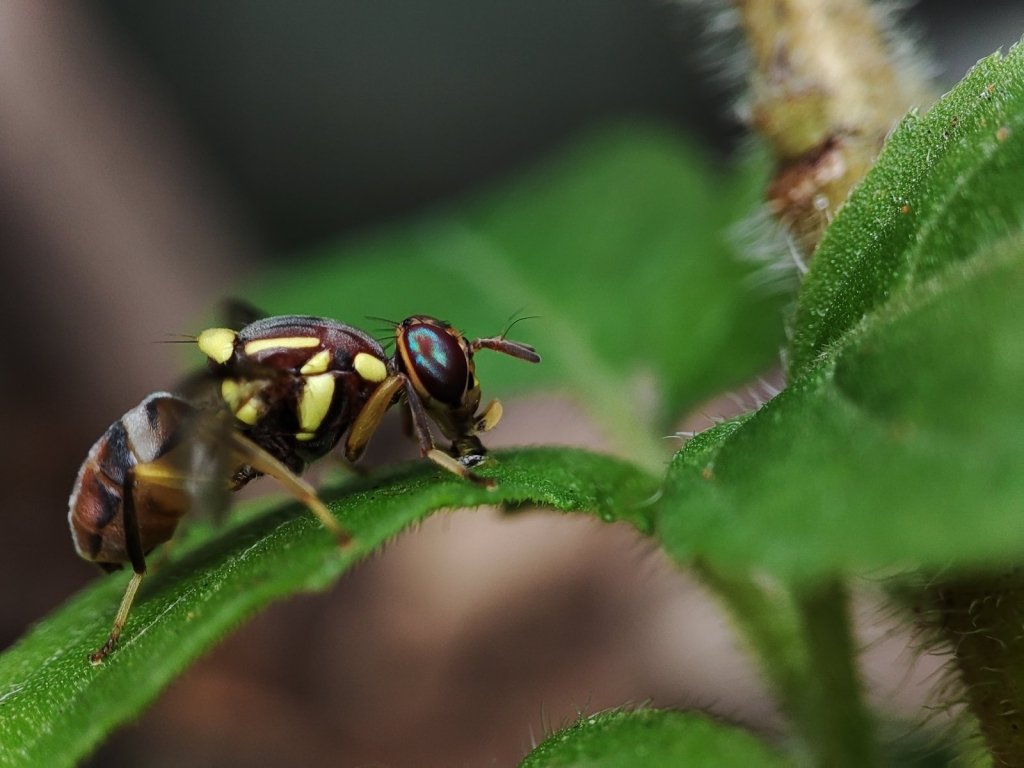
The short version: Fruit fly is the pest most likely to ruin homegrown fruit and fruiting vegetables, laying eggs under the skin so the fruit rots from the inside. The most reliable home defence is exclusion, netting a tree or bagging individual fruit, combined with strict hygiene: pick fruit as it ripens and collect every fallen or infested piece. Infested fruit must be sealed and solarised, frozen or binned, never composted or left under the tree, and gardeners in fruit-fly-free regions should check their state authority.
Few things are as disheartening as slicing into a tomato or a peach you have watched ripen for weeks, only to find it rotten and full of maggots. Fruit fly is the reason, and it is regarded as Australia's most damaging horticultural pest.
It cannot be dealt with by a single spray. Control is a matter of keeping the flies off the fruit and breaking their breeding cycle, ideally with the neighbours doing the same.
Which fruit fly, and where
Two species matter for home gardeners. Queensland fruit fly (Bactrocera tryoni), often shortened to Qfly, is established across much of eastern Australia, through Queensland, New South Wales, the ACT, Victoria and parts of the Northern Territory. Mediterranean fruit fly (Ceratitis capitata), or Medfly, is the resident species in Western Australia.
Some regions are kept deliberately free of fruit fly. Western Australia is free of Queensland fruit fly, and South Australia and Tasmania are also Qfly-free areas. This is why you should never carry homegrown fruit across state or regional borders, and why anyone in a pest-free area should treat a suspect find as reportable. Rules on movement and reporting vary, so check your own state agriculture department for what applies where you live.
How to tell fruit fly is the problem
The sign is on the fruit, not the fly. Adult Queensland fruit flies are reddish-brown with yellow markings and clear wings, roughly 6 to 8 millimetres long, but you will rarely see them at work.
What you notice instead are small puncture marks, or stings, in the skin of maturing fruit, sometimes with a slight dimple. The fruit often looks sound on the outside while it rots within, then softens and drops early. Cut an affected fruit open and you will find creamy-white maggots inside.
Which crops are at risk
Fruit fly has a very wide host range, well over 200 plants. In the vegetable patch it targets the fruiting crops: tomato, capsicum, chilli and eggplant. Among fruit it goes for stone fruit such as apricots, peaches, nectarines, plums and cherries, along with apples, pears, quinces, citrus, figs, grapes and persimmons. If it sets fruit, assume fruit fly is interested.
How it breeds
The female pierces the skin of ripening fruit and lays her eggs just beneath the surface. The eggs hatch within a few days, the maggots feed inside the fruit, and when mature they drop to the ground and pupate in the soil before emerging as adults.
The whole cycle is driven by warmth. It can take about a month in mild conditions and as little as two and a half to three weeks in high summer, so several generations build through the season. The peak risk period runs roughly from September to May, easing over winter.
How to protect your fruit
Because there is no cure once a fruit is stung, the whole game is prevention: keep the flies off, and remove anything they have got into.
- Exclude the flies. Netting a whole tree with fine mesh, or slipping bags or sleeves over individual fruit, is the most reliable non-chemical control. Put netting on after the fruit has set.
- Stay on top of hygiene. Pick fruit as it ripens rather than leaving it to hang, and collect every fallen and over-ripe piece, ideally daily. Fallen fruit left under the tree is how an infestation keeps going.
- Dispose of affected fruit properly. Seal it in a strong plastic bag, then either leave it in the sun to solarise for at least three days, or seven days if the weather is under 30 degrees, or freeze it for at least two days, before putting it in the general rubbish. Do not compost it, put it in the worm farm, leave it lying about, or move host fruit into a pest-free area.
- Use traps to monitor, not to cure. Male-lure traps are useful for early warning that fruit fly is about, but they will not clear an infestation on their own.
If you choose to spray, use only products registered for home gardens through the Australian Pesticides and Veterinary Medicines Authority, and follow the label and its withholding periods. Protein bait sprays, which combine a food attractant with an insecticide and are spot-applied to foliage, are the usual home-garden option. Older organophosphate sprays have largely been withdrawn from home food-garden use, so lean on netting, hygiene and baiting rather than chasing a strong chemical. The Australian Government keeps an overview of the fruit flies present in Australia and which regions are protected.
Fruit fly across Australia's climate zones
The pressure follows the warmth, and the species depends on the region.
- Tropical (Darwin, Cairns): warmth allows near year-round Queensland fruit fly breeding, with little winter break.
- Subtropical (Brisbane, northern NSW): high, long-season Qfly pressure, as this is core range.
- Arid and semi-arid (Alice Springs, Mildura): low natural pressure, though irrigated town gardens can still host outbreaks.
- Temperate (Sydney, Melbourne, Canberra): Qfly is established and the main risk runs spring to autumn, while South Australia's managed areas remain largely Qfly-free.
- Mediterranean (Perth, southern WA and Adelaide): Mediterranean fruit fly is the resident pest in WA and breeds for much of the year, and because the region is Queensland-fruit-fly-free, never carry host fruit in from elsewhere.
- Cool and alpine (Tasmanian highlands, the tablelands): Tasmania is fruit-fly-free and the cold limits establishment, so report any suspect fruit.
Frequently asked questions
How do I safely dispose of infested fruit?
Seal it in a strong plastic bag and either solarise it in the sun for at least three days, or seven if the weather is under 30 degrees, or freeze it for at least two days, then put it in the general rubbish. Never compost it, put it in the worm farm, or leave it under the tree.
Is affected fruit safe to eat?
The maggots are not a health risk, but infested fruit rots and is unpalatable, so it is not worth eating. Cut fruit open to check, and dispose of affected pieces as above.
Do traps control fruit fly?
Male-lure traps mainly monitor and warn, and will not clear an infestation. Real control comes from netting or bagging fruit, strict hygiene, and, if needed, protein baiting, ideally coordinated with the neighbours.
When is the risk highest?
Through the warm months, roughly September to May in temperate areas, when a generation can complete in about two and a half to three weeks. Start protecting fruit before it begins to ripen.
What can home gardeners spray?
Only products registered for home gardens through the APVMA, following the label and withholding periods. Protein bait sprays are the usual choice, while older organophosphates are no longer available for home food crops.
Do I need to report it?
In fruit-fly-free areas, including much of WA for Queensland fruit fly, South Australia's pest-free areas and Tasmania, suspected fruit fly is reportable. Contact your state agriculture department, which also sets the local quarantine and movement rules.
Net the fruit, keep the ground clear, dispose of the strikes properly, and fruit fly becomes a pest you manage rather than one that beats you every summer.
Related growing guides
- Organic pest control in Australia
- Powdery mildew, blossom end rot and other common vegetable troubles
- What is actually in a beneficial bug mix
Ready to plant? Browse our tomato seeds, capsicum seeds and chilli seeds.