
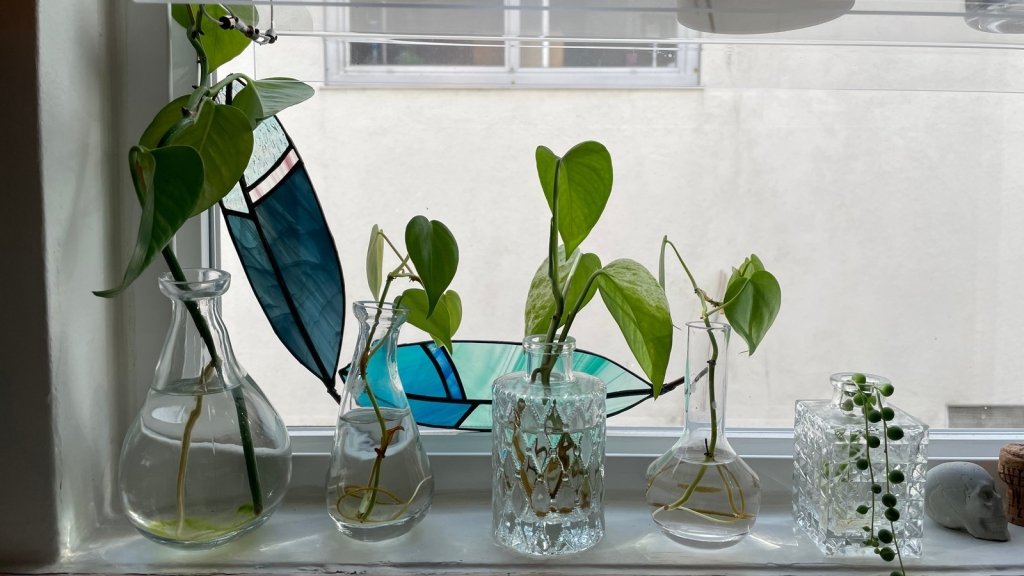
The short version: Many soft-stemmed plants, including mint, basil, coleus, devil's ivy, pelargoniums and tomato side shoots, will grow roots in a jar of plain tap water on a bright windowsill. Cut a 10 to 15 cm shoot just below a node, keep that node under water and the leaves above it, change the water every few days, and pot up once the roots are 2.5 to 5 cm long. Woody plants such as rosemary and lavender usually rot in water and are better struck in a sandy mix.
Most gardeners have done this by accident. A sprig of mint left in a glass on the bench grows a beard of white roots before anyone thinks to throw it out. Water propagation is that accident done on purpose, and it is the cleanest, cheapest way to multiply the plants that suit it.
It is also the method where the last step matters most. More water-rooted cuttings die in their first week in soil than in the jar, and the reason is worth understanding.
Why a jar of water works, and where it falls short
A cutting in water grows the same kind of roots it would grow in a pot, from the node region of the stem, but with constant moisture and nothing to push through. You can watch it happen, which is half the appeal. The catch is that roots grown in water are built for water. They are smoother, more brittle and carry fewer of the fine root hairs that draw moisture from soil, and they form internal air channels to cope with the low oxygen of a jar. Moved abruptly into dry mix in the sun, they cannot keep up, and the cutting wilts. Handled gently, the plant simply grows a second set of soil roots and carries on.
Plants that root well in water, and plants that rot
Reliable: mint, basil, coleus, devil's ivy and other pothos, tradescantia, pilea, begonia, syngonium, pelargonium, tomato side shoots, sweet potato vine, hydrangea and willow. Sweet potato is a favourite: half a tuber in a glass on a warm sill sends up shoots in a few weeks, and each shoot roots in shallow water.
Unreliable: rosemary, lavender, sage and other woody herbs, conifers, succulents and cacti, and anything with a woody stem. Gardening Australia's guide to water propagation puts it plainly: woody stems can easily rot in water and do better straight into a free-draining sandy mix. Our guide to taking cuttings covers those plants.

Setting up: the jar, the node and the windowsill
Cut a healthy, non-flowering shoot 10 to 15 cm long with clean scissors, making the cut 1 to 2 cm below a node, the swollen point where a leaf joins the stem. Remove any leaves that would sit under water, because they rot, and keep a few leaves above to feed the cutting. Stand it in a clean jar of tap water so the node is submerged. A dark bottle, or a clear jar wrapped in paper, keeps light off the developing roots and slows algae. Put it somewhere warm with bright, indirect light: near a north-facing window is ideal, direct sun cooks the water.
Change the water every three to seven days, sooner if it clouds or smells, and rinse the stem base when you do. Warm rooms, crowded jars and rot-prone cuttings need the shorter interval. In warm weather a forgotten jar is also a mosquito nursery, so the water change matters twice over. A temperature of about 18 to 27°C keeps things moving.
How long it takes, and when to pot up
Coleus can show roots in one to two weeks. Basil, mint and hydrangea usually take a few weeks. Most houseplants take four to six weeks, and slow subjects can run to three months, especially in winter. Pot up when the roots are 2.5 to 5 cm long and just starting to branch. Longer is not better: roots left for months in water become long, tangled and fully water-adapted, and they break when handled.

The move to soil without losing the plant
Make the change gradual. One useful trick is to drop a spoonful of potting mix into the jar each day for a week before potting, so the roots meet soil while still in water. Then pot into a small container with drainage holes and an airy, free-draining mix, handling the cutting by the stem rather than the roots. Water in and keep the mix moist rather than wet for the first few weeks. Hold the humidity up with a loose bag if the air is dry, keep the pot out of direct sun, and skip fertiliser for two to three weeks while the new soil roots form. Plants headed outdoors in cool districts need a few days of gradual exposure first.
Water rooting through the year in Australia
- Tropical (Darwin in the Northern Territory, Cairns and Townsville in Queensland): warm all year, so herbs, sweet potato and houseplants root in any month. Keep jars out of hot sun and change the water more often in the wet season.
- Subtropical (Brisbane and south-east Queensland, northern New South Wales): outdoor herbs, coleus and tomato laterals from September to April; houseplants indoors any time.
- Arid and semi-arid (Alice Springs in the Northern Territory, Broken Hill in New South Wales, Mildura in Victoria, Kalgoorlie in Western Australia): spring and autumn are kindest. In summer keep jars indoors and away from windows where the water heats up.
- Temperate (Sydney and the New South Wales coast, Melbourne in Victoria): October to March for garden plants, and expect the three-month end of the range for anything started in winter.
- Mediterranean (Perth and southern Western Australia, Adelaide in South Australia): spring and autumn; midsummer jars overheat in the dry heat.
- Cool and alpine (Tasmania, Canberra in the ACT, Ballarat in Victoria, Orange and Armidale in New South Wales, Stanthorpe in Queensland): November to February, otherwise a warm windowsill or a heat mat, because rooting stalls below about 18°C.
Willow water, charcoal and other jar folklore
Willow water, made by steeping willow twigs, is widely claimed to be a natural rooting hormone. Willow is often said to contain a natural auxin, and it does contain salicylic acid, but home-steeped willow water delivers very little of either, and controlled trials have found small, inconsistent effects at best. A lump of charcoal in the jar is said to keep the water sweet; no evidence either way was found, and regular water changes do the same job. Rainwater is sometimes recommended over tap water, but Australian sources root cuttings in ordinary tap water without trouble.
Frequently asked questions
How long should the roots be before I pot up?
About 2.5 to 5 cm and starting to branch. Longer roots are more fragile and more water-adapted, so do not wait for a full beard.
Why did my cutting die after I potted it?
Water roots have fewer root hairs and are built for low oxygen, so an abrupt move to dry mix in the sun kills them. Keep the mix moist, the plant shaded and unfed, and let new soil roots form.
Can I root rosemary or lavender in water?
Occasionally, but they usually rot. Treat them as semi-hardwood cuttings in a sand and compost mix instead.
Tap water or rainwater?
Tap water works. Change it every three to seven days and keep the jar clean.
Can I just leave the plant growing in water?
Devil's ivy, tradescantia and mint will live in water for a long time if you feed them with a very dilute liquid fertiliser and keep the vessel clean. They are never as vigorous as a potted plant.
Do I need rooting hormone in water?
No. The plants that root in water do so without it, and hormone is not designed to be used in a jar.
A jar on the sill, a change of water every few days and a gentle move into soil: it is hard to think of a cheaper way to fill a garden bed with basil.
Related growing guides
- Regrowing vegetables from kitchen scraps
- How to sprout sweet potato slips from a tuber
- How to take plant cuttings
Start a mother plant from seed: browse our basil seeds, mint seeds and the rest of the herb seeds range.