
The short version: Most vegetable and flower seed needs no treatment at all: sow it in the right season and keep it moist. A few seeds benefit from help. Large, hard-coated seed such as peas, beans, nasturtiums and beetroot can be soaked for a few hours to overnight, then sown at once. Hard-shelled seed such as sweet peas, lupins and wattles needs scarification, a nick, a rub with sandpaper or a pour of near-boiling water, so water can get in. Seed from cold climates, including apple pips and alpine natives, needs cold stratification, a moist spell in the fridge, before it will wake up.
Seed catalogues are full of instructions to soak, chip and chill, and a keen gardener can end up treating everything. The honest position is that the seed in most packets has had its dormancy bred out of it over centuries. Peas do not need a bath. Lettuce does not need the fridge. The treatments below are for the minority of seeds that evolved to wait, and knowing which is which saves a lot of fuss.
Why some seeds wait: dormancy in plain words
Dormancy is a seed's built-in delay, a way of not sprouting in the wrong season. Seed scientists sort it into classes, but for the home gardener two matter. Some seeds have a physical barrier: a waterproof coat that keeps moisture out until fire, weathering or an animal's gut breaks it. Wattles, sweet peas and morning glory are like this. Other seeds have a sleeping embryo that waits for a chemical cue, such as a period of cold and damp that says winter has passed. Apple pips and many cool-climate perennials are like this. Each treatment answers one kind of dormancy, and a seed with both, which happens in some natives, needs scarifying first and chilling second.
Soaking: a small head start for big seeds

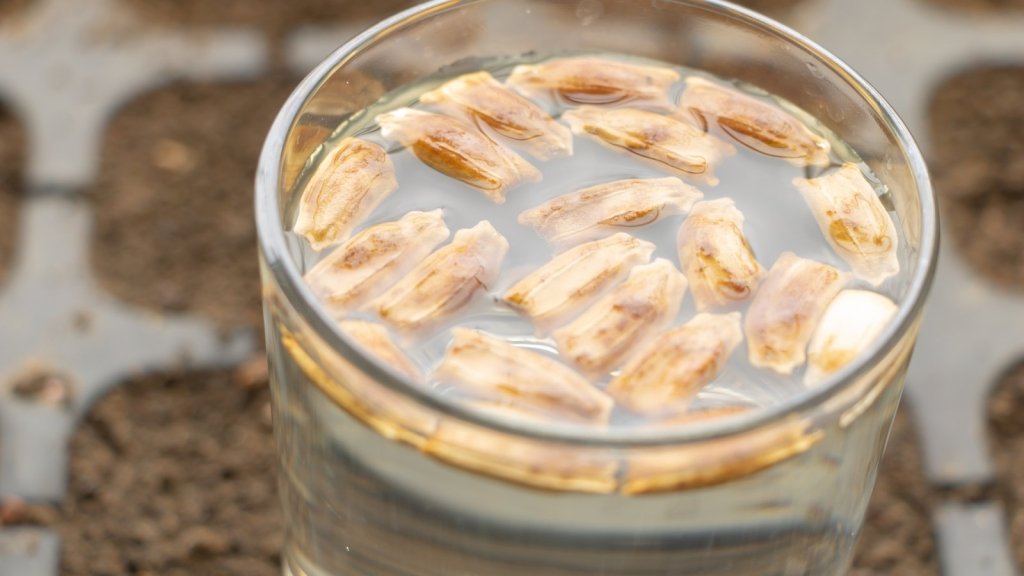
Soaking softens the coat of large seed and lets water reach the embryo quickly, so peas, beans, broad beans, corn, okra, luffa, beetroot and silverbeet clusters, nasturtiums and parsley can come up a few days earlier and more evenly. Gardening Australia suggests an overnight soak for peas, beans and corn. Beetroot and luffa are often given 24 hours, and parsley overnight because it is slow.
Keep expectations modest. In a simple side-by-side trial on peas, soaking sped germination a little and made no difference to the size of the plants a few weeks later. Treat 24 hours as the ceiling, because seed left longer can ferment and rot, and sow soaked seed straight away into moist soil. Skip soaking for small seed, which turns into an unsowable paste, and for supersweet corn, which is easily damaged by cold water and cold soil. The old float test is a myth for most seed: in simple trials, floaters have germinated about as well as sinkers.
Scarification: opening a hard coat

Scarification means deliberately weakening a hard seed coat so water can enter. It suits sweet peas, lupins, wattles and other pea-family natives such as hardenbergia and kennedia. Other hard-coated seed that benefits includes canna, morning glory, luffa and passionfruit, and, optionally, hibiscus and rosella. A quick overnight soak tells you which seeds need it: any that swell have taken up water and can be sown as they are, and the ones that stay hard get treated.
The mechanical method is simplest. Rub the seed between two sheets of fine sandpaper, or file one spot with a nail file until the paler inner layer just shows. For larger seed, chip a tiny flake from the coat with a sharp knife on the side away from the eye, working away from your fingers. One small opening is enough, and a scratch that reaches the embryo kills the seed.
The hot-water method is the standard for wattles and their relatives. Boil the kettle, take it off the heat, pour the water over the seed in a heatproof jug on a stable bench, and leave it to cool, or overnight for most wattles. Sow the seed that has swollen and treat the rest again. Some species are sensitive and get one minute in the water before cooling, and one study in the journal Australian Forestry found water at about 80°C for five minutes gave the best result for black wattle, so when unsure, test a pinch first. Whichever method you use, sow the same day, because a seed with an open coat will rot or dry out if left. Acid scarification is an industrial method using concentrated sulfuric acid, and it has no place at home.
Cold stratification: a fridge winter for sleeping embryos
Cold stratification gives a physiologically dormant seed the cold, moist spell it is waiting for. The cold has to happen while the seed is damp; a dry packet in the freezer is just storage. Mix the seed with an equal volume of just-damp vermiculite, sand or coir, or lay it on damp paper towel. Seal it in a labelled bag with the date in and the date due out, and put it in the fridge, ideally the crisper, at about 1 to 5°C. Check it weekly, bin anything mouldy and rinse the rest, and pot up any seed that sprouts early.
Duration depends on the species. Australian retailers default to four to eight weeks. Alpine and semi-alpine natives such as snow gum and some banksias want one to three months, and published research on Australian alpine herbs found some species needed at least eight weeks. Apple pips need at least 60 days. Echinacea and some poppies are partial cases where a chill can help but is not essential. Highly domesticated vegetable and annual flower seed does not need it and can be pushed into germinating early by mistake.

Smoke and light: two more cues for natives and fine seed
Many Australian natives wait for smoke. Kings Park researchers in Perth found smoke improved germination in 45 of 94 Western Australian species tested, and later identified the active compound, named karrikinolide from the Noongar word for smoke. Smoke water and smoke-impregnated vermiculite are sold for home use: soak seed for about 12 hours in smoke water diluted one part in nine, or sprinkle smoke vermiculite over the tray and water it in. Families that respond include the proteas, boronias and heaths. Wattles want hot water instead, and most eucalypts need no treatment at all, though alpine species such as snow gum benefit from a cold spell first.
Light is a cue too. Lettuce, petunias, impatiens and begonias germinate better with light and are pressed onto the surface rather than buried, while calendula, phlox and verbena prefer the dark. Our guide to sowing depth covers the rest.
Timing across Australia's climate zones
Count backwards from the sowing window: the sowing month minus the stratification weeks is the day the bag goes into the fridge.
- Tropical (Darwin in the Northern Territory, Cairns and Townsville in Queensland): winter never delivers a natural chill, so stratification is fridge-only, and few cold-climate perennials persist anyway. Hot-water treatment of wattle seed works year round; sow natives at the start of the dry season.
- Subtropical (Brisbane and south-east Queensland, northern New South Wales): winters are too mild for outdoor stratification. Bag seed in June or July for August sowing.
- Arid and semi-arid (Alice Springs in the Northern Territory, Broken Hill in New South Wales, Mildura in Victoria, Kalgoorlie in Western Australia): stratify in May and June for a July sowing. The cold winters of the southern inland can chill autumn-sown perennials naturally, but only if the seedbed stays moist.
- Temperate (Sydney and the New South Wales coast, Melbourne in Victoria): bag seed in June for late August sowing. In inland Victoria an autumn outdoor sowing of poppies and echinacea often does the job on its own.
- Mediterranean (Perth and southern Western Australia, Adelaide in South Australia): stratify from June for a late August start, and sow hot-water-treated wattles and smoke-treated natives in autumn so the winter rains do the watering.
- Cool and alpine (Tasmania, Canberra in the ACT, Ballarat in Victoria, Orange and Armidale in New South Wales, Stanthorpe in Queensland): the one zone where an autumn outdoor sowing is a genuine natural stratification. Otherwise bag seed in July for a September or October sowing.
Safety: hot water, blades and treated seed
Only the seed goes into the hot water, never your fingers, and the jug stays on a stable bench away from children until it has cooled. Chip and file away from your body, one small flake at a time, and leave acid scarification to industry. Some commercial seed is dressed with a fungicide such as thiram, which is dyed to show it: never eat or sprout treated seed, wear gloves, wash your hands, and pour soaking water down the drain rather than onto food crops. Morning glory seed is poisonous if eaten. Smoke water is a strong, tarry concentrate, so store it labelled and out of reach.
Frequently asked questions
Do I need to soak my seeds before sowing?
Usually no. Soaking gives large, thick-coated seed a few days' head start, but it must be sown at once, and small seed is better sown dry.
Do good seeds sink and dead seeds float?
No, that is a myth for most seed. The exception is hard-seeded wattles and peas after hot-water treatment, where the seed that fails to swell is usually infertile.
How hot should the water be for wattle seed?
Near boiling, poured over the seed and left to cool, overnight for most wattles. Sensitive species get about a minute. Test a small batch if the packet does not say.
How long do seeds need in the fridge?
Four to eight weeks at 1 to 5°C is the usual starting point for the few vegetable and flower seeds that need it. Alpine natives and apple pips want longer, one to three months, and apple pips at least 60 days.
Can I stratify in the freezer?
No. Stratification is cold and moist at fridge temperature. Freezing wet seed can kill it.
Which native seeds need smoke?
Many proteas, boronias, heaths and their relatives. Wattles need hot water instead, and most eucalypts germinate without any treatment.
Treat the few seeds that need it, leave the rest alone, and a packet of stubborn sweet peas or wattle seed stops being a mystery and becomes a bed of plants.
Related growing guides
- 21 reasons why your seeds did not germinate
- How long do seeds last?
- Everlasting daisies: the toughest Australian native flowers
Ready to sow? Browse our sweet pea seeds, native seeds and pea seeds.