
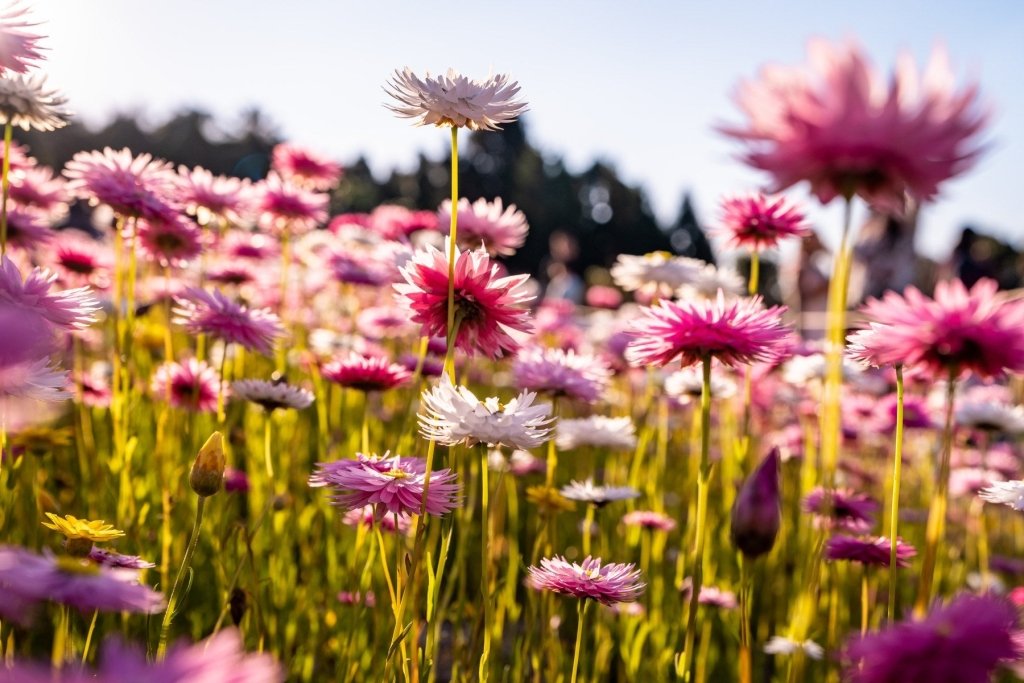
The short version: Everlasting daisies, the papery native daisies also known as paper daisies or strawflowers, are among the easiest and toughest flowers you can grow from seed. Give them sun, free-draining soil and not much else, and they reward you with masses of long-lasting blooms that pollinators love and that dry beautifully for the vase. Sow them in autumn or spring depending on your zone, go easy on the fertiliser, and they will largely look after themselves.
If you want a big, cheerful result for very little effort, it is hard to beat an everlasting daisy. These are tough Australian natives that shrug off heat and dry spells better than most garden flowers, and a single packet of seed can turn a bare, sunny patch into a haze of colour that lasts for weeks and then carries on, dried, long after.

What are everlasting daisies?
Everlasting daisies are a group of Australian native daisies whose flowers feel papery to the touch, which is exactly why they last so well. The best known is the golden everlasting (Xerochrysum bracteatum), the bright yellow strawflower you will see in gardens and bouquets, and the pink and white paper daisies (Rhodanthe species) that carpet the ground in a good wildflower season.
The name says it all. The colourful part is not soft petals but stiff, straw-like bracts that hold their shape and colour as they dry, so the flowers seem to last forever, on the plant and off it.

Why they are worth growing
The first reason is how tough and forgiving they are. Everlasting daisies handle heat and dry spells better than many ornamentals, and cope with leaner soils than most cut flowers, which makes them a water-wise and forgiving choice once established. They still flower best with some water through a long dry spell, but they ask far less than most.
The second is what they bring with them. The open, daisy flowers are a magnet for pollinators, including native bees, hoverflies and butterflies, so a patch quietly does the whole garden good. On top of that they are superb as cut flowers, and once dried they hold their colour for months in a wreath or arrangement, true to the name.

Growing them from seed
This is the easy part. Everlasting daisies grow readily from seed sown straight where they are to flower, or raised in punnets and planted out. The main thing they ask for is an open, sunny spot and soil that drains freely, since the one thing they dislike is wet feet.
Scatter the fine seed over a prepared bed and barely cover it, keeping the soil just moist until the first green shoots appear, then ease right off the hose as they get going. Timing is the one part that shifts with where you live: in warm and dry zones autumn sowing gives a long spring display, while in cool and temperate areas spring sowing works well once the frosts have passed.

Go easy on the fertiliser
Here is the one thing that trips up newcomers: more is not better. Everlasting daisies do not need a rich diet, and a free-draining bed with a little compost is usually plenty. If you do feed, a light, slow-release application is enough, and the Botanic Gardens of Sydney guide to growing paper daisies is a good reference for getting them established.
These daisies are not fussy about phosphorus themselves, but if you also grow phosphorus-sensitive natives such as grevilleas and banksias nearby, going easy on high-phosphorus fertiliser is a sound habit across the whole bed. Either way, overfeeding the daisies tends to give you soft, leafy plants and fewer of the flowers you are actually after.

Picking and drying for the vase
This is where the everlasting really earns its name. For drying, pick the flowers in bud or just as the bracts begin to part, when the colour is bright but the centre is still tight, since they continue to open as they dry. Strip the leaves, tie the stems in small bunches, and hang them upside down somewhere warm, dark and airy.
In a week or two you will have stems that hold their colour for months, ready for a winter arrangement when the garden outside is bare. As cut flowers in water they last a good long while too, far longer than most blooms.

Everlasting daisies across Australia
These are some of the few flowers that genuinely suit every corner of the country, with only the timing changing:
- Mediterranean (Perth, southern WA, Adelaide): their heartland, and the stars of the famous WA wildflower season; sow in autumn for a spectacular spring.
- Temperate (Sydney, Melbourne, Canberra): sow in spring after frost, or autumn in milder spots, for a long summer show.
- Subtropical (Brisbane, Sunshine Coast): grow through the cooler, drier months and give them excellent drainage.
- Tropical (Darwin, Cairns): the hardest zone for these daisies, since they dislike humidity; grow them through the dry season in a raised, very free-draining bed and expect a shorter display than further south.
- Arid and semi-arid (Alice Springs, Mildura): right at home, asking little more than sun and the occasional deep drink.
- Cool and alpine (Tasmania, the tablelands): sow in spring, choose a warm sunny position, and enjoy them through summer.

So clear a sunny, well-drained patch, scatter some seed, and then mostly leave them be. You can browse our native seeds for everlasting daisies and other hardy natives, and if you are new to raising plants from seed, our tips for beginning seed gardeners will set you up well.
For the effort of scattering a packet of seed, everlasting daisies give back more colour, for longer, than almost anything else you can sow. They are the kind of plant that makes a beginner look like an old hand.
Frequently asked questions
Are everlasting daisies Australian natives?
Yes. They are a group of native daisies, including the golden everlasting (Xerochrysum bracteatum) and the pink and white paper daisies (Rhodanthe species), all well suited to Australian conditions and famous for their papery, long-lasting flowers.
Are everlasting daisies easy to grow from seed?
Very. They are one of the most forgiving flowers to raise from seed, asking mainly for full sun and free-draining soil. Sow where they are to flower or raise them in punnets, barely cover the seed, and keep it just moist until the seedlings appear.
When should I sow everlasting daisy seed?
It depends on your climate. In warm, dry and Mediterranean areas, autumn sowing gives a long spring display, while in cool and temperate zones spring sowing after the last frost works well.
Do everlasting daisies need fertiliser?
Very little. They evolved in lean soils, and many natives dislike too much phosphorus, so heavy feeding does more harm than good. A free-draining bed with a little compost is usually enough, and any feed should be a low-phosphorus native blend used sparingly.
How do I dry everlasting daisies?
Pick the flowers just as they begin to open, strip the leaves, tie the stems in small bunches, and hang them upside down somewhere warm, dark and airy for a week or two. They will hold their colour for months.
Do everlasting daisies come back every year?
It depends on the type. Many paper daisies (Rhodanthe) are annuals that flower, set seed and die in a season, though they often self-sow for the next year. The golden everlasting occurs in both annual and perennial forms, and many garden cultivars behave as short-lived perennials or subshrubs in a sunny, well-drained spot, though they are often best treated as annuals to keep the display dense.
Related growing guides
- Self-Seeding Flowers That Come Back Every Year
- Eight Easy Cut Flowers to Grow From Seed in Australia
- A Beginner's Guide to Growing Annual Flowers from Seed
Ready to plant? Browse our Flower Seeds.