
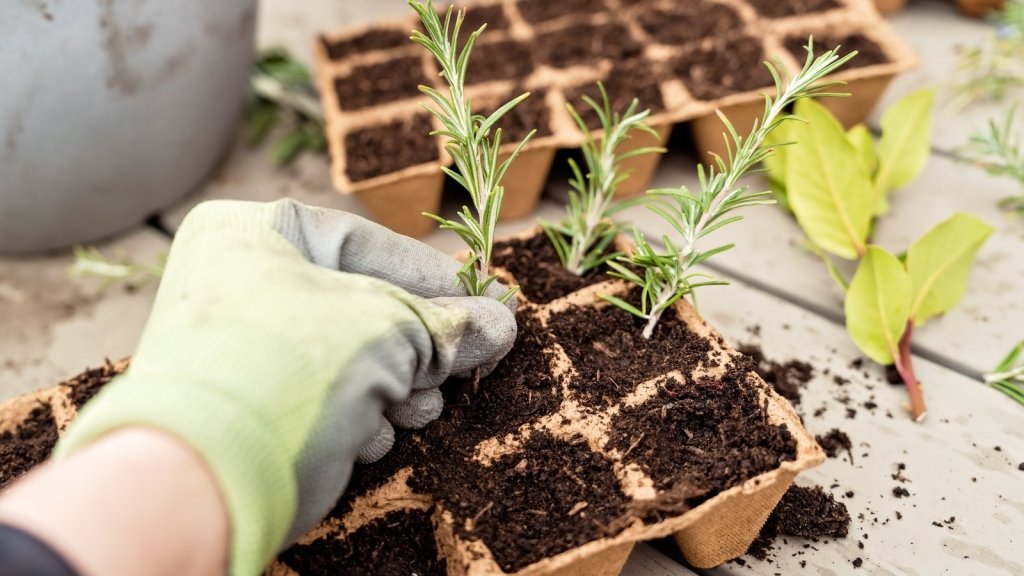
The short version: A stem cutting is a piece of shoot persuaded to grow its own roots, giving you an exact copy of the parent plant. Softwood cuttings are taken from spring growth, semi-hardwood from late summer to autumn, and hardwood from dormant winter wood. Cut just below a node, strip the lower leaves, push the cutting into a free-draining mix, keep it humid and out of direct sun, and most herbs and common garden plants root in a few weeks to a few months. Rooting hormone is optional for easy plants and useful for hard ones.
Every spring prune leaves a small heap of rosemary or salvia on the bench that is too good to bin. Those prunings are next year's plants, and turning them into rooted cuttings costs a pot of sand and a little patience.
Cuttings also do something seed cannot. A plant grown from a cutting is genetically identical to its parent, so the lavender that thrives in your soil, or the tomato with the flavour you like, comes back exactly as it was.
Three kinds of cutting, and the season for each
Cuttings are named for how mature the stem is when you cut it, and that sets the timing. Softwood cuttings are the soft, whippy tips of the current season's growth, taken in spring and early summer. They root fastest, often in two to four weeks with a little bottom heat, but they wilt and rot easily and are frost tender. Semi-hardwood cuttings are taken from late summer into autumn, once the base of the shoot has firmed and started to turn brown while the tip is still flexible. They are slower but tougher, and they suit rosemary, lavender, sage, thyme, bay and hydrangea. Hardwood cuttings are fully mature, leafless stems of deciduous plants taken in winter while the plant is dormant, and they can take two to six months to root.
Soft, non-woody plants such as basil, coleus and pelargonium give herbaceous tip cuttings almost any time they are growing. Tomato side shoots snapped out while pruning are cuttings too, and they root in a couple of weeks.
Plants that strike easily
Good beginner subjects among the herbs are rosemary, lavender, sage, thyme, oregano, mint and basil. In the flower garden, salvia, pelargonium, fuchsia and hydrangea strike readily, and roses and currants root well from hardwood cuttings. Blueberries are harder work and are usually mound layered instead. In the vegetable patch, tomato laterals and sweet potato vine are the easy ones. Sweet potato is the easiest of all: a 20 to 30 cm length of vine with the lower leaves stripped, pushed into warm moist soil, is a new plant. Our guide to sweet potato slips has the detail.

Rooting hormone: when it helps and how to use it safely
Rooting hormone is a synthetic form of the auxin plants make themselves, sold in Australia as gels and powders. Gels are graded by strength for softwood, semi-hardwood and hardwood cuttings, and powders come in similar grades. It lifts the strike rate and speed on hard-to-root subjects such as roses, fruit bushes and mature woody shrubs. Most herbs, pelargoniums, hydrangeas and hardwood cuttings root well without it.
Use it the way the label directs. Tip a little into a separate dish, dip only the base of the cutting, shake off the excess, and throw the leftover out rather than returning it to the container. Never dip cuttings straight into the pack, because that contaminates the whole supply. Keep it away from children and pets, avoid getting it on your skin or in your eyes, and wash your hands afterwards.
Honey and cinnamon are often suggested as natural substitutes. Honey contains no auxin. A University of Hawaii trial found it helped easy plants about as much as no treatment did and fell well behind synthetic hormone on a woody hibiscus. Its value, and cinnamon's, is antibacterial rather than root promoting. Fine on easy cuttings, not a substitute on hard ones.
How to take a cutting, step by step
- Choose a healthy, pest-free, non-flowering shoot of the right maturity for the season. Work in the cool of the morning, keep material in a damp bag, and strike it the same day.
- Wipe your secateurs with methylated spirits or dip them for 30 seconds in one part household bleach to ten parts water, and use a clean pot.
- Cut a 10 to 15 cm length, or 5 to 10 cm for soft herb tips, then re-cut the base just below a node on a slight angle.
- Strip the leaves from the lower half to two thirds, pinch out the soft tip, and halve any large leaves to slow water loss.
- For hardwood or stubborn subjects, slice a thin sliver of bark, about 1 to 2 cm long, from one side of the base.
- Dip the base in hormone if you are using it.
- Dibble holes in a moist, free-draining mix such as washed propagating sand, perlite, coir or a seed-raising mix, and push each cutting in by about a third of its length. Several cuttings around the edge of one pot is fine.
- Water in, then cover with a clear bag or a cut-off drink bottle to hold humidity. Rose hardwood cuttings are the exception and prefer no cover.

Aftercare, and knowing when the roots have formed
Bright, indirect light and steady warmth do most of the work. Around 18 to 24°C suits most cuttings, and a heat mat under softwood and semi-hardwood cuttings can halve the wait. Keep the mix moist but never soggy, because rot, not drought, is the usual cause of failure. Lift the cover for a few minutes every couple of days to let the air move, and pull out anything that blackens.
Do not tug the cuttings up to look. A gentle rock that meets resistance, or fine white roots showing at the drainage holes, tells you roots have formed. Softwood cuttings may be there in two to four weeks, soft herb tips in three to six, semi-hardwood in a month or more, and hardwood over the winter and into spring. Pot the rooted cuttings into small pots of good potting mix, water with seaweed solution, and harden them off over a fortnight before they face full sun and wind.
Timing across Australia's climate zones
- Tropical (Darwin in the Northern Territory, Cairns and Townsville in Queensland): herbs, sweet potato and most shrubs strike from softwood or semi-hardwood cuttings whenever they are growing, which is most of the year. Use a very open mix and ventilate covers in the wet season, when rot moves fast.
- Subtropical (Brisbane and south-east Queensland, northern New South Wales): softwood from September to December, semi-hardwood from January to April, and hardwood cuttings of deciduous plants from June to August.
- Arid and semi-arid (Alice Springs in the Northern Territory, Broken Hill in New South Wales, Mildura in Victoria, Kalgoorlie in Western Australia): softwood in early spring before the heat, semi-hardwood in autumn once it breaks, hardwood in winter. Shade and a humidity cover are not optional here.
- Temperate (Sydney and the New South Wales coast, Melbourne in Victoria): softwood from October to December, semi-hardwood from January to March, hardwood from June to August when the deciduous plants are bare. Keep softwood cuttings out of frost in inland districts.
- Mediterranean (Perth and southern Western Australia, Adelaide in South Australia): softwood from September to November before the dry, semi-hardwood from February to April, hardwood in winter. Lavender is best taken after flowering.
- Cool and alpine (Tasmania, Canberra in the ACT, Ballarat in Victoria, Orange and Armidale in New South Wales, Stanthorpe in Queensland): softwood in November and December on the later flush, semi-hardwood in February and March, hardwood after leaf fall. Bottom heat makes a real difference in this zone.
A word on the law, biosecurity and sap
Many named cultivars carry Plant Breeder's Rights. Under Australian law, propagating a protected variety privately for your own garden is not an infringement, but selling or trading the plants is, so keep cuttings of labelled varieties at home. Moving cuttings between states can also be restricted: Western Australia and Tasmania treat them as nursery stock that needs inspection, and grapevine material cannot leave phylloxera zones untreated. Check the interstate quarantine rules and the receiving state's biosecurity department before posting cuttings interstate. Finally, wear gloves and eye protection with plants that bleed irritant sap, such as euphorbias, oleander and brugmansia, and wash your skin if you touch it.
Frequently asked questions
Do I need rooting hormone?
Not for most herbs, pelargoniums, hydrangeas or hardwood cuttings. It improves results on roses, fruit bushes and harder woody plants, especially semi-hardwood cuttings.
How long until my cuttings root?
Softwood two to four weeks, soft herb tips three to six weeks, semi-hardwood a month or more, hardwood two to six months.
Why did my cuttings turn black and mushy?
Rot, from wet airless mix, dirty tools or leaves buried in the mix. Use a sandy, free-draining mix, sterilise your secateurs and keep the mix moist rather than wet.
Can I take cuttings from a plant with a Plant Breeder's Rights label?
For your own garden, yes. You cannot sell or trade them without a licence.
Can I post cuttings to a friend interstate?
Only after checking the receiving state's rules. Western Australia and Tasmania inspect and certify nursery stock, and some zones ban grape and fruit fly host material outright.
Is honey a rooting hormone?
No. It has antibacterial properties that may protect the cut, but no auxin. It is fine for easy plants and no help on hard ones.
Save the prunings, keep the mix damp and the sun off, and by the end of the season the bench of odd pots will have turned into a row of plants you did not have to buy.
Related growing guides
- How to sprout sweet potato slips from a tuber
- Regrowing vegetables from kitchen scraps
- Lavender from seed in Australia
Prefer to start from scratch? Browse our herb seeds and perennial flower seeds, and the gardening tools that make clean cuts.