Maca (Peruvian Ginseng) - 25 Seeds
Lepidium meyenii
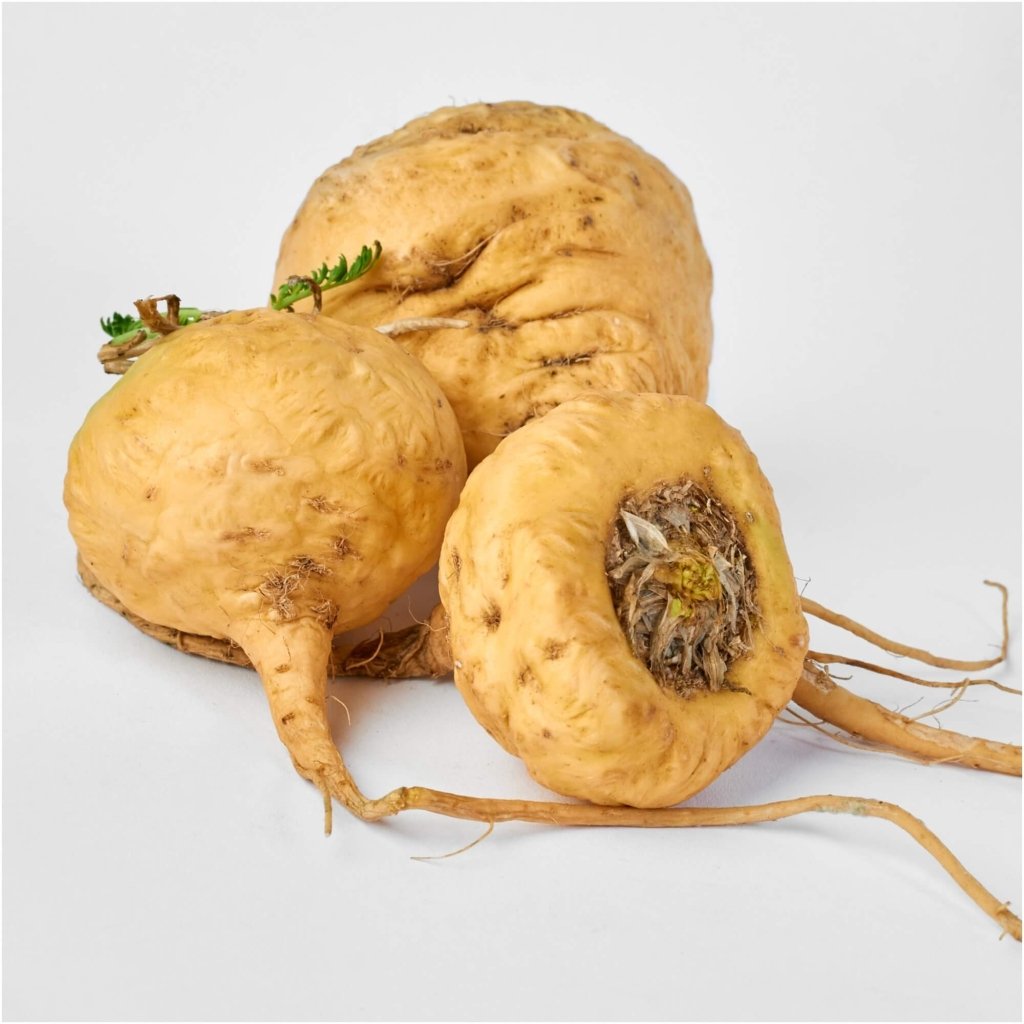
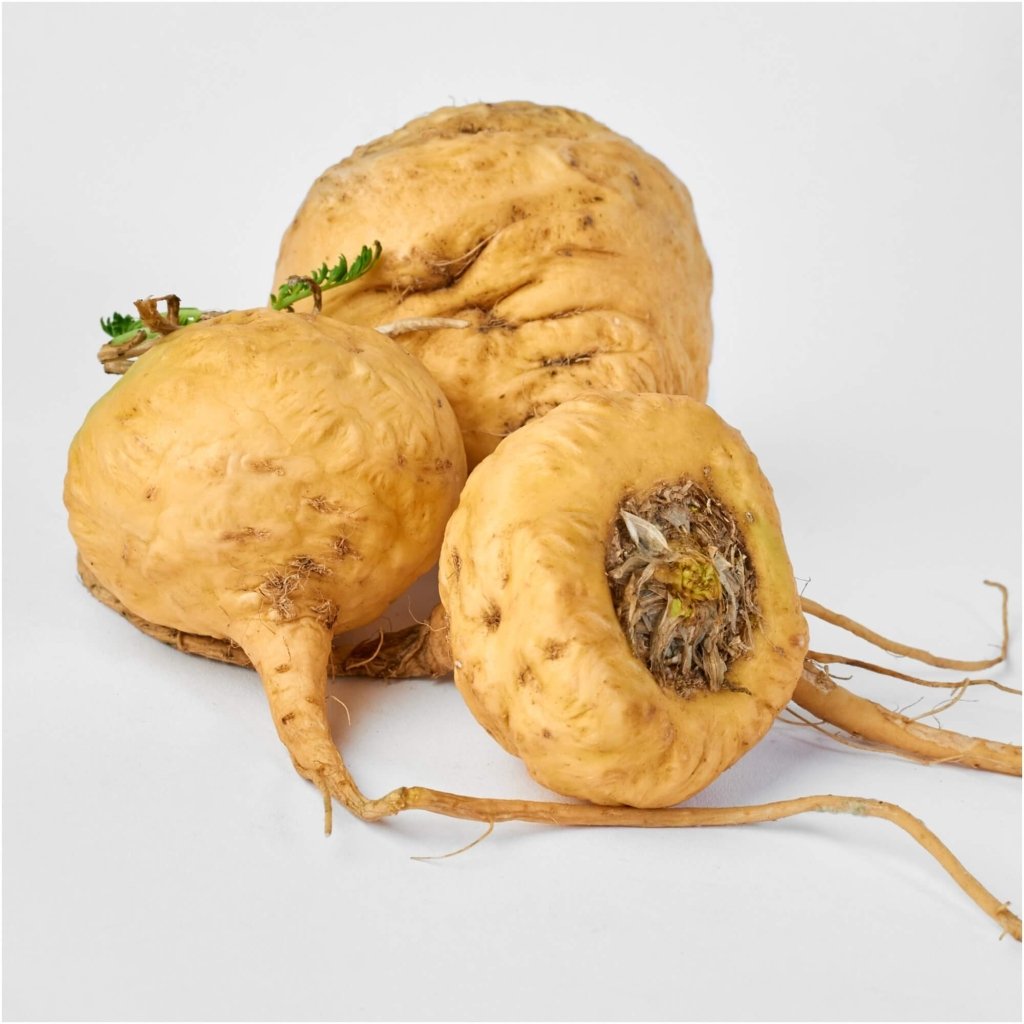
Maca is a hardy root crop that comes from the high Andes of Peru, where it has been cultivated for centuries. It belongs to the cabbage family (Brassicaceae), like radish and turnip, and forms a swollen root that can be harvested and eaten. The taste is earthy with a hint of nuttiness.
In different cultures, it is known as Peruvian Ginseng, Lepidium meyenii (its botanical name), or simply Maca root.
How to Grow
-
Sowing depth: On the surface, pressed in, or no more than 5 mm deep
-
Plant spacing: 10-15 cm between plants
-
Row spacing: 30-40 cm between rows
-
Germination time: 5-21 days, depending on soil temperature
-
Optimal germination temperature: 15-20 °C
-
Soil type: Loose, well-drained soil with good fertility. Sandy or loamy soil is best for root development. Aim for a neutral pH (6.0-7.5).
-
Watering: Keep the soil evenly moist, especially in the early stages. Avoid waterlogging, which can rot the roots.
-
Fertiliser: Add compost or aged manure before planting. Light side-dressings of organic fertiliser during growth will support healthy roots. Too much nitrogen encourages leafy growth at the expense of roots.
-
Sunlight: Full sun. Maca tolerates cooler conditions better than heat.
Harvest
-
Roots are ready in about 6-9 months after sowing.
-
Harvest when roots are firm and 3-5 cm in diameter.
-
Leaves are also edible when young and can be used like other leafy greens.
Possible Uses
-
Roots can be roasted, boiled, or dried.
-
Traditionally, maca roots are dried and ground into a flour for cooking or baking.
-
Leaves can be picked young and eaten raw or cooked.
Sold as seed for home garden growing only. We do not sell this as a food, a tea, a herbal preparation or a medicine, we give no preparation or dosage instructions, and we make no health claim of any kind. Any historical information is offered as garden history only. Seek advice from a qualified health practitioner before using any plant.