
|
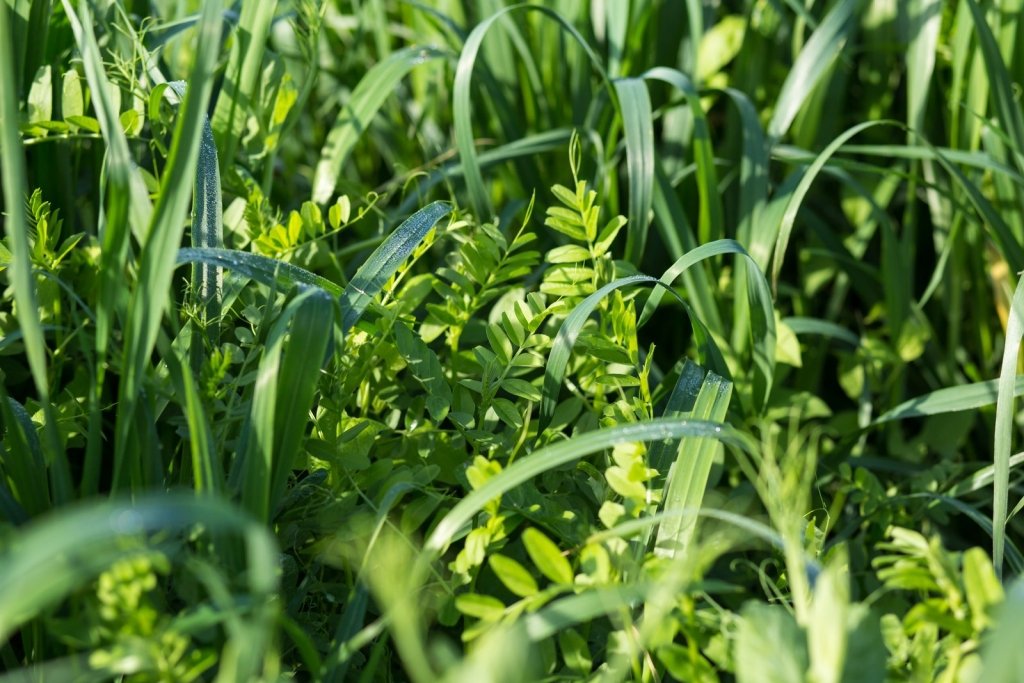
The short version: A cover crop is a fast-growing crop you sow to feed and protect your soil rather than to harvest. When it is chopped and returned to the bed, either as mulch or dug in, it feeds the soil as it breaks down. For many southern and temperate Australian gardens, the main window is late summer to autumn once the worst heat has passed. Warm-season covers can also be grown in spring and summer where there is enough moisture. Let the crop grow for a few weeks to a few months, then cut it down before it sets seed so it feeds the soil instead of becoming a weed. |
It is easy to think of an empty bed as a bed at rest. In practice, bare soil tends to compact, dry out and grow weeds, and much of its life can quietly fade between crops. A cover crop is a gentle way to keep that soil working for you, and it asks very little in return.
Home gardeners sometimes assume cover crops are a broadacre farming thing, suited to paddocks rather than backyards. They scale down well, though. A single raised bed or a small patch between summer and winter crops is plenty of room to see the benefit.
What a cover crop, or green manure, does
A cover crop is grown to improve the soil rather than to be eaten. Green manure is the term often used when that crop is chopped and returned to the bed, either by digging it into the top layer of soil or leaving it on the surface as mulch.
The benefits tend to stack up together. A living cover protects the soil surface from heavy rain and harsh sun, which can help hold structure and reduce erosion. The roots feed soil life and can improve the way water and air move through the bed. A leafy cover can crowd out weeds while it grows. And when the crop is returned to the soil, it adds organic matter as it breaks down, which many gardeners find leaves the bed easier to work.

Which cover crops suit Australian gardens
Most cover crops fall into a few simple groups, and many gardeners sow a mix to get more than one benefit at once. It is worth browsing the cover crop and soil builder range to see what suits your garden and season.
• Legumes such as field peas, faba beans, lupins, vetch and clover. These can fix nitrogen when the right soil bacteria are present in nodules on their roots. For best results, use the correct inoculant for the legume you are sowing, especially in new beds, imported soil mixes, raised beds, or gardens where that type of legume has not grown before. The nitrogen mostly becomes useful to the following crop as the plant material breaks down.
• Cereals and grasses such as oats, barley and cereal rye. These produce plenty of leaf and fibrous root, which is useful for bulk organic matter and quick groundcover. Cereal rye is the grain Secale cereale, not perennial ryegrass, which is a different plant and not usually something you want spreading through a vegetable bed.
• Brassicas such as mustard and tillage or forage radish. Their roots can help open tighter soil, but they are not a cure for serious compaction on their own. If you use a brassica cover, avoid planting broccoli, cabbage, cauliflower or other brassica vegetables straight after it.
• Buckwheat, a warm-season cover that grows quickly and flowers early. It is frost-tender, so keep it for the warmer months rather than a cold-zone winter.

When to sow, by climate zone
Australia covers a wide range of winters and summers, so timing matters more than any single calendar rule. Much online gardening advice is written for the Northern Hemisphere, so use it for the principles, not the dates.
• Tropical areas, including Darwin and the Top End, Cairns, Townsville and far north Queensland, the Kimberley in WA: match the crop to the wet and dry seasons. Warm-season, bulky covers such as millet, sorghum, cowpea or lablab can help protect and rebuild soil during hot, wet or fallow periods. In the dry season, covers may need irrigation. Always check product labels and local biosecurity rules before ordering seed.
• Subtropical areas, including Brisbane and south-east Queensland, the Gold and Sunshine Coasts, coastal northern NSW: mild winters give you a forgiving window for cool-season legumes and cereals from autumn. In the warmer months, look at heat-loving covers such as cowpea, lablab, millet or buckwheat in a spring and summer cover crop mix, depending on what is available and permitted in your state.
• Arid and semi-arid areas, including Alice Springs (NT), Broken Hill (NSW), Mildura (Vic), Port Augusta (SA), Kalgoorlie and the WA goldfields, and the inland of NSW, Queensland, SA and WA: moisture, not cold, is the limit. Sow a cool-season cover in autumn after rain, or only where you can water it, and keep the sowing small. Inland frosts can be sharp, so lean on frost-hardy oats, cereal rye and field peas, and turn the crop in early, before it draws down the moisture your next crop will need.
• Temperate areas, including Sydney and the NSW coast, Melbourne and coastal Victoria: autumn is the classic time for a winter cover such as field peas, faba beans, oats or an autumn and winter cover crop mix. Sow once the summer heat eases. Warm-season covers such as buckwheat suit spring into summer if the bed can be kept moist.
• Mediterranean areas, including Perth and the south-west of WA, Adelaide and the SA coast: autumn-sown covers suit the mild, wet winter pattern well. Check the product label for WA restrictions before ordering, as not every seed line can be sent into Western Australia.
• Cool and alpine areas, including Hobart and Tasmania, Canberra and the ACT, Ballarat and the Victorian central highlands, the NSW tablelands, the Snowy Mountains and the Victorian high country: the season is shorter, so sow in late summer to early autumn to give the cover time to establish before cold weather slows growth. Check the product label for Tasmanian restrictions before ordering.
These are broad groupings, so let your local frost dates have the final say.

How to grow one, then give it back
Rake the bed to a rough level, scatter the seed evenly, rake or press it in lightly, and water it in. A generous sowing gives a thicker cover, which helps shade the soil and reduce weed germination.
The most important job comes at the end. Cut or turn the crop in before it sets seed. Many gardeners do this just before flowering or at early flowering, while the stems are still soft and easy to break down.
1. Chop and drop. Cut the cover down and leave it on the surface as mulch. This suits no-dig beds.
2. Dig it in lightly. Chop the crop first, then turn it into the top few centimetres of soil. Avoid burying large, coarse clumps deeply.
After chopping or digging in, wait around two weeks before planting the next crop. In cool weather, or after a very bulky cereal crop, allow closer to four to six weeks, especially if you plan to direct-sow small seeds.

A few cautions worth knowing
Cut cover crops before they form mature seed, or they can self-sow through your next crop. Use brassica covers thoughtfully in crop rotation, especially if you also grow broccoli, cabbage, kale, cauliflower or Asian greens. Keep buckwheat for warm conditions, as it is frost-tender. And in dry climates, do not let a cover crop grow so long that it uses the moisture your next vegetable crop will need.
None of this is difficult. For most gardeners, a cover crop is one of the easier ways to look after a bed, and a small ritual that pays you back in better soil.
Frequently asked questions
What is a cover crop?
A cover crop is a fast-growing crop you sow to protect and improve your soil rather than to harvest. It shields bare ground, can suppress weeds, and adds organic matter when it is returned to the soil. Home gardeners often grow one in the gap between summer and winter crops.
Is a cover crop the same as a green manure?
They are closely related. A cover crop is any crop grown mainly to protect or improve soil. Green manure usually means that crop is chopped and returned to the bed, either dug into the soil or left on the surface as mulch.
Which cover crops add nitrogen?
Legumes such as field peas, faba beans, lupins, vetch and clover can fix nitrogen when the right rhizobia bacteria are present in their root nodules. In new beds or imported soil mixes, it is worth using the correct legume inoculant. The nitrogen mostly becomes useful to the following crop as the plant material breaks down.
When should I sow cover crops in Australia?
In many temperate and southern Australian gardens, late summer to autumn is the main window for a winter cover crop. Warm-season covers such as buckwheat, millet, cowpea and lablab suit spring and summer where there is enough moisture. In tropical areas, plan around the wet and dry seasons rather than using a southern calendar.
Do I have to dig the cover crop in?
No. You can chop it down and leave it on the surface as a mulch, which suits no-dig beds, or you can turn it into the top few centimetres of soil to speed up breakdown. Both approaches return the organic matter to the bed.
Can I grow cover crops in a raised bed or small garden?
Yes. Cover crops scale down to a single raised bed or a small patch very happily. Even a modest sowing can improve soil structure and crowd out weeds between your main crops.
How long should I wait to plant after turning in a cover crop?
Around two weeks is a useful minimum for soft, leafy material. Allow four to six weeks for bulky cereal crops, cooler weather, or when direct-sowing small seeds.
Will cover crops become weeds?
They can if you let them set seed. Cut or turn them in before mature seed forms, and they are much easier to manage.
Related growing guides
Ready to plant? Browse our Green Manure seeds.