
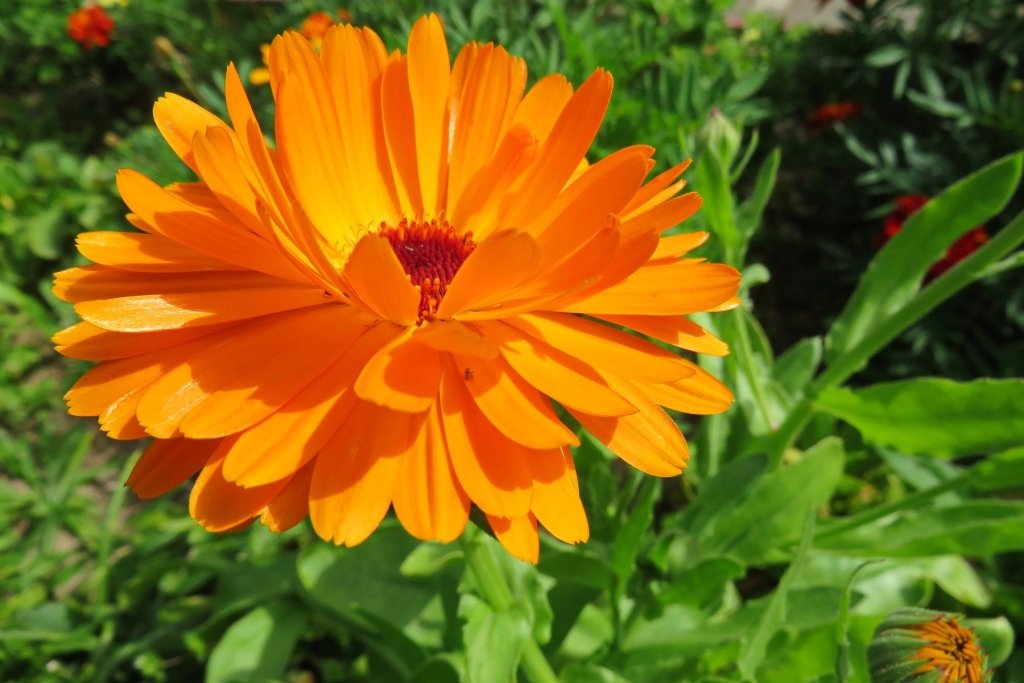
The short version: Calendula is one of the easiest cool-season flowers to grow from seed in Australia, and it shrugs off the cold that stops more tender flowers. Sow it in autumn for winter and spring colour in most zones, give it full sun to part shade and free-draining soil, and deadhead often. It is an annual that self-seeds, so a single sowing can quietly return for years.
While much of the flower garden is winding down for the cold months, calendula is just getting started. Its orange and yellow daisies open on grey mornings when little else is in flower, like a handful of warm light handed back to the garden in midwinter. That is why gardeners have kept a patch going for generations, and it is forgiving and quick from seed. The main thing to get right is the timing: in most of Australia, lean into the cool season.

Why calendula is such a hardy winter flower
Calendula earns its place because it actually prefers the cool. It is a frost-tolerant, cool-season annual in the daisy family, Asteraceae, and unlike frost-tender flowers such as cosmos, a light frost rarely flattens an established plant.
The plant is Calendula officinalis, often sold as pot marigold or English marigold. It grows into a bushy plant, usually 30 to 60 centimetres tall, with flat, open flowers in warm oranges, golds, apricots and creams. The blooms are bee-friendly, and the petals are a long-standing craft and kitchen flower.
When to sow calendula, zone by zone
Sow calendula in autumn across most of Australia for flowers through winter and spring, since it grows best in the milder months and fades in real heat. A spring sowing also suits many areas; timing shifts by zone:
- Tropical (Darwin, Cairns, Townsville): the dry season, roughly April to September, once wet-season humidity eases.
- Subtropical (Brisbane, Sunshine Coast, Coffs Harbour): autumn into winter, dodging mid-summer humidity.
- Arid and semi-arid (Alice Springs, Mildura, Kalgoorlie): autumn and early spring, with steady water as seedlings settle.
- Temperate (Sydney, Melbourne, Canberra): autumn for winter and spring colour. In frost-prone gardens like Canberra, an early autumn sowing can settle before the coldest snap, then pick up as it warms.
- Mediterranean (Perth and southern WA, and Adelaide): autumn is the sweet spot, since the mild, wet winters of Perth and southern WA carry it through to spring.
- Cool and alpine (Tasmanian highlands, Ballarat, Orange, and Stanthorpe, which stays cool despite being in Queensland): sow in late summer and autumn so plants settle before deep winter, then again in spring. Start under cover in the coldest spots.

Sowing the seed and giving it a good start
Calendula is happy sown straight where it is to flower, or raised in trays and planted out. The seed is large and curved, a little like a small pale claw, and a good one to hand a child on a sowing afternoon. It comes up quickly in mild soil. Choose an open spot in full sun to part shade, in free-draining soil with compost or aged manure, since it dislikes sitting wet.
For a head start in a cold zone, our guide to starting seeds indoors covers raising a tray under cover; browse our flower seeds as you plan the bed.

Soil, water and feeding without overdoing it
Calendula is not a hungry plant, so a bed with some compost dug in is usually enough. In poor soil or a pot, feed for flowers rather than leaves: a potassium-leaning feed, such as sulphate of potash or a fish and seaweed blend, encourages buds rather than soft growth that flops and draws aphids.
Water deeply but not too often, letting the top few centimetres dry between waterings, and water at the base in the morning rather than over the leaves to reduce fungal trouble.

Keeping it healthy: pests and a wet-weather watch
The main pests are aphids (Aphididae), slugs and snails, plus a few fungal diseases in damp weather, and most are kept in check if you stay ahead of them. Aphids cluster on soft new shoots and can often be knocked off with a strong spray of water or an insecticidal soap suited to home gardens.
Slugs and snails go for young seedlings on damp winter nights, so clear hiding spots and, if you have the patience, head out with a torch after rain. In humid or crowded plantings, watch for powdery mildew and rust (Puccinia species); space plants for airflow and remove affected leaves.

Picking, deadheading and letting it reseed
Pick and deadhead calendula often and it can flower for months. Every flower you cut, and every spent bloom you snip off, pushes the plant to make fresh buds instead of seed, so a row of calendula and a jug of winter colour on the table go together.
Left alone at the end of the season, it drops seed and returns the next year. It is easy to manage in a bed, but it has naturalised in parts of southern Australia, so deadhead before the seed falls, or grow it in pots, if you garden near bushland or paddocks. If you are planting for the bees too, our guide to planting a pollinator garden pairs nicely with a calendula patch.

For a flower that asks so little, calendula gives back a great deal: warmth when the days are short, armfuls for the table, and seedlings that turn up on their own next year. Tuck a patch where you can see it from a window, and it may become one of the first things you sow each autumn.

Frequently asked questions
Is calendula the same as a marigold?
Not quite. Calendula (Calendula officinalis) is often called pot marigold or English marigold, but it is a different plant from the French and African marigolds (genus Tagetes). Check the botanical name on the packet for true calendula.
Is calendula a perennial or an annual?
Calendula is almost always grown as an annual, dying off after setting seed, although botanically it is a short-lived perennial that can linger in mild, frost-free zones. Either way it self-seeds, so a patch often returns on its own.
Are calendula plants frost tolerant?
Yes. Calendula is a hardy, cool-season flower that tolerates light frost, which is what makes it such a useful winter bloomer. It keeps going through the cold in most zones, though hard alpine frosts can still knock it about.
Are calendula flowers edible?
Calendula petals have a long, traditional history as a culinary flower. If you plan to eat them, only use flowers not treated with pesticides, take care if you have a daisy-family allergy, and check current guidance from Food Standards Australia New Zealand. This is garden information, not food or health advice.
What is calendula good for in the garden, and is it medicinal?
As a garden plant, it brings reliable cool-season colour, draws bees and hoverflies, and makes a long-lasting cut flower. Medicinal or skincare uses sit outside a growing guide, so speak to a qualified health professional.
Are calendula flowers toxic to cats and other pets?
Calendula officinalis is listed as non-toxic to cats and dogs by the ASPCA, but that is not the same as encouraging a pet to eat it. The look-alike Tagetes marigolds can cause mild stomach upset or skin irritation, so do not let pets chew either plant, and check with your vet if yours seems unwell.
How do you dry calendula flowers?
Pick whole flower heads in the late morning once the petals have opened and the dew has dried. Spread them in a single layer on a tray in a warm, airy spot out of the sun until crisp, then store in a jar.
Related growing guides
- Self-Seeding Flowers That Come Back Every Year
- A Beginner's Guide to Growing Annual Flowers from Seed
- Eight Easy Cut Flowers to Grow From Seed in Australia
Ready to plant? Browse our Flower Seeds.