
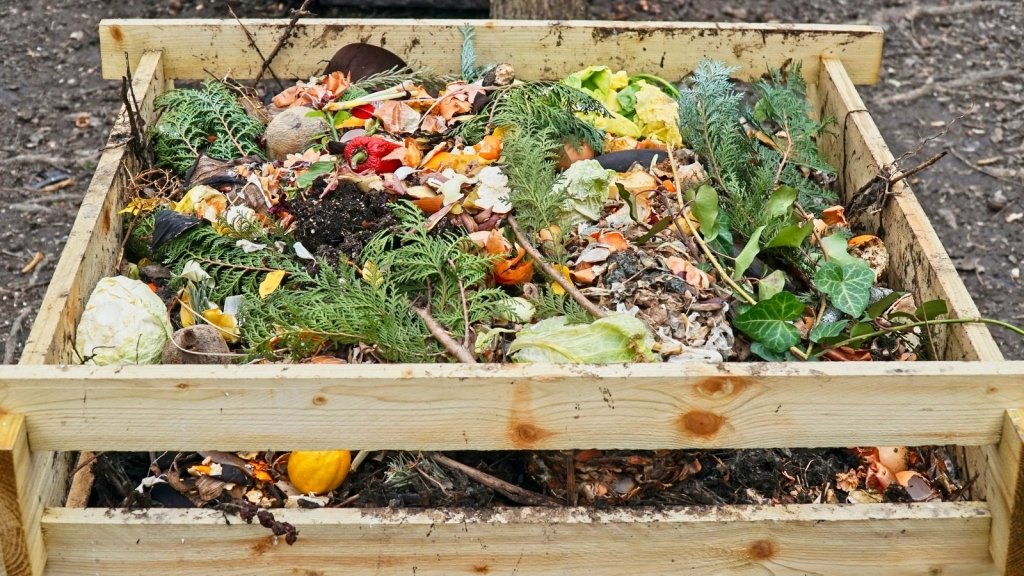
The short version: Compost is what you get when you pile up roughly equal parts of moist green material (kitchen scraps, lawn clippings) and dry brown material (leaves, straw, torn cardboard), keep it damp like a wrung-out sponge, and let air in now and then. Keep meat, dairy, cooked food and pet droppings out, and most problems never start. In a few months, sooner in warm weather, you have dark crumbly compost that can lift almost any Australian garden soil.
Composting has a reputation for being fiddly, all ratios and thermometers and secret recipes. It is not. Fallen leaves rot in the bush without anyone measuring anything, and a compost heap simply gathers that process into one corner of the yard and speeds it up.
The payoff is real. Compost feeds the soil life that feeds your plants, helps sandy soil hold water and clay soil breathe, and keeps a surprising amount of waste out of the bin. Council bin audits find that around half of what goes into the average general waste bin is organic material that could have been composted instead.

What a compost heap actually needs
A heap needs four things: greens, browns, water and air. Greens are the moist, nitrogen-rich ingredients, such as vegetable and fruit scraps, coffee grounds, fresh lawn clippings and soft weeds that have not set seed. Browns are the dry, carbon-rich ingredients, such as autumn leaves, straw, dead plant stalks, shredded newspaper, torn-up cardboard and egg cartons.
The microbes that do the work want both. Too many greens and the heap turns to a wet, smelly sludge. Too many browns and it sits there doing very little for a year. A bucket of browns for every bucket of greens is a good starting point, and up to two buckets of browns if the heap ever gets sloppy.

Setting up the heap
The best spot is on bare soil, in part shade, within easy reach of the kitchen door. Bare soil lets worms and soil organisms move up into the heap, and part shade matters in Australia because full sun dries a heap out fast. A purpose-made bin is tidy, but a wire ring, a bay of old pallets or a plain heap in a spare corner all work.
- Start with a coarse layer of twigs or stalks about 10 to 15 cm deep for drainage and air.
- Add greens, then browns, in layers a few centimetres thick, watering each layer lightly.
- Chop or tear bulky items first. Smaller pieces mean more surface for microbes and a faster result.
- Finish with a handful of garden soil or old compost to seed the heap with microbes, and cover fresh scraps with browns so they do not sit exposed.

Water and air: the two things beginners forget
The heap should feel like a wrung-out sponge all the way through. Squeeze a handful and it should hold together and feel damp, without water running out. In a dry summer that can mean watering the heap when you water the garden, with a lid or an old piece of carpet on top to hold moisture in. In a wet spell, add dry browns and keep the rain off.
Air is the other half. Turning the heap with a garden fork every week or two lets oxygen back in, which keeps the microbes working and keeps smells away. If turning a whole heap is beyond you, poke holes through it with a stake or a length of pipe, and mix coarse browns through the layers from the start.

What to leave out, and why
- Meat, fish, bones, dairy, bread and cooked food. They smell as they rot and they are what draws rats and mice.
- Fats and oils. They coat the material and slow everything down.
- Dog and cat droppings. They can carry parasites that a home heap rarely gets hot enough to kill.
- Diseased plants, and weeds with seed heads or runners. A cold home heap rarely gets hot enough to kill fungal spores, weed seed or fragments of couch, kikuyu and nutgrass, so you would only spread them around the garden.
- Glossy or coated paper, and sawdust from treated timber. Coated papers carry chemicals, and treated pine sawdust carries arsenic, copper and chromium.
- Most wood ash. A light dusting of ash from untreated firewood is fine now and then. Skip briquette, coal, treated or painted wood ash, and never add much, since ash is alkaline and can push the heap's pH too high.
Citrus peel and onion skins are fine in ordinary kitchen quantities. Larger amounts can slow a heap down, since citrus is acidic, so mix them through rather than piling them in one spot. Gum leaves are fine too, just slow. And check your tea bags, since many brands still contain a fine plastic mesh that never breaks down.
Fixing the common problems
- It smells sour or rotten. Too wet, too many greens, or not enough air. Turn it and fork through dry browns. Lime is rarely the answer, and never add it to a heap that is high in fresh greens, since the two together drive off nitrogen as ammonia.
- It smells of ammonia. Too much nitrogen. Add browns.
- Nothing is happening. Usually too dry or too brown. Water it and add fresh greens, or a little aged manure.
- Ants have moved in. The heap is too dry. Water it.
- Clouds of tiny flies. Vinegar flies are a normal part of a working heap. Bury fresh scraps under browns or a little soil.
- Rats or mice. Cut out the foods listed above, and sit the bin on a base of fine galvanised mesh so nothing digs in from underneath.
A heap that steams on a cold morning is not a problem. That is the microbes working, and a hot heap is the one that can kill weed seed and disease. A slow cold heap still makes good compost, it just takes longer and needs the cleaner ingredients.

Knowing when it is ready
Finished compost looks and smells like dark, crumbly soil, with an earthy smell and no scraps you can recognise. An actively turned heap can get there in two to three months in warm weather. A cold, leave-it-alone heap usually takes six months or more, and longer over a cool-zone winter.
A few sticks, corn cobs or avocado seeds left in the mix are normal. Sieve or pick them out and throw them into the next heap. Then spread the compost a few centimetres deep over beds and dig it lightly in, or use it as a mulch around established plants. Our guide to sandy, clay and loam soils explains why organic matter is the fix for every type.
Composting across Australia's climate zones
- Tropical (Cairns and far north Queensland, Darwin and the Top End of the Northern Territory, the Kimberley in Western Australia): heat and humidity speed everything up, but the wet season can waterlog a heap. Keep the rain off and add extra browns.
- Subtropical (Brisbane and coastal Queensland, Coffs Harbour and northern New South Wales): fast and forgiving. Cover fresh scraps well, since vinegar flies breed year round.
- Arid and semi-arid (inland Queensland, Broken Hill and Dubbo in New South Wales, Mildura in Victoria, inland South Australia and Western Australia, Alice Springs in the Northern Territory): drying out is the main enemy. Shade, a lid, and water with the garden.
- Temperate (Sydney and New South Wales, Melbourne and Victoria): steady from spring to autumn, slower through winter. Build a bigger heap before winter so it holds its own warmth.
- Mediterranean (Perth and southern Western Australia, and Adelaide and the Adelaide Plains in South Australia): dry summers mean regular watering and shade, while the wet winter is the easy season.
- Cool and alpine (Hobart and Tasmania, Canberra and the ACT, Ballarat in Victoria, Orange and Armidale on the New South Wales tablelands): a heap almost stops over winter, then wakes up in spring. Insulate it with straw or a cover, and be patient.
A note on masks, gloves and dust
Compost, potting mix and aged manure can carry the bacterium Legionella longbeachae, which causes a form of Legionnaires' disease when the dust is breathed in. State health departments advise wearing a face mask and gloves, dampening dry material before you handle it, opening bags and turning dry heaps outdoors in the open air, and washing your hands afterwards. It is a small habit that greatly reduces a real risk, especially for older gardeners and anyone with a weakened immune system.
Frequently asked questions
Can I compost citrus and onions?
Yes, in normal kitchen amounts, mixed through the heap. Large amounts can slow things down, and worm farms prefer only small amounts of either.
Should I add lime to my compost?
Rarely. Smelly compost is caused by wetness and lack of air, not acidity, and the fix is turning and dry browns. Adding lime to a heap full of fresh greens wastes nitrogen as ammonia.
How do I keep rats out?
Leave out meat, dairy, bread and cooked food, cover fresh scraps, and sit the bin on fine galvanised mesh folded up around the base. Rats usually dig in from underneath.
Can I compost weeds?
Soft weeds that have not set seed are excellent greens. Seeded weeds and runner grasses such as couch and kikuyu should be drowned in a bucket for a few weeks first, or sent out in the council green bin.
What if I have no room for a heap?
A worm farm, a bokashi bucket, a small tumbler or a council food and garden organics bin all work in a courtyard or unit. Our guide to composting in a small garden runs through the options.
Start with a bucket of scraps and a bag of leaves, keep it damp and give it air, and the rest mostly looks after itself. Your local council's composting guide, such as Brisbane City Council's compost at home page, is a good place to check for subsidised bins and local rules.
Related growing guides
- Food for the soil: what around the home can feed your garden
- Trench composting: bury your scraps and let the soil do the work
- Cover crops: how to feed your soil over winter
Ready to put that compost to work? Browse our vegetable seeds and cover crop seeds for a bed that gives back.