
The short version: Almost anything that was once alive and can rot is food for the soil, from peelings and coffee grounds to leaves, lawn clippings, shredded cardboard, aged manure and seaweed. Compost it, bury it, or use it as mulch, and it builds soil structure, holds water and feeds the soil life that feeds your plants. The exceptions are meat, dairy, bones, pet droppings, anything synthetic and anything treated with chemicals, which belong in the bin, not the bed.
A good vegetable garden eats. Every harvest carries goodness out of the soil, and unless something goes back, the beds slowly run down. Bought fertiliser can replace the nutrients, but it cannot replace the organic matter, the dark crumbly stuff that makes soil hold water, drain properly and teem with life. The useful news is that a surprising amount of organic matter passes through an ordinary house and garden every week. Roughly half of what goes into the average general waste bin could have fed the soil instead.

The simple test
Was it once alive, and can it rot? If the answer to both is yes, it can usually feed the soil. That covers plant material from the kitchen and garden, paper and cardboard, natural fibres, and the manure of grazing animals. It rules out plastics, glass, metal and anything synthetic, however cleverly it is labelled. The test needs a few caveats, because some things that were once alive rot badly in a home garden, and some carry passengers you do not want.
From the kitchen
Uncooked fruit and vegetable scraps are the backbone of most home composting. Keep a lidded bucket or caddy on the bench and it fills faster than you expect. Coffee grounds are a good nitrogen source once mixed with other material, and tea leaves are fine, though many tea bags still contain a plastic mesh that never breaks down, so check the brand or empty the leaves out.
Eggshells add calcium but can take a year or more to disappear unless you crush them finely. Egg cartons, paper towel and plain paper bags compost as browns. Citrus and onion scraps are fine in ordinary quantities in a heap or a trench, though worm farms prefer only small amounts.

From the garden
Lawn clippings are rich in nitrogen, so add them in thin layers mixed with dry material rather than a thick wad that mats and turns slimy. Leave out clippings from any lawn treated with a broadleaf or residual herbicide in the past several months, since some residues stay active for up to a year. Prunings, spent annuals, dead flowers, weeds that have not set seed and the leaves of deciduous trees are all excellent, and even slow gum leaves break down in time. Our guide to using autumn leaves covers the biggest seasonal haul.
The one thing a home heap cannot do is get hot enough to kill weed seed or disease, so seeded weeds, runner grasses such as couch and kikuyu, and diseased plant material should go out in the council green bin instead.
Manures, and the two questions to ask
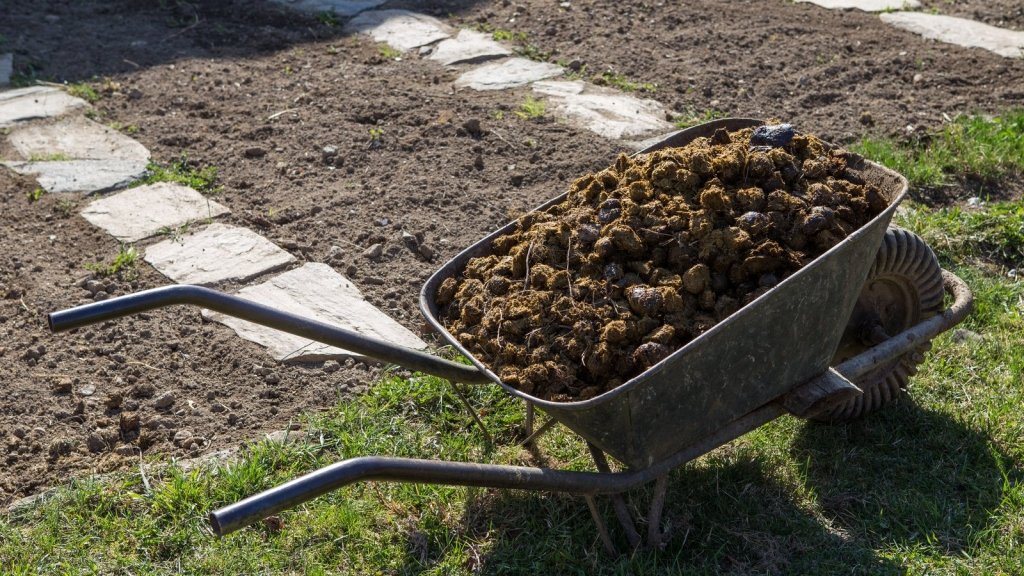
Manure from grazing and browsing animals is some of the best soil food there is. Chook manure and horse manure are rich and fast, and can burn plants if used fresh. Cow, sheep, rabbit and guinea pig manure are milder, though fresh cow, sheep or horse manure can all carry weed seed picked up from the paddock. Age any of them for at least three to six months before they go near a bed, longer for chook and horse manure, or add them to an actively managed hot compost heap. Leave a gap of a few months between digging manure into a bed and harvesting root crops or leafy greens that touch the soil.
Two questions before you accept a free load. First, has the paddock or the hay been sprayed with a broadleaf herbicide? Residues of some pasture herbicides pass through the animal and survive composting, and can stunt tomatoes, beans and other crops for a year or more. Second, is it from a carnivore? Dog and cat droppings can carry parasites that home composting does not reliably kill, so they never go in.

From around the house
- Plain paper and cardboard, shredded or torn and soaked, are a first-rate brown. Skip glossy magazines and coated packaging.
- Natural-fibre fabric, such as worn-out cotton or wool, cut small, will eventually rot, though slowly outside a hot heap. Most modern clothing is blended with synthetic fibre that never breaks down, so check the label.
- Hair and feathers are slow but fine.
- Wood ash from untreated timber is alkaline and best used as an occasional light dusting, never by the bucket, since it can push soil pH up and lock nutrients away. Our guide to soil pH explains why that matters.
- Sawdust and shavings only from untreated timber. Treated pine carries copper, chromium and arsenic, and must never go into compost or soil.
- Vacuum dust and dryer lint are best left out. Modern carpets and clothes are often blended with synthetic fibre that sheds as dust and lint, so treat both as bin, not barrow.
From further afield
Once you start looking, organic matter is everywhere. Stables and riding schools often give manure away, spoilt hay and straw are cheap from produce stores, cafes hand over coffee grounds by the bucket, and many councils sell or give away mulched green waste. Ask the herbicide question about any hay, straw or manure.
Seaweed washed up on a beach is a rich and traditional soil food, but the rules on collecting it vary by state and by beach, and marine parks and sanctuary zones generally prohibit it, so check with your state fisheries authority first and rinse the salt off before use. Pine needles are fine and do not meaningfully acidify soil, whatever the old advice says.

What not to use
Meat, fish, bones, dairy, cooked food and fats are not safe soil food in a home garden, however you bury them. They rot slowly and badly, they smell, and they are what bring rats, mice and foxes. Small bones such as chicken or fish frames can go into a sealed bokashi bucket, which pickles them so they can be buried later, but keep large bones such as beef or lamb bones out altogether. Leather takes years and attracts the same attention. Send the rest out in a council food organics bin if you have one. Diseased plants, seeded weeds, pet droppings, treated timber, glossy paper and anything synthetic all belong in the bin.

Getting it into the soil
There are four ways to use all this material, and most gardens use a mix. A compost heap or bin turns it into finished compost to spread wherever you like. A trench or a compost hole buries it straight into a bed to break down in place. Coarse material such as leaves and straw can go on as mulch and feed the soil from the top down. And a cover crop grows its own organic matter in a resting bed, then gets dug in. If none of that suits, a council food and garden organics bin at least keeps it out of landfill, where it breaks down without air and gives off methane.
Handle it with a little care. Compost, potting mix and aged manure can carry Legionella longbeachae, so NSW Health advises a mask and gloves, dampening dry material before handling it, avoiding the dust and washing your hands afterwards. Gardeners inside South East Queensland's fire ant biosecurity zones should check the National Fire Ant Eradication Program's rules on fireants.org.au before moving soil, manure, mulch or compost off a property.
Feeding the soil across Australia's climate zones
- Tropical (Cairns and far north Queensland, Darwin and the Top End of the Northern Territory, the Kimberley in Western Australia): heavy rain washes organic matter through fast, so feed little and often and keep beds mulched year round.
- Subtropical (Brisbane and coastal Queensland, Coffs Harbour and northern New South Wales): everything rots quickly in the warmth. Keep a steady supply of browns to balance the greens.
- Arid and semi-arid (inland Queensland, Broken Hill and Dubbo in New South Wales, Mildura in Victoria, inland South Australia and Western Australia, Alice Springs in the Northern Territory): organic matter is the scarcest and most valuable thing you can add. Bury it or mulch over it so it does not dry out before it rots.
- Temperate (Sydney and New South Wales, Melbourne and Victoria): feed beds in autumn and spring, and let winter do the slow work.
- Mediterranean (Perth and southern Western Australia, and Adelaide and the Adelaide Plains in South Australia): sandy, water-repellent soils need organic matter more than any other, worked in over several seasons rather than fixed in one.
- Cool and alpine (Hobart and Tasmania, Canberra and the ACT, Ballarat in Victoria, Orange and Armidale on the New South Wales tablelands): add material in autumn so it has the whole slow winter to break down before spring planting.
Frequently asked questions
Can I bury food scraps straight in the garden?
Yes, fruit and vegetable scraps can go into a trench or a compost hole about a spade deep. Keep meat, dairy and cooked food out, cover everything completely, and give the spot a few months before planting hungry crops over it.
Is fresh manure safe to use?
Not straight onto beds. Fresh chook and horse manure can burn plants, and fresh manure from paddocks can carry weed seed. Age it for at least three to six months, or compost it, and ask whether the paddock was sprayed with herbicide.
Can I compost tea bags?
The leaves, yes. Many tea bags contain a plastic mesh that does not break down, so check the brand or empty the leaves out of the bag.
Can I collect seaweed from the beach?
It depends where you live and which beach. Rules and limits vary by state, and marine parks and sanctuary zones generally prohibit it. Check with your state fisheries authority, and rinse the salt off before you use it.
What about wood ash?
A light dusting now and then from untreated wood is fine. Ash is strongly alkaline, so more than that can push soil pH up and lock nutrients away.
Feed the soil and it feeds you back, season after season. For the living version of soil food, our guide to cover crops shows how to grow organic matter in place.
Related growing guides
Grow your own soil food. Browse our cover crop seeds and vegetable seeds.