
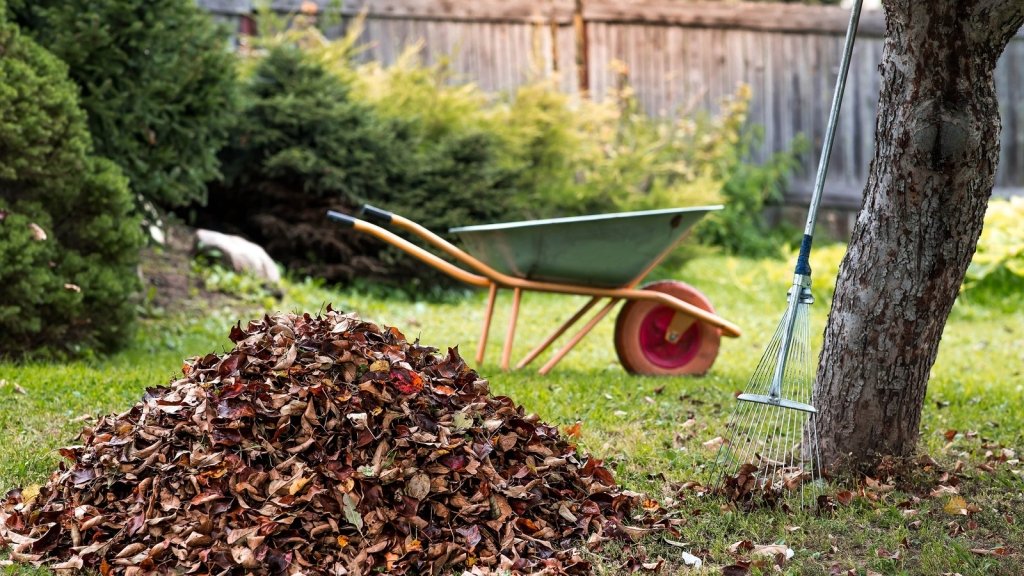
The short version: Fallen leaves are free organic matter, and there are four good uses for them: shred them for mulch, dig them into a resting bed, add them to the compost as browns, or pile them up to make leaf mould. Shred them first where you can, keep the layer to about 5 cm as mulch, and bin any leaves carrying black spot, rust or mildew. In most of Australia the leaf drop runs from March to May, with gum leaves arriving all year.
Every autumn the same thing happens in suburbs from Perth to Hobart. The plane trees and liquidambars let go, the footpaths turn gold, and thousands of bags of leaves go out for the council truck. The garden they came from then gets a bag of bought mulch a few weeks later. The trees spent a whole growing season pulling minerals out of the ground to build those leaves. Send them away and the soil is a little poorer each year. Keep them and the leaves quietly pay it back.

Which leaves you are dealing with
The big autumn drops in Australian gardens come from exotic deciduous trees: plane trees, liquidambars, oaks, elms, maples, ash, ornamental pears, crepe myrtles, and fruit trees and grapevines in the backyard. Jacarandas shed briefly in late winter and spring instead. Most of our native trees, eucalypts above all, are evergreen, so they drop leaves a few at a time all year rather than in one heap.
Gum leaves are still useful. They are slow to break down because of their waxy, oily surface, and fresh ones may hold back the growth of nearby plants until they have weathered or broken down, so use them aged or composted rather than fresh and thick. Camphor laurel, a serious environmental weed along coastal and northern New South Wales and much of coastal Queensland, is best composted thoroughly or binned. Walnut leaves are worth keeping out of vegetable beds.
1. Leaves as mulch
Leaf mulch shades the soil, holds moisture, suppresses weeds and slowly feeds the soil as it rots. The one rule is to shred first. Whole leaves knit together into a slimy mat that sheds water and starves the soil of air, so run the mower over the pile or pass them through a shredder. Spread shredded leaves about 5 cm deep around established plants, keep them clear of stems and trunks, and water the bed before you lay them.

2. Leaves dug into the soil
Digging shredded leaves into a bed you are resting for a season improves its structure and water-holding from the inside, and feeds the worms. Mix them through the top spade depth rather than burying a solid layer.
Give the bed a few months before you plant hungry crops into it. As microbes break down carbon-rich leaves they borrow nitrogen from the soil for a while, which can leave new seedlings pale and slow. The effect passes as the leaves rot. If you would rather plant sooner, compost the leaves instead and dig in the finished compost.

3. Leaves in the compost
Leaves are the ideal brown for a compost heap, the dry, carbon-rich half that balances wet kitchen scraps and lawn clippings. A heap with plenty of leaves layered through it stays open, drains well and rarely smells.
The catch is that leaves alone barely rot. Layer them with greens at somewhere between equal parts and roughly two parts leaves to one part greens by volume, keep the heap damp, and shred the leaves so they do not clump. A big autumn haul is worth bagging dry and storing under cover, so you have browns on hand through summer when the kitchen produces greens faster than the garden produces leaves. Our composting for beginners guide covers the rest of the heap.

4. Leaf mould
When you have more leaves than the heap can take, make leaf mould. It is simply leaves rotted on their own, slowly and coolly, by fungi rather than the hot bacteria of a compost heap. The result is a dark, crumbly, sweet-smelling material that is low in nutrients but wonderful for holding water, improving soil and lightening seed-raising mixes, and it rarely carries weed seed.
- Pile the leaves into a wire-mesh cage, an old compost bin, hessian sacks, or reused bags with holes punched in them, somewhere shaded.
- Wet them thoroughly and keep them damp. Dry leaves do not rot.
- Shred them first if you want it faster.
- Wait. Shredded, damp leaves in a cage can be ready in six to twelve months. Whole, dry leaves can take two years.

The leaves to keep out, and two safety notes
- Diseased leaves. Rose black spot, rust and mildew survive on fallen leaves, so rake those up and bin them rather than mulch or compost them. Peach and nectarine leaf curl is different: the fungus overwinters mainly in the bark and buds of the tree itself, so raking the fallen leaves helps a little but will not prevent it. A copper spray at bud swell in late winter is the control.
- Roadside leaves collect brake dust, tyre wear and oil from the gutter. Use them under ornamentals, not in the vegetable patch.
- Fresh gum and camphor laurel leaves in thick layers can hold back young plants. Age or compost them first.
Burning is rarely an option. In most urban council areas backyard burning of leaves and garden waste is banned or needs a permit, and rules tighten further in the fire season, so check your own council before lighting anything. And in bushfire-prone areas, piles of dry leaves and leaf mulch against the house are fuel. The NSW Rural Fire Service lists leaf litter and garden mulch among the hazards to clear from around a home before summer. Keep leaf piles and leaf mould bins well away from buildings.
Autumn leaves across Australia's climate zones
- Tropical (Cairns and far north Queensland, Darwin and the Top End of the Northern Territory, the Kimberley in Western Australia): few trees drop in autumn, but gum leaves and palm fronds fall all year. Compost them with plenty of greens.
- Subtropical (Brisbane and coastal Queensland, Coffs Harbour and northern New South Wales): a light, late leaf drop, often into June. Camphor laurel litter is common here, so compost it well before it reaches a bed.
- Arid and semi-arid (inland Queensland, Broken Hill and Dubbo in New South Wales, Mildura in Victoria, inland South Australia and Western Australia, Alice Springs in the Northern Territory): leaves are precious mulch where organic matter is scarce. Keep leaf mould bins wet, because dry leaves in dry air can sit unchanged for years.
- Temperate (Sydney and New South Wales, Melbourne and Victoria): the classic autumn drop, March to May. Bag some browns for summer and turn the rest into leaf mould.
- Mediterranean (Perth and southern Western Australia, and Adelaide and the Adelaide Plains in South Australia): leaves and leaf mould do a great deal for sandy, water-repellent soils. Dig them in before the winter rain.
- Cool and alpine (Hobart and Tasmania, Canberra and the ACT, Ballarat in Victoria, Orange and Armidale on the New South Wales tablelands): the heaviest drop and the slowest rot. Shred, keep damp, and allow the full year or more for leaf mould.
Frequently asked questions
Do I have to shred leaves before using them as mulch?
It is strongly recommended. Whole leaves mat into a wet, airless layer that repels water. A pass with the mower is enough.
Can I compost gum leaves?
Yes. They are slow because of their waxy coating, so mix them through the heap with plenty of greens and give them time. Aged gum leaves also make a good mulch under natives and fruit trees.
How long does leaf mould take?
Six to twelve months for shredded leaves kept damp in a cage or bin, and up to two years for whole, dry leaves. Moisture is the thing that makes the difference.
What about leaves from a sick tree?
Bin leaves with black spot, rust or mildew, since those overwinter on the ground and reinfect the plant in spring. Peach leaf curl lives on in the tree's bark and buds, so bin the leaves for tidiness but rely on a copper spray at bud swell to control it.
Can I just burn them?
In most urban areas, no, or only with a council permit, and never in a fire danger period. Composting, mulching or the council green bin are the sensible options.
A rake, a mower and a corner of the yard turn an autumn chore into next year's soil. If you are planting through the cooler months, our guide to growing autumn and winter vegetables pairs well with a freshly mulched bed.
Related growing guides
- Composting for beginners
- Food for the soil: what around the home can feed your garden
- Growing autumn and winter vegetables in your garden
Mulched and ready? Browse our vegetable seeds and flower seeds for the season ahead.