
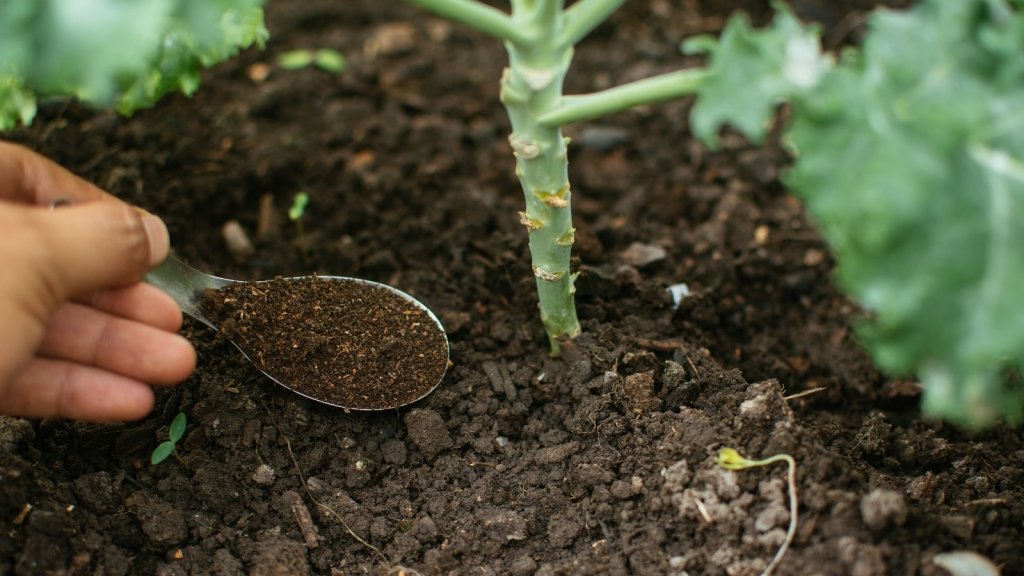
The short version: Fertiliser tops up the three nutrients a vegetable garden uses fastest: nitrogen for leaves, phosphorus for roots and establishment, and potassium for flowers, fruit and toughness. Vegetables, fruiting plants and anything in a pot usually benefit from feeding, while an established garden in good soil often needs little or none. Choose the product for the job, water it in, keep it off the leaves and out of the stormwater drain, and store it where dogs and children cannot reach it.
Fertiliser is the part of gardening most people either skip entirely or overdo with enthusiasm. The bag promises a lot, the numbers on the label mean nothing, and somewhere in the shed there is a half-used box of something blue. Feeding a garden is simpler than the shelf suggests once you know what the numbers mean and which plants actually need help.

What the three letters mean
Fertiliser labels in Australia have to name each nutrient in the product and give its percentage. On a mixed garden fertiliser those percentages are usually set out as nitrogen, then phosphorus, then potassium, and often sulphur as well. A label reading 10:4:6 is ten percent nitrogen, four percent phosphorus, six percent potassium. Australian labels give phosphorus and potassium as the element rather than the oxide figures used on many overseas labels, so a 10:4:6 bought here is not quite the same product as a 10:4:6 described on an American website. The numbers tell you what the product is good for.
- Nitrogen (N) drives leafy green growth. Leafy crops such as lettuce, silverbeet and brassicas want plenty of it. Too much on a fruiting plant gives you a tomato bush the size of a small car and very few tomatoes.
- Phosphorus (P) supports root growth and establishment. Most Australian soils are naturally low in it, which is why so many products carry it, and why many Australian natives, particularly banksias, grevilleas, hakeas and waratahs, evolved to hate an excess.
- Potassium (K) supports flowering, fruiting and general hardiness, which is why fruiting crops get a potassium-rich feed once they start to flower.

Organic, synthetic, slow and fast
There are two separate distinctions here, and they are often muddled. One is organic versus synthetic. The other is slow release versus fast acting, and it does not line up with the first.
Solid organic products such as pelletised chicken manure, blood and bone and worm castings release slowly, because soil microbes have to break them down first. Synthetic controlled-release granules release slowly too, through a coating that responds to warmth and moisture. Liquid feeds act fast whether they are organic or not: fish emulsion, worm casting tea and a fish and seaweed blend are taken up quickly, often with a visible response inside a week, much like a synthetic soluble feed. Seaweed solution on its own is a tonic rather than a fertiliser, low in the main nutrients but useful for helping plants through heat, transplanting and frost.
For a home vegetable garden the sensible pattern is a slow base and a fast top-up. Work compost, aged manure or pelletised manure into the bed before planting, then use a liquid feed every few weeks on hungry crops during active growth. Sulphate of potash covers the potassium side for fruiting crops without adding nitrogen, and it is gentler on citrus and berries than chloride-based potash.

When plants need feeding, and when they do not
Plants are less hungry than the shelf implies. An established garden of shrubs and perennials in decent soil at a sensible pH often needs no fertiliser at all, and natives in particular can be harmed by the standard products. The plants that reliably repay feeding are the ones you keep harvesting from: vegetables, flowering annuals, fruit trees and anything grown in a pot, where watering washes nutrients out faster than the small volume of mix can replace them.
Feed when a plant is actively growing and can use it, which for most vegetables means the weeks after planting and again as they size up or start to flower. Feeding a plant that is dormant, stressed by heat, or sitting in dry soil is unlikely to help and can do harm. Our guide to soil pH explains why some nutrients stay locked away no matter how much you apply.
How to apply it without burning anything
Fertiliser burn is what happens when concentrated salts draw water out of roots and leaves. The signs are scorched brown leaf edges and a plant wilting in soil that is plainly moist, often within a day or two of feeding in warm weather. The rules that prevent it are short.
- Water the soil first, then feed. Never fertilise dry soil.
- Use the rate on the label, or less. Doubling the dose does not double the growth.
- Keep granules off leaves and stems, spread them around the drip line, and water them in.
- Dilute liquids exactly as the label says, and pour them onto the soil rather than over the foliage in hot sun.
- If you have overdone it, water the bed deeply with plain water over the next few days to move the salts down past the roots. Do it into soil rather than over paving, so the nutrients do not run into the gutter.

Rain, runoff and waterways
Whatever the plants do not take up can wash off the garden into stormwater drains and from there into creeks, rivers and bays, where nitrogen and phosphorus feed algal blooms that starve the water of oxygen. Councils along the coast ask gardeners to hold off feeding when heavy rain is forecast, to use the recommended rate, to prefer low-phosphorus products where they will do, and to leave lawn clippings on the lawn rather than feeding it more. It is good advice everywhere.

Storage and safety
Organic fertilisers smell like food to a dog. Blood and bone, bone meal and pelletised manures are highly attractive to dogs, and a dog that gets into a bag can end up with severe gastroenteritis, sometimes pancreatitis, and in bad cases a blockage in the gut. Store bags and containers where pets and small children cannot reach them, preferably up high or locked away, never decant fertiliser into a food or drink container, and water granules in after spreading so there is less to lick up. If a pet does eat fertiliser, ring your vet or the Animal Poisons Helpline on 1300 869 738 straight away.
Bagged potting mix, compost, manure and soil products can also carry the bacterium Legionella longbeachae, which causes a form of Legionnaires' disease when the dust is inhaled. Put the mask and gloves on before you open the bag, open it outdoors and away from your face, dampen the contents to keep the dust down, and wash your hands afterwards. That is what healthdirect, the national health information service, and NSW Health advise for potting mix, and it applies just as much to a bag of pelletised manure.
Use manure that has been composted or aged, never fresh, and keep it away from leafy crops you eat raw. The food safety guidance for commercial growers is to avoid untreated manures altogether and to leave a long gap, on the order of three months, between applying a soil amendment and harvesting anything that sits close to the ground. Wash your hands after handling any of it, and wash your produce.
Feeding across Australia's climate zones
- Tropical (Cairns and far north Queensland, Darwin and the Top End of the Northern Territory, the Kimberley in Western Australia): wet-season rain leaches nutrients fast, so favour slow-release products in the wet and feed little and often in the dry.
- Subtropical (Brisbane and coastal Queensland, Coffs Harbour and northern New South Wales): summer storms carry fertiliser straight into waterways. Watch the forecast and lean on low-phosphorus products near the coast.
- Arid and semi-arid (inland Queensland, Broken Hill and Dubbo in New South Wales, Mildura in Victoria, inland South Australia and Western Australia, Alice Springs in the Northern Territory): little rain means salts build up rather than wash out. Light, frequent liquid feeds beat heavy doses, and flush pots occasionally with plain water.
- Temperate (Sydney and New South Wales, Melbourne and Victoria): feed the vegetable garden in spring and again in early autumn, and let winter rest.
- Mediterranean (Perth and southern Western Australia, and Adelaide and the Adelaide Plains in South Australia): fast-draining sands leach nutrients quickly, so light, frequent feeding wins, and this is the home of Australia's most phosphorus-sensitive natives, so keep standard fertilisers away from anything in the protea family.
- Cool and alpine (Hobart and Tasmania, Canberra and the ACT, Ballarat in Victoria, Orange and Armidale on the New South Wales tablelands): the season is short and cold soil slows organic feeds to a crawl, so liquid feeds are the reliable option once growth starts in spring.
Frequently asked questions
Do I have to fertilise a vegetable garden?
Usually yes, because harvesting keeps taking nutrients away. Compost or aged manure before planting plus a liquid feed during growth covers most crops. Established ornamentals in good soil often need nothing.
Is organic fertiliser safer than synthetic?
Safer for the soil life and slower to burn, but not harmless. Blood and bone and pelletised manures are a real hazard to dogs, and any fertiliser overdone will damage plants and pollute waterways.
What is the best liquid feed for vegetables?
Fish emulsion or a fish and seaweed blend for leafy growth, and a potassium-rich tomato food once fruiting crops flower. Sulphate of potash does the same job if you would rather spread it and water it in. Worm casting tea is a gentle all-rounder for seedlings.
Can I use lawn fertiliser on the vegetable patch?
Better not. Lawn products are high in nitrogen and some carry selective herbicides, which can distort, stunt or kill broadleaf vegetables such as tomatoes, capsicums, eggplants and beans.
Why are my natives dying after I fed them?
Many Australian natives, especially banksias, grevilleas and hakeas, are sensitive to phosphorus. Use a low-phosphorus native fertiliser, or none at all in good soil.
Feed the plants that are working hard, at the rate on the label, into moist soil, and keep the bag where the dog cannot get it. That is most of what there is to know. For the living version of a slow feed, our guide to cover crops shows how a resting bed can grow its own nitrogen.
Related growing guides
- Soil pH explained: why it matters and how to nudge it
- Cover crops: how to feed your soil over winter
- Nitrogen drawdown: why plants go yellow under fresh mulch
Fed and ready? Browse our vegetable seeds and cover crop seeds.