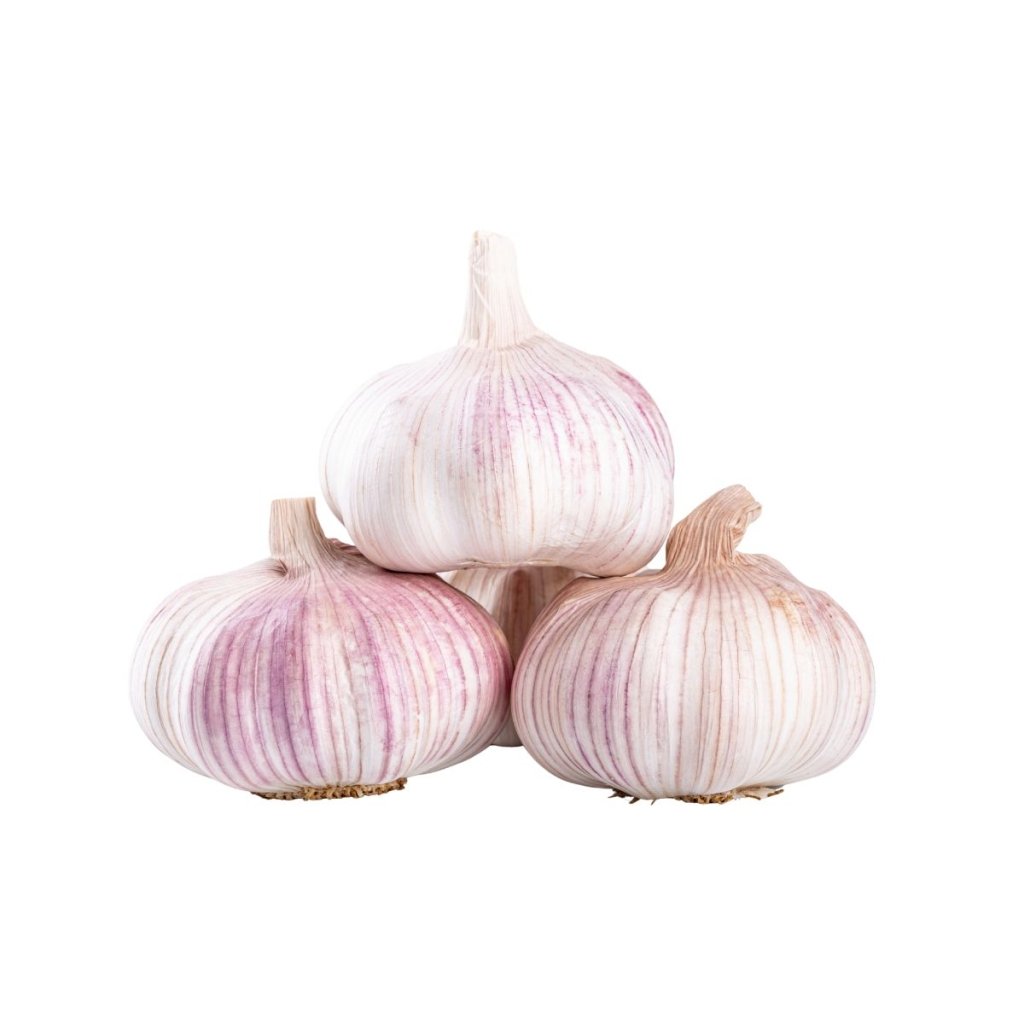
Garlic - Kenlarge (2 Bulbs, 200g, 400g, 1kg)
Allium sativum
NOT to WA & TAS
Contains approximately 14-16 bulbs per kg. As garlic bulbs are a natural product with inherent size variation, the exact number of bulbs may vary. All packs are weighed to ensure you receive the full stated weight, with loose cloves included where necessary to achieve precise weight.
An Australian-bred subtropical variety ideal for Queensland and northern NSW's warmer climates. These day-length neutral bulbs produce large, tear-drop-shaped heads with 6-12 cloves, featuring white skin with purple blotching. Enjoy sweet, true garlic flavour with moderate heat, perfect raw in dressings or gently sautéed. The 5.5-6-month growing cycle suits autumn planting, with late winter to early spring harvest. Stores for 7-9 months when properly cured. Thrives without requiring cold winters.
Growing Guide
Kenlarge thrives in Australia's subtropical and warm temperate regions, particularly Queensland and northern NSW. As a day-length neutral variety, it doesn't require the cold winter vernalisation that many garlic types need, making it perfect for warmer climates where other varieties struggle.
Climate & Site Selection Choose a sunny position with well-drained soil. Kenlarge performs best in regions with mild winters and warm to hot springs. In cooler southern states, it can be successfully grown in greenhouses where temperatures remain moderate. Avoid heavy clay soils or areas prone to waterlogging, as excess moisture can cause bulb rot.
Soil Preparation Prepare beds 2-3 weeks before planting. Work in well-aged compost or manure to improve soil structure and fertility. Garlic prefers slightly acidic to neutral soil (pH 6.0-7.0). Ensure excellent drainage by creating raised beds if necessary—this is particularly important in higher rainfall areas.
Planting Plant cloves in autumn (March-April) for a late winter to early spring harvest. Separate bulbs into individual cloves just before planting, selecting the largest, healthiest cloves from disease-free bulbs. Plant cloves 5-8cm deep with the pointed end facing upward, spacing them 15cm apart in rows 30cm apart. This spacing accommodates Kenlarge's larger bulb size.
Watering Keep soil consistently moist during the growing season, particularly during active leaf growth. Water deeply once or twice weekly, adjusting based on rainfall. As bulbs begin to mature (when lower leaves start yellowing), gradually reduce watering. Stop watering completely 2-3 weeks before harvest to allow bulbs to firm up and skins to toughen.
Fertilising Apply a nitrogen-rich fertiliser or well-aged compost 4-6 weeks after planting to support vigorous leaf growth. Avoid high-nitrogen fertilisers once bulbs begin forming, as this can delay maturity and reduce storage life. A side dressing of wood ash or potash in late winter provides potassium for bulb development.
Mulching Apply 5-8cm of organic mulch (such as sugar cane or pea straw) after planting to suppress weeds, retain moisture, and regulate soil temperature. Keep mulch pulled back slightly from stems to prevent fungal issues.
Pest & Disease Management Kenlarge is relatively hardy, but watch for thrips and onion leaf miner in warmer regions. Rust can appear in humid conditions—ensure good air circulation and avoid overhead watering. Practice crop rotation, avoiding planting garlic or other alliums in the same spot for at least three years.
Harvest & Storage
When to Harvest Kenlarge is ready to harvest 5.5-6 months after planting, typically in late winter to early spring (August-September in most regions). Harvest timing is critical—too early and bulbs won't have fully developed; too late and the bulb skins may split.
Watch for these signs:
- Lower 3-4 leaves have turned yellow or brown
- Upper 5-6 leaves remain green
- Bulb wrappers are intact and papery
- Individual cloves are well-defined when you gently squeeze the bulb
Test a bulb by carefully excavating soil around one plant to check development. Kenlarge forms a distinctive tear-drop shape with well-separated cloves when mature.
Harvesting Method Choose a dry day with no rain forecast for at least a week. Stop watering 2-3 weeks before harvest to allow bulbs to cure in the ground. Loosen soil around bulbs with a garden fork, working carefully to avoid bruising or piercing the bulbs. Lift plants gently by the stems, shaking off excess soil. Handle bulbs carefully as any damage shortens storage life.
Curing Proper curing is essential for long storage. Hang bunches of 5-8 plants or lay bulbs in a single layer on wire racks in a warm, dry, well-ventilated area protected from direct sunlight and rain. A covered veranda, shed, or garage with good airflow works well. Cure for 3-4 weeks until the outer skins are papery dry, stems have shrivelled, and roots are completely dried.
Once cured, trim roots to 1cm and cut stems to 2-3cm above the bulb (or leave long for braiding if desired). Remove any loose, damaged, or dirty outer layers.
Storage Conditions Store cured bulbs in a cool (10-15°C), dark, dry location with good air circulation. Mesh bags, wooden crates, or hanging braids allow airflow while keeping bulbs dry. Avoid plastic bags or airtight containers, which trap moisture and promote mould.
Properly cured Kenlarge stores for 7-9 months, making it an excellent choice for year-round kitchen use. Check stored bulbs monthly, removing any that show softening, sprouting, or mould to prevent spread.
Saving Seed Select the largest, healthiest bulbs from your harvest to replant the following season. Store seed bulbs separately in optimal conditions and plant the biggest cloves for next year's crop.
Culinary Uses
Kenlarge offers sweet, true garlic flavour with a pleasant touch of heat, making it versatile across both raw and cooked applications. Its moderate intensity appeals to those who enjoy genuine garlic character without overwhelming pungency.
Flavour Profile Raw Kenlarge delivers moderate initial heat that develops into a sweet, creamy garlic finish. When cooked, the heat mellows considerably, revealing rich, sweet undertones. The flavour intensifies if bulbs are aged for a few weeks after curing, allowing sugars to concentrate and sharp notes to soften.
Raw Applications The balanced heat and sweet flavour make Kenlarge excellent for raw preparations:
-
Salad dressings & vinaigrettes: Finely minced or crushed garlic adds depth without overpowering delicate greens
-
Aioli & mayonnaise: Creates smooth, aromatic spreads perfect for sandwiches and seafood
-
Fresh salsas: Contributes punchy flavour to tomato-based or fruit salsas
-
Marinades: Infuses meats, seafood, and vegetables with aromatic garlic essence
-
Garlic butter: Mash raw cloves into softened butter with herbs for bread or seafood
Cooked Applications Kenlarge's sweet character shines when gently cooked:
-
Sautéing: Thinly slice or mince and sauté in olive oil until golden and fragrant for pasta dishes, stir-fries, and vegetable sides
-
Roasting: Roast whole bulbs until soft and caramelised, then squeeze out sweet, spreadable cloves for bread or mixing into mashed potatoes
-
Slow-cooked dishes: Add to curries, braises, and stews where long cooking mellows the heat and develops sweet complexity
-
Soups & stocks: Infuse broths with aromatic depth
Preparation Tips For milder flavour, remove the green germ (shoot) from the centre of each clove before using. Crushing or mincing releases more oils and intensifies flavour, while slicing produces gentler results. Let crushed raw garlic rest 10 minutes before cooking to maximise beneficial compounds.
Storage After Peeling Peeled cloves keep for up to a week refrigerated in a sealed container. For longer storage, freeze whole peeled cloves or chop and preserve in olive oil (refrigerate oil-stored garlic and use within one week to prevent botulism risk).
Pairing Suggestions Kenlarge complements seafood particularly well, enhancing prawns, fish, and scallops without masking delicate flavours. It pairs beautifully with tomatoes, basil, olive oil, and lemon in Mediterranean-style dishes. Use it in Asian stir-fries with ginger and soy, or in Australian native-inspired dishes alongside lemon myrtle and bush tomatoes.