
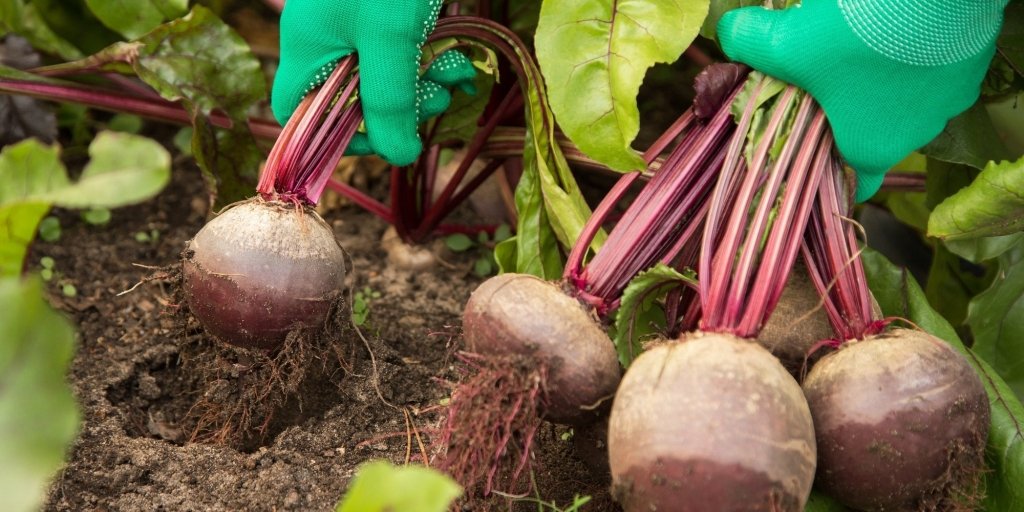
A root crop that asks very little
Beetroot, Beta vulgaris, is a root vegetable also known as red beet, garden beet and table beet. It suits a small bed or a deep pot, it is ready in eight to ten weeks, and both the root and the young leaves are worth taking to the kitchen. There is more to it than dark red: the beetroot seeds range runs from white and golden types to candy striped ones.

When to sow beetroot in Australia
Beetroot germinates best in soil between 12°C and 24°C, so the good windows sit either side of the hottest and coldest weeks of the year. The months below come from our own sowing calendar.
- Tropical (Darwin, Cairns, Townsville, Mackay, Broome, the Top End and the far north): April to May and again July to August, through the dry season.
- Subtropical (Brisbane, the Gold and Sunshine Coasts, Bundaberg, Coffs Harbour, Lismore and the NSW north coast): March to September.
- Arid and semi-arid (Alice Springs, Broken Hill, Kalgoorlie, Longreach, Mildura, Port Augusta and most of the inland): February to May, then August to October.
- Temperate (Sydney, Melbourne, Geelong, Newcastle, the NSW and Victorian coast and most of coastal southern Australia): August to December for the main spring and early summer crop, and January to April for an autumn crop.
- Mediterranean (Perth, Adelaide, the south west of Western Australia and the South Australian gulf country): the same months as temperate, though the January and February sowings carry the dry summer and need shade cloth and steady water to get through it.
- Cool and alpine (Hobart, Canberra, Ballarat, Katoomba, Armidale, the Victorian and NSW tablelands and the alpine districts): September to December, with an early sowing in January and February for autumn roots.
These are broad groupings. If you garden between two zones, on a range or in a frost pocket, lean on your local frost dates rather than on the label.
Where to grow it
Beetroot wants an open, sunny spot with five or six hours of direct sun. It grows in a container at least 25cm deep, though open ground gives the better root. Work the bed over to a spade depth and take out stones as you go.
Dig compost in a few weeks ahead rather than on the day. Fresh manure, stones and compacted ground are the three usual causes of forked and whiskery roots.
Sowing depth and spacing
Sow direct where the plants are to grow, because beetroot resents being moved. Soak the seed in water for a few hours first to soften the corky coat, then sow 1 to 2cm deep, about 5cm apart along the row, with 25 to 30cm between rows. Keep the bed damp and seedlings usually appear in seven to fourteen days.
Sow a short row every three weeks rather than the whole packet at once, and the harvest arrives in usable lots.
Thinning, the step that decides the crop
What looks like a single beetroot seed is really a dried fruit, a corky cluster holding two to four true seeds, so one sowing point throws up a tuft of seedlings. That is normal, and it is why thinning matters more with beetroot than with almost anything else.
At the two-leaf stage, snip the extra seedlings off at ground level with scissors rather than pulling them, so the roots of the one you keep are not disturbed. Then thin the row again so that 8 to 10cm is left between the plants that remain. The thinnings are good in a salad.
Crowded plants make small, misshapen roots, and it is the most common reason a beetroot bed disappoints.

Water and feeding
Even moisture is the whole trick. A bed that swings between dry and wet gives roots with woody rings and split skins, so water deeply two or three times a week rather than lightly every day, and mulch to hold what you put on.
Beetroot does not want a high nitrogen feed, which pushes leaf growth at the expense of the root. Compost dug in before sowing, and a light side dressing of sulphate of potash about halfway through, is plenty.
Common problems
- Small or misshapen roots: usually crowding, or ground too hard for the root to swell. Thin properly and dig deeper next time.
- Bolting: a run of cold on very young seedlings, or a sudden burst of heat, can send the plant to flower instead of root. Sow inside the windows above and keep the water up in a hot spell.
- Forked roots: stones, compacted soil or fresh manure.
- Woody, coarse roots: left in the ground too long, so pull them young.
Harvesting
Most varieties are ready eight to ten weeks after sowing, at anything from golf ball to tennis ball size. Lift by hand, easing heavy ground with a fork. Twist the tops off about 2cm above the crown rather than cutting them flush, which keeps the root from bleeding colour when it is cooked. The young leaves can be used like silverbeet.

Varieties worth a row
Detroit Dark Red is the standard round type and a sound first choice. Early Wonder is quicker off the mark and has good leaves for picking. Cylindra grows long rather than round, which gives even slices. Chioggia cuts to pink and white rings, and Golden does not stain the board. Baby Spinel (Pablo F1) is bred to be pulled small and is the one to grow in a pot.
To try several at once, the Heirloom Mix and the assorted five pack both cover a range.

Related growing guides
- Stop being kind to your carrots: why thinning is the step everyone skips
- Succession planting: how to harvest continuously, not all at once
- What to grow in winter: cool-season vegetables across Australia
Ready to plant? Browse our beetroot seeds.