
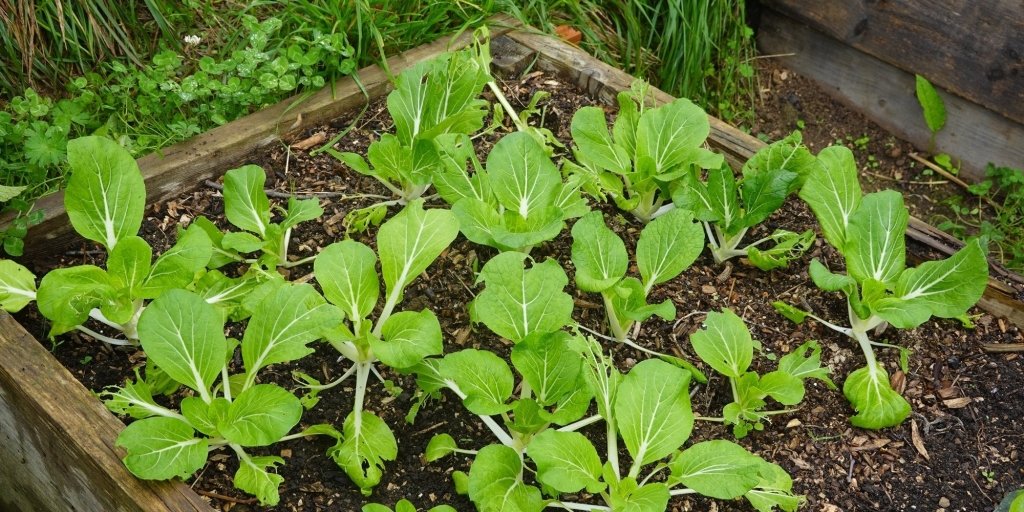
Asian greens in the cool season patch
A stir fry lover can keep a garden productive right through the cool months with a bed of Asian greens. Pak choi and Chinese cabbage spring to mind first, but Chinese broccoli (kailaan), mizuna, mustard greens, tatsoi and komatsuna are just as quick and forgiving. The names pak choi and bok choy are often used interchangeably, but in Australia pak choi usually means the green stemmed types and bok choy the white stemmed ones, and the two differ enough in texture and flavour to be worth a row each.
Most Asian greens are brassicas, which is why they share the same pests and the same liking for cool weather. Tatsoi and mustard greens take frost more readily than pak choi does. Celtuce is the odd one out, a lettuce grown for its thick stem, and like other lettuces it takes a light frost but not a hard one. These greens are a useful source of vitamin C.
When to sow across Australia
These months follow the Happy Valley Seeds sowing calendar. They are broad groupings, so gardeners between two zones should lean on their own local frost dates.
- Cool and alpine (Tasmania, the ACT, the NSW and Victorian tablelands): Feb to Apr, with May sowings undercover.
- Temperate (coastal NSW, Victoria and the southern mainland generally): Mar to Aug, the longest window of the lot.
- Mediterranean (Perth, Adelaide, the south west of WA and the SA gulf country): the same Mar to Aug months, with autumn sowings doing best because they mature before the dry summer.
- Subtropical (south east Queensland and the NSW north coast): Apr to Jul.
- Arid and semi-arid (inland NSW, Queensland, SA and WA, and central Australia): Mar to May, plus a July sowing undercover.
- Tropical (the Top End, far north Queensland and the Kimberley): the dry season, mainly Jun and Jul, with quick types fitted in at other times under shade.
Preparing your soil
These leafy greens like a soil close to neutral, so check the pH before you improve the bed and again afterwards. Compost, aged manure and coconut coir all help, and a bed that holds moisture keeps the leaves tender rather than tough.
Asian greens are hungry for nitrogen. If legumes have not been in that spot recently, work blood and bone or pelletised manure through the top 10cm a couple of weeks before sowing. Coffee grounds are often suggested, but fresh grounds tie up nitrogen as they break down and can hold back germination. Use them only once they have been through the compost heap, and then only as a light scattering.

Sowing and spacing
For hearting types such as Chinese cabbage, make a hole about 1cm deep, drop in two seeds and keep the stronger seedling. For leafier types such as pak choi and tatsoi, draw a shallow trench about 1cm deep, sprinkle seed along it and cover lightly. Seed this size does not want to go deeper.
Give hearting Chinese cabbage 30 to 40cm each way, pak choi, tatsoi and komatsuna 20 to 25cm, and mizuna or mustard grown as cut and come again leaves 10 to 15cm, with rows about 30cm apart. Thinning is not essential if you pull the fastest plants first, at around eight weeks, which opens space for the slower ones behind.
Companion plants and caterpillars
Because most Asian greens are brassicas, cabbage white butterflies and diamondback moths will find them. The control that reliably works is physical: a fine insect net or mesh cloche over the bed from sowing, sealed at the edges so nothing can lay underneath. Rub off any eggs you find under the leaves, and leave the small parasitoid wasps alone, because they do a lot of quiet work on caterpillars.
Growing brassicas with celery and cool season herbs such as oregano, thyme and rosemary is an old tradition and does no harm, but there is no good evidence that scent masks the crop, and the white plastic cabbage moth decoys have not held up either. A few sacrificial brassicas at the end of the bed draw egg laying away from the plants you want.
Pests
Snails and slugs are the other worry, at their worst in winter and able to work through young leaves overnight. Beer traps sunk to soil level catch plenty, and a torch walk after rain catches more. Eggshells and copper tape are widely repeated but failed to hold snails back in trials, so do not count on them. If numbers stay high, an APVMA-registered iron-based snail bait, used exactly as the label says, is the next step.

Harvesting
Most of these plants regrow. Cut the leaves, leaving about 5cm of foliage above the soil, and a second crop usually follows in three to four weeks, longer in the depths of winter. As spring warms the plants run to flower, and leaving one or two to do so feeds bees building their numbers back up after winter.
Those plants will also drop seed. Brassicas cross readily, so seed saved from a mixed bed will not come true, and some mustards self sow hard enough to become a nuisance, so pull the volunteers you do not want while they are small.
Related growing guides
- Asian Greens from Seed: Fast, Forgiving Leaves for Every Australian Garden
- Cabbage White and Diamondback Caterpillars: Protecting Your Brassicas
- Slugs and Snails: How to Control Them Organically in Australia
Ready to plant? Browse our Asian Vegetable seeds.