
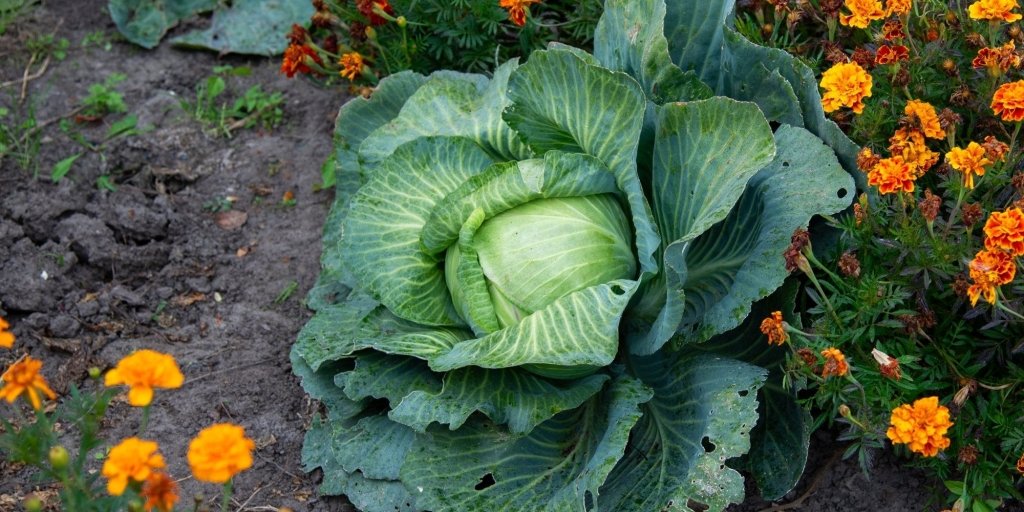
Cabbage is a cool season crop, not a summer one
Cabbage, Brassica oleracea var. capitata, is a cole crop: a green, white or red biennial that home gardeners grow as an annual for one thing, a firm head of tightly wrapped leaves. It is not a difficult plant. Get the timing and the spacing right and most of the remaining work is steady watering and keeping the caterpillars off. Happy Valley Seeds carries a wide range of cabbage seeds, from small quick types to the big storage drumheads.

When to sow cabbage in Australia
Cabbage heads best when it grows through cool weather. Sow it so the plants are filling out in autumn, winter or early spring rather than in the heat, because a head that sizes up in hot weather is often loose and the plant may bolt to seed instead. The windows below come from our own sowing calendar.
- Tropical (Darwin, Cairns, Townsville, Mackay, Broome, the Top End and the far north): April to May, using tropical or heat tolerant types.
- Subtropical (Brisbane, the Gold and Sunshine Coasts, Bundaberg, Coffs Harbour, Lismore and the NSW north coast): March to July, the longest window of any zone.
- Arid and semi-arid (Alice Springs, Broken Hill, Kalgoorlie, Longreach, Mildura, Port Augusta and most of the inland): March to April, once the worst of the summer heat has gone.
- Temperate (Sydney, Melbourne, Geelong, Newcastle, the NSW and Victorian coast and most of coastal southern Australia): January to March for an autumn and winter harvest, and again in July in the warmer districts.
- Mediterranean (Perth, Adelaide, the south west of Western Australia and the South Australian gulf country): the same months as temperate. The January and February seedbeds sit in the dry summer, so give them afternoon shade and water daily until the seedlings are up.
- Cool and alpine (Hobart, Canberra, Ballarat, Katoomba, Armidale, the Victorian and NSW tablelands and the alpine districts): January to February for an autumn and winter crop, with a second sowing under cover in August to plant out after the last frost.
These are broad groupings. If you garden between two zones, on a range or in a frost pocket, lean on your local frost dates rather than on the label.
Soil and bed preparation
Cabbage is a hungry plant with a shallow, spreading root system, so it wants a bed that holds moisture and still drains. Dig compost and aged manure through the bed a few weeks before sowing, and add blood and bone or pelletised poultry manure for the leafy growth. Firm ground suits cabbage better than a bed that has just been dug loose, so prepare early and let it settle.
Aim for a pH of 6.5 to 7.5. Brassicas are one of the few crops where a slightly alkaline soil is an advantage, because club root is far less active above pH 7.0. If you have had club root in a bed before, lime it well ahead of sowing and test the soil rather than guess.
Sowing the seed
Sow about 1cm deep. A seed tray or punnet is the easiest way to raise even seedlings, and a tray can be moved into shade or under cover when the weather turns. Direct sowing into the bed also works if the soil is fine and you can keep it damp. Seed usually comes up in seven to ten days in warm soil.
Transplant when the seedlings are 7 to 12cm tall with three or four true leaves. Set them a little deeper than they sat in the tray, firm the soil around the stem and water them in.
Spacing decides head size more than anything else you do. Allow 45cm between compact types such as Golden Acre or Mini, and 60cm or more for drumheads and savoys, with 60 to 75cm between rows. Crowded plants make small heads and hold damp air around the leaves.
Water, mulch and weeds
Water steadily rather than in bursts. A dry spell followed by a heavy soaking is the usual reason a head splits just before harvest. A mulch of straw or lucerne keeps the root zone even and cuts the weeding right down.
Pull weeds by hand while they are small, or smother them with mulch. There is no need to reach for a herbicide in a cabbage bed, and hand weeding keeps a crop you may eat raw clean.
Pests
The main pests of cabbage in Australia are the caterpillars of the cabbage white butterfly and the diamondback moth, which chew ragged holes through the leaves and bore into the heart, and the grey cabbage aphid, which forms dense colonies in the growing tip. Possums, rabbits and birds will also take young plants, particularly in outer suburbs and on rural blocks.
Exclusion is the simplest and most reliable control. Fine insect netting draped over hoops from the day the seedlings go out stops the butterflies and moths laying at all, and keeps the possums and birds off at the same time. Ordinary bird netting or wire mesh will stop the animals but not the moths, so use a fine mesh if caterpillars are the problem. Check under the leaves every few days and rub off the eggs and small caterpillars by hand.
Two old companion tricks are worth trying without relying on them. Nasturtiums planted nearby may draw some egg laying away from the crop. Mint is often planted near brassicas, though grow it in a pot sunk into the bed, because it will take over the ground otherwise.
If damage is severe and netting is not practical, choose an APVMA-registered product for that pest and use it exactly as the label says, spraying late in the day when bees are not working.
Diseases
Black rot is bacterial, caused by Xanthomonas campestris. It shows as V-shaped yellow lesions running in from the leaf edge with blackened veins, and it travels on seed and in splashed water. Remove affected plants, avoid overhead watering and do not work among wet plants.
Club root is a different problem again: it is caused by a soil-borne organism rather than a fungus, and it lives in a bed for many years. Affected plants are stunted and wilt in the afternoon, and the roots are swollen and distorted. Lime to lift the pH to 7.0 or a little above, rotate brassicas on a three to four year cycle, and bin affected roots rather than composting them.
Fungal leaf spots and downy mildew turn up in crowded, damp plantings. Space the plants properly, water at the base in the morning and pick off affected leaves.
Growing under cover
Winter cabbages are hardy and take frost well, and a light frost often improves the flavour. In the coldest districts a cloche or a row cover tunnel takes the edge off the worst nights and brings the crop on a little faster. A greenhouse or a polytunnel works the same way if you have one.
Harvesting
Depending on the variety, cabbage is ready 70 to 110 days from sowing. Cut when the head feels firm and solid to a squeeze, using a sharp knife and leaving the outer leaves and the stump in the ground. Small secondary heads often form on the stump afterwards and are worth eating.
Bring the crop in before the weather warms. Heat makes the leaves coarse and pushes the plant towards flowering, and a head left too long in the bed can split.
Varieties to start with
For a first crop, pick a quick compact type. Golden Acre is an early, reliable ball head that suits a small bed. Red Acre gives the same shape in deep purple and holds its colour when cooked. Sugarloaf makes a pointed head with a sweet, tender heart. For a long winter stand, Savoy Winter King takes the cold in its stride, and Mini suits a container or a tight row.

What to plant nearby
Cabbage is traditionally grown alongside onions, beetroot, celery and potatoes, and kept away from tomatoes, strawberries and climbing beans. Pairings of this kind are garden tradition rather than tested fact, and they are harmless to follow. What genuinely matters is rotation: keep brassicas out of the same bed for three to four years so that club root and the soil-borne diseases do not build up.
Related growing guides
- Cabbage White and Diamondback Caterpillars: Protecting Your Brassicas
- What to grow in winter: cool-season vegetables across Australia
- Soil pH explained: why it matters and how to nudge it
Ready to plant? Browse our cabbage seeds.