
How to Grow Potatoes in Australia
Potatoes grow from seed potatoes, not seed. Plant them after the last frost, once the soil holds about 10°C, in full sun and free-draining, slightly acid soil. Set them 10 to 15 cm deep and 25 to 40 cm apart. Hill soil up the stems as they grow and keep moisture even while tubers form. Dig 12 to 20 weeks later, when the tops die back.

| Sun | Full sun |
|---|---|
| Water | Even moisture while tubers form; never waterlogged |
| Soil | Deep, loose, free-draining, pH about 5.5 to 6 |
| Feed | Moderate; compost at planting, potassium from flowering |
| Spacing | 25 to 40 cm |
| Depth | 10 to 15 cm |
| Germination | Seed tubers, not seed; shoots in about three weeks |
| Harvest | 12 to 20 weeks |
| Container | Yes, 50 to 85 L, 40 cm wide |
| Frost | Frost tender; plant after the last frost |
| Use | Boiled, roasted, mashed or chips, by variety |
Potato (Solanum tuberosum) is a member of the nightshade family, Solanaceae, grown for its tubers (swollen underground stems packed with starch). A home patch can grow waxy, floury and coloured varieties rarely seen at the greengrocer. The mistake most gardeners make is planting potatoes from the kitchen. Sweet potato and Jerusalem artichoke are different plants with guides of their own, and potato onions are shallots.
Three mistakes that matter
- Planting shop potatoes. Potatoes bought to eat can carry viruses such as potato virus Y and soil diseases that persist in the bed. Plant seed potatoes grown for planting.
- Planting into cold, wet soil. Seed tubers sitting in cold, soggy ground often rot before they shoot, and frost blackens early shoots. Wait for the cue in When to plant, and plant into free-draining soil.
- Following tomatoes or potatoes. Blights, potato tuber moth and scab carry over in soil used by the nightshade family. Choose a bed where no potato, tomato, capsicum, chilli or eggplant has grown for three or four years.
When to plant
Plant once the soil holds about 10°C and the risk of frost has passed. Potatoes grow best in mild weather and need cool nights, so in warm zones plant for the cooler months, not the summer heat. Where the window is long, a second planting a few months later extends the harvest.
| Zone | Example cities | Plant | Harvest | Notes |
|---|---|---|---|---|
| Tropical | Darwin NT; Cairns, Townsville, Mackay QLD | Apr-May and Jul | Jul-Oct | Plant early in the dry season so tubers form in the coolest months, and dig before the wet season build-up. |
| Subtropical | Brisbane, Sunshine Coast, Bundaberg QLD; Coffs Harbour, Lismore NSW | Mar-Aug | Jun-Dec | Grow through the cool months. In frost-prone inland valleys, cover young shoots on frosty nights. |
| Arid and semi-arid | Alice Springs NT; Broken Hill, Dubbo NSW; Mildura VIC | Aug-Oct | Nov-Feb | Plant once inland frosts ease. Mulch deeply and water evenly, since summer heat spoils late tubers. |
| Temperate | Sydney, Newcastle, Wollongong NSW; Melbourne, Geelong VIC | Aug-Nov and Jan-Feb | Nov-Jun | Melbourne and frosty inland gardens wait for the last frost. A late summer planting gives an autumn crop. |
| Mediterranean | Perth, Bunbury WA; Adelaide and the SA coast | Jul-Oct | Oct-Feb | Plant into winter-moist soil and finish before the dry heat. Mulch well and water steadily in spring. |
| Cool and alpine | Hobart, Launceston TAS; Canberra ACT; Ballarat VIC; Orange NSW | Sep-Dec | Dec-Apr | Plant after the last frost, around Melbourne Cup weekend in frosty districts. Dig before autumn frosts. |
At the cold end of a window, chit the seed potatoes first so the crop gets away quickly. Hilling and Mounding covers frost protection. At the warm end, choose an early variety so the crop is dug before the heat arrives.
Site, soil and setup
| Get the bed right | What to do |
|---|---|
| Sun | Full sun, in an open spot that does not hold frost |
| Soil | Deep, loose and free-draining; a sandy loam that still holds nutrients is ideal. On clay, raise the bed or grow above ground in straw |
| pH | Slightly acid, about 5.5 to 6. Only if a test reads below 5.0, add dolomite lime at 100 to 200 g per square metre, 4 weeks before planting |
| Bed preparation | Dig in a 5 cm layer of compost, then scatter blood and bone at 100 to 150 g per square metre at planting. Or mix in a controlled release all-purpose granular (NPK around 14-5-10) at the label rate |
| Rotation | Three to four years between nightshade crops in the same bed |
Go easy on lime, wood ash and heavy doses of manure, because a less acid or heavily manured soil encourages common scab. For testing and adjusting soil, see soil pH explained.
Container growing
A free-draining 50 to 85 L pot, grow bag or sack, at least 40 cm wide and deep, holds two or three seed potatoes. Sit the seed potatoes on 10 cm of premium potting mix blended half and half with compost, and cover them with 10 cm more. Determinate varieties (which grow to a set height) suit pots best: try 'Kipfler', 'Nadine' or 'Avanti'.
- Watering: never let the mix dry out; shallow early layers dry quickly in sun and wind.
- Feeding: blood and bone at planting, about 15 g for a 40 cm pot. Then fish and seaweed blend at 25 mL per 9 L, fortnightly.
- Position: full sun, out of strong wind.
- Topping up: add potting mix and compost as the shoots grow, until the container is full.
- Safety: potting mix can carry Legionella bacteria, so wet it, wear gloves and a mask, and wash your hands after.
Planting Seed Tubers
Potatoes grow from seed potatoes (small whole tubers kept for planting), not from seed. Due to quarantine restrictions and our shipping policy, we cannot send seed potatoes to Western Australia, Tasmania or Kangaroo Island.
Choosing seed potatoes
| Type | Varieties in the range | In the kitchen | Season |
|---|---|---|---|
| Waxy | 'Kipfler', 'Nicola', 'Dutch Cream', 'Red Lady', 'Avanti', 'Lily Rose' | Hold together when cooked; salads, boiling, steaming | 'Avanti' and 'Kipfler' are early; 'Dutch Cream' is long season, about 16 to 18 weeks |
| Floury | 'Kennebec', 'King Edward', 'Russet Burbank', 'Rodeo' | High in starch and soft when cooked; roasts, chips, fluffy mash | 'King Edward' is mid to late season |
| All-rounder | 'Sebago', 'Nadine', 'White Star', 'Imperial Blue', 'Purple Bliss', 'Desiree', 'Pontiac', 'Delaware', 'Royal Blue', 'Red Royal', 'Peruvian Gold' | Between the two; suit most dishes | 'Imperial Blue', 'Nadine' and 'Delaware' are early; 'Desiree' takes about 130 days |
| Mixed bag | Assorted Mix | At least six unlabelled varieties | Early and late types together, so dig each plant as its own tops die |
Chitting
Chitting (sprouting seed potatoes before planting) gives the crop a head start. Set the tubers eyes up in an egg carton, sprouting on the windowsill or anywhere bright but out of direct sun. After two to four weeks they carry short, sturdy shoots about 1 cm long. The full method is in how to chit seed potatoes.

Planting out
- Plant egg-sized seed potatoes whole. Cut larger ones into pieces with at least one eye each, and let the cuts dry for a day or two first.
- Dig a trench about 20 cm deep and set the tubers in it, shoots up.
- Cover them with 10 to 15 cm of soil.
- Space them 25 to 40 cm apart, in rows 50 to 75 cm apart.
- Water in with seaweed solution (see Care by growth stage), then water only when the soil dries.
- Expect shoots in about three weeks.
On hard or clay ground, set the seed potatoes 30 cm apart on loosened soil instead. Cover them with 20 to 30 cm of straw. The tubers form in the straw, which is topped up as the plants grow.
Care by growth stage
Even moisture while the tubers form, and potassium from flowering, make a clean crop. Weeks count from planting and shift with variety and climate.
| Stage | Water | Feed | Watch for |
|---|---|---|---|
| Planting to shoots, weeks 0 to 3 | Only if the soil dries; soggy soil rots the seed | Organic: seaweed solution at 30 mL per 9 L at planting. Synthetic: none needed if granular went in at bed preparation | Late frost on the first shoots |
| Leafy growth and hilling, weeks 3 to 7 | A deep soak when the top few centimetres dry, and after each hilling | Organic: fish and seaweed blend at 25 mL per 9 L, fortnightly. Synthetic: an all-purpose soluble (NPK around 23-4-18) at half the label rate, fortnightly | Aphids under the leaves; 28-spotted ladybirds |
| Flowering and tuber set, weeks 7 to 12 | Steady and even; do not let the soil dry out | Organic: sulphate of potash at 30 to 50 g per square metre, watered in once, then liquid potash at the label rate, fortnightly. Synthetic: a fruiting and flowering soluble (NPK around 15-4-26) at the label rate, fortnightly | Target spot and late blight in humid weather |
| Tuber bulking, weeks 12 to 16 | Even moisture; big swings crack and knob the tubers | Organic: liquid potash at the label rate, fortnightly. Synthetic: high potassium soluble (sulphate of potash, 0-0-41) at the label rate, fortnightly | Cracks in the soil that let tuber moth reach the tubers |
| Dieback, weeks 16 to 20 | Stop once the tops yellow, so the skins set | Nothing | Skins firming, the sign that the crop is ready |
Potatoes are not heavy drinkers, and overwatering in poorly drained soil invites pests. A straw mulch keeps the soil evenly moist.
Hilling and Mounding
Hilling (drawing soil, compost or straw up around the stems) keeps light off the tubers and shelters young shoots from frost. How much hilling a plant needs depends on whether the variety is determinate or indeterminate.
| Habit | Varieties in the range | How to hill |
|---|---|---|
| Determinate (grows to a set height and sets its tubers in one layer near the seed) | 'Kennebec', 'Kipfler', 'Nadine', 'Purple Bliss', 'Red Lady', 'Avanti', 'Delaware', 'Desiree', 'Lily Rose', 'Peruvian Gold', 'Pontiac', 'Rodeo' | Hill once or twice, enough to keep every tuber covered; the best choice for pots and bags |
| Indeterminate (keeps growing and forms tubers along the buried stem) | 'Dutch Cream', 'Imperial Blue', 'King Edward', 'Nicola', 'Russet Burbank', 'Sebago', 'White Star', 'Red Royal', 'Royal Blue' | Keep mounding every few weeks through the season; suits deep beds and potato towers |
- Start when the shoots reach about 20 to 30 cm.
- Draw soil, compost or straw up the stems, leaving the top 10 cm of leaves showing.
- Repeat every few weeks until the ridge stands 20 to 30 cm high.
- Cover any tuber that pushes through to the light.
- If frost is forecast, bury young shoots completely under soil or straw.
Companion planting
Keep potatoes away from their own family, which shares their pests and diseases, and give them room in full sun.
Grows well with
- Peas, a legume outside the nightshade family that carries none of the potato blights.
- Cabbage and other brassicas, a rotation crop that helps a scab-affected bed recover.
- Sweet corn, a grass that makes a good rotation crop where scab has shown up.
Keep apart
- Tomato, which shares late blight, target spot and potato tuber moth.
- Eggplant and capsicum, hosts of the same blights and of tuber moth.
- Pumpkin, another food plant of the 28-spotted ladybird.
- Sunflower, which shades a potato bed from its tall stems.
Harvesting Tubers
Dig the main crop once the tops yellow and die back, usually 12 to 20 weeks after planting. Once plants flower, you can bandicoot a few new potatoes from the side.
- Rub a tuber with your thumb: if the skin slips off, leave the crop a few more days.
- Dig on a dry day, pushing the fork in well out from the stems.
- Lift the plant and sift the soil by hand for every tuber.
- Cook any speared or bruised tubers the same day, since they do not store.
Curing
| Step | How long | Conditions |
|---|---|---|
| Setting the skin | 1 to 2 weeks before digging | Tops yellowed or cut off, watering stopped, tubers left in the soil |
| Curing | 7 to 14 days | Dark, airy and humid, at about 10 to 15°C, so small cuts heal and skins thicken |
| Storing | Some months for late varieties | Dark, cool and airy, at about 4 to 8°C, in hessian or paper sacks; colder storage turns them sweet |
Store only sound tubers with the soil left on, and check them often for rot. Early varieties are best eaten soon after digging, while late ones keep longest. Cook each type as Choosing seed potatoes describes.
Common problems
Green tubers. Light reaching tubers near the surface, or in storage, turns the skin green and toxic; hill them over, as Hilling and Mounding describes.
Seed potatoes rot without shooting. Cold, soggy soil or cut pieces planted before they dried usually cause it; see Three mistakes that matter.
Knobbly, cracked or hollow tubers. A dry spell followed by heavy watering makes tubers grow in fits and starts; keep moisture even, as Care by growth stage describes.
Poor tubers in hot weather. Heat as the crop matures spoils tuber quality, so time planting to finish before summer, as When to plant describes.
Plants wilt in moist soil. Wilting that water does not fix, with brown rings or ooze in cut tubers, points to bacterial wilt (Ralstonia solanacearum), worst in warm soil. Bag the plants and grow no nightshades there for over five years.
Green fruit on the plant. Some varieties set berries after flowering; they do the crop no harm but are poisonous to eat.
Pests and diseases
The six insects and diseases below cause much of the trouble in Australian potato beds, most starting in soil, seed or weeds.
Potato tuber moth (Phthorimaea operculella). Its caterpillars mine the leaves and tunnel into tubers through cracks in dry soil, and the larvae shelter among stored tubers and sacks. Keep the tubers deeply hilled, water to close soil cracks, and dig promptly once the tops die.
28-spotted ladybird (Epilachna vigintioctopunctata). This hairy, orange, leaf-eating ladybird and its spiny yellow larvae strip the leaf surface. Hand-pick adults and larvae when first seen, and clear nightshade weeds nearby.
Aphids, including green peach aphid (Myzus persicae). They do little direct harm but spread potato virus Y and other viruses between plants. Let hoverfly larvae, lacewings and ladybirds feed on them, and clear the weeds that shelter them. Read more
Target spot (Alternaria solani). Also called early blight, it makes dark leaf spots with rings like a target, usually late in the season. Keep plants fed and watered, and clear the dead tops after harvest.
Late blight (Phytophthora infestans). In mild, humid weather, grey-green patches turn brown and can collapse a crop within days. Pull out and bag infected plants at once, and never compost them. In Western Australia, report a suspected case to DPIRD.
Common scab (Streptomyces scabiei). This soil bacterium leaves rough, corky patches on the skin; scabby potatoes are still good to eat once peeled. Keep the soil moist while tubers form, and see Site, soil and setup on lime and manure. Powdery scab (Spongospora subterranea) looks alike but favours cold, wet soil: improve drainage.
Prevention first
- Water the soil, not the leaves, since wet foliage encourages blight and other fungal diseases.
- In Victoria and Western Australia, check leaf undersides for tomato potato psyllid (Bactericera cockerelli), which yellows, curls and stunts plants. Fine insect mesh keeps it off.
- Pull up volunteer potatoes that sprout from missed tubers, since they carry blight and virus over.
- Keep nightshade weeds, such as black nightshade, out of and around the bed.
Tips
- Buy fresh seed potatoes each season rather than replanting your own, since viruses build up from crop to crop.
- Never leave culled or rotten potatoes lying on the bed or path, because tuber moth breeds freely in them.
- Where the garden soil is poor or has grown tomatoes, plant into a bin with its base knocked out, filled with compost and soil. At harvest, tip it over and spread the soil on a new bed.
Questions
Can I plant potatoes from the supermarket?
It is best not to. Potatoes bought to eat can carry viruses and soil diseases that stay in the bed for years. Plant seed potatoes grown for planting.
How deep and how far apart do you plant seed potatoes?
Set them in a trench about 20 cm deep and cover them with 10 to 15 cm of soil. Space them 25 to 40 cm apart, in rows 50 to 75 cm apart. Hill soil up the stems as they grow.
Do I need to chit seed potatoes before planting?
No, but it helps where the season is short. Stand the tubers eyes up in a bright spot out of direct sun. After two to four weeks they carry short, sturdy shoots about 1 cm long.
How do I know when potatoes are ready to dig?
Dig the main crop once the tops yellow and die back, usually 12 to 20 weeks after planting. Stop watering then, and wait one to two weeks. The skin should be firm and not rub off. New potatoes can be taken from the side once plants flower.
Are green potatoes safe to eat?
Green skin means the tuber has been in the light and holds more solanine, a natural toxin that cooking does not destroy. Cut away all green parts and sprouts before cooking, and throw out any potato that tastes bitter. Store potatoes in the dark.
Can you grow potatoes in a pot or grow bag?
Yes. Use a 50 to 85 L container at least 40 cm wide and deep for two or three seed potatoes. Sit them on 10 cm of potting mix and compost, cover with 10 cm more, then keep adding as the shoots grow. Determinate varieties suit pots best.
Grow it

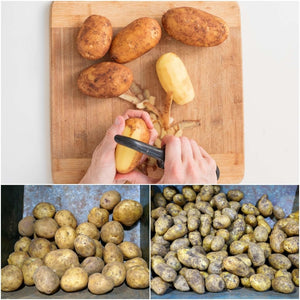


More edible produce guides
All edible produce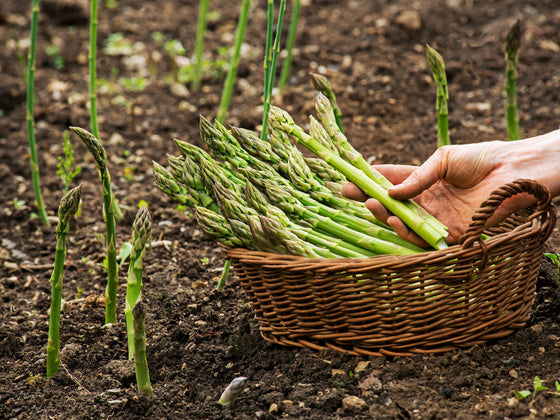
Asparagus
How to grow asparagus from seed in Australia: raising seedlings, planting crowns, a bed of its own, when to start picking spears and cutting back the fern.
| Position | Full sun |
|---|---|
| Depth | Seed 1 to 2 cm |
| Spacing | 30 to 40 cm |
| First pick | Third spring from sowing |
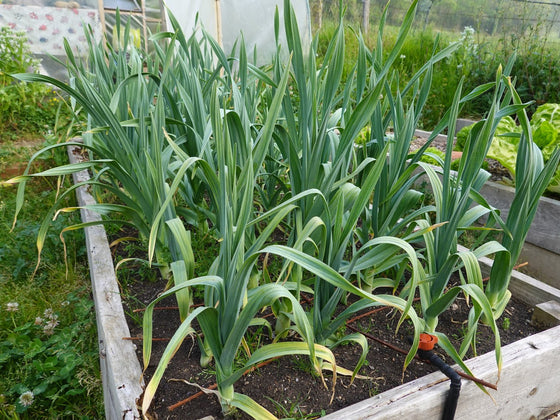
Elephant garlic
Also sold as Russian garlic. Plant the large cloves in April or May, keep the bed weeded and watered, and use the finger test to judge when the bulbs are ready.
| Position | Full sun, 6 hours or more |
|---|---|
| Depth | 5 cm of soil over tip |
| Spacing | 20 to 30 cm |
| First pick | 6 to 8 months |
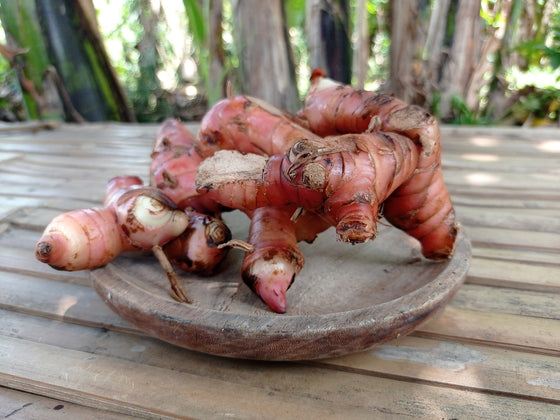
Galangal
Grow Thai red and lesser galangal from rhizomes in Australia: planting months for six zones, pre-sprouting, pots for frosty areas, feeding, pests and harvest.
| Position | Morning sun, afternoon shade |
|---|---|
| Depth | 5 to 7 cm, buds up |
| Spacing | 30 to 45 cm |
| First pick | 17 to 43 weeks |
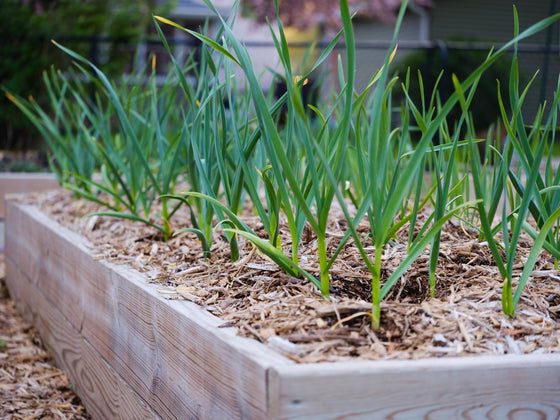
Garlic
When to plant garlic in each Australian climate zone, how deep and how far apart, feeding through winter, and how to tell when the bulbs are ready to lift and cure.
| Position | Full sun, 6 hours or more |
|---|---|
| Depth | Tip 2 to 5 cm deep |
| Spacing | 10 to 15 cm |
| First pick | 22 to 39 weeks |