
How to Grow Blackberries in Australia
Plant dormant bare-root thornless blackberry canes in winter, 150 to 180 cm apart along a post-and-wire trellis, in full sun and humus-rich, well-drained soil. They need a cold winter to flower. Check your state's weed rules first, since wild blackberry is a declared weed. Keep the soil moist from flowering to harvest, pick dull black berries in summer, and cut fruited canes out afterwards.
| Sun | Full sun, afternoon shade inland |
|---|---|
| Water | Steady moisture, above all flowering to harvest |
| Soil | Humus-rich, well drained, pH 6.0 to 6.8 |
| Feed | Medium; potash from flowering, light nitrogen |
| Spacing | 150 to 180 cm apart |
| Depth | Old soil mark, or 3 to 5 cm deeper |
| Germination | Not from seed: plant dormant bare-root canes |
| Harvest | Second summer after planting |
| Container | Not suited to pots |
| Frost | Frost hardy when dormant; needs winter chill |
| Support | Post-and-wire trellis, four or five wires |
| Use | Fresh, jam, pies, sauces and freezing |
Thornless blackberry (Rubus hybrid) is a cane fruit in the rose family, Rosaceae, grown on a trellis for its sweet black berries in summer. Its smooth canes make training and picking far kinder than on a wild bramble, but wild blackberry is one of Australia's worst weeds. Each state sets its own rules on which cultivars may be sold, so the mistake that matters most happens before planting.
Three mistakes that matter
- Planting without checking the law. Wild blackberry is a Weed of National Significance, and several states ban its sale except for named cultivars. Check the state table in Planting Canes before you buy.
- Leaving fruited canes in place. A cane that has fruited will not fruit again, and left standing it crowds the plant, traps humid air and shelters disease. Cut it to the ground after harvest, as Pruning and Training explains.
- Dry soil from flowering to harvest. Without steady moisture the berries stay small and lack flavour. Mulch the row, water deeply through spring and summer, and do not plant where water runs short from October.
When to plant
Plant bare-root canes in winter, from about June to August, while they are dormant and leafless. Plant them as soon as they arrive, on a day when the soil is neither frozen nor waterlogged. The crop depends on a cold winter: canes need winter chill to flower well, which is why the warm north misses out.
| Zone | Example cities | Plant | Harvest | Notes |
|---|---|---|---|---|
| Tropical | Darwin NT; Cairns, Townsville QLD; Broome WA | Not recommended | Not recommended | Winters are too warm for the chill canes need to flower, and wet-season humidity favours fungal disease. |
| Subtropical | Brisbane, Sunshine Coast QLD; Coffs Harbour, Lismore NSW | Not recommended | Not recommended | Mild winters rarely give enough chill for good flowering. Queensland also restricts blackberry sale; see the state table. |
| Arid and semi-arid | Mildura VIC; Broken Hill, Dubbo NSW; Port Augusta SA | Jun-Aug | Dec-Mar | Frosty nights give chill. Grow only with reliable water, deep mulch and shelter from hot afternoon sun and wind. |
| Temperate | Sydney, Wollongong NSW; Melbourne, Geelong VIC | Jun-Aug | Dec-Mar | Melbourne's colder winters suit best; mild coastal Sydney winters can mean lighter flowering. Shade from hot afternoons. |
| Mediterranean | Adelaide and the SA coast; Perth, Bunbury WA | Jun-Aug | Dec-Mar | The Adelaide Hills suit best. Dry summers need deep mulch and steady water. Canes are not sent to WA. |
| Cool and alpine | Canberra ACT; Ballarat VIC; Orange NSW; Stanthorpe QLD | Jun-Aug | Jan-Mar | Cold winters suit fruiting best. Plant when soil is not frozen; Canberra permits listed cultivars only. |
A cane planted in winter spends its first summer growing new canes, and those fruit the following summer. Expect a light pick at most in the first season.
Site, soil and setup
| Get the row right | What to do |
|---|---|
| Sun | Full sun in cool districts; where summers are hot, a spot shaded from the afternoon sun and sheltered from hot winds |
| Soil | Deep, humus-rich and well drained; on heavy or wet ground, plant into a raised row or mound |
| pH | About 6.0 to 6.8. Below that, dig in dolomite lime at 100 to 200 g per square metre, 4 weeks ahead; above it, elemental sulphur at 25 to 50 g per square metre, 3 months ahead. See soil pH |
| Bed preparation | A 5 cm layer of compost and 5 to 10 cm of well-rotted cow or horse manure, dug in 4 to 6 weeks before planting |
| Trellis | Posts about 3 m apart with 4 to 5 wires 30 cm apart, the lowest 45 cm from the ground; build it before you plant |
| Room | 150 to 180 cm between plants along the trellis, and 2 m between rows |
| Water | Within reach of a hose or drip line, since fruit needs steady moisture from spring to the end of picking |
Do not plant where tomatoes, potatoes, eggplants or capsicums have grown in the last three years. Their soil can carry Verticillium wilt (Verticillium dahliae), a soil-borne fungus that sometimes infects blackberry.
Planting Canes
Blackberries start from a dormant bare-root cane, a single stem with its roots, planted straight into its place on the trellis. Due to quarantine restrictions and our shipping policy, we cannot send Blackberry Thornless canes to Western Australia or Tasmania.
Check your state's weed rules first
| State or territory | What the law says about blackberry |
|---|---|
| Queensland | Blackberry (Rubus anglocandicans and the R. fruticosus aggregate, including their hybrids) is a category 3 restricted invasive plant. It must not be given away, sold or released into the environment. The listing names no exempt cultivar, so check with Biosecurity Queensland before you plant. |
| New South Wales | It must not be imported into the state, sold or offered for sale. Exempt cultivars: 'Black Satin', 'Chehalem', 'Chester Thornless', 'Dirksen Thornless', 'Loch Ness', 'Murrindindi', 'Silvan', 'Smooth Stem' and 'Thornfree'. |
| Victoria | A regionally controlled weed in most catchments and restricted in the Mallee. Without a permit it cannot be bought, sold, propagated or moved. Agriculture Victoria notes thornless hybrids are not recorded as weeds, so confirm your cultivar's status. |
| South Australia | Declared across the state: entry, transport on public roads and sale are prohibited. Named cultivars such as 'Black Satin', 'Smoothstem' and 'Thornfree' are excluded from the declaration. |
| Australian Capital Territory | A declared pest throughout the territory, except the cultivars 'Black Satin', 'Chester Thornless', 'Dirksen Thornless', 'Loch Ness', 'Smoothstem', 'Thornfree', 'Chehalem', 'Murrindindi' and 'Silvan'. |
| Western Australia | A declared pest across the state. The state's declared pest list also names the thornless cultivars 'Thornfree', 'Loch Ness' and 'Black Satin'. |
| Tasmania | A declared weed: importation, sale and distribution are prohibited. |
| Northern Territory | Blackberry (R. fruticosus aggregate) is a Class A declared weed, to be eradicated. Class A weeds are also Class C, not to be introduced. Growing, selling or moving a declared weed is illegal, so do not plant it. |
Exemptions go by cultivar name, so a cane sold only as a thornless hybrid, with no cultivar named, cannot be shown to be exempt. Ask the seller for the cultivar name before you buy. Declarations change, so confirm the current list with your state's biosecurity agency. Raspberry, boysenberry, loganberry, youngberry, tayberry, silvanberry and lawtonberry have their own guides.
Bare-root preparation
A dormant cane looks lifeless, but healthy stock has plenty of fine, fibrous roots, a strong stem and two or three green shoots or buds. Keep the roots moist from the moment the parcel opens, and never leave them lying in the sun. Cut off any damaged roots. Then stand the rest in a bucket of seaweed solution at half strength (15 mL per 9 L) while you dig the hole.
Planting on the trellis
- Dig a hole as deep as the roots and twice as wide, centred under the trellis wires.
- Fan the roots out and set the cane at the depth it grew before, or 3 to 5 cm deeper.
- Backfill with the improved soil, firm gently and water in with seaweed solution at 30 mL per 9 L.
- Cut the planted cane back to two buds; the new fruiting canes grow from the crown each spring.
- Mulch with straw, hay or sugarcane mulch, not woodchip.
Care by growth stage
Steady water, a light hand with nitrogen and potash from flowering decide the crop. Months follow the southern season and shift a few weeks earlier in warmer districts.
| Stage | Water | Feed | Watch for |
|---|---|---|---|
| Dormant, June to August | Only in long dry spells | No feed while dormant; start in spring | Waterlogging after heavy rain; weeds creeping in under the mulch |
| New growth, September to October | Water deeply whenever the topsoil dries, more often as the weather warms | Pelletised chicken manure at 100 g per square metre, or an all-purpose controlled release granular (NPK around 14-5-10) at the label rate | Green peach aphid (Myzus persicae) on soft tips; purple spots of cane spot (Elsinoe veneta) on young canes |
| Flowering, October to November | Keep the soil evenly moist; water at the base, not over the flowers | Sulphate of potash at 30 to 50 g per square metre once, then liquid potash at the label rate, fortnightly; or a fruiting and flowering soluble (NPK around 15-4-26) at the label rate, fortnightly | Grey mould (Botrytis cinerea) on flowers after several cool, wet or humid days |
| Fruiting and picking, December to March | Keep watering steady right through picking; do not let the soil dry out | Fish and seaweed blend at 25 mL per 9 L, fortnightly, or the fruiting and flowering soluble at the label rate, fortnightly | Birds, possums and Queensland fruit fly (Bactrocera tryoni) at ripening fruit; two-spotted mite (Tetranychus urticae) in hot, dry weather |
| After harvest, March to May | Water in dry spells as the weather cools | No feed; top-dress with a 5 cm layer of compost to build the soil, then renew the mulch | Blotches of blackberry leaf rust (Phragmidium violaceum) on leaves; cane tips touching the soil and rooting |
Net the trellis once the first berries colour, using white, wildlife-safe netting stretched taut. Choose mesh 5 mm or smaller at full stretch, which Victoria and the ACT require by law. The trellis keeps the plants low enough to cover. Too much nitrogen in spring gives soft, leafy growth that grey mould and aphids favour.
Pruning and Training
Each cane lives two summers. In its first it grows long and leafy (a primocane). In its second it sends out short side shoots that flower and fruit (a floricane), then dies. Pruning keeps the two apart on the trellis.
- Through spring and summer, tie new canes loosely in a bundle on the top wire, clear of the fruiting canes below.
- Pinch out the tips of new canes once they reach the top wire, which encourages branching.
- Keep cane tips off the ground: where a tip touches soil it roots and starts a new plant.
- After the last picking, cut every fruited cane to ground level.
- Untie the new canes, keep about six strong ones on a young plant, and fan or weave them along the lower wires.
- In winter, dig out any suckers that appear away from the row.
Bag and bin the prunings rather than composting them, since cane spot and downy mildew (Peronospora sparsa) survive on old canes and leaves.
Companion planting
A blackberry row is permanent, so keep companions low and to the edges where they will not shade the canes or compete for water.
Grows well with
- Alyssum, whose nectar-filled flowers draw pollinators and predatory insects to the row.
- Phacelia, which draws hoverflies whose larvae eat aphids.
Keep apart
- Roses, which host the same downy mildew.
- Wild blackberry, which hosts downy mildew and redberry mite (Acalitus essigi).
Harvesting Fruit
Pick berries when they have turned from shiny to dull black and begin to soften; unlike a raspberry, the core comes away inside the fruit.
- Check the canes every few days once fruit starts to colour.
- Pick in the cool of the morning.
- Lay the fruit in shallow containers so the bottom layer does not crush.
- Take off damaged or mouldy berries as you go, and bin them.

Store the berries unwashed and uncovered in a shallow container in the fridge for one to two days, and wash them just before eating.
Eat them fresh, or freeze them and cook them into jam, pies and sauces.
Common problems
Few flowers after a mild winter. Too little winter chill, as When to plant explains, often gives light crops on the coast and in warm districts.
White or tan drupelets (the juicy segments of the berry). A sudden rise in temperature with low humidity and wind lets ultraviolet light damage exposed berries; afternoon shade can reduce it.
Canes wilting and tips dying in warm, wet weather. Phytophthora root rot (Phytophthora species) attacks roots in poorly drained soil, turning them brown to black; raise the row and do not overwater. Read more
Purple spots with grey centres on young canes. Cane spot, a fungus spread by rain splash, weakens canes; start with clean stock, keep rows open and remove prunings.
New plants popping up along the row. Cane tips that touch the soil root and form new plants; see Pruning and Training. Read more
Berries eaten before you pick them. Blackbirds and other birds, and possums, take ripe fruit; net the trellis as Care by growth stage describes. Read more
Pests and diseases
Most blackberry troubles follow the weather: mites build up in hot, dry spells and fungal diseases in humid or wet ones.
Two-spotted mite (Tetranychus urticae). These mites, about 0.6 mm long, feed under the leaves and leave them speckled and bronzed, often with fine webbing. They thrive in hot, dry, dusty conditions, so keep the soil moist and avoid sprays that kill predatory mites. Read more
Redberry mite (Acalitus essigi). This tiny whitish mite shelters in buds and at the base of the fruit. It leaves some drupelets hard and red while the rest ripen black. Cut out fruited canes promptly, and control any wild blackberry within 100 m, which harbours it.
Queensland fruit fly (Bactrocera tryoni). Females lay eggs in ripening berries, and the maggots rot the fruit from inside. Where fruit fly is active, cover the row with fine insect mesh once fruit sets, sealed to the ground, with berries clear of it. Pick promptly. Kill the maggots in fallen or stung fruit before binning it. Freeze it, or seal it in a bag in the sun for at least 14 days. Read more
Grey mould (Botrytis cinerea). Flowers turn brown and grow grey fuzz after a few humid days, and the fungus spreads to the berries. Keep the canes thinned and tied so air moves, and pick off infected fruit.
Downy mildew (Peronospora sparsa). Angular yellow patches on the upper leaf turn red and purple, and infected green berries redden early, shrivel and harden. It favours warm, humid weather, so train canes openly and remove old prunings.
Blackberry leaf rust (Phragmidium violaceum). Released to control wild blackberry, this rust leaves purple-brown blotches on leaves, with yellow or black pustules beneath. Some thornless hybrids are susceptible, so in rust-prone districts ask your state agriculture department about resistant stock.
Prevention first
- Start with clean, healthy canes of a cultivar permitted in your state.
- Water the soil, not the canes, and keep the row open and well tied.
- Prune and bin as Pruning and Training describes.
- Spray aphids with pyrethrum only when numbers build up. It harms bees, so spray late in the day away from open flowers, following the label and its withholding period.
Tips
- Keep the plant label or receipt showing the cultivar name, in case a weeds officer asks.
- Mark each spring's new canes with a coloured tie, so there is no doubt which to cut after harvest.
- Tie canes to the wires with soft, stretchy ties, which do not cut into the canes as they thicken.
Questions
Is it legal to grow thornless blackberries in Australia?
It depends on your state. Wild blackberry is a Weed of National Significance. New South Wales, South Australia and the ACT exempt named thornless cultivars such as 'Black Satin' and 'Thornfree'. Queensland lists no exempt cultivar, Tasmania prohibits sale and the Northern Territory lists it for eradication. Check your state's current list and the cultivar name before planting.
When do you plant blackberry canes?
Plant dormant bare-root canes in winter, from about June to August, as soon as they arrive. Choose a day when the soil is neither frozen nor waterlogged. Canes need a cold winter to flower well, so they are not recommended for tropical and subtropical gardens.
How long until a blackberry cane fruits?
Expect the first real crop in the second summer after planting. A winter-planted cane spends its first season growing new canes from the crown. Those canes flower and fruit the following summer, usually between December and March.
How do you prune thornless blackberries?
Cut every cane that has fruited to ground level after the last picking, since it will not fruit again. Then tie the strong new canes along the lower wires for next summer. Pinch out new cane tips at the top wire in summer, and keep tips off the ground so they do not root.
How do you know when blackberries are ripe?
A ripe blackberry has turned from shiny to dull black and begins to soften. Shiny black berries keep a little longer but taste less sweet. Pick every few days in the cool of the morning, and refrigerate the fruit unwashed for one to two days.
Can you grow blackberries in a pot?
Not well. Thornless blackberry canes are vigorous and need a permanent trellis, deep soil and plenty of water and feed. They suit a garden row rather than a container. Space plants 150 to 180 cm apart along a post-and-wire trellis.
More edible produce guides
All edible produce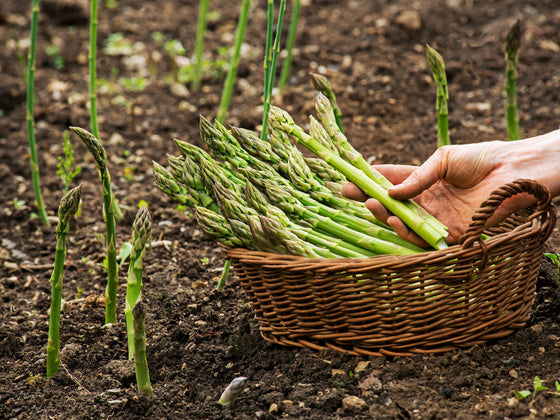
Asparagus
How to grow asparagus from seed in Australia: raising seedlings, planting crowns, a bed of its own, when to start picking spears and cutting back the fern.
| Position | Full sun |
|---|---|
| Depth | Seed 1 to 2 cm |
| Spacing | 30 to 40 cm |
| First pick | Third spring from sowing |
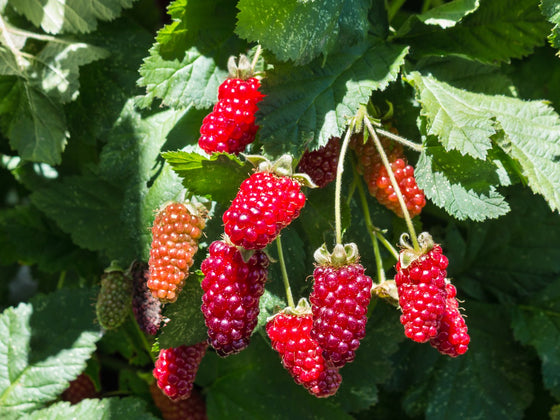
Boysenberry
Grow boysenberries in Australia from bare-root canes: winter planting by climate zone, building a wire trellis, feeding, pruning fruited canes and picking.
| Position | Sun; afternoon shade where hot |
|---|---|
| Depth | Stem base level with soil |
| Spacing | 1.5 to 2 m apart |
| First pick | Early summer, from year two |
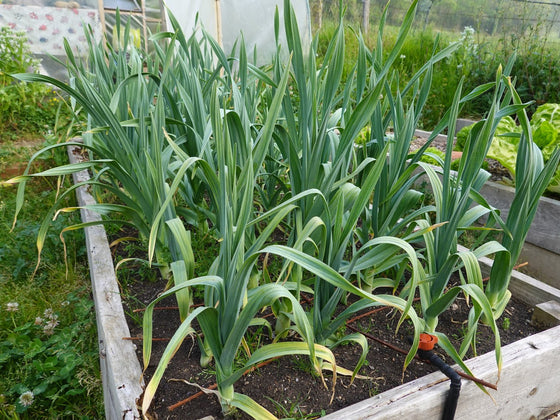
Elephant garlic
Also sold as Russian garlic. Plant the large cloves in April or May, keep the bed weeded and watered, and use the finger test to judge when the bulbs are ready.
| Position | Full sun, 6 hours or more |
|---|---|
| Depth | 5 cm of soil over tip |
| Spacing | 20 to 30 cm |
| First pick | 6 to 8 months |
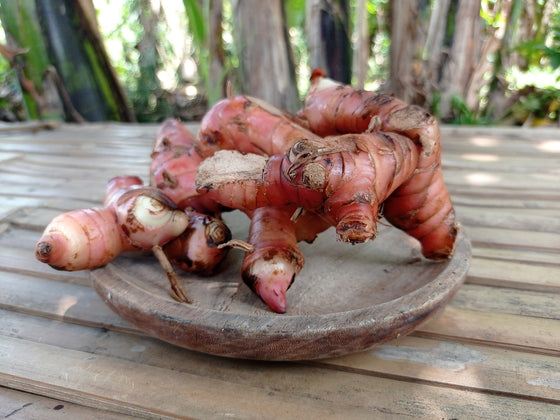
Galangal
Grow Thai red and lesser galangal from rhizomes in Australia: planting months for six zones, pre-sprouting, pots for frosty areas, feeding, pests and harvest.
| Position | Morning sun, afternoon shade |
|---|---|
| Depth | 5 to 7 cm, buds up |
| Spacing | 30 to 45 cm |
| First pick | 17 to 43 weeks |