
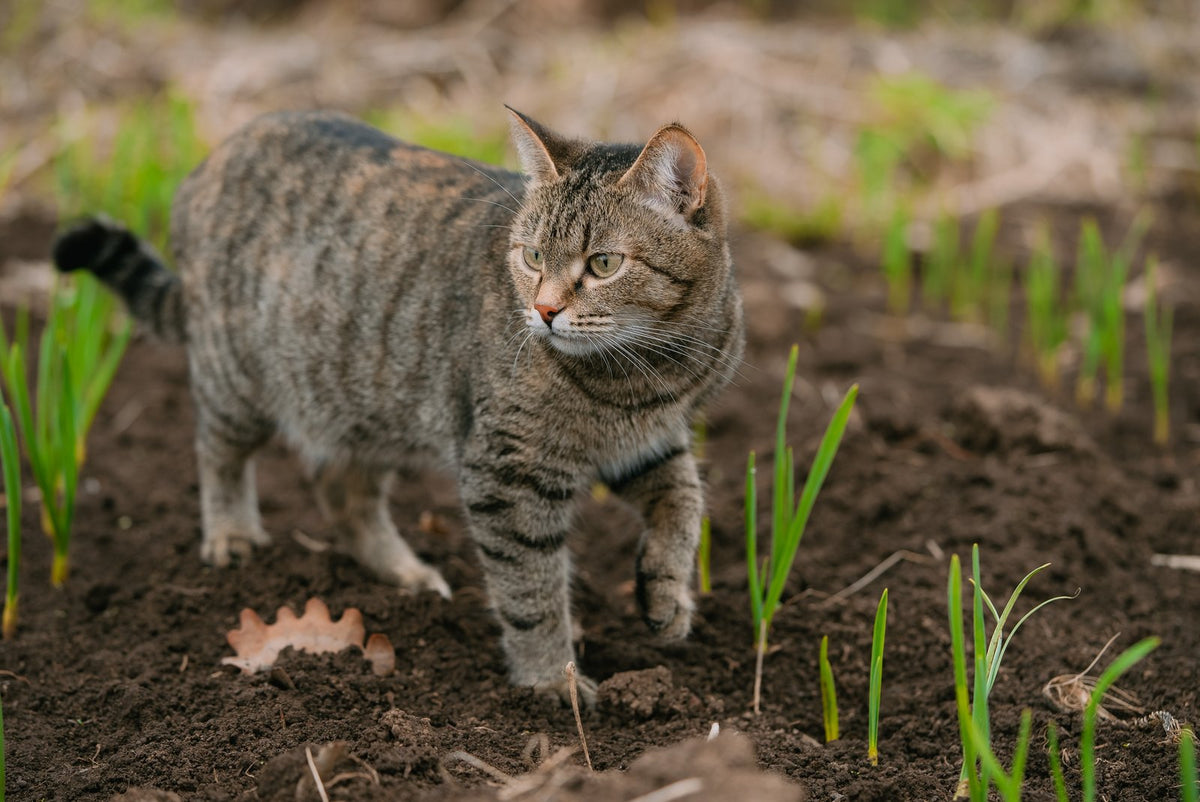
The short version: Cats and birds are best managed humanely and lawfully, never by harming them. For cats digging in beds, the cheap and effective answer is the stick method, pushing sticks upright into the soil so there is no open ground to dig, along with prickly mulch and keeping beds planted. For birds, protect the vulnerable stage, which is just-sown seed and young seedlings, with covers and wildlife-safe netting that is white, pulled taut and fine-meshed. Many birds eat pests and are protected by law, so the aim is to shield the crop, not drive the birds off.
Cats and birds both get into garden beds, but they call for quite different handling, and both come with a rule that matters: keep it humane and lawful. Harming, trapping or poisoning birds is an offence, and there is no need to harm a cat either.
The good news is that the gentle methods are also the effective ones, and most of them cost very little.
Keeping cats out of the beds
Cats dig and toilet in soft, open soil, so the trick is to take away the bare ground.
- Use the stick method. Push sticks, bamboo skewers, chopsticks or prunings upright into the soil across the bed, roughly 15 to 20 centimetres apart, so a cat cannot find clear ground to dig or squat on. It is cheap or free, harms nothing, and the sticks can double as plant supports.
- Lay a prickly or coarse mulch. Pine cones, holly or citrus prunings, coarse woodchip, pebbles or gravel all make digging unpleasant.
- Cover seedbeds. A mesh or wire cloche or a mesh-roofed frame simply excludes cats.
- Try a motion-activated sprinkler. A harmless burst of water startles cats and is widely used.
- Leave no bare soil. Keep beds mulched, planted and watered, since cats avoid digging in damp, occupied ground.
Deterrent plants and scents such as rosemary and lavender are often suggested, but the evidence is weak and the scents wash off, so do not count on them. Do not use cayenne or chilli, which can transfer to a cat's paws and eyes and cause real pain, so it is not a humane option. A note for cat owners: keeping your own cat safely contained at home protects the cat and the local wildlife, and is encouraged by the RSPCA and a growing number of councils. Cat droppings can also carry Toxoplasma, so wear gloves and wash your produce.
Protecting crops from birds
Start from the fact that many garden birds are useful, eating pest insects, and that most are protected by law. The aim is to protect the seed and fruit, not to drive the birds away.
- Use wildlife-safe netting. This is the important rule. Netting should be white, so nocturnal animals can see it, pulled taut and held off the foliage, with a mesh so fine you cannot poke a finger through it, no larger than 5 mm by 5 mm at full stretch. Loose, dark, wide-mesh netting entangles birds, flying-foxes, possums and reptiles. This standard is mandatory for household fruit netting in Victoria, and it is good practice everywhere, so check your own state or territory rules.
- Cover the vulnerable stage. Cloches, tunnels and mesh over seedbeds protect just-sown seed and young seedlings, which is where most bird damage happens.
- Use the stick method on seedbeds, which also disrupts birds scratching in freshly sown ground.
- Move your scarers around. Reflective tape, old discs, and moving or rotating devices work for a while, but birds habituate within weeks, so shift and vary them and combine methods.
Humane deterrence across Australia's climate zones
The methods are the same across the country. What changes is the local species and the local council rules, so point yourself to your council and your state wildlife authority for what applies where you live.
- Tropical (far north Queensland, the Northern Territory Top End, the Kimberley in Western Australia), subtropical (south-east Queensland, northern New South Wales) and arid (inland New South Wales, South Australia, Western Australia and the Northern Territory): the same covers, netting and stick method apply.
- Temperate (Victoria, southern New South Wales) and Mediterranean (Adelaide and southern South Australia, Perth and south-west Western Australia): note that Victoria has mandatory wildlife-safe fruit-netting rules, so check your own state or territory's requirements.
- Cool and alpine (Tasmania, the highlands): the same approach, with covers doubling as frost protection for seedlings.
Frequently asked questions
How do I stop cats digging in my beds?
Use the stick method together with a coarse mulch so there is no open soil, and keep the beds watered and planted.
Is netting safe for wildlife?
Only if it is white, taut and fine-meshed, with a mesh you cannot poke a finger through, no larger than 5 mm by 5 mm at full stretch. Loose, wide-mesh netting is not, and the fine-mesh standard is mandatory in Victoria.
Are the birds actually helping?
Often yes. Many eat pest insects and are protected by law, so protect the crop rather than targeting the birds.
Do scare devices work long term?
Not on their own. Birds habituate within weeks, so move and combine them.
Are there humane options only?
Yes. Never trap, poison or harm birds, which is illegal, or cats. Everything here is non-lethal.
Will scented plants like rosemary or lavender repel cats?
The evidence is weak and inconsistent, and scents wash off. Avoid chilli or cayenne on welfare grounds.
Take away the bare soil for cats, protect the seedlings and fruit from birds with safe netting, and you keep both out of trouble without harming a thing.
Related growing guides
Ready to plant? Browse our vegetable seeds and flower seeds, and protect the seedlings while they establish.