
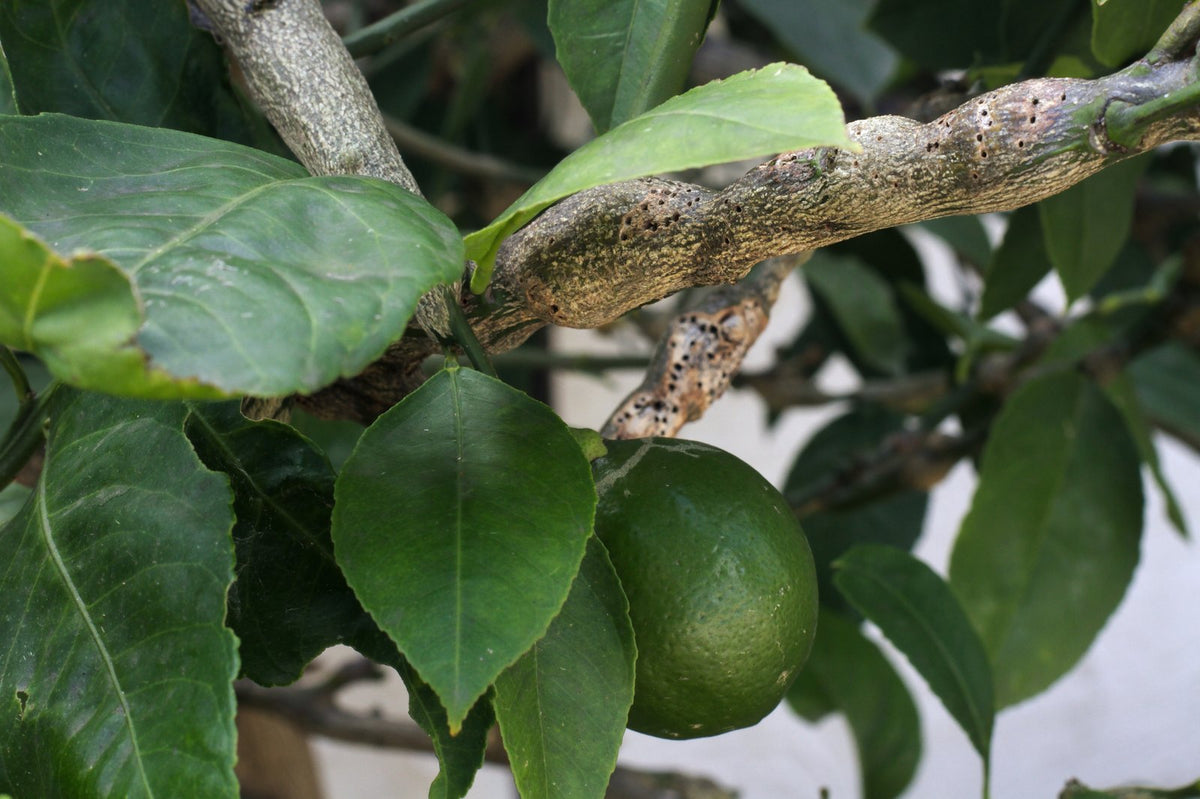
The short version: Citrus gall wasp is a tiny native wasp whose larvae cause woody swellings, or galls, along citrus twigs and branches, weakening the tree and cutting the crop. There is no spray that cures it. The one control that works is timing: prune out and destroy galled wood in late winter to early spring, before the adults emerge, and dispose of the prunings properly rather than composting them. Grapefruit and lemons are hit hardest.
If your lemon or grapefruit has developed knobbly, woody lumps along its stems, this is very likely citrus gall wasp. The wasp itself is only two or three millimetres long and almost never seen, so the galls are usually the first sign.
Happy Valley Seeds does not sell citrus trees, so this is advice only, but it is a common enough backyard problem to be worth getting right, and the whole approach comes down to good timing.
How to spot citrus gall wasp
The sign to look for is woody, lumpy swellings along the twigs and young branches, which form as the larvae feed inside the stem. The galls become visible from about April and are obvious by June, and tiny round exit holes appear as the adults leave in spring. The galls weaken the tree, reducing its vigour, fruit size and yield, and heavy galling can cause branch dieback, though it rarely kills an established tree outright.
The wasp responsible, Bruchophagus fellis, is a native, originally from the Queensland and northern New South Wales border region, where its wild host is the native finger lime. It is now established across much of eastern Australia and in metropolitan Perth, and it is still spreading.
Why timing is everything
Citrus gall wasp has just one generation a year, which is what makes it so manageable if you get the timing right. The adults emerge in spring, mate, and lay their eggs into the soft new spring flush. In the south that emergence runs mainly through October and November. A female lays up to 100 eggs and lives only a few days to a couple of weeks.
The larvae then tunnel into the stem and feed for around nine to ten months, while the tree swells around them into a gall, and the new adults emerge the following spring. Because everything hinges on that single spring emergence, removing the galls before it happens breaks the cycle for the year.
How to control citrus gall wasp
- Prune out galled wood before the adults emerge. Cut off and destroy galled wood in late winter to early spring, at least a month before emergence. A useful rule of thumb in the south is to have it done by the end of winter.
- Or skim the galls. On wood you do not want to remove, slice the outer gall lengthwise on one side with a sharp blade to expose the larvae, without ring-barking the stem, and skip any empty galls that already show exit holes.
- Dispose of prunings properly. Seal them in a bag for general rubbish or solarise them under plastic. Do not compost galled wood or put it in the green or FOGO bin, because the wasps still emerge from cut galled wood.
- Do not push soft spring growth. Go easy on nitrogen and heavy watering in late winter and spring, feeding mainly in autumn, and avoid heavy winter pruning that forces the soft new flush the wasp lays into.
Hanging yellow double-sided sticky traps inside the canopy in spring helps monitor and catch the emerging adults. A horticultural or petroleum spray oil on the bark in early spring may deter egg-laying, but it will not cure an existing infestation. The adults are weak fliers, so long-distance spread is mostly by wind or by people moving infested trees and untreated galled wood, which is why it is best not to move galled citrus material between areas.
How to keep citrus gall wasp down
- Make the winter prune-and-destroy a fixed part of your citrus routine.
- Time feeding for autumn, so the strong flush comes when it does the tree most good rather than feeding the wasp.
- Check young trees closely, since they are set back the most by heavy galling.
- Keep sticky traps in the canopy through spring to gauge how bad the emergence is.
Citrus gall wasp across Australia's climate zones
This is chiefly a pest of eastern Australia and the citrus-growing regions.
- Tropical (far north Queensland, the Northern Territory): part of the wasp's native range, where natural parasitoids help keep numbers down.
- Subtropical (south-east Queensland, coastal northern New South Wales): the endemic home range, where established predators moderate the pressure, though it still pays to monitor.
- Temperate (coastal and central New South Wales including Sydney, coastal Victoria): established and damaging in home gardens.
- Cool and mountain (highland Victoria, southern New South Wales, the ACT): it has spread south ahead of its predators, so galls can build up, and vigilance pays off.
- Mediterranean (Adelaide and South Australia, Perth and south-west Western Australia): established in both cities, so manage it as an ordinary established pest.
- Arid and irrigated (the Riverina and Sunraysia, the Riverland, the Central Burnett): widespread in commercial citrus, where growers time their controls to the adult emergence.
Frequently asked questions
What are the woody lumps on my lemon?
They are galls, where the tree has swollen around gall wasp larvae feeding inside the stem.
When should I prune the galls?
In late winter to early spring, before the adults emerge, which in the south means before about October, and at least a month ahead of emergence.
Can I compost the prunings?
No. Bag them for landfill or solarise them under plastic. The wasps still emerge from cut galled wood, so compost and green bins can spread them.
Will it kill my tree?
Usually not. It reduces vigour, fruit size and yield and can cause dieback, though a young, badly galled tree may be best replaced.
When do I hang sticky traps?
In spring as the adults emerge, around October and November in the south, placed inside the canopy.
Which citrus is worst affected?
Grapefruit and lemons, and susceptible rootstocks such as trifoliata and rough lemon, though all citrus can be affected.
Make the winter prune a habit, dispose of the wood properly, and resist feeding the soft spring flush, and citrus gall wasp should stay manageable without needing a spray.
Related growing guides
Ready to plant? Browse our vegetable seeds and herb seeds to fill the beds beneath your fruit trees.