
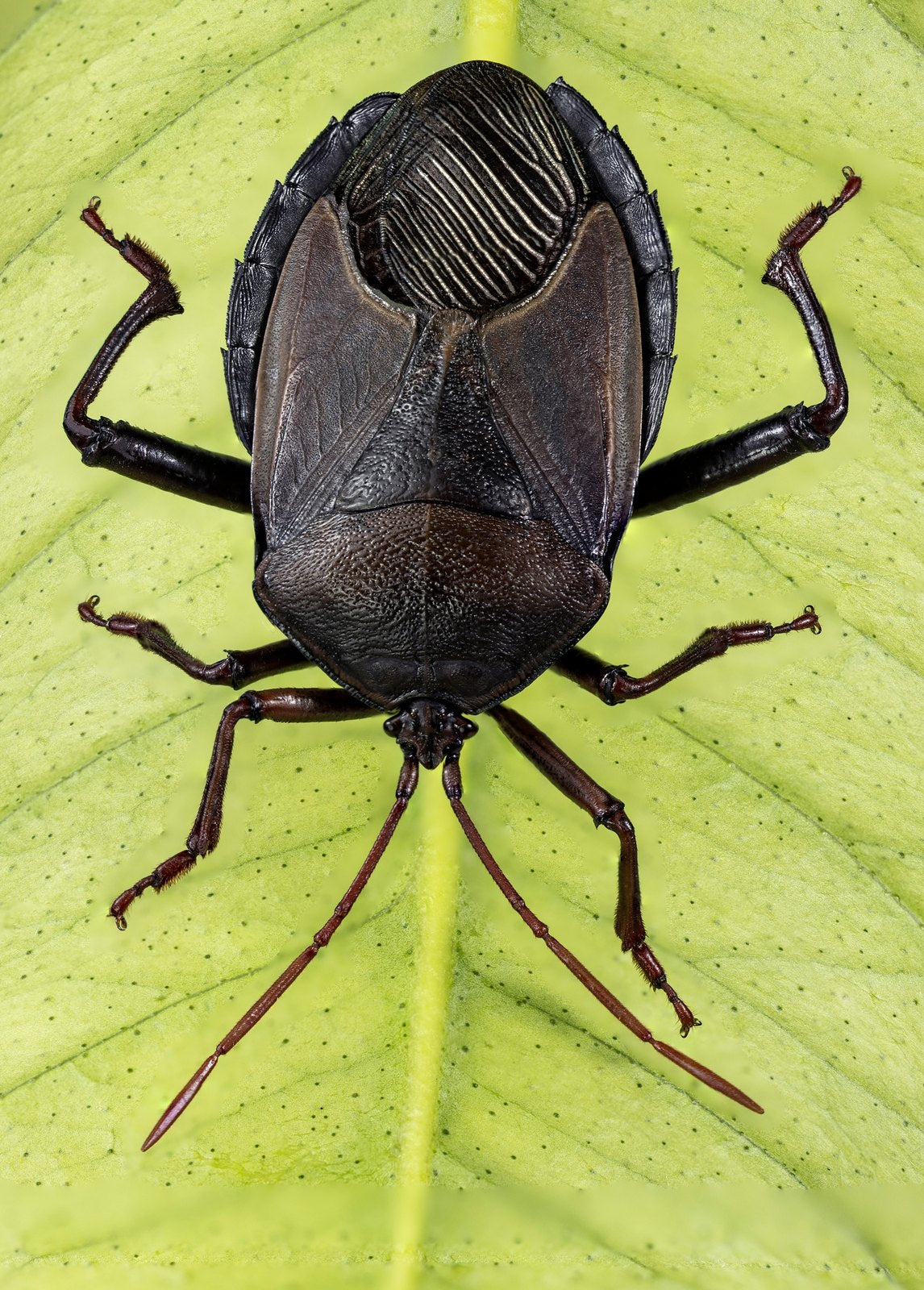
The short version: The bronze orange bug is a large native stink bug that clusters on citrus, sucking sap from new growth and flower and fruit stalks, so tips wilt and flowers and young fruit drop. When disturbed it squirts a foul, caustic orange-brown fluid that can burn skin and, worse, injure eyes, so always wear eye protection and gloves. Remove them by hand or vacuum early in the morning when they are sluggish, and treat the young nymphs with horticultural oil.
This is a bug that commands respect. It is big, it clusters on citrus in numbers, and its defence is a jet of caustic fluid that genuinely hurts if it reaches your skin or eyes.
Happy Valley Seeds does not sell citrus trees, so this is advice only, but for anyone with a lemon tree in the warmer parts of the country it is worth knowing how to deal with the bronze orange bug safely.
How to spot the bronze orange bug
The bronze orange bug (Musgraveia sulciventris) is a large, shield-shaped stink bug, native to Australia, with adults about 25 millimetres long and coloured bronze to nearly black. The nymphs change as they grow, starting small, flat and pale green, becoming a mottled yellow to orange, then maturing into the large, glossy bronze to black adult. They cluster on citrus, especially the new spring growth and the flower and fruit stalks.
The safety point cannot be overstated. When disturbed, they squirt a foul, caustic orange-brown fluid that can stain and burn skin and, if it reaches the eyes, cause severe pain and eye injury. Always wear safety glasses or goggles, gloves and long sleeves, keep your face well back, and never let them squirt into your eyes. It is a different insect from the smaller, bright green vegetable bug of the veg patch, and from the beneficial predatory shield bugs, which you should leave alone.
Why it targets citrus
The bronze orange bug feeds only on citrus, all types, with young trees hit hard and lemons and grapefruit often the worst affected. It is a sap-sucker, and feeding on the new shoots and the flower and fruit stalks makes the tips wilt and die and causes flowers and young fruit to drop, reducing the crop. The late-stage nymphs and adults do the most damage, and a heavy infestation weakens a young tree.
It has one generation a year. The small nymphs overwinter on the undersides of leaves, then become active and feed as the new growth flushes in spring, growing and changing colour through the warmer months, with adults present by summer. The worst of it is in spring and early summer, and it is most damaging in the warm, humid coastal districts.
How to control the bronze orange bug safely
- Hand-pick or knock them into soapy water, with protection on. Wearing eye protection, gloves and long sleeves, do this early in the morning when they are cool and sluggish and least likely to squirt.
- Vacuum small trees. An old vacuum cleaner lifts them off a small tree without you having to touch them, and a strong hose dislodges them too.
- Treat the young nymphs with oil. Horticultural or pest oil works best against the young nymphs early in the season.
- Back the predators. Assassin bugs, predatory shield bugs, spiders and birds all take them, so avoid the broad-spectrum sprays that kill these beneficials.
Never spray or squirt the fluid towards your own or anyone else's eyes. Pyrethrum-based sprays are sometimes used, and some are registered for organic gardens, but pyrethrum is broad-spectrum and harms bees and beneficial insects, so treat it as a cautious last resort and never spray open flowers.
How to keep the bronze orange bug down
- Check the undersides of leaves through winter for the overwintering nymphs, and deal with them early in spring while they are small.
- Keep young trees healthy and watch them closely, as they suffer the most.
- Always keep protective glasses and gloves with your citrus tools, so you are ready to remove bugs safely.
- Encourage a diverse garden so the predators are present when numbers build.
Bronze orange bug across Australia's climate zones
This is chiefly a subtropical, eastern-Australian pest.
- Subtropical (south-east Queensland, northern New South Wales): the heartland, where it is worst.
- Temperate (coastal and inland New South Wales, the ACT, parts of Victoria): established and spreading southward.
- Arid and semi-arid (inland irrigated citrus districts of Queensland and New South Wales): reported in some inland citrus areas.
- Tropical (far north Queensland, the Northern Territory): citrus is grown, but it is far less of a reported problem here.
- Mediterranean (South Australia, south-west Western Australia): citrus is widely grown, though it is not a commonly reported pest in these zones.
- Cool and alpine (Tasmania, alpine areas): citrus is limited, so it is not a noted problem.
Frequently asked questions
What is squirting orange fluid on my lemon tree?
Almost certainly the bronze orange bug, a native citrus stink bug that fires a caustic orange-brown spray when disturbed.
Does the spray really burn?
Yes. It can burn and stain skin and cause severe pain and eye injury, so wear eye protection and gloves and keep it away from your face.
Will it kill my tree?
An established tree usually survives, but it can lose new growth, flowers and fruit, and heavy attacks weaken young trees, so control mainly protects the crop.
When are they worst?
In spring and early summer, as the new growth flushes. The nymphs overwinter and become active in spring.
How do I remove them safely?
Wearing eye protection, gloves and long sleeves, knock or hand-pick them into soapy water early in the morning, or vacuum them off. Avoid the squirt.
Are they the same as the green stink bug?
No. The green vegetable bug is a smaller, bright green bug of vegetables and beans. The bronze orange bug is larger, turns bronze to black, and attacks citrus.
Gear up with glasses and gloves, work in the cool of the morning, and hit the nymphs early, and you can clear the bronze orange bug without wearing any of its defence yourself.
Related growing guides
Ready to plant? Browse our vegetable seeds and herb seeds to fill the beds beneath your citrus.