
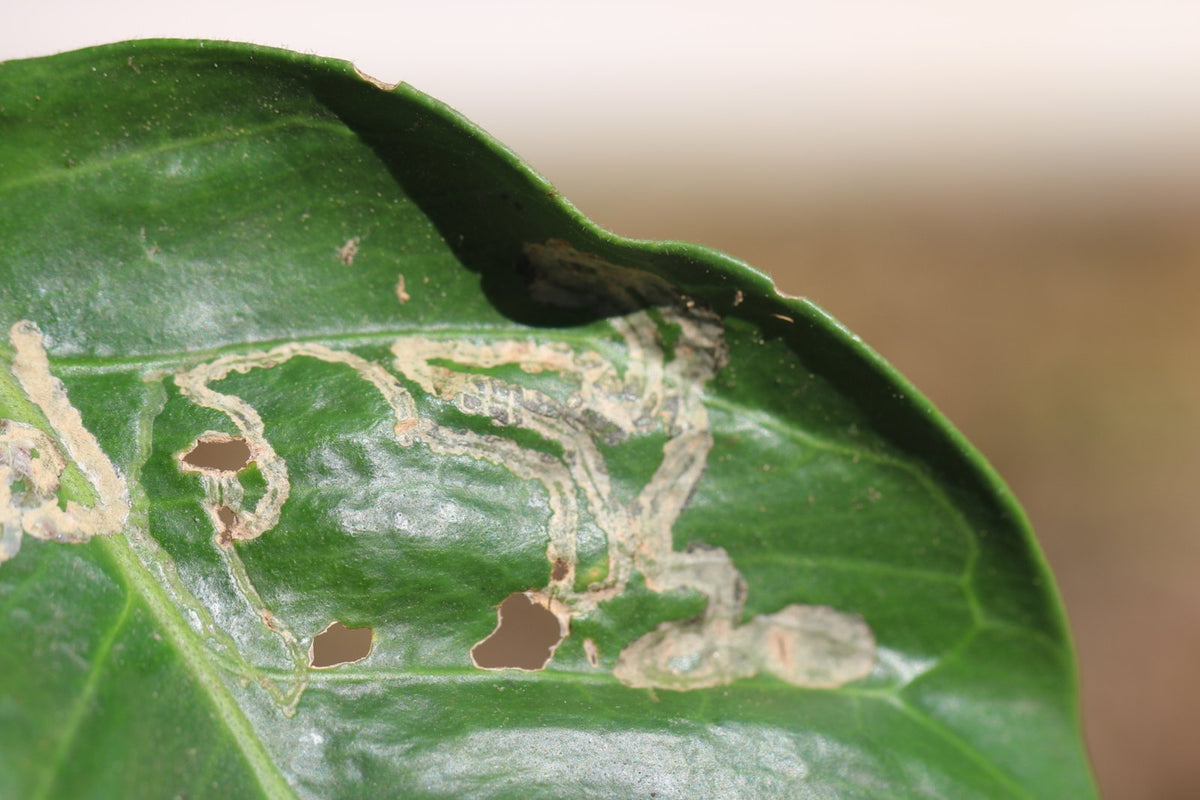
The short version: Citrus leaf miner is a tiny moth whose larvae tunnel inside the soft new leaves of citrus, leaving silvery squiggly trails and curled, distorted growth. On an established tree the damage is largely cosmetic and needs no spray, so the sensible response is to tolerate it, go easy on stripping affected leaves, and concentrate protection on young and potted trees using a horticultural oil timed to the new flush. It affects the leaves, not the fruit.
Those silvery, winding squiggles across new citrus leaves look alarming the first time you see them, but they are rarely the disaster they appear. Citrus leaf miner is a cosmetic nuisance on a healthy, established tree.
Happy Valley Seeds does not sell citrus trees, so this is advice only, but it is a very common backyard sight, and knowing when to act, and when to leave it be, saves a lot of unnecessary spraying.
How to spot citrus leaf miner
The sign is unmistakable: silvery, serpentine tunnels winding through the soft new leaves, often with a fine dark line down the centre, and the affected new leaves curl, twist and pucker. A tiny translucent greenish larva, only about three millimetres, sits at the growing end of each mine. The adult is a small silvery moth that flies at night and is rarely seen.
It is the only leaf miner that attacks citrus in Australia, so squiggly mines on citrus leaves are almost certainly this pest, Phyllocnistis citrella. Only the soft new flush is attacked, and the damage is largely cosmetic on established trees, though it can stunt young or potted ones.
Why it comes and goes
Citrus leaf miner is a warm-season pest with several overlapping generations, and one cycle takes only a couple of weeks in summer, longer as the weather cools. The moths lay on the soft flush, so the pressure peaks on the vigorous late-summer to autumn growth and goes quiet in winter. In southern Australia the spring flush often escapes damage, because numbers are still low early in the season.
This seasonal pattern is the key to managing it, because it means the tree can push out a clean spring flush if you feed it at the right time, and the worst-hit late flush is the one you can choose not to encourage.
How to manage citrus leaf miner
- Tolerate it on established trees. Mature trees keep using the mined leaves and cope perfectly well, so cosmetic mining needs no treatment.
- Go easy on stripping affected leaves. On an established tree the leaf still feeds the plant, and heavy picking or pruning triggers fresh soft flush that simply gets re-attacked. If you do remove badly mined growth, bin it rather than compost it.
- Time feeding to dodge the pest. Feed in late winter so the strong flush comes in spring, when numbers are low, and avoid high-nitrogen feeds that push soft growth in late summer.
- Use horticultural oil on the new flush, for young trees. Start as the growth emerges, before the leaves reach about a centimetre, and reapply through the susceptible period, roughly every five to seven days in warm weather or every ten to fourteen days when it is cooler, and stop once the leaves harden. The oil coats the flush so the moths avoid it, but it will not reliably kill larvae already inside a mine, so it is preventive, not a rescue. Avoid oil above about 35 degrees or on a stressed plant.
Concentrate your effort on the young and potted trees, which are the ones that truly suffer. Encourage the natural enemies, including lacewings and the parasitic wasps that attack the larvae, and avoid broad-spectrum insecticides, which kill those helpers and make things worse. There is no need to fuss over cosmetic mines on a big tree.
How to keep citrus leaf miner down
- Feed citrus in late winter so the main flush arrives in spring, ahead of the worst of the pest.
- Protect young and potted trees with well-timed oil on each new flush.
- Leave established trees alone, and resist the urge to prune out the mines.
- Keep trees healthy and evenly watered so they carry the cosmetic damage easily.
Citrus leaf miner across Australia's climate zones
- Tropical (the Northern Territory Top End, far north Queensland, the Kimberley in Western Australia): warm year round, so the most generations and near year-round pressure.
- Subtropical (south-east Queensland, the northern New South Wales coast): a classic hot spot, with heavy pressure through the long late-summer to autumn flush.
- Arid and semi-arid (inland New South Wales, South Australia and Western Australia, western Queensland, central Northern Territory): drier air limits it, but the irrigated summer flush is still attacked.
- Temperate (coastal New South Wales including Sydney, Victoria, southern South Australia and Western Australia): worst from late summer to autumn, with the spring flush usually escaping, so tolerate it on established trees.
- Cool and mountain (Tasmania, the ACT, the Victorian and New South Wales highlands): the fewest generations and the shortest window, so often minor, with young or potted citrus the main worry.
- Mediterranean (Perth and south-west Western Australia, Adelaide and coastal South Australia): hot dry summers, with damage building on the irrigated late-summer flush, so focus on protecting young trees.
Frequently asked questions
What are the silvery squiggles on my citrus leaves?
They are the tunnels of citrus leaf miner larvae feeding inside the new leaves.
Should I pick off the affected leaves?
On an established tree there is usually no need, since the leaf still feeds the plant and heavy removal triggers fresh growth that just gets re-mined. If you do take off badly mined tips, bin them rather than compost them.
Will it kill my tree?
Not an established tree, where the damage is cosmetic. Heavy attacks can stunt young or potted trees but rarely kill them.
When do I use white oil?
Only on the new flush, from bud-break until the leaves harden, reapplying through the susceptible period. It is preventive, not a cure for mines that are already there.
Young trees versus old trees?
Leave mature trees alone and concentrate your oil and care on the young and potted ones, which are the ones that suffer.
Does it affect the fruit?
It mines the leaves, not the fruit, and on an established tree there is no meaningful effect on yield or quality.
Feed at the right time, protect the young trees, and let the big ones wear their squiggles, and citrus leaf miner turns out to be far less trouble than it looks.
Related growing guides
Ready to plant? Browse our vegetable seeds and herb seeds to fill the beds beneath your citrus.