
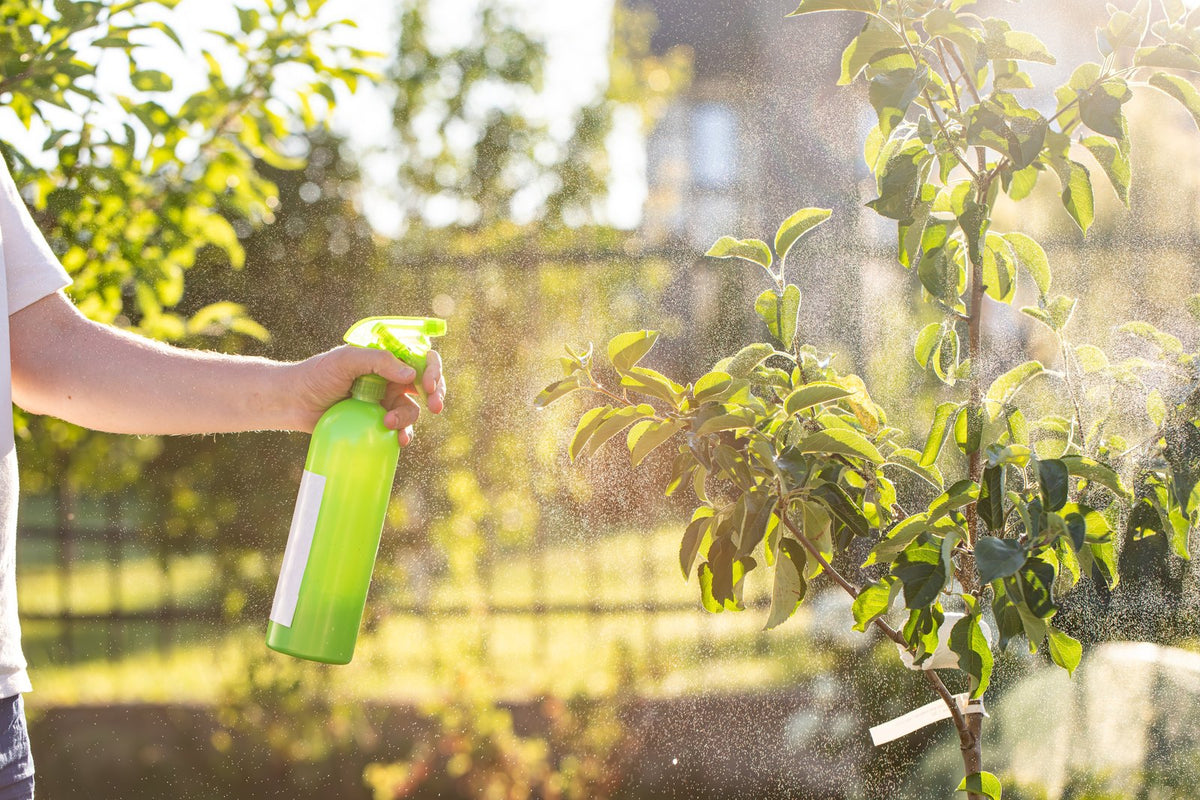
The short version: White oil is a simple horticultural oil spray that smothers soft-bodied pests like scale, aphids, mealybugs, mites and whitefly. You can make it at home from vegetable oil and a little dishwashing detergent, or buy a ready-made pest oil. It works by coating the insect, not by poisoning it, so coverage is everything and it has no lasting residue. The golden rule is to never spray it in the heat, as it will burn leaves above about 30 degrees or in full sun.
White oil is one of the most useful sprays in an organic gardener's kit, precisely because it is so simple. It does not poison anything, it just smothers the pest, so there is little resistance risk, though as a contact spray it can still affect other soft-bodied insects it lands on.
It is also cheap to make, which is handy, because scale and mealybug on a citrus or a pot plant often need more than one go.
What white oil is and how it works
White oil is a horticultural oil in which the oil is emulsified so it mixes with water. The name refers to the milky look of the home-made emulsion. You can make it from an ordinary vegetable, canola or sunflower oil with a little pure soap or plain dishwashing detergent as the emulsifier, or buy a commercial version sold as pest oil, petroleum spray oil or a botanical oil such as an eco-oil.
It works physically, not as a poison. The oil coats soft-bodied pests and their eggs and blocks the pores they breathe through, so they suffocate. Because it is mechanical, pests cannot build resistance to it, but it also means the residue is very short-lived, largely gone once it dries, so thorough coverage and repeat sprays are what make it work.
What it controls
White oil is for soft-bodied sap-suckers and a few soft chewers. It works on scale, best timed to the mobile crawler stage, on aphids, mealybugs, mites and whitefly, and on citrus leaf miner when sprayed on the new flush to deter egg-laying. It also helps smother the sooty mould that grows on honeydew. It is not a broad knockdown, and it does little against large, hard-bodied, mobile insects.
How to make and use white oil
A widely used home recipe is one cup of vegetable oil to a quarter cup of pure dishwashing detergent, shaken hard until it turns white, which makes a concentrate. Ratios do vary between sources, so if in doubt make the weaker mix. To spray, dilute about one tablespoon of the concentrate in a litre of water, shake well, and make it fresh each time.
- Cover the pest thoroughly. Wet both leaf surfaces, especially the undersides, along with the stems and branches where pests shelter.
- Spray in the cool. Early morning or evening, on a dry, still day, so the spray is not wasted to wind or rain.
- Repeat. Because the residue is short, plan on repeat sprays, spaced a few days to a couple of weeks apart depending on the pest.
- Water the plant first and only spray healthy, well-watered plants.
The cautions that matter
White oil is gentle on the gardener but can burn plants if misused, so a few rules are worth keeping.
- Never spray in the heat. Avoid spraying above about 30 degrees or in full sun, which causes leaf burn, and never spray a water-stressed plant.
- Test first. Try it on a few leaves and wait a day or two before doing the whole plant.
- Mind the sensitive plants. Many ferns, some conifers, seedlings and soft or hairy foliage can be damaged by oil.
- Keep it away from sulfur. Do not combine oil with a sulfur spray, or use it within about a month of one, or the foliage may burn.
- Choose the right detergent. Use a plain, additive-free detergent or pure soap, with no bleach, antibacterial agents or skin softeners.
Oils harm insects only by direct contact, so while the risk to bees is low, it is still good practice to spray late in the day and keep off open flowers.
Using white oil across Australia's climate zones
The main thing that changes by zone is the heat, which governs when you can safely spray.
- Tropical (far north Queensland and the Northern Territory Top End, including Cairns and Darwin): spray early in the day and avoid the build-up and wet-season heat.
- Subtropical (Brisbane and northern New South Wales): use the cool of the morning and avoid the humid midday.
- Arid and semi-arid (inland New South Wales, South Australia and Western Australia, and the Northern Territory around Alice Springs): high heat makes burn likely, so spray only cool, well-watered plants.
- Temperate (New South Wales, Victoria and the ACT, including Sydney, Melbourne and Canberra): avoid hot northerly spells, otherwise straightforward.
- Mediterranean (Perth and southern Western Australia, and Adelaide in South Australia): skip the dry summer heat and heatwaves.
- Cool and alpine (Tasmania, the highlands): summer heat is rarely a limit, so just watch for cold, wet days.
Frequently asked questions
Is homemade white oil as good as the bought kind?
Both smother pests the same way. Homemade is cheaper, while commercial pest oils and eco-oils are pre-emulsified and more consistent.
Will white oil burn my plants?
It can, if it is too strong, sprayed on a hot or sunny day, used on a stressed plant, or applied to a sensitive species. Test it first.
Does it kill bees?
Only by direct contact, and the residue is short, so spray late in the day and keep off open flowers.
What pests does it work on?
Soft-bodied sap-suckers such as scale, aphids, mealybugs, mites and whitefly, rather than large, hard or fast-moving insects.
How often do I need to spray?
Repeat sprays are the norm, spaced by the pest, because the short residue means one application is rarely enough.
Can I use ordinary cooking oil?
Yes. Common recipes use ordinary vegetable, cooking or canola oil.
Make it weak, spray it in the cool, and cover the pest properly, and white oil knocks back scale and its soft-bodied cousins with little lasting harm to the rest of the garden.
Related growing guides
Ready to plant? Browse our vegetable seeds and flower seeds for the season ahead.