
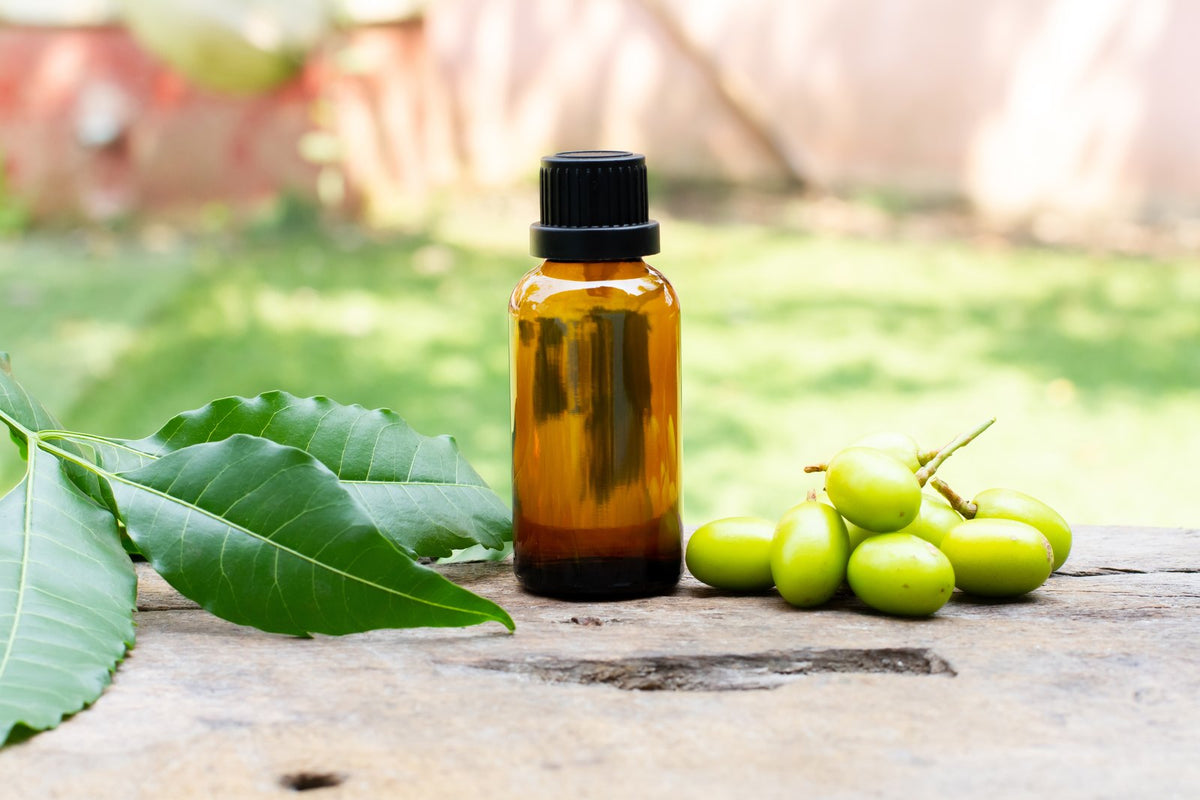
The short version: The important point for Australian gardeners is that registered neem products here are approved for ornamental plants only, not food crops, so use only an APVMA-registered product and follow its label exactly. Neem oil is a plant-derived spray that works slowly, by putting insects off feeding and disrupting their growth, rather than knocking them down on contact. Treat it as a considered choice, spray late in the day to protect bees, and never spray it in the heat.
Neem has a big reputation overseas as an all-purpose organic spray, and plenty of that reputation has carried over to Australia. The reality here is more limited, and it is worth understanding before you buy a bottle.
Used within its proper limits it is a useful, gentle tool, but it is neither the instant fix nor the free-for-all edible-crop spray it is sometimes made out to be.
What neem oil is and how it works
Neem oil is pressed and extracted from the neem tree (Azadirachta indica), and its main insecticidal compound is azadirachtin. Cold-pressed neem oil keeps both the azadirachtin and the fatty oil, so it both disrupts insects and smothers them, while a clarified extract works mainly by smothering, much like a horticultural oil.
It is not a fast knockdown. Neem acts as an antifeedant, a repellent and an insect growth regulator, disrupting moulting, feeding and egg-laying, with some smothering as well. The effect builds over days as the insects feed, so results are gradual and repeat sprays are usual. It is most effective on young, soft-bodied stages and weak on hard-shelled adults and eggs.
The Australian registration limit
This is the part that matters most. In Australia, the neem and azadirachtin garden products registered by the APVMA are for ornamental plants only, not food crops. The common home-garden products are registered for pests such as two-spotted mite, aphid and whitefly on ornamentals, and for fungus gnats in potting mix, and their labels state that they must not be used on plants grown for human or animal consumption.
Unlike some overseas markets, neem is not broadly registered for edible or vegetable crops here, and products sold simply as neem oil with no registration number cannot legally make pest-control claims. So the honest advice is to use only an APVMA-registered product, strictly as the label directs, and not to spray neem freely over your vegetables. Because these rules can change, it is worth checking the current position before you buy.
How to use neem oil within its limits
- Follow the product label. Use the rate and the uses on an APVMA-registered product, rather than any generic recipe.
- Mix it fresh. Neem needs a wetting agent to emulsify in water, and the diluted mix breaks down within hours, so make only what you need and use it straight away.
- Cover thoroughly and repeat. Spray to run-off, covering both leaf surfaces, and repeat in line with the pest's life cycle as the label sets out.
Within its registered ornamental uses, neem is applied against aphids, mites, whitefly, caterpillars and thrips, the soft stages of scale and mealybug, and fungus gnats as a potting-mix drench.
The cautions that matter
- Protect the bees. Neem can harm bees on direct contact, so spray late in the day or early morning, never on open flowers or foraging bees, and note that native and stingless bees may be more sensitive. The risk drops once the spray has dried.
- Never spray in the heat. Like other oils, neem can scorch foliage in heat or sun, so avoid spraying above about 30 degrees or on a stressed plant, and spot-test first.
- Keep it out of waterways, as it is toxic to fish and aquatic life.
- It is not for eating, and some sources advise particular caution around pregnancy, so handle it as the garden chemical it is.
Using neem oil across Australia's climate zones
As with any oil, the heat is the main thing that changes by zone.
- Tropical (far north Queensland and the Northern Territory Top End, including Cairns and Darwin) and subtropical (Brisbane and northern New South Wales): high temperatures often exceed the safe spraying range, so spray early or late and skip hot spells.
- Arid and semi-arid (inland New South Wales, South Australia and Western Australia, and the Northern Territory around Alice Springs): heat and stressed plants make burn likely, so spray only cool, well-watered plants.
- Mediterranean (Perth and southern Western Australia, and Adelaide in South Australia): avoid the dry summer heat.
- Temperate (New South Wales, Victoria and the ACT, including Sydney, Melbourne and Canberra) and cool and alpine (Tasmania, the highlands): the burn risk is mainly in midsummer, so otherwise it is straightforward.
Frequently asked questions
Is neem allowed on vegetables in Australia?
Registered neem products are approved for ornamentals only, and their labels state they are not for edible plants, so follow the label and do not spray it on food crops.
Is neem safe for bees?
Only if it is not sprayed on or near them. Direct contact can harm bees, so spray when they are not foraging.
Why is neem so slow?
It is an antifeedant and growth regulator rather than a contact poison, so it acts over days as the pests feed and moult.
How is neem different from white oil?
White oil only smothers, while cold-pressed neem oil both smothers and disrupts feeding and growth through azadirachtin.
Can I make my own neem spray?
Homemade neem from raw oil is unregistered, hard to emulsify and inconsistent, so a registered product used to the label is the better path.
Is neem organic-approved?
Neem is accepted under many organic schemes, but check the specific product's certification rather than assuming.
Kept to its registered uses, sprayed in the cool and off the flowers, neem is a useful, gentle helper, so long as you treat its Australian limits as real.
Related growing guides
Ready to plant? Browse our vegetable seeds and flower seeds for the season ahead.