
The short version: Pyrethrum is a natural insecticide made from the flowers of the pyrethrum daisy, much of it grown in Tasmania. It knocks insects down fast on contact and then breaks down quickly, but it is broad-spectrum, so it kills beneficial insects and bees as readily as pests. Use it only as a targeted last resort, spray at dusk once the bees have stopped foraging, keep it off open flowers, and never confuse natural pyrethrum with the longer-lasting synthetic pyrethroids.
Pyrethrum has a reputation as the gardener's safe, natural knockdown spray, and it is natural, but safe is doing a lot of work in that sentence. It is as hard on ladybirds and bees as it is on aphids.
That does not make it useless, but it does mean it belongs at the back of the cupboard for the occasional targeted job, not in the weekly routine.
What pyrethrum is
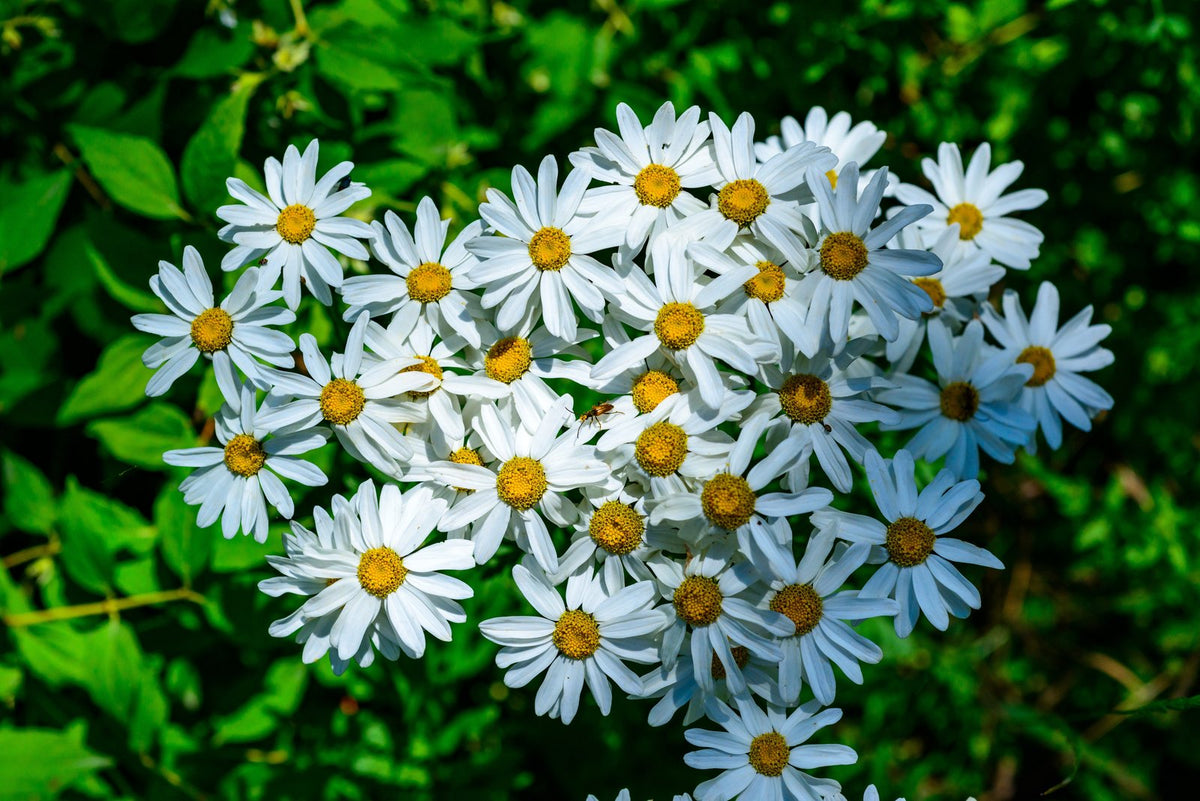
Pyrethrum is made from the dried flowers of the pyrethrum daisy (Tanacetum cinerariifolium), and the active compounds are a group of six natural pyrethrins. There is a pleasing local angle here, as Australia is the world's largest producer, with the crop grown commercially in north-west Tasmania.
One distinction is worth getting right. Natural pyrethrum is not the same as the synthetic pyrethroids, such as permethrin and bifenthrin, which are longer-lived manufactured chemicals. Many commercial pyrethrum products also add a synthetic synergist called piperonyl butoxide, or PBO, to boost the knockdown, and PBO is not certified organic, so it is worth reading the label if that matters to you.
How it works, and its catch
Pyrethrum is a fast contact knockdown that attacks the insect nervous system, so it has to hit the pest directly. It then breaks down quickly in sunlight and air, giving it a short residual life, which is part of its appeal. It is broad-spectrum, working on aphids, caterpillars, thrips, beetles and many other insects.
The catch is in that word broad-spectrum. It also kills the beneficial insects you want to keep, including ladybirds, lacewings, predatory wasps and bees, and it is toxic to fish, while cats are sensitive to this chemical family. This is exactly why it is a last resort rather than a routine spray: every time you use it, you knock back the natural controls that would otherwise be doing the work for free.
How to use pyrethrum responsibly
- Spray at dusk. Apply late in the day once the bees have stopped foraging, so the spray can break down overnight before they return.
- Target the pest. Aim a fine jet directly at the pest rather than blanket-misting the whole plant, and avoid open flowers.
- Follow the label. Use an APVMA-registered product to its label, as any insecticide sold or used in Australia must be registered.
- Avoid the heat. Pyrethrum can burn soft-leaved plants such as zucchini and melons in hot weather.
Home-made steeps of dried pyrethrum flowers exist, but their strength is unreliable and unmeasured, so both the results and the safety vary. A registered product at least gives you a known dose.
Using pyrethrum across Australia's climate zones
Pyrethrum can be used Australia-wide, and the main difference by zone is how fast it breaks down.
- Tropical (far north Queensland and the Northern Territory Top End, including Cairns and Darwin) and arid and semi-arid (inland New South Wales, South Australia and Western Australia, and the Northern Territory around Alice Springs): the strong sun breaks it down fast, so dusk spraying and reapplication matter more here.
- Subtropical (Brisbane and northern New South Wales): spray in the cool, and mind soft-leaved crops in the heat.
- Temperate (New South Wales, Victoria and the ACT, including Sydney, Melbourne and Canberra) and Mediterranean (Perth and southern Western Australia, and Adelaide in South Australia): straightforward, avoiding hot, sunny afternoons.
- Cool and alpine (Tasmania, the highlands): the home of much of the crop, and simple to use in the milder conditions.
Frequently asked questions
Is pyrethrum organic?
The natural extract is, but many products add PBO and other non-organic ingredients, so check the label.
Does it kill bees?
Yes. Bees are highly sensitive to it, so spray at dusk, target the pest and keep off flowers.
What is the difference between pyrethrum and pyrethroids?
Pyrethrins are natural and short-lived. Pyrethroids, such as permethrin and bifenthrin, are synthetic and longer-lasting.
Is it safe for pets and fish?
It is toxic to fish, and cats are notably sensitive, so keep both away from treated areas and water.
How long does it last?
Not long. It breaks down quickly in sunlight and air, so do not count on it lingering, which is why coverage and timing matter.
Can I make my own?
You can steep pyrethrum flowers, but the strength is unreliable, so a registered product gives a known dose.
Keep it for the rare targeted job, spray it at dusk, and respect what it does to bees and beneficials, and pyrethrum stays a useful tool rather than a problem of its own.
Related growing guides
- How to make and use white oil
- Neem oil and its Australian limits
- What is actually in a beneficial bug mix
Ready to plant? Browse our vegetable seeds and flower seeds for the season ahead.