
How to Grow Rhubarb in Australia
Sow rhubarb seed in pots at 20 to 23°C, mostly in spring. Plant out 90 cm to 1 m apart, buds at soil level, in rich, free-draining soil. Feed and water generously. Pick nothing in the first year, a few stalks in the second and more from the third, pulling rather than cutting. Eat only the stalks: the leaves are poisonous.

| Sun | Full sun; shade hot afternoons |
|---|---|
| Water | Deep soak once or twice weekly when dry |
| Soil | Rich, free-draining loam, pH 5.5 to 6.5 |
| Feed | Heavy feeder; manure yearly, seaweed fortnightly |
| Spacing | 90 cm to 1 m |
| Depth | Seed 10 to 25 mm |
| Germination | 7 to 14 days at 20 to 23°C |
| Harvest | Lightly from year two |
| Container | Not suited to pots |
| Frost | Crown hardy; leaves damaged below about -3°C |
| Use | Cooked stalks only; the leaves are poisonous |
Rhubarb (Rheum × hybridum, often sold as Rheum rhabarbarum) is a long-lived perennial of the dock family, Polygonaceae, grown for its tart leaf stalks. A well-fed crown can keep cropping for 10 years or more, and it grows well from the Adelaide Hills and Canberra to Tasmania. The mistake most gardeners make is picking too hard, too soon: a young plant needs every leaf to build the crown that feeds later harvests.
Three mistakes that matter
- Picking in the first year. Stalks taken from a young plant starve the crown, so later stalks stay thin and few. Leave the plant unpicked for its first year after planting, pick lightly in the second and take more from the third.
- Planting the crown deep in wet soil. A buried crown in soggy ground rots, often without warning until the plant collapses. Set the buds at or just above the surface, in free-draining soil or on a mound where drainage is poor.
- Letting flower stalks stand. A flower spike draws off the energy the plant would put into stalks and roots, and a crown left to flower year after year weakens. Cut each spike out as soon as it shows (see Cutting Back).
When to plant
Rhubarb seed germinates best when the seed-raising mix holds 20 to 23°C. Sow it in pots in spring, or in autumn where winters are mild, and plant out once frost has passed. Sow once: this is a permanent crop, and a few more seeds than you need gives you a choice of seedlings. Plant crowns and divisions while they are dormant, from late winter to early spring.
| Zone | Example cities | Plant | Harvest | Notes |
|---|---|---|---|---|
| Tropical | Darwin, Katherine NT; Cairns, Townsville QLD; Broome WA | Not recommended | Not recommended | No winter rest, heat above 27°C and wet-season humidity weaken plants and rot crowns. |
| Subtropical | Brisbane, Gold Coast, Bundaberg QLD; Coffs Harbour, Lismore NSW | Mar and Jul-Sep | Apr-Oct | Marginal: grow in afternoon shade on a raised bed; plants are often short-lived through humid summers. |
| Arid and semi-arid | Alice Springs NT; Broken Hill, Dubbo NSW; Mildura VIC; Kalgoorlie WA | Aug-Oct | Sep-Nov and Mar-May | Plant crowns Jul-Sep; shade and mulch through summer, when heat slows growth and thins stalks. |
| Temperate | Sydney, Newcastle, Wollongong NSW; Melbourne, Geelong VIC | Sep-Nov | Sep-Apr | Plant crowns Aug-Oct; around Sydney, give plants afternoon shade through summer. |
| Mediterranean | Perth, Bunbury WA; Adelaide and the SA coast | Mar-Apr and Aug-Oct | Apr-Dec | Autumn sowing suits Perth; plants often stay leafy all winter but need steady water in dry summers. |
| Cool and alpine | Hobart, Launceston TAS; Canberra ACT; Ballarat VIC; Orange NSW | Sep-Nov | Nov-Mar | Sow under cover and plant out after the last frost; plant dormant crowns Jun-Sep. |
In hot inland and northern gardens, plants that never get a winter rest tend to tire within a season or two. Many growers there replant every year or two.
Site, soil and setup
Give rhubarb at least half a day of full sun in cool districts. From Sydney north and across the inland, afternoon shade from a tree or shadecloth protects the leaves, because stalk quality falls once temperatures pass 27°C.
The soil should be deep, rich and free-draining, with a pH of 5.5 to 6.5. Crowns rot in wet clay, so build a mound or raised bed on heavy ground, and see soil pH explained before adding lime.
| When | What to add | Rate |
|---|---|---|
| 4 to 6 weeks before planting | Well-rotted cow or horse manure, dug in | 5 to 10 cm layer |
| 4 weeks before planting, only if pH is below 5.5 | Dolomite lime, raked in | 100 to 200 g per square metre |
| At planting | Compost, worked into the top 20 cm | 5 cm layer |
| At planting | Blood and bone, raked in | 100 to 150 g per square metre |

Choose a spot you will not need to dig for years. When you replant, move rhubarb to fresh soil, because crown rot organisms linger where it grew.
Planting Crowns
Rhubarb starts from seed raised in pots, which grows into a crown (the fleshy rootstock the stalks spring from). Established crowns can also be split to make more plants.
Crown division
Lift a plant older than two years while it is dormant in winter. Split the crown downwards through the top with a sharp spade, so each piece keeps two or three buds and some roots. Replant the pieces straight away with the buds just above the soil, or wrap them in damp newspaper until you are ready. Dividing every three to five years keeps crowns vigorous; see dividing perennials.
Starting from seed
- Sow seed 10 to 25 mm deep in small pots or cell trays of seed-raising mix.
- Keep the mix just moist and warm, as When to plant describes; seedlings usually appear in 7 to 14 days.
- In frosty districts, sow under cover 5 to 7 weeks before the last frost.
- Pot each seedling on once it has its first true leaves and stands 5 to 10 cm tall.
- Grow the young plants on for 6 to 8 weeks from sowing before planting out.
Seedlings vary from their parent: some grow red stalks, others green, and not every plant matches the variety named on the packet. Green stalks cook just as well as red. Seed of 'Victoria' and 'Glaskins Perpetual' from the rhubarb seed range varies in the same way, so keep your strongest plants and divide those later.
Planting out
- Harden seedlings off first (hardening off: a week of lengthening spells outdoors so the leaves toughen). See hardening off seedlings.
- Space plants 90 cm to 1 m apart, since each crown spreads for years.
- Set seedlings and crowns so the buds sit at or just above the soil surface.
- Water in with seaweed solution at half strength, 15 mL per 9 L.
- Mulch 5 to 7 cm deep with pea straw or sugar cane, keeping it clear of the crown.

Care by growth stage
Steady water and generous feeding decide how thick the stalks grow. Weeks count from sowing; from the second year, established plants repeat the last three rows.
| Stage | Water | Feed | Watch for |
|---|---|---|---|
| Seedlings in pots, weeks 1 to 8 | Keep the mix just moist, never wet | None until the first true leaves, then seaweed solution at half strength (15 mL per 9 L) fortnightly | Slow growth in cold mix; weak or spindly seedlings to discard |
| First season in the bed, weeks 9 to 40 | A deep soak once or twice a week in hot, dry weather | Fish and seaweed blend at 25 mL per 9 L fortnightly | Flower spikes; snails on young leaves; pick no stalks |
| Winter rest, each year | Water less; in cool districts winter rain is often enough | None while the crown is dormant | Soggy soil around the crown; dead leaves to clear in late autumn |
| Spring regrowth, from year two | Water deeply as new leaves unfold | Pelletised chicken manure at 100 g per square metre as growth starts, watered in, then seaweed solution at 30 mL per 9 L fortnightly | Aphids on new leaves; flower spikes |
| Picking season, from year two | Keep watering steadily right through picking | Fish and seaweed blend at 25 mL per 9 L fortnightly; a 5 cm layer of compost when picking ends in autumn | Leave four or five stalks on the plant; stop picking after three to four months |
If growth stalls in poor soil, a light dose of all-purpose controlled release granular (NPK around 14-5-10) scratched into the soil in spring can help. Go easy on nitrogen, since too much tends to bring flower spikes and long, poor stalks.

Cutting Back
Trimming steers the plant's energy into stalks and roots and keeps rot away from the crown.
- Cut flower spikes off with a sharp knife as close to the crown as you can, as soon as they appear.
- Leave healthy leaves on after picking ends, because they build the reserves for next season.
- In late autumn, clear away dead and dying leaves so pests and disease do not build up over winter.
Companion planting
Rhubarb holds its bed for years, so choose neighbours that will not need digging near the crown.
Grows well with
- Asparagus, another long-lived crop that wants a permanent, well-manured bed away from annual digging.
- Cabbage and kale, low cool-season crops that Australian planting guides list as good neighbours and that fit around the bed's edge.
Keep apart
- Carrots and potatoes, which need digging that disturbs rhubarb roots and which host root-knot nematode.
- Tomato, another crop root-knot nematode attacks, so the pest can build up in a shared bed.
Harvesting Stalks
Pick a stalk once its leaf has fully opened, and before the edges of the oldest leaves begin to turn down.
- Grip the stalk near its base and pull down and sideways with a slight twist, so it comes away whole.
- Never cut stalks, because the stub left behind can rot back into the crown.
- Take the outer stalks first, and no more than a third of the plant at one time.
- Leave at least four or five stalks growing.
- Trim each leaf off in the garden and compost it.
- After three to four months of picking, let the plant grow on unpicked for the rest of the season.

Wrap picked stalks in damp paper or a tea towel rather than plastic. In the fridge crisper they last at least a week. For longer keeping, chop the stalks and freeze them raw.
Stew the stalks with sugar, or bake them into crumbles, pies and cakes with apple or strawberries.
Common problems
Thin, stringy stalks. Dry spells are the usual cause, along with a crown too young or picked too hard (see Three mistakes that matter).
Green stalks on a red variety. Stalk colour is set by each plant, so a green seedling stays green, though red colour deepens in cool weather.
Frequent flower spikes. Flowering is most common after cold winters and hot summers, and also follows too much nitrogen, stress or an old crown that needs dividing.
Mottled yellow young leaves. On alkaline soil this often points to manganese deficiency, so test the pH and apply a soluble trace element mix at the label rate.
No seedlings. Cold seed-raising mix is the usual cause; see When to plant for the temperature seed needs. Read more
Pests and diseases
Rhubarb has few serious pests, but crown rot can kill a plant outright.
Crown rot (Phytophthora and Rhizoctonia species). Soil-borne pathogens rot the crown and roots in wet soil, and the leaves yellow and wilt despite moist ground; lift and discard a rotted plant.
Garden snail (Cornu aspersum). Snails and slugs chew young leaves and shoots, mostly in spring; collect them by torchlight at night. Read more
Aphids (Aphididae). These small sap-sucking insects cluster on new leaves; hose them off or spray insecticidal soap. Read more
Root-knot nematode (Meloidogyne species). These microscopic soil worms, common in sandy soil, form galls (swellings) on the roots and weaken the plant. Read more
Leaf spot (Alternaria and Phoma species). These fungi cause black spots on the leaves but rarely harm the stalks; pick off spotted leaves and water at soil level.
Prevention first
- Plant in free-draining soil and keep mulch off the crown to head off crown rot.
- Plant or divide only firm, vigorous, disease-free crowns.
- Check new leaves each week in spring, when snails and aphids are most active.
- Keep the plant well fed and watered, since a vigorous crown shrugs off minor leaf damage.
Tips
- Cook rhubarb in stainless steel or enamel pans, because its acid can discolour copper and aluminium.
- Tip frozen rhubarb straight into the pot; thawing it first turns the pieces soggy.
- Lay trimmed leaves over a patch of weeds to smother them.
- Label your best seedling in its first season, so you know which crown to divide later.
Questions
Can you eat rhubarb leaves?
No. Rhubarb leaves contain oxalic acid and are toxic to people and to animals, including chooks. Eat only the stalks, trim the leaves off in the garden and put them in the compost, where they are safe. If someone eats a leaf, call the Poisons Information Centre on 13 11 26.
How long does rhubarb take to grow from seed?
Seed-grown rhubarb usually takes two to three years to reach a full harvest. Leave the plant unpicked in its first year, pick a few stalks in the second and pick more freely from the third. Crowns and divisions are older plants, so they reach picking size sooner.
Can you grow rhubarb in Brisbane or Darwin?
In Brisbane, yes, with care. Sow in autumn or late winter, plant in a raised bed with afternoon shade and expect plants to tire after a few years. In Darwin and the tropics it is not recommended, because heat, humidity and no winter rest weaken plants and rot crowns.
Should you cut or pull rhubarb stalks?
Pull them. Grip each stalk near the base and pull down and sideways with a slight twist, so it comes away whole. A cut leaves a stub that can rot back into the crown. Take the outer stalks first and never more than a third of the plant at once.
Why is my rhubarb flowering?
Flowering is most common after a cold winter and a hot summer. It also follows too much nitrogen, dry spells or an old, crowded crown. Cut each flower spike out close to the crown as soon as it appears, and divide crowns every three to five years.
Why are my rhubarb stalks green instead of red?
Stalk colour is set by each plant, and rhubarb grown from seed varies, so some seedlings grow green stalks that stay green. Red colour usually deepens in cool weather. Green stalks cook just as well as red, so keep the strongest plants whatever their colour.
Grow it


More edible produce guides
All edible produce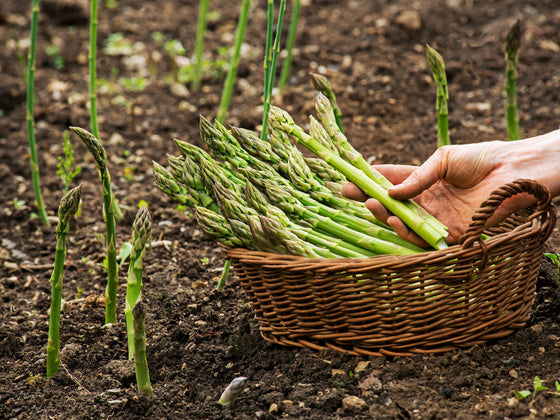
Asparagus
How to grow asparagus from seed in Australia: raising seedlings, planting crowns, a bed of its own, when to start picking spears and cutting back the fern.
| Position | Full sun |
|---|---|
| Depth | Seed 1 to 2 cm |
| Spacing | 30 to 40 cm |
| First pick | Third spring from sowing |
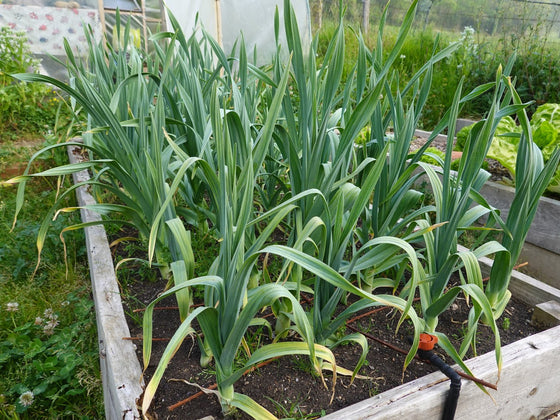
Elephant garlic
Also sold as Russian garlic. Plant the large cloves in April or May, keep the bed weeded and watered, and use the finger test to judge when the bulbs are ready.
| Position | Full sun, 6 hours or more |
|---|---|
| Depth | 5 cm of soil over tip |
| Spacing | 20 to 30 cm |
| First pick | 6 to 8 months |
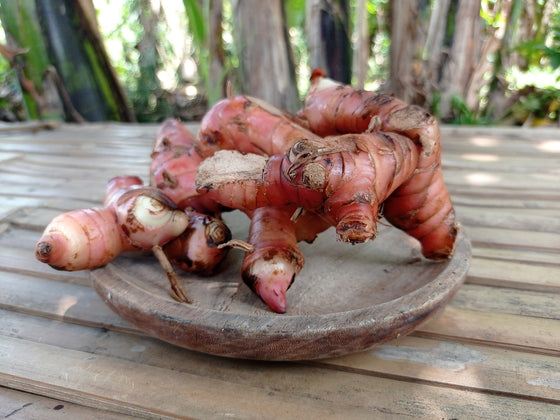
Galangal
Grow Thai red and lesser galangal from rhizomes in Australia: planting months for six zones, pre-sprouting, pots for frosty areas, feeding, pests and harvest.
| Position | Morning sun, afternoon shade |
|---|---|
| Depth | 5 to 7 cm, buds up |
| Spacing | 30 to 45 cm |
| First pick | 17 to 43 weeks |
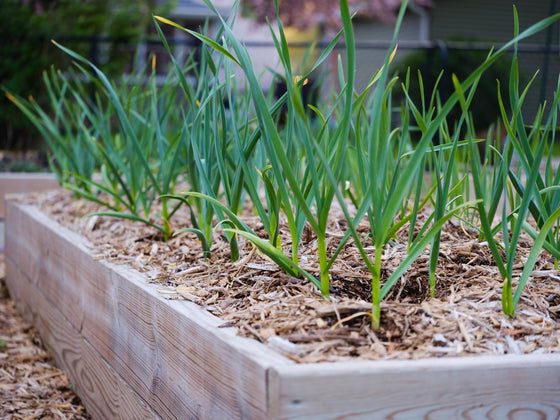
Garlic
When to plant garlic in each Australian climate zone, how deep and how far apart, feeding through winter, and how to tell when the bulbs are ready to lift and cure.
| Position | Full sun, 6 hours or more |
|---|---|
| Depth | Tip 2 to 5 cm deep |
| Spacing | 10 to 15 cm |
| First pick | 22 to 39 weeks |