
How to Grow Lawtonberries in Australia
Plant dormant bare-root Lawtonberry canes in winter, 1.5 to 1.8 m apart beside a post-and-wire trellis. Choose deep, well-drained soil with morning sun and afternoon shade in hot districts. Keep the soil moist through flowering and fruiting. Canes fruit in their second year, usually from about December to February, so cut out canes that have fruited and keep strong new ones. Check your state's blackberry weed rules before planting.
| Sun | Morning sun, afternoon shade |
|---|---|
| Water | Deep, steady water, most through fruiting |
| Soil | Deep, rich, well drained, pH 6.0 to 6.5 |
| Feed | Medium; early spring, then potassium from flowering |
| Spacing | 1.5 to 1.8 m apart |
| Depth | Nursery soil mark; hole 10 to 15 cm deep |
| Germination | Not from seed: plant dormant bare-root canes |
| Harvest | Second summer, Dec to Feb |
| Container | Not suited to pots |
| Frost | Frost hardy; dormant canes are not harmed |
| Support | Post-and-wire trellis, four or five wires |
| Use | Fresh, jam, pies, sauces and freezing |
Lawtonberry is 'Lawton', an old American blackberry in the rose family, Rosaceae, usually listed as Rubus philadelphicus. It is grown for its purple-black berries on upright, thorny canes. Planted as a bare-root cane in winter and trained on a trellis, it crops each summer on canes that grew the year before. A common mistake is cutting out those new canes, and with them the next crop.
Three mistakes that matter
- Cutting the new canes. Lawtonberry fruits on canes that grew the previous season, so a hard winter prune of the green new canes removes next summer's berries. Cut out the canes that have fruited and keep the strongest five or six new ones, as Pruning and Training explains.
- Letting it wander. Lawton suckers strongly, cane tips that touch the soil take root, and birds carry the seed away. Pull suckers while they are small, keep every cane tied up on the trellis and net the ripening fruit.
- Dry soil and hot afternoons at fruiting. Brambles that dry out while flowering or fruiting give a poor harvest, and harsh sun can scald ripening berries. Mulch deeply, water steadily and give the row afternoon shade in hot districts.
When to plant
Plant dormant bare-root canes in winter, before the buds burst: from about June in milder districts to September in cold ones. Blackberries crop best after a cold winter, so the cooler zones suit them most and the tropics do not suit them at all. One planting keeps cropping for many years in good soil, so there is nothing to plant in succession.
| Zone | Example cities | Plant | Harvest | Notes |
|---|---|---|---|---|
| Tropical | Darwin, Katherine NT; Cairns, Townsville QLD; Broome WA | Not recommended | Not recommended | No cold winter and a humid wet season; blackberry is also a Class A declared weed in the NT. |
| Subtropical | Brisbane, Sunshine Coast, Bundaberg QLD; Coffs Harbour, Lismore NSW | Jun-Jul | Dec-Jan | Marginal: mild winters can mean light crops. Choose a cooler inland or elevated spot with afternoon shade. |
| Arid and semi-arid | Mildura VIC; Broken Hill, Dubbo NSW; Port Augusta SA | Jun-Aug | Dec-Feb | Plant in winter; give afternoon shade, wind shelter, deep mulch and steady water through the hot, dry summer. |
| Temperate | Sydney, Newcastle, Wollongong NSW; Melbourne, Geelong VIC | Jun-Aug | Dec-Feb | Melbourne suits it best. On the warm Sydney coast, shade ripening fruit from hot afternoon sun. |
| Mediterranean | Adelaide and the SA coast; Perth, Bunbury WA | Jun-Aug | Dec-Feb | We cannot send canes to WA. In Adelaide, water deeply and shade the row through the long, dry summer. |
| Cool and alpine | Canberra ACT; Ballarat VIC; Orange NSW; Hobart TAS | Jul-Sep | Jan-Feb | The best zone for it. Frost does not harm dormant canes. We cannot send canes to Tasmania. |
Frost does not harm dormant canes, so in cold districts plant as soon as the soil can be worked. Snow that falls after bud burst can break canes, which is one more reason to plant early and tie in promptly.
Site, soil and setup
| Get the site right | What to do |
|---|---|
| Sun | Morning sun with afternoon shade in hot districts, full sun in cool ones; run the row north to south for even light |
| Shelter | Out of strong winds, including hot summer northerlies in the south: wind-stressed plants grow smaller canes, leaves and fruit |
| Soil | Deep, rich in organic matter and above all well drained; blackberries grow on a wide range of soils if water drains away |
| pH | 6.0 to 6.5; on more acid soil, dig in garden lime or dolomite lime at 100 to 200 g per square metre, 4 weeks ahead. See soil pH |
| Drainage | Where water lies after rain, plant on a raised bed or mound. See waterlogged soil |
| Bed preparation | Clear perennial weeds such as couch first, then dig in a 5 cm layer of compost and 5 to 10 cm of well-rotted cow or horse manure, 4 to 6 weeks before planting |
| Base feed | Blood and bone at 100 to 150 g per square metre, or a controlled release granular (NPK around 14-5-10) at the label rate, raked in at planting |
| Room | 1.5 to 1.8 m between plants, and 2 to 3 m between rows |
Avoid a spot where brambles, roses or stone fruit grew recently. Crown gall bacteria (Agrobacterium tumefaciens) attack many plants in the rose family, and an infected plant cannot be cured.
Blackberry and the weed laws
Wild European blackberry (Rubus fruticosus aggregate) is a Weed of National Significance, declared in every state and territory. Government sources place North American blackberries such as Lawton outside that group, but each state words its law differently.
| State or territory | What the law says | For a Lawtonberry |
|---|---|---|
| New South Wales | European blackberry must not be sold anywhere in NSW, apart from nine named cultivars | NSW WeedWise lists Rubus philadelphicus among the introduced species outside the blackberry group |
| Queensland | Blackberry (R. anglocandicans and the R. fruticosus aggregate) is a category 3 restricted invasive plant: it must not be given away, sold or released | The listing names European blackberry; confirm with Business Queensland before planting |
| Victoria | The R. fruticosus aggregate is regionally controlled in most catchments and restricted in the Mallee | Agriculture Victoria places North American blackberries grown for fruit outside the aggregate, and notes some have escaped from gardens; ask Agriculture Victoria if unsure |
| South Australia | Entry, road transport and sale of European blackberry are prohibited statewide | PIRSA places many fruiting cultivars derived from North American brambles outside the aggregate; ask your landscape board if unsure |
| ACT | The R. fruticosus aggregate is a declared pest, apart from listed cultivars | Lawton is not on that list; ask ACT Biosecurity before planting |
| Northern Territory | Blackberry is a Class A declared weed, to be eradicated, and a declared weed may not be grown or sold | Do not plant any blackberry without advice from the NT Weed Management Branch; the climate does not suit it either |
| Western Australia and Tasmania | Blackberry is declared in both; Tasmania prohibits the import, sale and distribution of the weed, and its management plan excludes commercial varieties | We cannot send canes to either state |
Wherever you garden, the law expects you to stop a plant you keep from spreading. Follow the second of Three mistakes, and bag prunings instead of dumping them.
Planting Canes
Lawtonberry starts from a dormant bare-root cane, a short stem on a root system, planted straight into the bed beside its trellis. Due to quarantine restrictions and our shipping policy, we cannot send Lawtonberry canes to Western Australia or Tasmania.
Bare-root preparation
Unwrap the cane as soon as it arrives and check that the roots are still moist. Plant within a few days, keeping the roots in their damp packing until then. Shake the packing off before planting and keep it out of the hole, since it holds water but feeds nothing. Soak the roots in a bucket of water while you dig, and trim off any broken roots.
Planting the cane
- Dig a hole twice the width of the roots and 10 to 15 cm deep, 1.5 to 1.8 m from the next plant.
- Spread the roots out and set the plant at the depth it grew in the nursery, shown by the soil mark on the stem.
- Backfill, firm gently and water in with seaweed solution at 30 mL per 9 L.
- Cut the cane back to about two buds so the plant puts its energy into strong new canes from the base.
- Mulch with compost or straw, keeping it clear of the stem.
Setting up the trellis
Lawton's upright canes reach 1.5 to 2 m, and the fruiting canes still need tying in. Set sturdy posts about 2 m tall and up to 3 m apart. Stretch four or five wires between them, 30 cm apart, with the lowest 45 cm above the ground.
Care by growth stage
Steady water from flowering to the last pick, and a light hand with nitrogen late in the season, decide the crop. Stages follow the seasons and shift a few weeks between zones. The table repeats every year, although a newly planted cane carries little fruit in its first summer.
| Stage | Water | Feed | Watch for |
|---|---|---|---|
| Planting to bud burst, winter | Water in well, then only when the top few centimetres of soil dry out | Seaweed solution at 30 mL per 9 L at planting, then fortnightly as buds swell; the synthetic option is the controlled release granular in the base feed | Weeds competing at the base; wind rocking the new plant loose |
| New canes, early spring | Water deeply once or twice a week in dry spells | Pelletised chicken manure at 100 g per square metre as growth starts; or an all-purpose soluble (NPK around 23-4-18) at half the label rate, fortnightly | Two-spotted mite (Tetranychus urticae) in dry weather; purple spots of cane anthracnose (Elsinoe veneta) on new canes |
| Flowering, late spring | Keep the soil evenly moist and water at soil level, not over the flowers | Sulphate of potash at 30 to 50 g per square metre once, at first flowers, then fish and seaweed blend at 25 mL per 9 L, fortnightly; or a fruiting and flowering soluble (NPK around 15-4-26) at the label rate, fortnightly | Plague thrips (Thrips imaginis) in the flowers; grey mould (Botrytis cinerea) on fading petals in cool, wet weather |
| Fruit swelling and picking, summer | Keep watering deeply and steadily right through picking; plants that dry out give smaller fruit and weaker new canes | Liquid potash at the label rate, fortnightly; or keep the fruiting and flowering soluble going at the label rate, fortnightly | Birds, possums and Queensland fruit fly (Bactrocera tryoni) at ripe fruit; scalded, pink drupelets in heat |
Stop feeding once picking ends: late nitrogen keeps canes soft into winter and softens the fruit. Before the berries colour, cover the trellis with white, wildlife-safe netting on a frame, taut, with mesh too small for a finger. Net early, because birds that find the crop hunt for gaps.
Pruning and Training
Each plant carries two sets of canes at once. A cane in its first year (a primocane) only grows. In its second year (as a floricane) it flowers, fruits and dies, so prune to keep the two sets apart.
| When | What to do |
|---|---|
| Summer | Tie new canes loosely together as they grow and train them up to the top wire, away from the fruiting canes; pinch 8 to 10 cm off their tips once they are 20 to 30 cm above it, so they branch |
| After the last pick | Cut every fruited cane off at ground level; these canes are brittle and carry old fruit stalks |
| Winter | Keep five or six of the strongest new canes and cut the rest out at the base; shorten their side shoots to 30 to 45 cm, then fan or weave them along the lower wires |
| All year | Pull out suckers that come up away from the row while they are small, since a pulled sucker regrows more slowly than a cut one |
Wear thorn-proof leather gloves and long sleeves for every pruning job, as staying safe in the garden describes. Top-dress the row with compost after pruning and put the straw mulch back.
Companion planting
A Lawtonberry row is best kept to itself, with low flowers along its edges for pollinators and pest predators.
Grows well with
- Alyssum, whose small flowers draw hoverflies, whose young prey on mites and other small pests.
- Cornflower, sown along the path side, which gives predatory insects nectar, pollen and shelter.
Keep apart
- Raspberry, blackberry, boysenberry, loganberry, youngberry, tayberry and silvanberry, each on its own trellis, since brambles share grey mould, rusts and viruses.
- Wild blackberry thickets, which harbour blackberry leaf rust (Phragmidium violaceum) and other bramble troubles.
- Vegetable beds, which the suckers invade from the row.
Harvesting Fruit
Pick when berries have turned fully purple-black and feel slightly soft; left to ripen fully on the cane, they develop the best flavour.
- Expect the first real crop in the second summer, once the canes that grow after planting have had a year.
- Pick every 3 to 4 days through the season, which in the Dandenongs east of Melbourne runs from about December to February.
- Pick when the fruit is dry, because wet berries rot faster.
- Roll each berry off with a gentle pull: a blackberry keeps its core, unlike a raspberry.
- Lay berries one or two deep in shallow containers so they do not crush.
- Bin mouldy fruit as you go, and freeze stung fruit sealed in a bag for two days before binning it.
Chill unwashed berries, covered, and eat them within a day or two; Lawton keeps better than most blackberries. Wash them just before use, and freeze them for longer keeping.
Eat them fresh from the cane, or bake them into pies and simmer them into sauces and the jam they are best known for.
Common problems
Canes browning and dying after harvest. This is normal: a cane dies once it has fruited, so cut it out as Pruning and Training describes.
Pink, cooked-looking drupelets. This is sunscald, which often strikes when strong sun follows cool, cloudy weather; see Three mistakes.
Crumbly berries that fall apart. Poor drupelet set can signal raspberry bushy dwarf virus, which bees spread in pollen. It cannot be cured, so replace badly affected plants with clean stock.
Berries that stay partly red. Where part of a berry stays hard and red while the rest ripens black, the red drupelets never ripen. This is redberry mite (Acalitus essigi), a minute mite found in Victorian and Tasmanian blackberries, worst within about 30 m of wild blackberry.
Berries eaten before you pick them. Birds can strip a blackberry crop, so net the trellis before the fruit colours, as Care by growth stage describes. Read more
Pests and diseases
Most bramble troubles in Australian gardens start in wet, crowded canes or in hot, dry weather.
Two-spotted mite (Tetranychus urticae). These minute mites feed under the leaves in warm weather, leaving pale speckles that turn to a silvery sheen. Sprays kill the predatory mites that control them, so hose leaf undersides in dry spells. Read more
Grey mould (Botrytis cinerea). The most serious berry disease in Australia shows as short grey fur on drupelets, after infection at flowering in cool, wet weather. Keep new canes apart from fruiting canes for airflow, and pick often.
Cane anthracnose (Elsinoe veneta). Round purple spots appear on new canes in late spring and turn grey in the middle. Cut out badly spotted canes. Where it returns, spray dormant canes in winter with a copper fungicide whose label lists the disease on blackberry, at the label rate.
Blackberry leaf rust (Phragmidium violaceum). Released in Australia to weaken wild blackberry, this rust makes red-purple leaf spots above yellow pustules that turn black. Erect blackberries are less susceptible, so pick off affected leaves and keep the canes thinned for airflow.
Queensland fruit fly (Bactrocera tryoni). A native pest throughout eastern Australia, it lists blackberry among its host fruits. Females lay eggs in ripening fruit, so pick promptly and do not let fallen fruit lie under the plants. Where it is active, use fine insect mesh in place of the bird net after flowering, secured to the ground and clear of the fruit. Read more
Prevention first
- Start with clean canes from a reputable supplier, since viruses and crown gall arrive on infected stock.
- Prune as Pruning and Training describes, so air moves freely between the new and fruiting canes.
- Water the soil, not the canes, and keep the base of the row free of weeds.
- Clear any wild blackberry on your land near the row, since it carries the most redberry mite.
Tips
- Not sure which canes have fruited? Bend them: old canes are brittle and snap, while new ones flex.
- Freeze berries in a single layer on a tray before bagging them, so they stay loose and can be tipped out by the handful.
- To stretch the picking season, give an earlier bramble such as boysenberry or youngberry its own trellis nearby: Lawton ripens after them in the south-east.
Questions
When do you plant lawtonberry canes in Australia?
Plant dormant bare-root canes in winter, from about June in milder districts to September in cold ones. Plant them as soon as they arrive. Frost does not harm dormant canes, so in cold districts plant once the soil can be worked. Lawtonberry does not suit the tropics.
Is a lawtonberry a cross between a raspberry and a blackberry?
No. 'Lawton' is an old American blackberry selected from the wild in the eastern United States. Agriculture Victoria names three possible parent species, and Australian nurseries and NSW WeedWise list it as Rubus philadelphicus. Sources on its exact parentage are thin, but none of them records raspberry in it.
Is it legal to grow a lawtonberry in my state?
Wild European blackberry is declared in every state and territory. NSW WeedWise lists Lawton's species outside that group, and other states word their laws around the European aggregate, so check with your state authority. The Northern Territory declares blackberry a Class A weed, and we cannot send canes to Western Australia or Tasmania.
How do you prune a lawtonberry?
After harvest, cut every cane that fruited off at ground level. In winter, keep five or six strong new canes, shorten their side shoots to 30 to 45 cm and weave them along the trellis. In summer, train new canes up to the top wire and pinch their tips once they pass it by 20 to 30 cm.
When do lawtonberries fruit?
Usually from about December to February, on canes that grew the season before. The first real crop comes in the second summer after planting. Pick every 3 to 4 days once berries are fully purple-black and slightly soft.
Do lawtonberries need a second plant to fruit?
No. Lawtonberry is self-fertile, so a single plant sets fruit without a partner. Plant a second one only if you want more berries.
More edible produce guides
All edible produce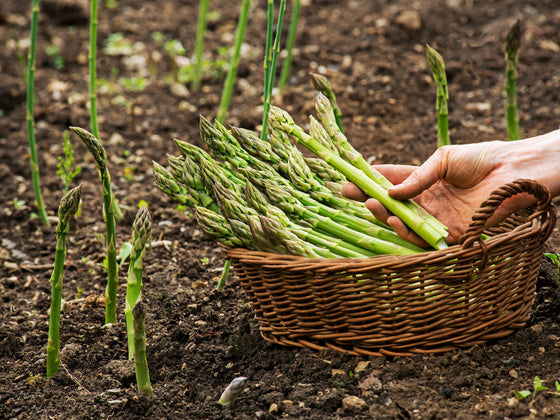
Asparagus
How to grow asparagus from seed in Australia: raising seedlings, planting crowns, a bed of its own, when to start picking spears and cutting back the fern.
| Position | Full sun |
|---|---|
| Depth | Seed 1 to 2 cm |
| Spacing | 30 to 40 cm |
| First pick | Third spring from sowing |
Blackberry
Grow thornless blackberries in Australia: each state's weed rules, planting bare-root canes in winter, trellis training, pruning, feeding and picking the fruit.
| Position | Full sun, afternoon shade inland |
|---|---|
| Depth | Old soil mark, or 3 to 5 cm deeper |
| Spacing | 150 to 180 cm apart |
| First pick | Second summer after planting |
Boysenberry
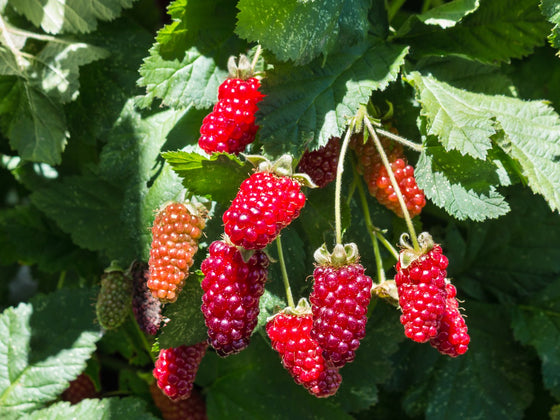
Grow boysenberries in Australia from bare-root canes: winter planting by climate zone, building a wire trellis, feeding, pruning fruited canes and picking.
| Position | Sun; afternoon shade where hot |
|---|---|
| Depth | Stem base level with soil |
| Spacing | 1.5 to 2 m apart |
| First pick | Early summer, from year two |
Elephant garlic
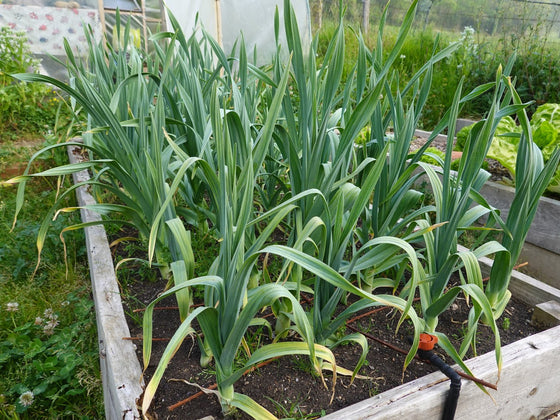
Also sold as Russian garlic. Plant the large cloves in April or May, keep the bed weeded and watered, and use the finger test to judge when the bulbs are ready.
| Position | Full sun, 6 hours or more |
|---|---|
| Depth | 5 cm of soil over tip |
| Spacing | 20 to 30 cm |
| First pick | 6 to 8 months |