
How to Grow Asparagus in Australia
Sow asparagus seed in spring, 1 to 2 cm deep, once the soil holds at least 16°C. Raise seedlings in pots, then plant them 30 to 40 cm apart in a sunny, free-draining bed of their own. Pick nothing in the first spring in the bed and only lightly in the second. From the third spring, cut spears for up to 10 weeks.

| Sun | Full sun |
|---|---|
| Water | Evenly moist; well watered through summer |
| Soil | Deep, rich, free-draining; pH 6.5 to 7.0 |
| Feed | Compost each winter; chicken manure in spring |
| Spacing | 30 to 40 cm |
| Depth | Seed 1 to 2 cm |
| Germination | 14 to 21 days; best at 24 to 27°C |
| Harvest | Third spring from sowing |
| Container | Not suited to pots |
| Frost | Hardy when dormant; spears frost tender |
| Use | Young spears only; berries are toxic |
Asparagus (Asparagus officinalis, family Asparagaceae) is a perennial vegetable grown for the tender spears it pushes up each spring. A well-made bed can keep cropping for 15 to 20 years, and most Australian asparagus is grown in Victoria, around Koo Wee Rup and Mildura. The usual mistake is picking too soon, before the crown (the cluster of buds and fleshy roots below ground) has built its reserves.
Three mistakes that matter
- Picking before the crowns are ready. Plants cut too heavily too soon often stay weak and spindly for years. Leave a new crown uncut in its first spring in the bed, then pick lightly in the second (see Harvesting Spears).
- Cutting the fern while it is still green. The summer fern refills the crown for next spring's spears. Leave it standing until it has turned yellow or brown in late autumn, then cut it at ground level (see Cutting Back).
- Letting weeds and grass move in. Young asparagus competes poorly, and a hoe among the crowns damages them. Pull weeds by hand and keep the bed under mulch; see organic weed control for stubborn grasses.
When to plant
Sow seed in spring once the soil holds at least 16°C. It germinates best at 24 to 27°C, so a seedling heat mat helps in cool districts. One sowing is enough, because the plants stay for many years. Seedlings go into their permanent bed after the last frost, and dormant crowns are planted in winter.
| Zone | Example cities | Plant | Harvest | Notes |
|---|---|---|---|---|
| Tropical | Darwin, Katherine NT; Cairns, Townsville QLD | May-Jul | Aug-Oct, from year three | Sow early in the dry season. Without a cool winter rest, crops are usually lighter; plant on mounds. |
| Subtropical | Brisbane, Sunshine Coast, Bundaberg QLD; Coffs Harbour NSW | Aug-Nov | Aug-Oct, from year three | Choose 'UC 157 F2' or 'Argenteuil' for mild winters, and raise beds so summer storms drain away. |
| Arid and semi-arid | Mildura VIC; Broken Hill, Dubbo NSW; Alice Springs NT | Sep-Nov | Aug-Oct, from year three | Mildura grows asparagus commercially. Sow after the last frost; water deeply and mulch through hot summers. |
| Temperate | Sydney, Newcastle NSW; Melbourne, Geelong VIC | Sep-Nov | Sep-Nov, from year three | Start trays under cover once nights warm. Commercial picking at Koo Wee Rup, near Melbourne, begins in September. |
| Mediterranean | Perth, Bunbury WA; Adelaide and the SA coast | Sep-Nov | Sep-Nov, from year three | Planners give no separate window here; spring sowing suits. Water deeply through the long, dry summer. |
| Cool and alpine | Hobart, Launceston TAS; Canberra ACT; Ballarat VIC; Orange NSW | Sep-Nov | Oct-Dec, from year three | Raise seedlings under cover and plant out after the last frost; frost can brown early spears. |
Seedlings sown late in the window go into winter small; keep them in their pots and plant them out as dormant crowns in winter.
Site, soil and setup
Choose full sun, shelter from strong wind and a bed of its own, clear of tree roots and of annual crops that get dug. The ferns grow 0.5 to 1.5 m tall, so set the bed where they will not shade shorter crops.
Asparagus wants deep, rich, free-draining soil with a pH of about 6.5 to 7.0. On heavy clay, build a raised bed or mound, because crowns in wet soil can rot. See what to do when soil will not drain.
| Step | Product and rate | When |
|---|---|---|
| Clear perennial weeds such as couch and kikuyu | Dig out every root and runner | Ideally 6 to 12 months before planting |
| Raise the pH if it tests below 6.0 | Garden lime, 100 to 200 g per square metre | 4 weeks before planting |
| Build structure and food | Well-rotted cow or horse manure, a 5 to 10 cm layer dug in | 4 to 6 weeks before planting |
| Add organic matter | Compost, a 5 cm layer worked through the top soil | Before planting |
| Base feed | Pelletised chicken manure, 100 g per square metre | At planting |
Pick ground that has not grown asparagus before, because Fusarium crown rot can survive in the soil indefinitely.
Planting Crowns
Raise seedlings in pots for their first few months, then plant them in the permanent bed, where each one grows into a crown.
Choosing a variety
All three varieties raise a mix of male and female plants from seed. Males generally crop better, while females set red berries.
| Variety | Type | Spears | Worth knowing |
|---|---|---|---|
| 'Mary Washington' | Heirloom, open-pollinated | Long, straight, medium dark green with tight, purple-tinged tips | Early spears; plants can crop for up to 20 years |
| 'UC 157 F2' | Second generation (F2) of a University of California hybrid | Dark green, with light bracts (the small scales along the spear) | Moderate tolerance of Fusarium root rot; suits warm districts with mild winters; F2 plants vary more than most |
| 'Argenteuil' | European heirloom | White with rose-coloured buds when blanched | Heat tolerant and early; blanch under straw for white spears (see Tips) |
Raising seedlings
- Soak the seed in water for two days before sowing.
- Sow 1 to 2 cm deep, one or two seeds to a deep cell or small pot of seed-raising mix.
- Keep the mix moist and warm; seedlings usually appear in 14 to 21 days.
- Stand the pots on wire mesh rather than a solid bench, so the roots branch instead of forming one weak taproot.
- From the first ferny shoots, water in seaweed solution at half strength (15 mL per 9 L) every fortnight.
- After 10 to 12 weeks, harden off the seedlings (accustom them to outdoor sun and wind over about a week) before planting out.
Seed can also go into a spare garden row, sown in shallow drills 30 cm apart and thinned to 10 cm. Those plants grow there for a year and are lifted as crowns in winter.
Planting out
A crown is set on a low ridge so water drains away from its buds while the fleshy roots reach down on either side. Home-raised crowns lifted in winter and potted seedlings in spring go in the same way. Prepare the trenches before you lift anything, because bare roots dry out quickly in the air.
- Dig a trench about 30 cm wide and 20 cm deep.
- Rake a ridge of soil along the base of the trench.
- Sit each crown on the ridge with its roots spread down both sides, 30 to 40 cm apart.
- Backfill until the roots are under about 5 cm of soil and the top of the crown sits at or just below the surface.
- Plant potted seedlings at the same spacing, with the base of the shoots at soil level.
- Water well to settle the soil around the roots.
Care by growth stage
Next spring's spears are paid for by this year's fern, so every stage below aims to keep that fern growing strongly until autumn.
| Stage | Water | Feed | Watch for |
|---|---|---|---|
| Seedlings in pots, weeks 1 to 12 from sowing | Keep the mix moist but never soggy | Seaweed solution at half strength (15 mL per 9 L) every fortnight from the first shoots | Slow, uneven emergence; snails on new shoots |
| First year in the bed, spring to autumn | Keep the soil evenly moist and water deeply in dry spells | Pelletised chicken manure, 100 g per square metre in spring and again in late summer | Weeds around the young crowns; cut no spears this year |
| Fern growth, summer each year after picking ends | Keep well watered through summer | Blood and bone, 100 to 150 g per square metre, watered in as picking ends | Red berries on female plants; stunted yellow ferns (see Pests and diseases) |
| Die-back and winter rest, late autumn to winter | Little needed; rain usually covers it | Compost or well-rotted manure, a 5 cm layer over the bed once the ferns are cut | Ferns turning yellow then brown, the cue to cut; weeds in the bare bed |
| Spear season, spring each year from year two in the bed | Keep the soil evenly moist right through picking | Pelletised chicken manure, 100 g per square metre as the first spears appear | Frost on early spears; snails, thrips and purple spot |
Keep a mulch of straw about 10 cm deep over the bed through summer to hold moisture and smother weeds. In cool districts, rake it thinner before spring. Thick mulch keeps the soil cold, which delays the first spears and can raise their risk of frost damage. If growth stalls in poor soil, a light dose of all-purpose controlled release granular (NPK around 14-5-10) scratched in each spring can help.
Cutting Back
Asparagus needs one cut a year, in late autumn or winter, once the ferns have drawn their goodness back into the crown.
- Wait until the ferns have turned yellow or brown, then cut them at ground level.
- Cut female ferns before their red berries drop, so seed does not sow itself through the bed.
- Take the old fern off the bed rather than leaving it on the soil, because it carries purple spot into spring.
- Pull self-sown asparagus seedlings while small, as they crowd the planted crowns.
- Replace weak female plants if you want thicker spears; their spears are just as good to eat.
Companion planting
Asparagus shares its bed with little, but a few plants fit around it and a few belong elsewhere.
Grows well with
- Lettuce, sown over the bare bed in winter as a quick crop before the spears return.
- Basil, which growers report may help to repel thrips.
Keep apart
- Onions and garlic, favoured hosts of the onion thrips that distort spears.
- Potatoes, carrots and other dug crops, whose harvest disturbs the spreading crown roots.
- Paterson's curse and other weeds whose seed heads breed Rutherglen bugs.
- Trees and large shrubs, whose roots compete for water and food.
Harvesting Spears
Cut spears when they are 15 to 25 cm tall and at least as thick as a pencil, before the tips begin to loosen.
- First spring in the bed: pick nothing, and let every spear grow into fern.
- Second spring: pick for 3 to 4 weeks, taking no more than half the spears.
- From the third spring: pick for up to 10 weeks, then stop and let the rest grow.
- Pick every 2 to 3 days, and daily in warm weather, when spears lengthen fast.
- Cut each spear at or just below soil level with a sharp knife, or snap it where it breaks cleanly.
- Leave any spear thinner than a pencil to grow into fern.

Spears lose quality quickly once cut, so pick in the cool of the morning. Stand them upright in 2.5 to 5 cm of water, cover loosely with a plastic bag and refrigerate for up to 3 days. Steam them, or stir-fry them briefly in hot oil.
Common problems
Thin, spindly spears. Young crowns, heavy picking the year before, weed competition or female plants tend to give thin spears (see Three mistakes).
Loose, open tips. Hot weather makes the tip open before the spear is long, which spoils its look but not its eating.
Crooked spears. Spears grow fast and bend where tools, insects or wind-blown soil have injured one side.
Brown, withered tips after a cold night. Frost has damaged them, and although not poisonous they taste off, so cut and discard them.
Seed slow to come up. Asparagus seed is slow and uneven in cool mix, so soak it and keep it warm (see When to plant). Read more
Pests and diseases
Asparagus has few serious pests or diseases, and most trouble arrives with the spring spears.
Common garden snail (Cornu aspersum). Snails and slugs chew emerging spears in spring, so hand-pick them by torchlight after rain. Read more
Onion thrips (Thrips tabaci). These tiny, slender insects feed on developing spears and distort them; insecticidal soap or horticultural oil keeps numbers down. Read more
Rutherglen bug (Nysius vinitor). Swarms can appear almost overnight in spring and summer after breeding in weed seed heads, so clear host weeds nearby. Read more
Purple spot (Stemphylium vesicarium). Small, sunken, reddish-purple spots form on the lower half of spears and on the fern, worst after cool, wet weather.
Fusarium crown and root rot (Fusarium oxysporum f. sp. asparagi). Plants decline slowly, with stunted yellow ferns and reddish-brown streaks inside the base of the stems and crown. Keep crowns vigorous with steady water and feeding, and set replacement plants in fresh ground.
Prevention first
- Plant on a raised bed or mound in free-draining soil, as waterlogged crowns rot.
- Clear last season's fern from the bed before the spears emerge.
- Keep the bed and its edges free of the weeds that shelter thrips and Rutherglen bugs.
- Stop picking on time each year, since over-cut crowns are more open to Fusarium.
Tips
- Tag each plant that carries berries in its first autumn, so you know which are female before deciding what to replace.
- For white spears, heap about 30 cm of loose straw over the plants to keep out the light; 'Argenteuil' is the variety grown for this.
- Ornamental asparagus fern (Asparagus aethiopicus, sometimes sold as A. densiflorus) is a different, spiny species. It is a Weed of National Significance, so never plant it for spears.
Questions
How long does asparagus take to grow from seed?
Expect a first light pick in the third spring after sowing. The seedling year builds a small crown. The first spring in the bed is left uncut, and the next allows 3 to 4 weeks of picking. Full picking, for up to 10 weeks, usually starts the spring after that.
When do you plant asparagus crowns in Australia?
Plant dormant crowns in winter, when they are sold bare-rooted, through to early spring. Set each crown on a ridge in a trench about 20 cm deep, 30 to 40 cm apart. Its top sits at or just below the surface. Seedlings raised in pots go out in spring after the last frost.
Are asparagus berries poisonous?
Yes. The small red berries on female plants are mildly toxic and are not eaten; only the young spears are. Cut female ferns before the berries fall, which also stops self-sown seedlings. If anyone swallows berries, call the Poisons Information Line on 13 11 26.
Why are my asparagus spears so thin?
Thin spears usually come from young crowns, from picking too long the year before, or from weeds competing for water and food. Female plants tend to give thinner spears too. Stop picking when spears drop below pencil thickness, feed the bed as picking ends, and let the fern grow all summer.
Can you grow asparagus in Brisbane or the tropics?
Yes, although crops are usually lighter, because asparagus grows best with a cool or frosty season. Sow from August to November around Brisbane, and early in the dry season in the tropics. Choose 'UC 157 F2' or the heat-tolerant 'Argenteuil', and plant on a raised bed or mound for drainage.
Is asparagus fern the same plant as edible asparagus?
No. The ornamental asparagus fern grown in pots and baskets is Asparagus aethiopicus, a different, spiny species. It is a Weed of National Significance and a declared weed in most states and territories. Edible asparagus is Asparagus officinalis, grown from seed or crowns for its spears.
Grow it


More edible produce guides
All edible produce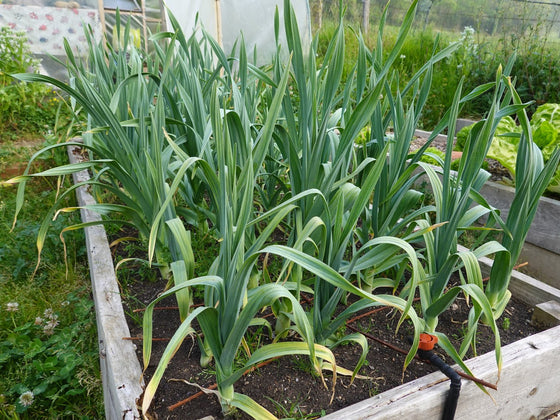
Elephant garlic
Also sold as Russian garlic. Plant the large cloves in April or May, keep the bed weeded and watered, and use the finger test to judge when the bulbs are ready.
| Position | Full sun, 6 hours or more |
|---|---|
| Depth | 5 cm of soil over tip |
| Spacing | 20 to 30 cm |
| First pick | 6 to 8 months |
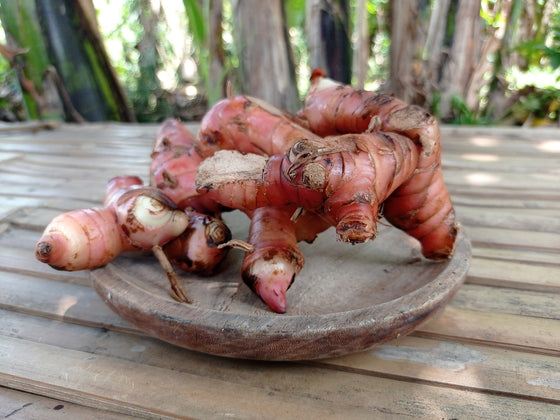
Galangal
Grow Thai red and lesser galangal from rhizomes in Australia: planting months for six zones, pre-sprouting, pots for frosty areas, feeding, pests and harvest.
| Position | Morning sun, afternoon shade |
|---|---|
| Depth | 5 to 7 cm, buds up |
| Spacing | 30 to 45 cm |
| First pick | 17 to 43 weeks |
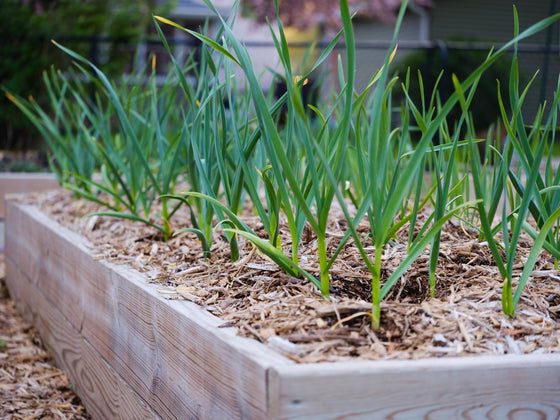
Garlic
When to plant garlic in each Australian climate zone, how deep and how far apart, feeding through winter, and how to tell when the bulbs are ready to lift and cure.
| Position | Full sun, 6 hours or more |
|---|---|
| Depth | Tip 2 to 5 cm deep |
| Spacing | 10 to 15 cm |
| First pick | 22 to 39 weeks |
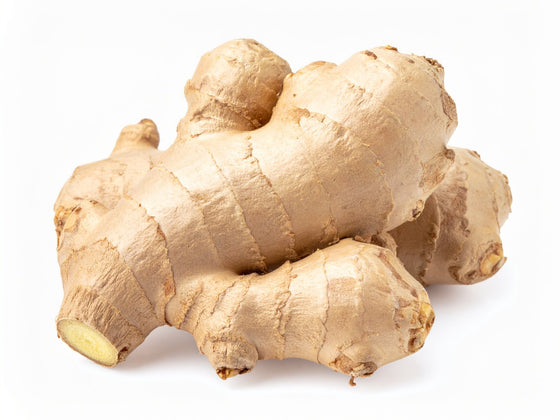
Ginger
Grow ginger in Australia from rhizomes: planting months for all six zones, pre-sprouting, pots for cool areas, feeding, soft rot, harvest and replanting.
| Position | Morning sun, afternoon shade |
|---|---|
| Depth | About 5 cm, buds up |
| Spacing | 20 to 30 cm apart |
| First pick | 22 to 43 weeks |