

How to Grow Basil in Australia
Sow basil 2 to 6 mm deep once the soil holds 18°C, in trays indoors or direct into warm beds. Plant out 20 to 30 cm apart in full sun when nights stay above 10°C. Water the soil in the morning and feed fortnightly with half-strength fish and seaweed blend. Start picking stem tips above a leaf pair 6 to 12 weeks after sowing.
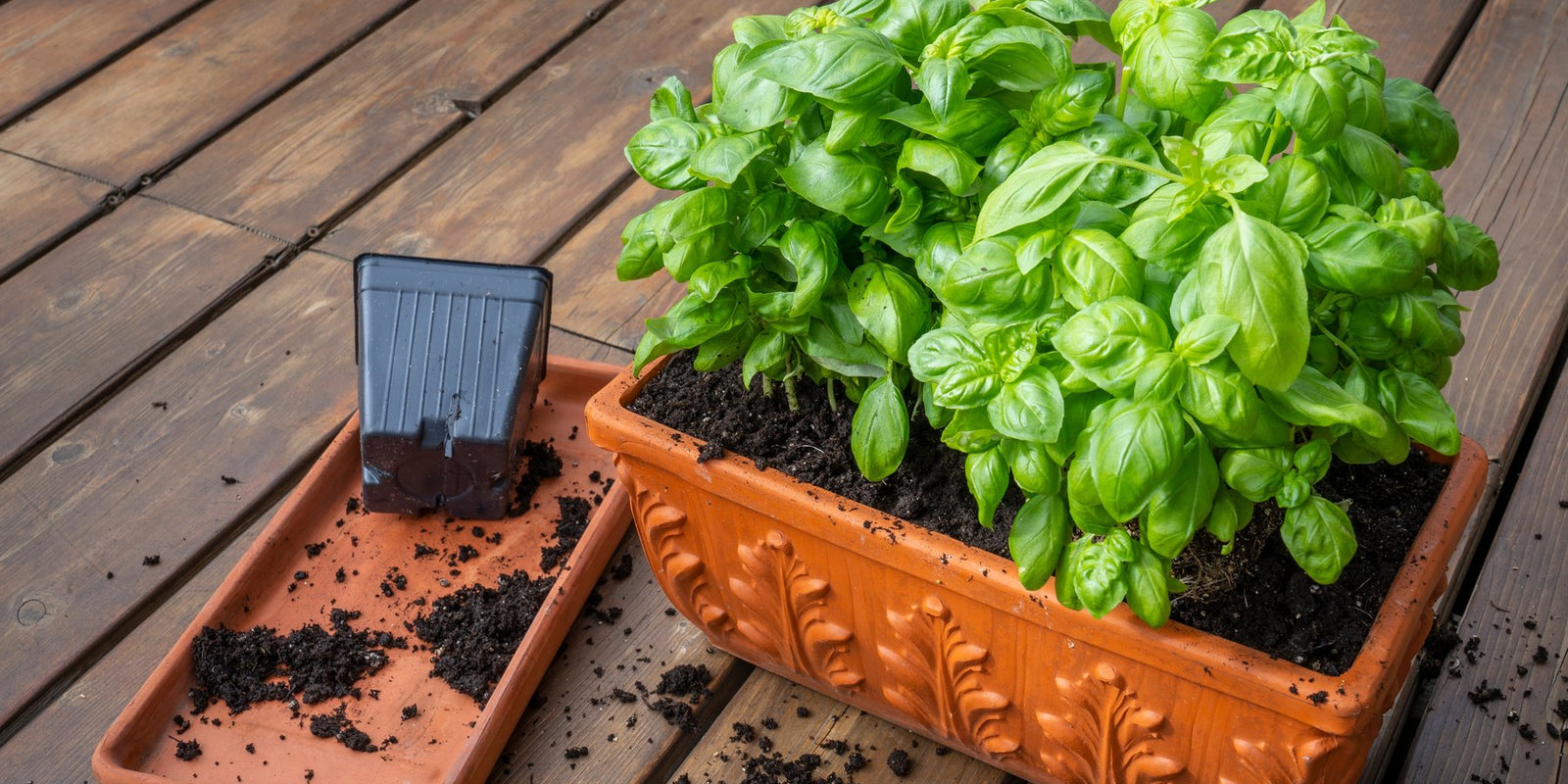
| Sun | Full sun, 6 hours minimum |
|---|---|
| Water | Evenly moist; water the soil in the morning |
| Soil | Rich, free-draining, pH 6.0 to 7.0 |
| Feed | Half-strength fish and seaweed blend, fortnightly |
| Spacing | 20 to 30 cm |
| Depth | 2 to 6 mm |
| Germination | 5 to 14 days in warm soil |
| Harvest | 6 to 12 weeks |
| Container | Pot 20 cm wide, about 4 to 6 L |
| Frost | Frost tender; cold nights darken leaves |
| Use | Leaves raw or cooked, pesto, Thai dishes, tea |
| Pets and people | No known harm to cats, dogs or people |
Basil (Ocimum basilicum) is a frost-tender herb in the mint family, Lamiaceae, grown for its scented leaves. Australian summers suit it: once nights are warm it can be picked for months, and in the tropics it grows year-round. The usual mistake is planting out too early, into nights cold enough to damage the leaves.
Three mistakes that matter
- Planting out into cold nights. Nights below about 10°C can make basil leaves wilt and darken. Keep seedlings in a warm, bright spot and plant out only once nights stay above 10°C.
- Letting plants run to flower. Once flowers and seed form, stems turn woody, new leaves slow and the foliage can taste bitter. Pinch stems back to a leaf pair about every two weeks, and cut any budding stem at least four leaf pairs below the spike.
- Watering the leaves late in the day. Foliage that stays damp overnight, especially on crowded plants, invites basil downy mildew, which can strip plants bare (see Pests and diseases). Water the soil in the morning and space plants 20 to 30 cm apart.
When to plant
Basil seed germinates once the soil holds at least 18°C, and fastest at about 20 to 30°C. Where spring warms slowly, sow indoors 4 to 6 weeks before planting out, on a seedling heat mat in a cool room.
| Zone | Example cities | Sow | Harvest | Notes |
|---|---|---|---|---|
| Tropical | Darwin NT; Cairns, Townsville QLD | Jan-Dec | Jan-Dec | Sow any month. In the wet season, grow in pots that can move under cover to keep leaves dry. |
| Subtropical | Brisbane, Gold Coast QLD; Coffs Harbour NSW | Aug-Feb | Oct-May | Start trays in August; plant out once nights stay above 10°C, usually September in Brisbane. |
| Arid and semi-arid | Alice Springs NT; Mildura VIC; Broken Hill NSW | Sep-Feb | Nov-Apr | Start in trays. Plant out from October in Alice Springs, November in Mildura; shade plants in heatwaves. |
| Temperate | Sydney, Newcastle NSW; Melbourne, Geelong VIC | Sep-Jan | Nov-Apr | Start in trays. Plant out October in Sydney, Melbourne Cup weekend in Melbourne. |
| Mediterranean | Perth, Bunbury WA; Adelaide and the SA coast | Sep-Jan | Nov-Apr | Start in trays. Plant out Melbourne Cup weekend in Adelaide and Perth. Mulch through dry summers. |
| Cool and alpine | Canberra ACT; Hobart TAS; Ballarat VIC | Oct-Jan | Dec-Mar | Sow indoors. Plant out from December, or January in Ballarat; cold nights usually end picking in March. |
In the cool zone, even summer nights can dip below 10°C, so plant out once nights average above 10°C, into the warmest spot.
Site, soil and setup
Choose a spot with at least 6 hours of direct sun, and allow light afternoon shade in hot inland and tropical summers. Basil wants rich, free-draining soil with a pH of 6.0 to 7.0, and it sulks in clay that stays wet.
| Get the bed right | What to do |
|---|---|
| Organic matter | Dig in 5 cm of compost, or 5 to 10 cm of well-rotted cow or horse manure, 4 to 6 weeks before planting |
| Below pH 6.0 | Dolomite lime at 100 to 200 g per square metre, 4 weeks before planting |
| Above pH 7.0 | Elemental sulphur at 25 to 50 g per square metre, at least 3 months ahead |
| Heavy clay | A raised bed or mound, which drains better and warms sooner |
| Rotation | A bed free of basil and other mint-family herbs for at least 2 to 3 years |
Container growing
One plant needs a pot at least 20 cm wide and deep, about 4 to 6 L, filled with premium potting mix. In a trough, space plants 15 to 20 cm apart. Compact types suit pots: bush basil 'Fine Leaf' stays low and bushy, and 'Medinette' is compact and slow to run to flower.
- Water: push a finger into the mix each morning and water when it comes out clean and dry.
- Feed: fish and seaweed blend at half strength, about 12 mL per 9 L, each fortnight.
- Position: full sun, sheltered from strong wind.

Sowing Seeds
Start seed in trays while nights are cold, or sow direct into warm soil.
Starting under cover
- Sow 2 to 6 mm deep in punnets or trays of fresh seed-raising mix.
- Keep the mix moist and warm (see When to plant); seedlings emerge in 5 to 14 days.
- Moist seed forms a jelly-like coat, which is normal.
- If nights are still cold once several true leaves show, pot seedlings on into 7.5 cm pots.
Sowing direct
Once the soil has warmed (see When to plant), sow a few seeds at the same depth every 20 to 30 cm. Keep the surface damp, not soggy, until seedlings appear, then thin each spot to the strongest once its first true leaves open.
Transplanting
- Plant out seedlings about 10 cm tall, usually 4 to 6 weeks after sowing.
- Harden them off first for at least a week, ideally two (longer spells outdoors each day, so they adjust to sun and wind).
- Set plants at the same spacing and water them in with seaweed solution at half strength (15 mL per 9 L).

Care by growth stage
Weeks count from planting out. Feed lightly, because over-feeding can reduce the essential oils behind basil's flavour and aroma. Water by the finger test, not the calendar.
| Stage | Water | Feed | Watch for |
|---|---|---|---|
| Establishment, weeks 1 to 3 | At the base each morning until new leaves appear | Seaweed solution at half strength, 15 mL per 9 L, two weeks after planting | Snails and slugs on seedlings after rain |
| Branching and first picks, weeks 4 to 8 | Finger to the second knuckle; water when no damp soil clings to it | Fish and seaweed blend at half strength, about 12 mL per 9 L, fortnightly | Aphids on shoot tips and under leaves |
| Full production, weeks 9 to 16 | Pots daily and beds every few days in summer heat | The same blend; no high-potassium fruiting feeds, which encourage flowering | Flower spikes, and mites in hot, dusty weather |
| Autumn wind-down, weeks 17 to 24 | By the finger test up to each harvest | None once nights cool and growth slows | Cold nights, which end the season (see Harvesting Leaves) |
Spread 5 cm of compost or pea straw around plants, clear of the stems, and top it up as it breaks down. If growth stalls in poor soil, a light dose of all-purpose controlled release granular (NPK around 14-5-10) scratched in can replace the blend. Before cold nights arrive, move pots to a bright, warm windowsill indoors, where they can keep producing for weeks longer.
Pinching Out
Pinching out the growing tip once plants reach 15 to 25 cm makes the stem branch into a bushy plant. A bud sits at each leaf joint, so a cut above a leaf pair leaves two buds to grow on, usually within a week.
- First pinch: nip the main stem just above the second leaf pair from the base.
- Flower spikes: nipping off the spike alone can prompt new ones lower down, so cut the stem at least four leaf pairs below it.
- Bush basil: skip the height rule and snip shoot tips all over once the plant fills out.

Companion planting
Good partners share basil's planting months and sunny beds.
Grows well with
- Tomato, which goes in over the same spring months.
- Capsicum and chilli, which start at the same soil warmth.
Keep apart
- Mint, whose spreading underground stems crowd basil out of a shared bed or pot.
- Rosemary, which prefers dry, lean soil and suffers under the steady watering basil needs.
Harvesting Leaves
The first pinch (see Pinching Out) is also the first pick, usually 6 to 12 weeks after sowing.
- Take whole stem tips rather than single large leaves from the base.
- After the first cut, leave at least half the plant at each picking.
- Pick in the late afternoon; in shelf-life trials, evening-cut basil kept longer than dawn-cut.
- Before autumn nights drop below about 10°C, cut whole plants for pesto or the freezer.

Stand cut stems in a glass of water on the bench, change it daily, and use them within a few days. The fridge blackens basil, whose leaves are damaged below about 12°C. For longer storage, freeze whole leaves in a bag, or chopped leaves under water in ice cube trays.
Use the leaves raw or cooked in Italian and South-East Asian dishes, or steep them for tea.
Common problems
Leggy seedlings. Tall, thin seedlings that flop over are stretching for light, often on a windowsill. Read more
Damping off. Seedlings that collapse at soil level have been attacked by organisms such as Pythium, which thrive in overwatered, poorly ventilated mix. Read more
Flower spikes on young plants. Heat, dry soil and high-potassium fruiting feeds can all push young plants to flower; see Three mistakes that matter for cutting them back.
Wilting in damp soil. A plant that wilts in wet soil may have roots rotting from waterlogging, or Fusarium wilt (see Pests and diseases). Read more
Pests and diseases
Snails and caterpillars chew leaves, aphids and mites suck sap, and two diseases can kill plants.
Common garden snail (Cornu aspersum). Ragged holes and slime trails on seedlings show snails, or grey field slugs (Deroceras reticulatum), feeding at night. Collect them by torchlight after rain and set beer traps. Read more
Looper caterpillars (Chrysodeixis spp.). Green caterpillars that move with a looping action chew large, ragged holes in leaves. Pick them off, or spray a Bt (Bacillus thuringiensis) product labelled for herbs while they are small.
Green peach aphid (Myzus persicae). Small, usually green insects cluster under leaves and on shoot tips, distorting new growth. Hose them off in the morning, or wet leaf undersides thoroughly with insecticidal soap. Read more
Two-spotted mite (Tetranychus urticae). Fine pale speckling, then bronzed leaves, show mites feeding underneath, especially in hot, dusty weather or on water-stressed plants. Hose leaf undersides forcefully every few mornings. Read more
Basil downy mildew (Peronospora belbahrii). Yellow patches bounded by leaf veins, with grey-purple fuzz beneath, mark this disease, which thrives in humid weather and spreads mainly on the wind. Pull and bin affected plants. Thai, lemon and lime types usually show fewer symptoms. 'Prospera' was bred to resist it, though a newer strain overseas has overcome that resistance. Read more
Fusarium wilt (Fusarium oxysporum f. sp. basilici). Plants that stunt and wilt at 20 to 30 cm, with brown streaks on the lower stem, often have this soil-borne fungus. It is recorded in Australia and can arrive on seed. In soil it survives 8 to 12 years, so rotation alone will not clear a bed. Bin affected plants, then grow basil in fresh potting mix or choose 'Prospera', bred to resist this wilt.
Prevention first
- Turn a few leaves over each week to catch aphids, mites and silverleaf whitefly (Bemisia tabaci) early.
- Leave ladybirds, lacewings and hoverflies to eat aphids by avoiding broad-spectrum sprays.
- Do not save seed from plants that had Fusarium wilt or downy mildew, since both diseases can travel on seed.
- Pull nearby weeds, which can host aphids between crops.
Tips
- Root the tips you pinch off: a non-flowering shoot in a glass of water on a bright windowsill roots within a few weeks.
- Sow seed thickly in a tray for microgreens, ready to cut in 10 to 14 days.
- Seed saved from F1 hybrids such as 'Prospera' will not come true. For true seed, grow a non-hybrid variety and let no other basil flower alongside it, since varieties can cross.
Questions
Why is my basil turning black?
Cold is a common cause: leaves can darken after nights below about 10°C, and picked basil blackens in the fridge. Dark patches that start as yellowing between the veins, with grey fuzz underneath, point to basil downy mildew instead. Plant out only once nights stay above 10°C, and keep cut stems in water on the kitchen bench.
How do I stop my basil from flowering?
Cut it often and keep it moist. Clip each stem above a leaf pair about every two weeks, and cut any stem in bud at least four leaf pairs below the spike. Heat, dry soil and high-potassium fruiting feeds can all push basil to flower, so water through hot spells and skip those feeds.
Why are my basil leaves yellow with grey fuzz underneath?
That is most likely basil downy mildew, a disease favoured by humid weather and leaves that stay wet overnight. Pull and bin affected plants, water the soil in the morning, and space plants 20 to 30 cm apart. Thai, lemon and lime types usually show fewer symptoms than sweet basil.
Can basil grow all year round in Australia?
In the tropics, yes: in Darwin, Cairns and Townsville it can be sown any month, and plants in frost-free gardens can live for years. Elsewhere it is a summer herb that autumn cold ends, though a potted plant on a bright, warm windowsill can keep producing into winter.
What is the best basil to grow in a pot?
A compact type. Bush basil 'Fine Leaf' stays low and bushy, and 'Medinette' is compact and slow to run to flower. Give one plant a pot at least 20 cm wide and deep, filled with premium potting mix. Keep it in full sun for 6 hours or more.
How often should I water basil?
Water whenever the soil feels dry rather than on a fixed timetable. Push a finger into the soil to the second knuckle; if damp soil clings to it, wait. Pots can need water daily in summer heat. Water the soil rather than the leaves, ideally in the morning.
Grow it
Tap Add beside a size to put it in your cart. You stay on this page.
- Basil - Blue Spice seedsFrom $2.99
- Basil - Cinnamon seedsFrom $2.99
- Basil - Clove seedsFrom $2.99
- Basil - Dark Opal seedsFrom $2.99
- Basil - Fine Leaf - Bush Basil seedsFrom $2.99
- Basil - Freddy seedsFrom $2.99
- Basil - Gecofure seedsFrom $2.99
- Basil - Genovese seedsFrom $1.00


More herbs to sow in October
All herbs
Agrimony
How to grow agrimony in Australia from seed: chilling the burrs, sowing months for six climate zones, sun and soil, cutting back, harvest, history and safety.
| Position | Full sun, light shade tolerated |
|---|---|
| Depth | 5 mm |
| Spacing | 30 cm apart |
| First pick | Summer; 12 to 18 weeks from spring sowing |

Angelica
How to grow angelica in Australia from seed: fresh or chilled seed sown on the surface, part shade, months for six climate zones, stems, history and safety.
| Position | Part shade, morning sun |
|---|---|
| Depth | Surface; press in, uncovered |
| Spacing | 50 to 90 cm |
| First pick | Stems at about 18 months |
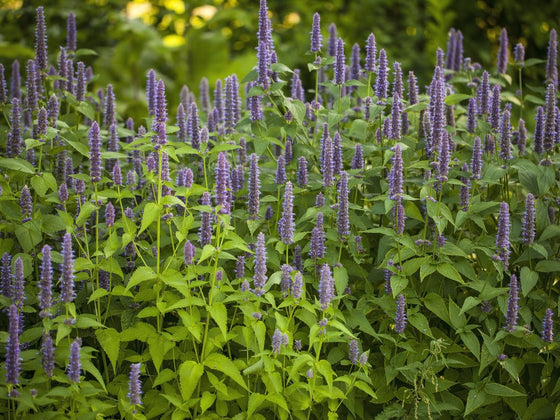
Anise Hyssop
How to grow anise hyssop in Australia from seed: surface sowing, free-draining soil, sowing months for six zones, cutting back, and picking leaves and flowers.
| Position | Full sun or light shade |
|---|---|
| Depth | Surface, or 1 mm |
| Spacing | 30 to 40 cm apart |
| First pick | Leaves from about 10 weeks |

Anise
How to grow anise in Australia: when to sow in all six climate zones, sowing where it grows, spacing and watering, then harvesting and drying seed and leaves.
| Position | Full sun, sheltered from wind |
|---|---|
| Depth | 6 to 10 mm |
| Spacing | 25 to 30 cm apart |
| First pick | Seed 17 to 20 weeks from sowing |