
How to Grow Ashwagandha in Australia
Ashwagandha is a frost-tender nightshade-family shrub grown as a summer annual outside the tropics. Its seed needs warmth, not a treatment: sow 5 mm deep at 20 to 30°C and expect seedlings in one to four weeks. Plant out after frost, 45 to 60 cm apart, in full sun and free-draining soil. Lift the root 150 to 180 days after sowing.
| Sun | Full sun |
|---|---|
| Water | Low once established; never waterlogged |
| Soil | Free-draining sandy or loamy, pH 6.5 to 8.0 |
| Feed | Minimal; compost and half-strength liquid feeds |
| Spacing | 45 to 60 cm apart |
| Depth | 5 mm |
| Germination | 1 to 4 weeks at about 25°C, untreated |
| Harvest | Roots 21 to 26 weeks |
| Container | Yes; 30 cm pot, about 13.5 L |
| Frost | Tender; grown as an annual where frosts occur |
| Use | Herb garden and pots; bees visit the flowers |
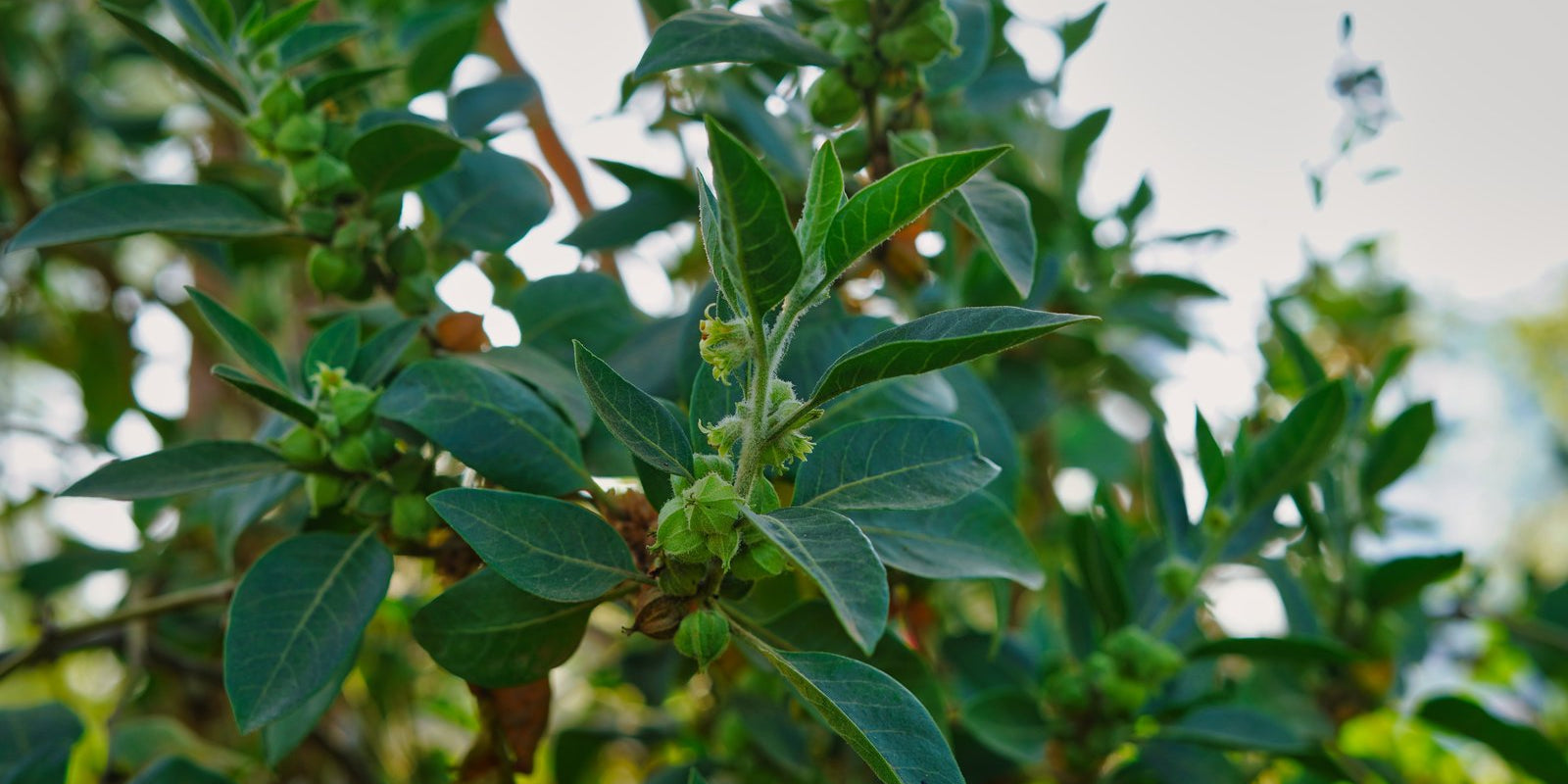
Ashwagandha (Withania somnifera), a grey-leaved shrub of the nightshade family (Solanaceae), is grown for its fleshy root and its orange-red berries in papery husks. It is frost-tender and short lived, so outside the tropics it is grown from Ashwagandha Vedic seed as a summer annual. The seed needs warmth rather than any treatment, and it often fails in cold or soggy mix.
Three mistakes that matter
- Sowing into cold mix. Cool mix slows and thins germination, and seed sown in open ground often fails, with heavy seedling losses. Raise seed warm under cover, as Germinating the seed describes.
- Keeping the soil wet. Ashwagandha comes from dry country, and too much water harms it, rotting stems and roots. Plant it in free-draining ground or a raised bed, and water only once the top few centimetres have dried.
- Lifting the root too early. A root dug before the plant matures is thin and small. Leave the plant in the ground until it shows the signs of maturity that Harvesting Roots describes.
When to plant
Warmth governs sowing: the seed wants 20 to 30°C, with about 25°C best. Start seed under cover about five weeks before planting out, and plant out after the last frost. In frost-free districts, sow direct or plant out once nights stay above 15°C. One sowing a year is enough, because a plant needs five to six months to make a root worth lifting.
| Zone | Example cities | Sow | Harvest | Notes |
|---|---|---|---|---|
| Tropical | Darwin, Katherine NT; Cairns, Townsville QLD; Kununurra WA | Mar-May | Aug-Nov | Sow as the wet season ends; lift roots before the build-up, since heavy rain harms the crop. |
| Subtropical | Brisbane, Sunshine Coast, Bundaberg QLD; Coffs Harbour, Lismore NSW | Sep-Nov | Mar-May | Raise seed warm from early spring; grow in raised beds so summer storms drain away. |
| Arid and semi-arid | Alice Springs NT; Broken Hill, Dubbo NSW; Mildura VIC; Kalgoorlie WA | Sep-Oct | Feb-Apr | Suits the dry heat. Plant out after the last frost; lift roots before inland frosts return in May. |
| Temperate | Sydney, Newcastle, Wollongong NSW; Melbourne, Geelong VIC | Sep-Nov | Mar-May | Raise seed under cover; plant out after frost into the warmest, sunniest spot. Melbourne sows at the late end. |
| Mediterranean | Perth, Bunbury WA; Adelaide and the SA coast | Sep-Nov | Mar-May | Long, dry summers suit it. Lift the roots before winter rain soaks the soil. |
| Cool and alpine | Hobart TAS; Canberra ACT; Ballarat VIC; Orange NSW | Sep-Oct | Mar-Apr | Short season: sow indoors, plant out in pots after Melbourne Cup, and lift or move under cover at first frost. |
In the cool south, Melbourne Cup weekend in early November is the usual marker for planting out frost-tender crops. Sow early in the window wherever autumn frost comes early, so the root has its full season before the first cold night.
Site, soil and setup
| Need | What ashwagandha wants |
|---|---|
| Sun | Full sun, six hours or more; it does not grow in shade |
| Soil | Sandy or loamy and free-draining; heavy clay needs a mound or raised bed |
| pH | About 6.5 to 8.0; neutral to slightly alkaline suits it |
| Water | Low once established; never waterlogged |
| Fertility | Low to moderate; heavy manuring is not needed |
| Height and habit | 60 cm to 1 m, an upright, branching shrub covered in fine grey hairs |
| Frost | Tender; protect it from frost |
Dig a 5 cm layer of compost into the bed before planting. Where a pH test reads below 6.5, dig in garden lime at 100 to 200 g per square metre 4 weeks before planting. Do not plant where tomatoes, eggplant, capsicum or potatoes grew last season, because root-knot nematodes build up when susceptible crops follow one another.
Container growing
A pot suits cool districts, where the plant can go under cover before frost. It also suits wet ones, keeping the root out of soggy ground. Use a pot at least 30 cm wide, which holds about 13.5 L; a 40 cm pot, about 28 L, gives the root more room. Fill it with free-draining potting mix, with a few handfuls of coarse sand mixed through.
- Water: only once the top few centimetres of mix are dry, then water until it drains from the base.
- Feed: worm casting liquid diluted to weak tea colour, fortnightly from potting up until the first flowers.
- Position: full sun, sheltered from strong wind; move the pot under cover before the first frost.
- Saucers: empty them after rain, so the mix never sits in water.
Germinating the seed
Ashwagandha seed has no dormancy that a chill or a nick must break: it needs warmth. In a trial of two Indian seed lots, seed germinated best at 25°C and poorly at 20°C. Light helped a little, so cover the seed thinly. In that trial a three-hour rinse or a light scuffing lifted germination a little at 25°C, but no treatment helped much at 20°C. Ordinary stored seed stays viable for about a year, and then germination falls away; seed banks keep it far longer dried and frozen.
Rates vary between seed lots. Untreated seed in the Kew seed bank's tests gave 58 to 100 per cent, including lots tested at 20°C. The Indian seed lots gave 40 to 55 per cent at 25°C, with the first seedlings after about eight days and most within two weeks. Sow two or three seeds for each plant wanted.
| Treatment | How | How long | Temperature | What success looks like |
|---|---|---|---|---|
| Rinse under running water | Put the seed in a fine tea strainer under a slow trickle from the tap, then sow at once | 3 hours | Sow into about 25°C | Seedlings about a day sooner; in the trial, 55 to 67 per cent came up against 40 to 55 per cent untreated |
| Light scuffing, then a soak | Rub the seed gently between two sheets of fine sandpaper, then soak it in clean water before sowing | A few seconds of rubbing, then a 3-hour soak | Sow into about 25°C | A dull, scuffed seed coat; in the trial, 52 to 65 per cent came up |
| None needed | Sow 5 mm deep in damp seed raising mix, cover the tray and keep it warm, ideally on a seedling heat mat | First seedlings in about 1 to 2 weeks; stragglers up to 4 weeks | 20 to 30°C at the seed, about 25°C best | Small seedlings with a pair of seed leaves pushing through the mix |
In the same trial, gibberellic acid lifted germination further, but it is a laboratory treatment that home seed does not need. More on these methods is in Soaking, Scarification and Cold Stratification.
When nothing comes up
- Too cold. In one trial, seed at 20°C came up later and far less well than at 25°C, though some seed bank lots did well at 20°C. Move the tray onto a seedling heat mat and hold it near 25°C.
- Mix kept too wet. Soggy mix rots seed and invites damping off (seedlings rotting before or just after they emerge); let the surface dry slightly between waterings.
- Old or warm-stored seed. Germination drops after about a year; store packets sealed, cool and dry, and sow fresh seed first.
- Home-saved seed still damp. Seed that stays moist after harvest can be slow to germinate for months, so dry the berries fully before taking the seed out.
- Given up too soon. Seed bank tests run for four to six weeks or more; wait four weeks in warm mix before sowing again.
Sowing Seeds
Start ashwagandha in trays or cells as Germinating the seed sets out; sowing direct suits only warm, frost-free districts.
Starting under cover
- Fill cells or a tray with seed raising mix and water it before sowing.
- Sow two or three seeds per cell, 5 mm deep, and firm the mix gently. A 15-seed packet sown this way fills five to seven cells.
- Keep the mix at the warmth When to plant gives, moist but not wet, under a clear cover.
- Lift the cover once seedlings show and give them full light, so they do not stretch.
- Thin to the strongest seedling in each cell once the first true leaves open.
Sowing direct
In the tropics and the warm subtropics, sow direct once the soil holds the warmth When to plant gives. Cover the seed thinly and mark the row. Thin the seedlings to 45 to 60 cm apart about four weeks after sowing.
Transplanting
Seedlings reach planting size at about five weeks old. Harden them off first (get them used to outdoor sun and wind over about a week), as hardening off seedlings describes. Plant them 45 to 60 cm apart at the depth they grew in the pot, and water them in with seaweed solution at half strength.
Care by growth stage
Water decides this crop more than feeding: steady moisture while young, then restraint once plants are established.
| Stage | Water | Feed | Watch for |
|---|---|---|---|
| Seedlings, weeks 1 to 5 | Keep the mix evenly moist; water from below | Seaweed solution at half strength, 15 mL per 9 L, fortnightly once true leaves show | Seedlings collapsing at soil level; stretching in low light |
| Establishing, from planting out at about week 5 until new shoots grow | Water in well at planting, then deeply about every 10 days, more often in pots and heatwaves | Worm casting liquid diluted to weak tea colour, fortnightly | Aphids on soft tips; weeds crowding young plants |
| Growing and flowering, from new growth until berries form | Deeply, only when the top few centimetres are dry | None needed in a bed prepared as Site, soil and setup describes | Pale stippled leaves in hot, dry spells; grazed, lacy leaves |
| Fruiting and maturing, to harvest at weeks 21 to 26 | Keep watering as normal right up to the harvest, never to waterlogging, so the soil is moist for digging | None | Leaves drying and berries colouring, the signs the root is ready; frost forecasts |
If growth stalls in poor soil, a light application of all-purpose controlled release granular (NPK around 14-5-10) scratched into the soil can help.
Companion planting
Grow it among plants that like the same hot, lean, dry conditions, and away from its nightshade relatives.
Grows well with
- Thyme, which wants the same full sun, free-draining soil and little water.
- Lavender, which suits the same dry, sunny bed and lean soil.
- Oregano, a low spreader that shares the dry end of the garden.
Keep apart
- Tomato, eggplant and capsicum, which share the 28-spotted ladybird and two-spotted mite.
- Mint, which wants moist soil and runs through the bed.
Harvesting Roots
Lift the roots 150 to 180 days after sowing, once the lower leaves dry and the berries turn from green to orange-red.
- Water the bed the day before if it is dry, so the soil is moist for digging.
- Cut the stems off 1 to 2 cm above the ground.
- Loosen the soil wide of the plant with a garden fork and ease the taproot out whole, side roots included.
- Wash the soil off and cut the roots into pieces 7 to 10 cm long.
- Spread the pieces in one layer in an airy, shaded spot until they are hard and dry right through.
- Pick ripe berries separately if you want seed.

Store the dried root pieces in airtight tins or jars, labelled, in a cool, dark cupboard, to keep out damp and mould. For seed, dry the picked berries completely, then crush them and sift out the pale, flat seed.
Traditional use and history
The Sanskrit name ashwagandha means horse smell, after the strong smell of the root. The Ayurvedic Pharmacopoeia of India records two other Sanskrit names, Hayagandha and Vajigandha. In English the plant has been called winter cherry, Indian winter cherry and poison gooseberry.
In Ayurveda, the traditional medicine of India, the root holds a prominent place among the rasayana herbs. The Unani tradition also used the root, the seeds and the leaves. The English name Indian ginseng came from comparing it with the ginseng of Chinese tradition.
| Place | What the record shows |
|---|---|
| Native range | Southern Europe and the Canary Islands through Africa and Arabia to India, Myanmar and central China |
| Ancient Egypt | Fruits of the plant were found in a floral collar in the innermost coffin of Tutankhamun |
| Namibia | Herbarium labels record roots burnt in a fire to keep lions away, and fruits and flowers used as charms in lion hunting |
| India | A field crop, widely grown in Madhya Pradesh and Rajasthan; the markets of Neemuch and Mandsaur trade the roots |
| South Africa | Grows wild in every province and is rated Least Concern, not threatened |
Linnaeus first described the plant in the eighteenth century as Physalis somnifera, placing it with the cape gooseberries, and the Latin somnifera means sleep-bearing. The genus name Withania honours Henry Witham, an English palaeobotanist of the early nineteenth century.
In India the roots were traditionally collected in winter, washed and cut into short pieces, much as Harvesting Roots describes for the garden.
Safety
Ashwagandha is sold as seed for growing, and nothing here is advice to eat or take any part of the plant. Anyone thinking of using a plant should first seek advice from a qualified health practitioner.
| Topic | What the sources say |
|---|---|
| Toxicity | LiverTox, the United States liver injury database, gives ashwagandha likelihood score B, a likely cause of liver injury. Cases typically appeared 2 to 12 weeks after starting a product, with jaundice, and withanolides are the suspected compounds. Rare deaths occurred mainly in people with existing liver disease. The TGA warns of very rare liver injury, and of sudden, severe vomiting and diarrhoea, from products containing it, and advises anyone taking such a product who notices yellowing of the skin or eyes or dark urine to stop at once and seek medical advice. NC State Extension lists the flowers, fruits, leaves and roots as poisonous, at medium severity. |
| Pregnancy and breastfeeding | The United States National Center for Complementary and Integrative Health says to avoid it in pregnancy and not to use it while breastfeeding. In Australia, the TGA requires a pregnancy warning on the label of certain preparations. |
| Interactions with medicines | The same centre lists possible interactions with medicines for diabetes and high blood pressure, immunosuppressants, sedatives, anti-seizure medicines and thyroid hormone. It advises against use before surgery and with autoimmune or thyroid disorders. The TGA says anyone with past or present liver problems should avoid products containing it. |
| Allergy and skin | NC State Extension records that it does not cause contact dermatitis. No allergy or skin reaction from handling the growing plant is recorded. |
| Pets and livestock | The ASPCA plant lists for dogs and cats carry no entry for ashwagandha, so its effect on pets is not established. The winter cherry those lists name as toxic to dogs, cats and horses is a different plant, Jerusalem cherry. Its effect on livestock is unrecorded. Birds eat the berries. |
| Legal status | No state or territory declares it a weed or prohibited plant. It is on none of the declared plant lists of NSW, Victoria, Queensland, South Australia, Tasmania, the ACT or the Northern Territory, and the Western Australian Organism List marks it permitted. It is naturalised as an uncommon weed around Maitland in NSW and in South Australia. |
The name winter cherry also belongs to Jerusalem cherry (Solanum pseudocapsicum), a naturalised garden escape in every mainland state. All its parts are poisonous to people, especially the unripe fruit. Its bright orange-red berries, 10 to 15 mm across, hang bare below white, star-shaped flowers. Ashwagandha's smaller berries sit inside a papery husk, as on a cape gooseberry, and its flowers are small and yellow-green. A related species, Withania coagulans, is a different plant from the one in the packet.
Common problems
Plants blacken after a cold night. Ashwagandha is frost-tender, so lift the roots before the first frost, or move potted plants under cover. Read more
Tall, sparse plants with few berries. The plant cannot grow well in shade, so move it to the sunniest bed next season.
Pale, stretched seedlings. Too little light after germination stretches seedlings, so move the tray into bright light at once. Read more
Pests and diseases
No serious pest is recorded on the field crop; those below attack it overseas, or its nightshade relatives in Australia.
Two-spotted mite (Tetranychus urticae). Tiny mites feed under the leaves, leaving pale stippling and fine webbing, and are worst in hot, dry weather. Hose the undersides of the leaves, and avoid broad-spectrum sprays, which kill the tiny black ladybirds that eat mites. Read more
Aphids (Aphididae). Small green or yellow sap-suckers cluster on soft tips, leaving distorted growth and sticky honeydew. Knock them off with a strong jet of water, or spray insecticidal soap on the undersides of the leaves. Read more
28-spotted ladybird (Epilachna vigintioctopunctata). Downy, dull orange beetles and spiny, pale yellow larvae graze the leaf surface, leaving lacy patches. Hand-pick both, checking for the downy hairs that set them apart from aphid-eating ladybirds. Read more
Root-knot nematode (Meloidogyne species). Microscopic worms form galls 1 to 10 mm across on the roots, so plants look stunted and wilt. Bin galled roots, and rotate beds as Site, soil and setup describes. Read more
Damping off (Pythium species and Rhizoctonia solani). Seedlings rot before they emerge or collapse at soil level soon after, worst in hot, humid weather. Use fresh mix and clean trays, avoid overwatering and thin crowded seedlings. Read more
Prevention first
- Plant in full sun and free-draining soil, so plants are not stressed.
- Check the undersides of leaves weekly in hot, dry weather for mites and ladybird larvae.
- Water at the base in the morning, so leaves dry before night.
- Clear nightshade weeds near the bed, which carry pests and nematodes between crops.
Tips
- Write the sowing date on each tray label, so the days to harvest in Harvesting Roots are easy to count.
- Pick ripe berries before birds do, to keep self-sown seedlings out of nearby bushland.
- In frost-free gardens, leave one plant in the ground for a second year, since it grows there as a short-lived perennial.
Questions
Why are my ashwagandha seeds not germinating?
Usually the mix is too cold or too wet. The seed needs no chilling or soaking, but it wants warmth, about 25°C at the seed, which a seedling heat mat gives. Keep the mix moist but not soggy, and cover the seed about 5 mm deep. Wait four weeks before sowing again, and use seed less than a year old.
How long does ashwagandha take to grow from seed?
Seedlings usually appear in one to two weeks at about 25°C. The root is ready to lift 150 to 180 days after sowing, once the lower leaves dry and the berries turn orange-red. Plants flower and fruit in their first year.
Can I grow ashwagandha in Melbourne or Canberra?
Yes, as a summer annual. Raise seed indoors in spring, plant out into a warm, sunny spot once frosts have passed, and lift the root before autumn frosts. A pot helps, because it can be moved under cover on a cold night.
Is ashwagandha safe around dogs and cats?
Its effect on pets is not established, because the ASPCA plant lists carry no entry for it. NC State Extension lists the flowers, berries, leaves and roots as poisonous to people, at medium severity. Keep the berries and any dried roots away from pets.
Is ashwagandha a declared weed anywhere in Australia?
No state or territory declares it, and the Western Australian Organism List marks it permitted. It is naturalised as an uncommon weed in parts of New South Wales and South Australia. Birds eat the berries, so picking them when ripe keeps the plant in the garden.
Is winter cherry the same plant as ashwagandha?
Not always. Winter cherry is an old English name for ashwagandha, but it also names Jerusalem cherry, Solanum pseudocapsicum. The ASPCA lists Jerusalem cherry as toxic to dogs, cats and horses. Ashwagandha's berries sit inside a papery husk, while Jerusalem cherry's larger berries hang bare.
Grow it
More herb guides
All herbs
Agrimony
How to grow agrimony in Australia from seed: chilling the burrs, sowing months for six climate zones, sun and soil, cutting back, harvest, history and safety.
| Position | Full sun, light shade tolerated |
|---|---|
| Depth | 5 mm |
| Spacing | 30 cm apart |
| First pick | Summer; 12 to 18 weeks from spring sowing |

Angelica
How to grow angelica in Australia from seed: fresh or chilled seed sown on the surface, part shade, months for six climate zones, stems, history and safety.
| Position | Part shade, morning sun |
|---|---|
| Depth | Surface; press in, uncovered |
| Spacing | 50 to 90 cm |
| First pick | Stems at about 18 months |

Astragalus
How to grow astragalus (huang qi) in Australia from hard-coated seed: rubbing and soaking, sowing months for six zones, care, pests and lifting the taproot.
| Position | Full sun |
|---|---|
| Depth | 5 mm |
| Spacing | 20 to 45 cm apart |
| First pick | Roots after 2 to 3 years |
Basil
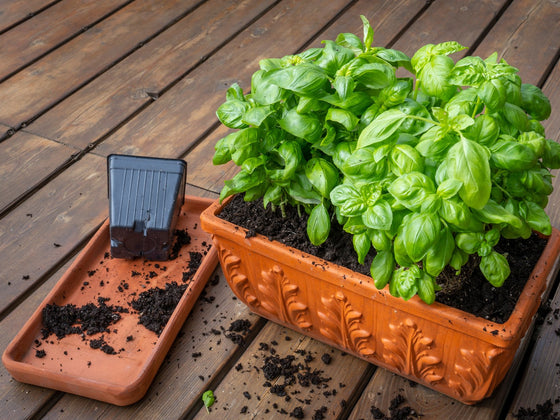
Sowing basil once the nights are mild, spacing and watering, pinching for bushy plants, and picking so the crop keeps coming until the first cold snap.
| Position | Full sun, 6 hours minimum |
|---|---|
| Depth | 2 to 6 mm |
| Spacing | 20 to 30 cm |
| First pick | 6 to 12 weeks |