
How to Grow Cape Gooseberries in Australia
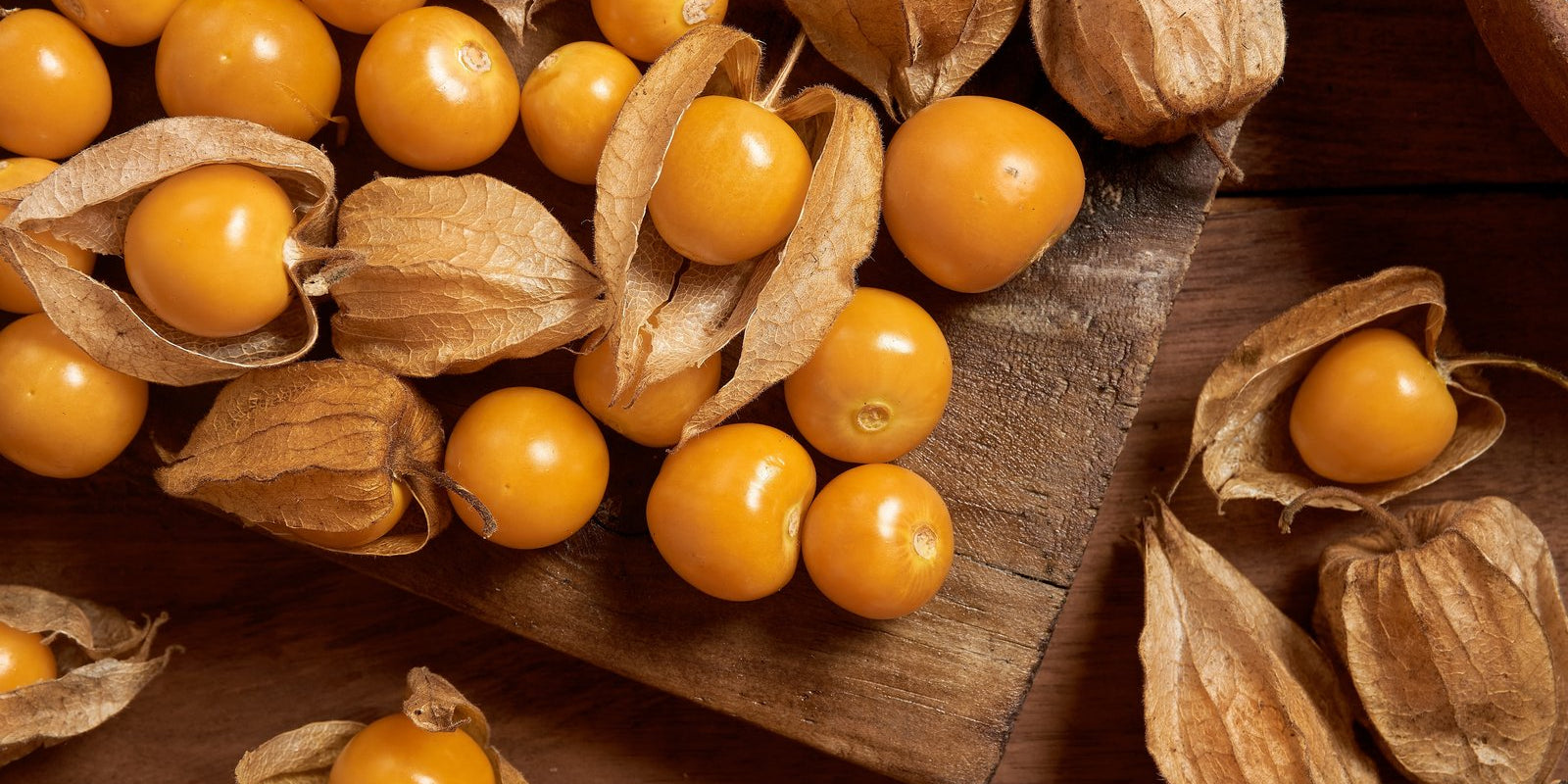
Cape gooseberry needs full sun, free-draining soil of average fertility and shelter from strong wind. Raise seed in trays about 4 mm deep near 25°C and plant out after frost, 1 to 1.5 m apart, or closer for the Dwarf. Water steadily, go light on nitrogen and pick when the husk is papery and light brown and the berry golden.
| Sun | Full sun, sheltered from wind |
|---|---|
| Water | Steady in growth, less as fruit ripen |
| Soil | Free-draining, average fertility, pH near 6.4 |
| Feed | Medium; light on nitrogen, potash from flowering |
| Spacing | 50 cm to 1.5 m |
| Depth | About 4 mm |
| Germination | 6 to 28 days, fastest near 25°C |
| Harvest | 12 to 26 weeks from sowing |
| Container | Dwarf or Cossack Pineapple, 20 L pot or larger |
| Frost | Frost tender; grown as an annual in frost areas |
| Use | Fresh, fruit salads, pies, tarts and jam |
Cape gooseberry (Physalis peruviana) is a soft-stemmed perennial in the nightshade family, Solanaceae, grown for sweet, tangy golden berries that ripen inside papery husks. It was among the first fruits the early colonists grew in New South Wales, and one sowing can crop for months. The mistake most gardeners make is growing it in soil that is too rich.
Three mistakes that matter
- Feeding too richly. Very fertile soil and heavy nitrogen build a big, leafy bush whose fruit are slow to colour and ripen. Grow it in average soil and shift to potassium from first flowers, as Care by growth stage sets out.
- Eating fruit before it is ripe. Unripe berries are poisonous, and the husk is bitter and inedible. Wait until the husk is papery and light brown and the berry inside is golden, as Harvesting Fruit describes.
- Leaving windfalls on the ground. Fallen fruit can breed fruit fly, and seed from them comes up everywhere, including in nearby bushland. Gather fallen fruit every few days and deal with it as Pests and diseases describes.
When to plant
Frost decides the date. Seed germinates from about 15 to 30°C and fastest near 25°C. Start it in trays somewhere warm six to eight weeks before the last frost, then plant out once frost has passed. In frost-free zones, time sowings so fruit sets in the milder months, because summer heat slows fruit set. One sowing is usually enough, since each plant keeps flowering and fruiting while it grows.
| Zone | Example cities | Sow | Harvest | Notes |
|---|---|---|---|---|
| Tropical | Darwin, Katherine NT; Cairns, Townsville QLD; Broome WA | Mar-Aug | Jul-Dec | Sow early in the dry season so fruit sets before the heat of the wet season build-up. |
| Subtropical | Brisbane, Bundaberg, Rockhampton QLD; Coffs Harbour, Lismore NSW | Aug-Oct and Feb-Mar | Nov-Feb and Jun-Oct | Autumn sowings crop through the mild winter and spring; plants often carry on for several years. |
| Arid and semi-arid | Alice Springs NT; Broken Hill, Dubbo NSW; Mildura VIC; Kalgoorlie WA | Aug-Sep | Jan-May | Raise seedlings under cover, plant out after the last frost and mulch; winter frost ends cropping. |
| Temperate | Sydney, Newcastle, Wollongong NSW; Melbourne, Geelong VIC | Aug-Dec | Jan-May | Start trays in August; Melbourne plants out after Melbourne Cup weekend, once frost has passed. |
| Mediterranean | Perth, Bunbury WA; Adelaide and the SA coast | Aug-Dec | Jan-Jun | Start trays in August; water deeply under mulch through the long, dry summer or plants stop growing. |
| Cool and alpine | Canberra ACT; Hobart, Launceston TAS; Orange, Armidale NSW; Ballarat VIC | Sep-Nov | Feb-Apr | Raise indoors, plant out after the last frost in a warm, sheltered spot; grow as an annual. |
At the early edge of a window, keep trays on a seedling heat mat. At the late edge in frosty zones, choose the Dwarf or Cossack Pineapple, which fit a pot you can move somewhere warmer.
Site, soil and setup
| Get the bed right | What to do |
|---|---|
| Sun | Full sun, with shelter from strong wind |
| Drainage | Well-drained soil only; on flat or heavy ground, plant on a ridge or mound, because wet roots rot |
| Soil | Sandy to gravelly loam of average fertility; dig in a 5 cm layer of compost and no more |
| pH | Aim for about 6.4; test first, and on acid soil add dolomite lime or garden lime at 100 to 200 g per square metre, 4 weeks before planting |
| Base feed | Pelletised chicken manure at 100 g per square metre, mixed in at planting |
| Mulch | Pea straw or other straw once plants are in, to hold moisture |
Rotate beds: avoid ground where potatoes grew recently, because potato moth carries over, and do not follow tomato, capsicum or eggplant, which share root-knot nematode.
| Store variety | Habit | What changes |
|---|---|---|
| 'Golden Nugget' (Physalis peruviana) | Standard cape gooseberry, a straggling bush about 1 m tall that spreads wider | Space plants 1 to 1.5 m apart; plants can crop for three or four years where frost is light or absent |
| 'Dwarf' (Physalis peruviana) | Up to 90 cm tall, vigorous and spreading | Suits pots and small beds; space 60 to 90 cm apart |
| Cossack Pineapple ground cherry (Physalis pruinosa) | A separate species: a bushy, frost-tender annual about 50 cm tall with lemon-coloured fruit | Grown the same way; space 50 cm apart and allow 2 to 4 weeks for seed to come up |

Container growing
The Dwarf and the Cossack Pineapple crop well in pots. Grow one plant per pot of at least 20 L and about 35 cm across. A 45 L pot about 40 cm across dries out more slowly. Use a pot with drainage holes and a premium potting mix that meets the Australian Standard.
- Water: check daily in hot weather and water when the top few centimetres dry, because a dry plant stops growing. See watering pots in summer.
- Feed: mix a controlled release granular for containers into the potting mix at planting, at the label rate. From first flowers, give fish and seaweed blend at 25 mL per 9 L fortnightly.
- Position: full sun, out of strong wind; move the pot to a warm wall when frost threatens.
Sowing Seeds
Raise cape gooseberry in trays as you would tomato, then plant out after frost; in frost-free gardens you can also sow direct.
Starting in trays
- Sow seed about 4 mm deep in seed raising mix and keep it moist and warm, ideally near 25°C.
- Seedlings appear in 6 to 28 days, often within 2 weeks in warmth.
- Once the first true leaves show, pot each seedling into its own small pot.
- Harden off (accustom seedlings to sun and wind outdoors) for about a week.
- Plant out at 15 to 20 cm tall, at the spacing in the variety table, then water in and mulch.
Sowing direct
Where frost is rare, sow two or three seeds 4 mm deep at each planting spot in warm, moist soil. Keep the soil surface damp until seedlings appear, then keep the strongest one.
Care by growth stage
Steady moisture and a light hand with nitrogen decide the crop. Weeks count from sowing and stretch in cool weather.
| Stage | Water | Feed | Watch for |
|---|---|---|---|
| Seedling, weeks 1 to 8 | Keep the mix just moist, never soggy | Nothing until the first true leaves, then seaweed solution at half strength, 15 mL per 9 L, fortnightly; or a controlled release granular (NPK around 14-5-10) at the label rate when potting on | Leggy seedlings in low light |
| Establishing, weeks 8 to 14 | Deep soaks when the top few centimetres dry; mulch with straw | Fish and seaweed blend at 25 mL per 9 L fortnightly, with no high-nitrogen feeds; or the granular from planting, with no top-up yet | Two-spotted mite in hot, dry spells; tomato potato psyllid under the leaves in Western Australia and Victoria |
| Flowering, weeks 12 to 18 | Steady; dry soil sends plants dormant and flowers stop | Sulphate of potash at 30 to 50 g per square metre once, then liquid potash at the label rate fortnightly; or a fruiting and flowering soluble (NPK around 15-4-26) fortnightly, at the label rate | Wilting shoots from potato moth caterpillars in the stems |
| Picking, week 14 onwards | Deep and even, keeping the mulch topped up | Pelletised chicken manure at 100 g per square metre once, midway, then fish and seaweed blend fortnightly; or the fruiting and flowering soluble fortnightly | Fallen fruit, fruit fly and birds |
| Main ripening flush | Reduce water for 3 to 7 days before a main picking, without letting plants wilt | Nothing | Husks turning papery and light brown |
In frosty zones, pull plants out once frost kills them. Where frost is light or absent, plants often reshoot and crop again, though older plants are more prone to root rots and viruses.
Companion planting
Cape gooseberry shares pests with its nightshade relatives and sprawls over anything small beside it.
Grows well with
- French marigold, planted through the bed, whose roots disrupt the life cycle of root-knot nematode.
- Sunn hemp, or a suitable oat variety, grown as a cover crop in the bed beforehand to reduce guava root-knot nematode.
Keep apart
- Potato, which hosts potato moth that moves into cape gooseberry stems.
- Tomato, capsicum and eggplant, which share tomato potato psyllid, fruit fly and root-knot nematode.
- Low vegetables and seedlings, which the spreading stems smother.
Harvesting Fruit
The first fruit usually ripen 3 to 6 months after sowing. Pick when the husk turns papery and light brown and the berry inside is clear golden yellow.
- Snap ripe fruit off by the husk, and gather fruit that has dropped, every few days.
- Pick when plants are dry; spread rain-wet fruit in the sun to dry before storing.
- Discard any fruit with a discoloured husk, which usually means the berry has broken down.
- Leave green husks on the plant: unripe berries are poisonous, and so are the leaves.

Stored in their husks somewhere cool and dry, ripe fruit keep for several weeks, and dry fruit in a sealed container can keep for months. Peel back the husk and eat the berries fresh or in fruit salad. They also cook into pies, tarts and jam, which sets well because the fruit is rich in pectin.
Common problems
Seed slow to come up. Cold mix is the usual cause, since seed germinates best near 25°C; move trays somewhere warmer and keep them moist. Read more
Plants stall or set little fruit in summer. Dry soil sends cape gooseberry dormant, and hot weather slows fruit set, so water deeply under mulch and expect more fruit as it cools.
Birds take the ripe fruit. Birds love the berries and spread the seed; cover plants with white, wildlife-safe netting pulled taut, with mesh too small for a finger. Read more
Seedlings come up everywhere. Cape gooseberry is naturalised across eastern and southern Australia, including south-west Western Australia. It is listed as an environmental weed in Western Australia, New South Wales and Victoria. Pull seedlings you did not sow, and check your council's weed list before keeping them.
Pests and diseases
Cape gooseberry shares most of its pests with tomato and potato, and any spray used must name the crop or its situation on the label.
Queensland fruit fly (Bactrocera tryoni). Found through eastern Australia, it lays eggs in ripening fruit and its maggots tunnel in the flesh, which rots. In Western Australia, Mediterranean fruit fly (Ceratitis capitata) does the same. Gather fallen fruit and destroy fly-struck fruit by sealing it in black plastic bags in the sun or freezing it for at least 24 hours. Read more
Potato moth (Phthorimaea operculella). Caterpillars mine the leaves and tunnel into the stems, so leaves on the affected branches wilt. It is worst on ground recently used for potatoes, so choose the site as Site, soil and setup describes.
Two-spotted mite (Tetranychus urticae). Yellow mottling spreads from the veins on the leaf undersides, often from midsummer, and heavy attack yellows and drops leaves. Numbers climb in hot, dry weather, so keep plants watered and avoid broad-spectrum sprays that kill predatory mites and ladybirds. Read more
Tomato potato psyllid (Bactericera cockerelli). Established in Western Australia and Victoria, this tiny sap-sucker feeds under the leaves and leaves white, sugary granules. Heavy feeding yellows and curls leaves upwards and stunts plants. Check leaf undersides weekly, and elsewhere report suspected psyllids to your state agriculture department.
Root-knot nematode (Meloidogyne species). These microscopic soil worms cause galls (lumpy growths) on the roots, and plants turn yellow, stunted and wilt. Guava root-knot nematode, found around Darwin and in Queensland, infects cape gooseberry. Bag and bin affected plants rather than composting them. Read more
Prevention first
- Gather fallen and overripe fruit every few days, through the whole season.
- Check leaf undersides weekly for mites, psyllids and leaf mines.
- Raise your own seedlings and clean boots and tools, so no infested soil comes in.
- Spare the bees: if you must use pyrethrum, spray late in the day, away from open flowers.
Tips
- In Perth and similar dry summers, unwatered plants go semi-dormant, then regrow with the autumn rain and crop through winter and spring.
- Where frost is light, cut old plants back after a flush of fruit to keep them going. Replace them from seed every two or three years.
- Leave the husk on as a handle when dipping berries into melted chocolate.
Questions
When should I plant cape gooseberry seeds in Australia?
Start seed in trays six to eight weeks before the last frost and plant out once frost has passed. Temperate and Mediterranean gardens sow August to December, and cool gardens September to November. Tropical gardens sow March to August, in the dry season. Subtropical gardens sow August to October or February to March.
How do I know when cape gooseberries are ripe?
The husk turns papery and light brown, and the berry inside is clear golden yellow. Many ripe fruit drop to the ground, so gather them every few days. Leave green husks on the plant, because unripe berries are poisonous.
Are cape gooseberry leaves or husks edible?
No. Eat only the ripe golden berry. The husk is bitter and inedible, and the leaves and unripe berries are poisonous. Peel the husk back and discard it before eating or cooking the fruit.
Why is my cape gooseberry all leaves and no fruit?
Soil that is too rich is the usual cause. Heavy nitrogen builds a big, leafy bush whose fruit are slow to colour. Stop high-nitrogen feeds, give sulphate of potash or liquid potash from first flowers, and keep the soil evenly moist.
Is cape gooseberry a perennial or an annual?
It is a short-lived perennial that can crop for three or four years where frost is light or absent. Frost kills it, so in frosty areas grow it as an annual from seed each spring. The Cossack Pineapple ground cherry is a frost-tender annual everywhere.
Can you grow cape gooseberry in a pot?
Yes, the Dwarf and the Cossack Pineapple suit pots. Grow one plant per pot of at least 20 L and about 35 cm across, with drainage holes and premium potting mix. Keep it in full sun and check the water daily in hot weather.
Grow it


More vegetable guides
All vegetables
Amaranth
How to grow leaf amaranth, or Chinese spinach, in Australia: sowing months for six climate zones, warm soil, thinning, picking, pests and cooking the leaves.
| Position | Full sun |
|---|---|
| Depth | 3 to 6 mm |
| Spacing | 15 cm apart |
| First pick | 4 to 8 weeks |

Artichoke
How to grow globe artichokes from seed in Australia: sowing, spacing, feeding, when to cut the buds, cutting back, cardoon, and sowing months for every zone.
| Position | Full sun |
|---|---|
| Depth | 10 mm |
| Spacing | 1 to 1.5 m apart |
| First pick | About 42 to 57 weeks |

Bean
How to grow beans in Australia: sowing months by climate zone, bush and climbing types, low-nitrogen feeding, watering, picking pods, plus bean fly and rust.
| Position | Full sun, at least six hours |
|---|---|
| Depth | 25 to 30 mm |
| Spacing | Bush 10 to 15, climbing 15 to 20 cm |
| First pick | 7 to 14 weeks |

Beetroot
How to grow beetroot in Australia: sowing months for all six climate zones, thinning the seed clusters, steady watering, harvest size and the pests that matter.
| Position | Full sun or part shade |
|---|---|
| Depth | 10 to 20 mm |
| Spacing | 10 cm apart after thinning |
| First pick | 7 to 12 weeks |