
How to Grow Squash in Australia
Summer squash is a frost-tender bush crop for full sun and rich, free-draining soil. Sow seed 20 to 25 mm deep once the soil holds 21°C, or start it in pots. Space bush types 60 to 90 cm apart, water deeply at the soil and switch to potassium at flowering. Pick patty pan at 5 to 10 cm across, from 7 to 9 weeks after sowing.

| Sun | Full sun, sheltered from wind |
|---|---|
| Water | Deep, even soaks; keep leaves dry |
| Soil | Rich and free-draining, pH 6.0 to 6.5 |
| Feed | Heavy; potassium from the first flowers |
| Spacing | 60 to 90 cm |
| Depth | 20 to 25 mm |
| Germination | 5 to 14 days in warm soil |
| Harvest | 7 to 9 weeks from sowing |
| Container | Yes, bush types in a 45 cm pot |
| Frost | Frost tender; plant out after frost |
| Use | Steamed, fried, or in stir-fries and pasta sauces |
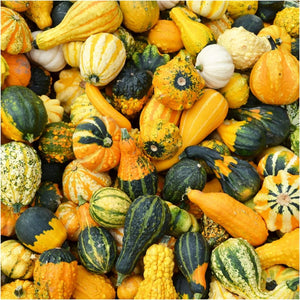
Summer squash (Cucurbita pepo) is a frost-tender bush of the gourd family, Cucurbitaceae, grown for young fruit: patty pan, scallopini, crookneck and straightneck. A plant or two fits a small bed or a big pot and crops for weeks. Many gardeners leave the fruit too long, and it turns tough and seedy within days. Zucchini, the best-known summer squash, has its own guide, How to Grow Zucchini, and winter squash sits with How to Grow Pumpkins.
Three mistakes that matter
- Sowing into cold soil. Squash seed comes up slowly or not at all in cold ground, and seedlings set out too early stall and struggle to recover. Wait for warm soil (see When to plant), or start seed in pots under cover.
- Letting fruit grow large. In warm weather a squash can turn hard-skinned and seedy in a few days. Every oversized fruit left on the bush also holds back new ones. Check plants daily once they flower (see Harvesting Fruit).
- Crowding plants and wetting the leaves. Close planting and shade bring on powdery mildew (Podosphaera xanthii), which slows the whole plant. Wet leaves invite downy mildew (Pseudoperonospora cubensis). Give each bush room and water the soil, not the leaves, in the morning.
When to plant
Sow once the soil holds 21°C to 35°C, the range that gives the best germination. In cooler gardens, start seed in pots on a seedling heat mat 3 to 4 weeks before planting out. For a steady supply, sow a few seeds, then a few more three weeks later.
| Zone | Example cities | Sow | Harvest | Notes |
|---|---|---|---|---|
| Tropical | Darwin, Katherine NT; Cairns, Townsville QLD; Broome WA | Apr-Jul | Jun-Oct | Sow in the dry season; wet-season heat and humidity bring mildew and poor fruit set. |
| Subtropical | Brisbane, Gold Coast, Bundaberg QLD; Coffs Harbour, Lismore NSW | Aug-Feb | Oct-May | Start August seed in pots under cover; a January or February sowing crops into the mild autumn. |
| Arid and semi-arid | Alice Springs NT; Broken Hill NSW; Mildura VIC; Kalgoorlie WA | Sep-Feb | Nov-Apr | Sow after the last inland frost; shade plants through heatwaves, when flowers may be all male. |
| Temperate | Sydney, Newcastle, Wollongong NSW; Melbourne, Geelong VIC | Sep-Jan | Nov-Apr | Sydney sows direct from October; Melbourne raises seed in pots and plants out around Melbourne Cup weekend. |
| Mediterranean | Perth, Bunbury WA; Adelaide and the SA coast | Sep-Jan | Nov-Apr | Adelaide sows zucchini, the same species, September to December; mulch deeply against the dry summer heat. |
| Cool and alpine | Hobart TAS; Canberra ACT; Ballarat VIC; Armidale NSW | Oct-Jan | Dec-Apr | Raise seed in pots and plant out after the last frost, often around Melbourne Cup weekend. |
Plant out once frost has passed and the soil has warmed. Through heatwaves, plants may carry only male flowers and set little fruit until the weather eases.
Site, soil and setup
Squash is a hungry, shallow-rooted plant, so rich, moist soil that still drains freely decides how long it keeps cropping.
| Get the bed right | What to do |
|---|---|
| Sun | Full sun, sheltered from strong wind |
| Soil | Loamy and free-draining; dig in 5 to 10 cm of well-rotted cow or horse manure 4 to 6 weeks ahead, or a 5 cm layer of compost |
| pH | 6.0 to 6.5; on acid soil, dolomite lime at 100 to 200 g per square metre, 4 weeks before planting |
| Drainage | A raised bed or a low mound where the ground stays wet after rain |
| Base feed | Pelletised chicken manure at 100 g per square metre, or blood and bone at 100 to 150 g per square metre, at planting |
| Rotation | A bed where no pumpkin, zucchini, cucumber or melon grew for the past two years |
Container growing
A compact bush squash crops well in a pot at least 45 cm across, filled with about 40 L of premium potting mix. The compact 'Sunburst', 'Lunar', 'Golden Scallopini' and 'Early White Bush' suit pots; leave the big 'Yellow Crookneck' for a garden bed.
- Water: pots dry out fast, so water daily in hot weather, soaking the mix rather than the leaves.
- Feed: fish and seaweed blend at 25 mL per 9 L fortnightly, then liquid potash per label fortnightly once the first fruit swells.
- Position: full sun, out of strong wind, where you pass it every day.
- Pollination: on a balcony with few bees, hand-pollinate (see Pollination).
Sowing Seeds
Sow squash where it is to grow once the soil is warm, or start it in pots under cover and plant it out young.
Seed of 'Sunburst' and 'Lunar' comes coated with a fungicide. Wear gloves to handle it, wash your skin with soap afterwards, keep it from children and never eat it or feed it to animals.
Sowing direct
- Sow two or three seeds per spot, 20 to 25 mm deep, into moist soil.
- Space spots 60 to 90 cm apart for bush types, and up to 1.2 m for big plants such as 'Yellow Crookneck'.
- Seedlings usually emerge in 5 to 14 days.
- Once the first true leaves open, thin each spot to the strongest seedling.
- Mulch with pea or lucerne straw once the soil is warm.
Starting in pots
- Sow one or two seeds per 7.5 cm pot of seed-raising mix, keep the pots warm and remove the weaker seedling.
- Plant out young, within about four weeks of sowing, since older plants that have stopped growing transplant poorly.
- Harden off (accustom seedlings to sun and wind) over about a week.
- Set each plant in without breaking the root ball, then water in with seaweed solution at half strength.
Pollination
Each plant carries separate male and female flowers. Males open first on long, slender stalks, so early blooms falling off is normal; females follow with a tiny squash behind the petals.
Bees carry the pollen, and cold, rainy or cloudy weather keeps them away. An unpollinated fruit collapses and drops.
- Pollinate in the morning, because female flowers close by the afternoon.
- Pick a male flower, strip its petals and press the pollen-coated centre onto the centre of an open female flower.
- One male flower serves several females, and a small, soft paintbrush does the same job.
- Under insect mesh, hand-pollinate every female flower, since bees cannot reach them.
Care by growth stage
Steady water and a switch to potassium at flowering keep a squash bush cropping. Weeks count from sowing.
| Stage | Water | Feed | Watch for |
|---|---|---|---|
| Seedling, weeks 1 to 3 | Keep the soil just moist; water transplants in well | Seaweed solution at half strength, 15 mL per 9 L, at planting out and a fortnight later | Pumpkin beetle (Aulacophora hilaris) on seedlings; slugs and snails in damp weather; damping off (seedlings collapsing at soil level) |
| Leaf growth, weeks 3 to 5 | Deep soaks at the base two or three times a week | Fish emulsion at half strength fortnightly | Melon aphid (Aphis gossypii) under the leaves; 28-spotted ladybird (Epilachna vigintioctopunctata) and its spiny larvae; in the north, cucumber moth (Diaphania indica) caterpillars webbing leaves together |
| Flowering, weeks 5 to 7 | Deep, regular soaks; keep the leaves dry | Sulphate of potash at 30 to 50 g per square metre once as flowers open, then liquid potash per label fortnightly | Male flowers only at first (see Pollination); powdery mildew on shaded lower leaves |
| Picking, week 7 onward | Even moisture to the last pick, never waterlogged | Fish and seaweed blend at 25 mL per 9 L fortnightly; pelletised chicken manure at 100 g per square metre once mid-season | Fruit fly stings; possums and rats taking fruit; two-spotted mite (Tetranychus urticae) bronzing leaves in hot, dry weather; blossom end rot |
Aim for about 25 mm of water a week, which is 25 L per square metre. Sandy soil takes it better in smaller, more frequent doses.
If you prefer a conventional feed, use each product at its label rate. Mix a controlled release all-purpose granular (NPK 12-3-8 to 14-5-10) through the soil at planting. Water on an all-purpose soluble (NPK 23-4-18 to 27-5-9) fortnightly during leaf growth. From the first flowers, change to a fruiting and flowering soluble (NPK 15-4-26 to 15-5-20), also fortnightly.

Companion planting
Tall crops that leave the ground free, and flowers that bring in bees, make the best neighbours for low bush squash.
Grows well with
- Sweet corn and sunflower, whose tall stems leave the soil around them to the squash.
- Climbing beans, sown to run up the corn in the traditional three-crop planting.
- Nasturtium and marigold, which draw bees to the squash flowers.
Keep apart
- Potato and eggplant, which share the 28-spotted ladybird.
- Pumpkin, zucchini and cucumber, which share powdery mildew, pumpkin beetle and aphid-borne viruses.
Harvesting Fruit
Pick summer squash a few days after the flower opens, while the skin is glossy and soft enough to mark with a thumbnail.
| Type | Varieties | Pick at |
|---|---|---|
| Scallop (patty pan and scallopini) | 'Golden Scallopini', 'Early White Bush', 'Scallop Bennings Green Tint', 'Scallop Yellow Bush', 'Golden Custard', 'Sunburst', 'Lunar' | 5 to 10 cm across |
| Crookneck | 'Yellow Crookneck' | 10 to 12 cm long, before the skin turns bumpy |
| Straightneck | 'Straightneck Early Prolific' | 13 to 15 cm long, when most tender |
- Cut each fruit free with a knife or secateurs; snapping it off leaves a ragged stem end that rots.
- Remove any oversized fruit, even if you will not eat it.
- Pick male flowers for stuffing on the day they open; taking them does not reduce the crop.

Summer squash does not keep like pumpkin. Store it in a plastic bag in the fridge and use it within about four days. It keeps best at 5°C to 10°C, and colder air pits the skin within days.
Cook it whole or sliced, skin and seeds included: steam it, fry it, or add it to stir-fries and pasta sauces.
Common problems
Blossom end rot. The flower end of a growing fruit darkens and rots when uneven watering stops calcium reaching it, even in soil that holds plenty. Water steadily; lime belongs in bed preparation, never as a cure. Read more
Baby squash shrivelling. Small fruit that collapse and drop soon after the flower fades were not pollinated; see Pollination.
Fruit rotting underneath. Fruit lying on damp soil can rot where it touches the ground, so slide straw or mulch beneath it.
Wilting on hot afternoons. Big leaves can droop on very hot days, and they recover as long as the root zone is watered regularly.
Knotted roots. A stunted plant that wilts in moist soil, with lumps all over its roots, has root-knot nematode (Meloidogyne species). Read more
Bitter fruit. A strongly bitter squash carries high levels of cucurbitacins, natural toxins that have caused vomiting, cramps and diarrhoea. Spit it out, discard the fruit and save no seed from that plant.
Pests and diseases
Squash depends on bees for pollination, so spray only when needed, late in the day and away from open flowers.
Queensland fruit fly (Bactrocera tryoni). Females can sting squash, and the maggots tunnel through the flesh, which soon rots. In Queensland, the Northern Territory and north-east New South Wales, cucumber fly (Zeugodacus cucumis) attacks squash too. Freeze stung fruit in a sealed bag for two days before binning it. Read more
Pumpkin beetle (Aulacophora hilaris). These yellow-orange beetles, 6 to 7 mm long with four black spots, feed in groups and chew leaves down to the veins. The spotless plain pumpkin beetle (Aulacophora abdominalis) does the same damage. A few can kill seedlings, so check young plants twice a week and catch beetles by hand in the early morning.
28-spotted ladybird (Epilachna vigintioctopunctata). Adults are orange with 28 black spots and a coat of short downy hairs, unlike the ladybirds that eat aphids. Adults and their spiny yellow larvae strip leaves to a skeleton of veins, so squash them and the upright yellow egg clusters under leaves.
Melon aphid (Aphis gossypii). Pale green to yellow aphids cluster under leaves and on tips, and they spread viruses such as zucchini yellow mosaic virus. Infected plants grow mottled, twisted leaves and no cure exists, so pull and bin them. Hose aphids off or spray an insecticidal soap, following its label. Read more
Powdery mildew (Podosphaera xanthii). White, powdery patches start on older, shaded lower leaves and spread in dry weather as well as humid. Remove the worst leaves and spray 1 part full-cream milk to 10 parts water, repeating after rain. Read more
Downy mildew (Pseudoperonospora cubensis). Leaves turn mottled, with pale yellow spots that enlarge and dry out, unlike the white coating of powdery mildew. Its spores need wet leaves to take hold, so it is worst after rain, fog and heavy dew. Pick off badly marked leaves early. Read more
Prevention first
- Turn leaves every few days to find beetles, eggs, aphids and early mildew.
- Where fruit fly is active, cover plants with fine insect mesh once fruit sets, secured to the ground and clear of every fruit.
- Pick and tend plants only when the leaves are dry, since hands and tools spread disease through wet foliage.
- Clear spent plants after the last pick, and bin rather than compost any with virus or stung fruit.
Tips
- Save seed only from open-pollinated varieties such as 'Scallop Bennings Green Tint', from flowers taped shut before opening, hand-pollinated, then retaped. Every C. pepo type, including zucchini, crookneck and some pumpkins and gourds, crosses with squash, and F1 hybrids such as 'Sunburst' do not come true.
- Sink a 15 cm pot into the soil beside each plant and water into it. Water then reaches the roots and the base of the stem stays dry.
- Tag each hand-pollinated seed fruit and leave it on the bush until the rind hardens, well past eating size. Wash the scooped seed and dry it fully before storing it.
Questions
What is the difference between summer squash and pumpkin?
Summer squash is picked young, while the skin is soft and the seeds are tiny, and eaten skin and all. Pumpkins and winter squash stay on the vine until the rind hardens, then keep far longer. Summer squash keeps only about four days in the fridge.
Is zucchini a type of squash?
Yes. Zucchini is a summer squash of the same species, Cucurbita pepo, as patty pan, scallopini, crookneck and straightneck. They grow the same way and cross with each other, which matters only if you save seed.
When do I pick patty pan squash?
Pick patty pan and scallopini at 5 to 10 cm across, usually a few days after the flower opens. The skin should be glossy and soft enough to mark with a thumbnail. Larger fruit turn tough and seedy, and leaving them on the bush slows new fruit.
Why do my baby squash rot and fall off?
Usually the flowers were not pollinated. Early flowers are mostly male, and bees stay away in cold, wet or cloudy weather. Hand-pollinate in the morning by pressing a male flower's pollen onto an open female flower. Fruit that grows first and then rots at the tip has blossom end rot from uneven watering.
Can I grow squash in a pot?
Yes. Choose a compact bush variety such as 'Sunburst' or 'Golden Scallopini' and a pot at least 45 cm across. Use premium potting mix, set it in full sun and water daily in hot weather. Feed fortnightly with fish and seaweed blend at 25 mL per 9 L, and hand-pollinate if few bees visit.
Is bitter squash safe to eat?
No. A strongly bitter squash carries high levels of cucurbitacins, natural toxins that have caused vomiting, stomach cramps and diarrhoea. Spit it out, discard the fruit and save no seed from that plant.
Grow it


More vegetable guides
All vegetables
Amaranth
How to grow leaf amaranth, or Chinese spinach, in Australia: sowing months for six climate zones, warm soil, thinning, picking, pests and cooking the leaves.
| Position | Full sun |
|---|---|
| Depth | 3 to 6 mm |
| Spacing | 15 cm apart |
| First pick | 4 to 8 weeks |

Artichoke
How to grow globe artichokes from seed in Australia: sowing, spacing, feeding, when to cut the buds, cutting back, cardoon, and sowing months for every zone.
| Position | Full sun |
|---|---|
| Depth | 10 mm |
| Spacing | 1 to 1.5 m apart |
| First pick | About 42 to 57 weeks |

Bean
How to grow beans in Australia: sowing months by climate zone, bush and climbing types, low-nitrogen feeding, watering, picking pods, plus bean fly and rust.
| Position | Full sun, at least six hours |
|---|---|
| Depth | 25 to 30 mm |
| Spacing | Bush 10 to 15, climbing 15 to 20 cm |
| First pick | 7 to 14 weeks |

Beetroot
How to grow beetroot in Australia: sowing months for all six climate zones, thinning the seed clusters, steady watering, harvest size and the pests that matter.
| Position | Full sun or part shade |
|---|---|
| Depth | 10 to 20 mm |
| Spacing | 10 cm apart after thinning |
| First pick | 7 to 12 weeks |