

How to Grow Sunflowers in Australia
Sow sunflowers direct in full sun once the soil holds 12°C at 8 am and heavy frosts are over. Sow 15 to 25 mm deep and 15 to 60 cm or more apart, depending on type. Water deeply about weekly, then two to three times a week from budding. Cut blooms, usually 8 to 12 weeks after sowing, as the outer petals lift.
| Sun | Full sun, 6 hours minimum |
|---|---|
| Water | About weekly; 2 to 3 times weekly from budding |
| Soil | Deep, well-drained loam, pH 6.0 to 7.5 |
| Feed | Compost at sowing; liquid feeds fortnightly; potash from flowering |
| Spacing | 15 to 60 cm or more |
| Depth | 15 to 25 mm |
| Germination | 5 to 30 days; fastest in warm soil |
| Harvest | 8 to 12 weeks |
| Container | Dwarf types: one per 25 cm, 10 L pot |
| Frost | Sow after heavy frosts; buds are frost-tender |
| Support | Stake types over about 80 cm |
| Use | Cut flowers, seed, summer screens |
| Pets and people | No known harm to cats, dogs or people |
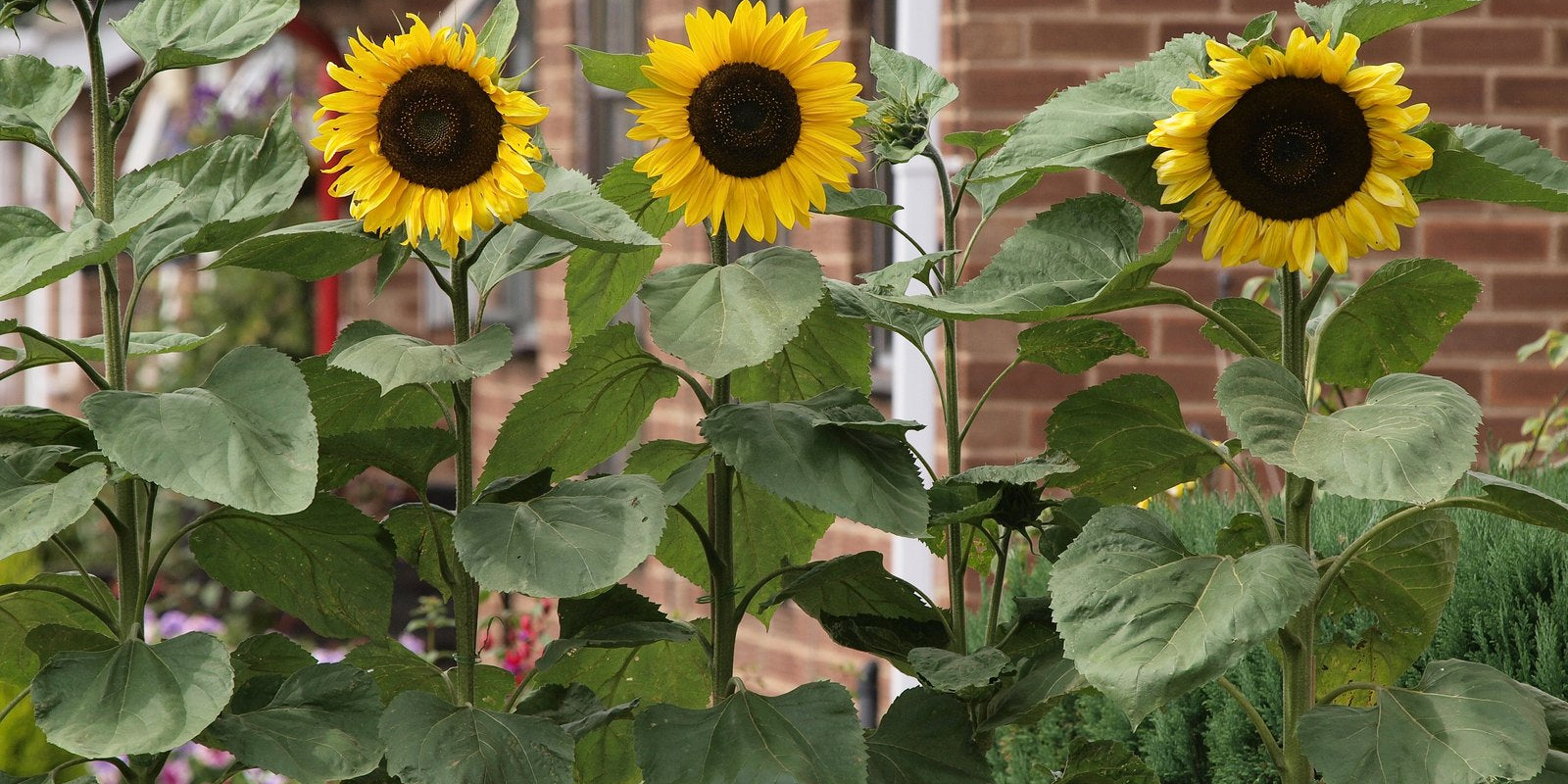
Sunflower (Helianthus annuus) is a fast-growing annual in the daisy family, Asteraceae, grown for cut flowers, seed and tall summer screens. Sown in the right months, it flowers in every Australian climate zone, usually 8 to 12 weeks from sowing. The usual mistake is sowing too early, into soil still too cold for seed to come up quickly and evenly.
Three mistakes that matter
- Sowing into cold, wet soil. Seed can sit for weeks, then rot or be eaten before it emerges. Wait for the soil temperature in When to plant, and sow into moist, not soggy, soil.
- Letting plants go dry as buds form. Water demand climbs steeply from about 10 days after buds show, and dry soil can then leave empty seed in the centre of the head. Step up watering as buds appear, following Care by growth stage.
- Feeding for leaves, not stems. Too much manure or high-nitrogen fertiliser gives tall, soft growth that leans and a dense canopy that holds disease. Prepare the bed with compost, then follow the feeds in Care by growth stage.
When to plant
Push a soil thermometer 10 cm into the bed at 8 am on a few mornings in a row. Sow once it reads 12°C or more and is rising, with heavy frosts over.
| Zone | Example cities | Sow | Flowering | Notes |
|---|---|---|---|---|
| Tropical | Darwin NT; Cairns, Townsville QLD | Apr-Aug | Jun-Nov | Sow as wet-season rain eases so plants flower in the dry season; wet-season sowings risk seed rot and fungal disease. |
| Subtropical | Brisbane, Bundaberg QLD; Coffs Harbour NSW | Aug-Mar | Oct-Jun | Frost is rarely a limit on the coast; sowings after January flower as nights cool and leaf disease rises. |
| Arid and semi-arid | Alice Springs NT; Mildura VIC; Broken Hill, Dubbo NSW | Sep-Jan | Nov-Apr | Sow after the last frost; in summer, mulch and keep seed rows moist, as hot bare soil reduces emergence. |
| Temperate | Sydney, Newcastle NSW; Melbourne, Geelong VIC | Sep-Jan | Nov-Apr | Start once soil warms after winter; Melbourne, the cold end of the zone, often waits until October. |
| Mediterranean | Perth, Bunbury WA; Adelaide and the SA coast | Sep-Jan | Nov-Apr | Sow as spring soil warms; dry summers dry beds fast, so check January sowings daily until seedlings emerge. |
| Cool and alpine | Canberra ACT; Hobart TAS; Ballarat VIC; Armidale NSW | Oct-Dec | Dec-Apr | Sow from Melbourne Cup weekend in frosty spots, or in pots in late September; early January suits quick dwarf types. |
In cool and alpine gardens, sow in early January only types that flower within about 10 weeks, such as 'Dwarf Sonnet', to beat April frosts.
Site, soil and setup
Sunflowers need full sun for at least 6 hours a day, as shade from budding onward reduces seed set. Open heads usually stop turning and face north-east, so plant them along the western side of the garden. Tall types also need shelter from strong wind.
Deep, fertile, free-draining loam with a pH of 6.0 to 7.5 suits them best. The taproot (main root) can be 40 to 50 cm deep when plants are only 30 cm tall, so avoid shallow soil.
| Where | What to do |
|---|---|
| pH tests below 6.0 | Dig in garden lime at 100 to 200 g per square metre, 4 weeks before sowing. |
| Heavy clay that stays wet | Build a raised bed. Dig in gypsum at 500 g to 1 kg per square metre only for dispersive clay, where an air-dried crumb clouds rainwater within 20 hours. |
| Every bed | Spread a 5 cm layer of compost and pelletised chicken manure at 100 g per square metre. Mix both through the bed, as fertiliser touching germinating seed can burn it. |
Grow sunflowers in the same bed only once every three years, and not where white mould (Sclerotinia sclerotiorum) struck in the last five years.
Container growing
For pots, try the branching, pollen-free 'Dwarf Sonnet' (25 to 40 cm) or the double-flowered 'Teddy Bear' (40 to 60 cm).
Give one plant under about 60 cm a pot at least 25 cm across and deep, about 10 L. Plants of 60 to 80 cm, or shorter types with full-size heads, need a pot 35 to 40 cm across, about 20 to 35 L. Taller types need a pot at least 50 cm across, about 60 L. Fill pots with fresh potting mix, not garden soil.
- Watering: check pots daily and water when the mix is dry 2 cm down, until it drains from the base.
- Feeding: water in fish and seaweed blend at 25 mL per 9 L fortnightly until the first flowers open. Then switch to liquid potash at the label rate, fortnightly.
- Position: full sun, out of strong wind.
Sowing Seeds
Sow seed where plants will flower; raise seedlings in pots only to get ahead in cool areas.
Starting under cover
- Sow one seed per deep cell or small pot of seed raising mix, 15 to 25 mm deep, about twice the width of the seed.
- Keep pots warm and bright; seedlings usually appear in 5 to 10 days, but can take up to 30 days in cool conditions.
- Harden off seedlings before planting out (move them outdoors for a little longer each day until they cope with full sun and wind).
- Plant out while small, before roots circle the pot.
Sowing direct
- Sow two seeds per spot at that depth, spaced to suit the type in the table below.
- Keep the soil just moist until seedlings emerge.
- Once true leaves open, snip off the weaker seedling at soil level.
- Birds dig out fresh seed, so until seedlings are up, cover rows with wildlife-safe netting: white, taut, with mesh too small for a finger.
| Type | Typical height | Spacing | Staking |
|---|---|---|---|
| Dwarf and pot types | 30 to 60 cm | 20 to 30 cm | Optional |
| Branching types | 0.6 to 2.5 m | 40 to 60 cm | Plants over about 80 cm |
| Single-stem cut-flower types | 1.2 to 2.5 m | 15 to 30 cm for vase-sized heads | Yes, set early |
| Giant seed types | 2 m or more | 60 cm or more | Yes, set early |
Care by growth stage
Weeks count from sowing; cool-weather sowings can take about two weeks longer to flower.
| Stage | Water | Feed | Watch for |
|---|---|---|---|
| Establishment (weeks 1 to 3) | After seedlings emerge, soak deeply when the soil is dry a finger's depth down, about weekly in mild weather | Nothing until the first true leaves open, then seaweed solution at half strength (15 mL per 9 L) fortnightly | Once seedlings are up, mulch with compost 5 cm deep, clear of the stems; stake plants that will pass about 80 cm now, before surface roots spread |
| Leafy growth (weeks 3 to 6) | Afternoon wilting is normal if leaves recover by evening; water sooner if they stay limp | Fish and seaweed blend at 25 mL per 9 L fortnightly | Tie stems loosely to their stakes as they lengthen |
| Budding (weeks 6 to 9) | Deeply two to three times a week once buds are visible | Fish and seaweed blend at 25 mL per 9 L fortnightly until the first flowers open | Start weekly pest checks (see Pests and diseases) |
| Flowering (weeks 8 to 12) | Two to three times a week through flowering, without easing off before you cut; water at the base in the morning, keeping spray off flowers and leaves | As the first flowers open, sulphate of potash once at 30 to 50 g per square metre, watered in; from then on, liquid potash at the label rate fortnightly | Keep up the weekly pest checks |
If you prefer a conventional feed, use these instead of the organic feeds. Mix a controlled release all-purpose granular (NPK around 12-3-8 to 14-5-10) into the bed at the label rate at sowing. Without the granular, water in an all-purpose soluble (NPK 23-4-18 to 27-5-9) at the label rate fortnightly during leafy growth. From the first open flowers, switch to a fruiting and flowering soluble (NPK 15-4-26 to 15-5-20) at the label rate fortnightly.


Companion planting
Because evidence for companion planting is limited, these pairings rest on shade and insects.
Grows well with
- Pumpkins, zucchini and cucumbers: plant them on the sunny side of a sunflower row, where their vines cover bare soil.
- Marigolds and cosmos: with sunflowers, they draw bees and beneficial insects into the patch.

Keep apart
- Low crops that need full sun: tall sunflowers shade them for part of each day.
Harvesting Blooms
Cut stems for the vase when a flower is just opening and its outer petals have lifted to stand out from the centre.
- Cut in the cool of early morning, as stems cut at midday tend to wilt.
- Strip leaves that would sit below the waterline, as they rot and feed bacteria.
- Stand stems in water as you cut, then move them to a clean vase with flower preservative.
With the water changed every 2 to 3 days and the vase out of direct sun, most stems last one to two weeks. Standard orange-yellow types usually last longest, while dark-petalled types can drop petals within a week.
For seed, keep watering and cover the head once the petals fall, to keep birds off. Use a paper bag or a bag with mesh too small for a finger.

Seed is ready when the back of the head turns from yellow to brown and the bracts (leafy scales around it) dry. This usually takes 4 to 6 weeks after flowering. Cut the head, hang it upside down in a dry, airy spot, and knock the loosened seed into a bucket.
Store dry seed in a labelled paper bag in a cool, dry place out of the sun. Dried heads can also go to the chooks.
Common problems
Stems lean or snap. Heavy heads catch strong wind, and roots in waterlogged soil may not hold a tall plant upright.
Buds distort or blacken at the rim. Frost while buds are forming can twist them and turn the edge of the head black or purple.
Birds strip ripening seed. Sulphur-crested cockatoos, galahs and other seed-eating birds take seed from uncovered heads as it ripens. Read more
Heads rot in wet weather. Rhizopus head rot (Rhizopus species) enters heads damaged by hail, birds or caterpillars when rain or heavy dew keeps them wet.
Pests and diseases
Pests strike at two stages: seedlings, then buds and heads from budding until harvest.
Common garden snail (Cornu aspersum). Snails and slugs feed at night and can strip a row of emerging seedlings, though larger plants are less affected. Read more
Rutherglen bug (Nysius vinitor). From spring, swarms often arrive from drying inland weeds to suck sap from stems and developing seed, so buds can wilt and seed fills poorly. Read more
Green vegetable bug (Nezara viridula). These shield-shaped bugs suck sap from upper stems and heads, and large numbers leave heads wilted or deformed. Read more
Corn earworm (Helicoverpa armigera). Caterpillars up to 40 mm chew florets and bore into heads from budding onward; look-alike native budworm (Helicoverpa punctigera) is managed the same way.
White mould (Sclerotinia sclerotiorum). In cool, wet or humid weather it rots stems and heads so plants can collapse, and it also infects beans, lettuce and potatoes.
Powdery mildew (Golovinomyces latisporus). A white, powdery coating spreads over the leaves late in the season, most often when days are humid and nights cool. Read more
Prevention first
- Clear weeds from late winter, as Rutherglen bugs breed on them, and pick off snails by torchlight while seedlings are small.
- From budding, shake heads weekly over a bucket of soapy water early in the morning to catch bugs, and wear gloves to hand-pick caterpillars.
- Keep to the spacing in Sowing Seeds, as airflow slows powdery mildew and sunflower rust (Puccinia helianthi).
- Where white mould struck, grow only resistant crops such as sweet corn, onions or sweet potato there (see Site, soil and setup).
Tips
- Sow single-stem types every two to four weeks for a longer run of blooms; branching types flower for weeks.
- Grow pollen-free types for vases, since they drop no pollen. They set little seed without pollen-bearing sunflowers nearby, so grow a seed type such as 'Giant Russian' for seed heads.
- Cut spent heads before seed drops to avoid self-sown seedlings, as some types can turn weedy.
Questions
When should I plant sunflower seeds in Australia?
Sow once the soil has warmed and heavy frosts are over. That means Sep to Jan in temperate, Mediterranean and arid areas, and Aug to Mar in subtropical areas. In cool and alpine areas, sow Oct to Dec, or early January for quick dwarf types. In the tropics, sow Apr to Aug so plants flower in the dry season.
Can sunflowers grow in pots?
Yes, if you choose short types. Give one plant under about 60 cm a pot at least 25 cm across and deep, about 10 L. Plants of 60 to 80 cm, or shorter types with full-size heads, need a pot 35 to 40 cm across, about 20 to 35 L. Use fresh potting mix and check pots daily.
How do I make cut sunflowers last longer in a vase?
Cut in the early morning as the outer petals lift. Strip any leaves that would sit in water, and stand stems in clean water straight away. Use a clean vase with flower preservative, change the water every 2 to 3 days and keep it out of direct sun. Most stems last one to two weeks.
When are sunflower seeds ready to harvest?
Seed is ready when the back of the head has turned from yellow to brown and the bracts around it are dry. That is usually 4 to 6 weeks after flowering. Bag heads against birds once the petals fall. Then cut each head, hang it upside down somewhere dry and airy, and knock out the loose seed.
Do sunflowers need staking?
Tall types usually do, especially single-stem and giant types in windy spots. Push the stake in at sowing or soon after, before the roots spread, and tie the stem loosely as it grows. Types under about 80 cm rarely need support.
Why do my sunflowers face north-east instead of following the sun?
Young sunflowers turn to follow the sun, but the movement stops once the flowers open, and most heads then stay facing north-east. To see the flowers face on, plant sunflowers along the western side of the garden.
Grow it
Tap Add beside a size to put it in your cart. You stay on this page.
- Sunflower - Common seedsFrom $2.99
- Sunflower - Giant Single seedsFrom $2.99
- Sunflower - Sunbird seedsFrom $2.99
- Sunflower - Radiance seedsFrom $2.99
- Sunflower - Meridian Yellow seedsFrom $2.99
- Sunflower - Meridian Gold seedsFrom $2.99
- Sunflower - Matilda seedsFrom $2.99
- Sunflower - Happy Face Orange seedsFrom $2.99


More flowers to sow in October
All flowers
Ageratum
Grow ageratum from seed in Australia: surface sowing, months for six climate zones, spacing, pots, deadheading, weed and livestock cautions and pests to watch.
| Position | Full sun, 6 hours or more |
|---|---|
| Depth | Surface, 1 mm at most |
| Spacing | 30 cm; Red Flint 40 cm |
| First flowers | 12 to 14 weeks from sowing |

Alyssum
Grow alyssum from seed in Australia: sowing months for six climate zones, surface sowing, spacing, pots, shearing for more flowers, and the pests to watch.
| Position | Full sun or part shade |
|---|---|
| Depth | Surface sow, press in |
| Spacing | 15 to 20 cm |
| First flowers | 8 to 9 weeks from sowing |
Amaranth Flower
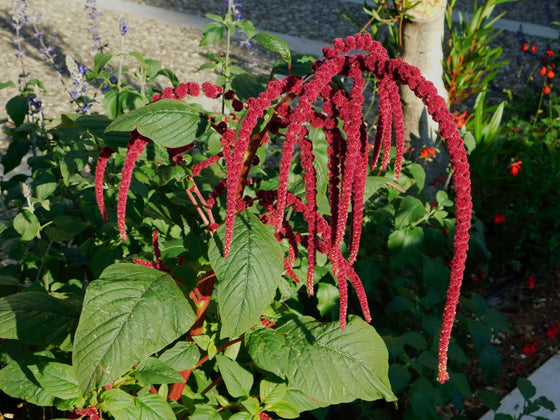
Grow ornamental amaranth from seed in Australia: love-lies-bleeding, plumes and Joseph's coat, sowing months for six zones, staking, drying and weed status.
| Position | Full sun, out of strong wind |
|---|---|
| Depth | 2 to 5 mm |
| Spacing | 40 to 80 cm |
| First flowers | 14 to 16 weeks |

Aster
Grow China asters in Australia: sowing months for six climate zones, spacing, pots, watering, Fusarium wilt and thrips, and cutting blooms for the vase.
| Position | Full sun, 6 hours minimum |
|---|---|
| Depth | 6 mm |
| Spacing | 30 to 40 cm |
| First flowers | 13 to 16 weeks |