
How to Grow Peanuts in Australia
Peanuts need full sun, loose sandy soil and a long warm season. Sow raw kernels 3 to 5 cm deep and 15 to 20 cm apart once the soil holds 18°C. Scatter gypsum over the row at first flowers, and keep the soil moist right up to digging. Lift plants 16 to 24 weeks after sowing, when leaves yellow and shells darken inside.
| Sun | Full sun, warmest bed |
|---|---|
| Water | Steady, most of all from flowering to digging |
| Soil | Loose, sandy, free-draining; pH 6.0 to 7.0 |
| Feed | Light; gypsum at first flowers, no nitrogen |
| Spacing | 15 to 20 cm |
| Depth | 3 to 5 cm |
| Germination | 7 to 14 days in soil above 18°C |
| Harvest | 16 to 24 weeks |
| Container | Not suited to pots |
| Frost | Frost tender; sow after the last frost |
| Use | Raw, roasted, salted, in salads and stir-fries |
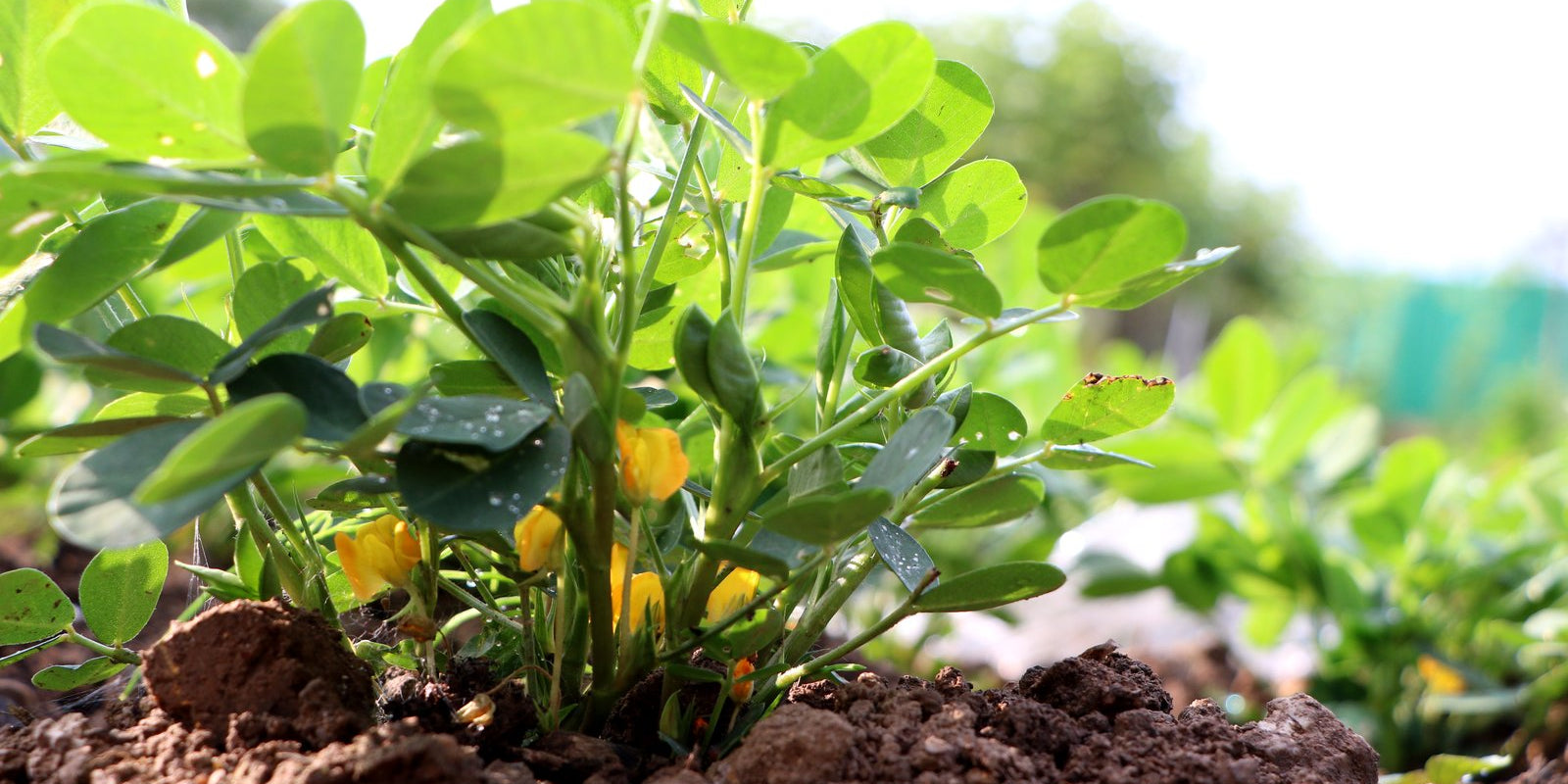
Peanut (Arachis hypogaea) is a frost-tender annual legume in the pea family, Fabaceae, grown for the nuts that form underground. Australia's peanut industry is centred on Kingaroy in Queensland's South Burnett, yet a warm backyard bed can grow a crop wherever summers run long. Flowers bloom above ground and push stalks called pegs into the soil, so most failures start with soil too hard or dry.
Three mistakes that matter
- Sowing into cold soil. Seed sitting in cool, damp ground is slow to emerge, and soil fungi often rot it before it breaks through. Wait for the soil temperature given in When to plant, and sow into moist, not wet, soil.
- Choosing hard or heavy ground. Pegs cannot push into compacted clay, and pods that do form tear off when the plant is lifted. Grow in loose, sandy soil, and keep mulch 10 cm back from the stems so pegs can reach the surface.
- Letting the bed dry out after flowering. Dry topsoil stops calcium reaching the pods, leaving empty shells, and lets in moulds that produce aflatoxin, a toxin that makes kernels unsafe to eat. Water steadily from first flowers through to digging, as Care by growth stage sets out.
When to plant
Sow once the soil 5 cm down holds at least 18°C at 9 am, after the last frost; seed germinates best between 20 and 35°C. The crop needs 16 to 24 weeks of warm weather from sowing to digging, so most gardens get one sowing a year.
| Zone | Example cities | Sow | Harvest | Notes |
|---|---|---|---|---|
| Tropical | Darwin, Katherine NT; Kununurra, Broome WA | Dec-Jan and Mar | Apr-Sep | Sow early in the wet for an April dig, or in March for a dry-season crop; dig in dry weather. |
| Subtropical | Brisbane, Gold Coast, Bundaberg QLD; Lismore, Coffs Harbour NSW | Oct-Dec | Feb-May | Mid October to late November is the preferred window; time sowing so digging misses heavy autumn rain. |
| Arid and semi-arid | Alice Springs NT; Mildura VIC; Broken Hill, Dubbo NSW | Oct-Nov | Feb-Apr | Sow once soil holds 18°C; mulch deeply, water often, and dig before the first May frosts. |
| Temperate | Sydney, Newcastle, Wollongong NSW; Melbourne, Geelong VIC | Oct-Dec | Feb-May | Sydney sows from October; Melbourne is marginal, so sow the warmest bed around Melbourne Cup weekend. |
| Mediterranean | Perth, Bunbury WA; Adelaide and the SA coast | Oct-Dec | Feb-May | Warm sandy soils suit peanuts; sow once soil holds 18°C and water deeply through the dry summer. |
| Cool and alpine | Canberra ACT; Hobart TAS; Orange, Armidale NSW; Ballarat VIC | Nov | Mar-Apr | Marginal: sow the warmest bed after the last frost; cool nights slow pods and autumn frost ends the crop. |
At the early edge of a window, wait until the soil has held that warmth for three mornings running and no heavy rain is forecast. At the late edge, count forward 16 to 24 weeks to check the crop can be dug before autumn frost or tropical downpours.
Site, soil and setup
| Get the bed right | What to do |
|---|---|
| Sun | Full sun in the warmest bed you have, sheltered from strong wind |
| Soil | Sand, sandy loam or light clay loam that stays loose and crumbly in the top 15 to 20 cm; avoid heavy clay and soil that sets hard |
| Heavy soil | Grow on a raised bed or low mound of sandy loam, which drains better and makes digging easier |
| pH | 6.0 to 7.0; below 6.0, garden lime at 100 to 200 g per square metre, 4 weeks before sowing. Choose lime over dolomite, whose magnesium can block calcium reaching the pods |
| Preparation | Fork the bed deeply so it stays loose, pick out sticks and stones, and mix in a 5 cm layer of compost |
| Base feed | Bone meal at 100 g per square metre forked in at sowing for phosphorus and calcium; skip nitrogen-rich fertilisers and fresh manure |
Like other legumes, peanuts host root bacteria that fix nitrogen from the air, which is why they need so little feeding. Leave at least a year before peanuts return to the same bed, because leaf spot survives in old plant remains.
Sowing Seeds
Sow raw, unroasted kernels with the papery skin intact, such as 'Big Pink', straight into the bed where they will grow.
Sowing direct
- Handle seed gently, like eggs: a split kernel or torn skin will not germinate.
- Sow 3 to 5 cm deep, 15 to 20 cm apart, in rows 60 to 75 cm apart. Go shallower in heavy or wet soil, since deep seed rots more often.
- Sow into moist soil and water in once. Unless the surface dries out, hold off until shoots appear, usually in 7 to 14 days.
- Where peanuts have never grown, a peanut inoculant (Group P rhizobia) at sowing helps roots form nitrogen-fixing nodules; follow its label.
- Sow a few spare seeds in pots to fill gaps, because some seedlings are usually lost as they emerge.
Seed peanuts are for sowing, not eating. Seed can carry a fungicide dressing, so wear gloves, wash your hands afterwards and store leftover seed well away from children and the pantry.
Starting in pots in cool areas
- In short seasons, sow one seed per small pot of seed raising mix, kept warm and sheltered, a few weeks before the soil outside warms.
- Plant out after the last frost, when seedlings are about 10 cm tall, at the spacing above.
- Harden off (get seedlings used to sun and wind outdoors) over about a week first.
Care by growth stage
Steady moisture and calcium in the topsoil decide the crop, because each pod draws its calcium straight from the soil around it. Weeks count from sowing and stretch in cool weather.
| Stage | Water | Feed | Watch for |
|---|---|---|---|
| Seedling, weeks 1 to 5 | Once up, a deep soak about once a week; short dry spells do no harm, but never keep the soil soggy | Nothing until the first true leaves, then seaweed solution at half strength, 15 mL per 9 L, fortnightly | Seedlings chewed off at ground level by cutworms; seedlings rotting in cold, wet soil |
| Flowering and pegging, weeks 5 to 10 | Deep soaks once or twice a week in hot, dry weather; from first flowers, water matters most | Gypsum at about 50 g per square metre, scattered over the row at first flowers and watered in | Native budworm caterpillars on leaves, flowers and pegs; peanut mite (Paraplonobia species) silvering leaves in long dry spells |
| Pod filling, weeks 10 to 18 | Keep the top few centimetres moist, never dry and cracked | Nothing | Leaf spot and rust in humid weather; sudden wilting from white mould; web moth larvae in pods in dry years |
| Maturing, weeks 16 to 24 | Keep watering steadily right up to digging, so pods stay sound and lift cleanly | Nothing | Yellowing leaves, the cue to test-dig a plant as Harvesting Pods describes |
When plants reach about 30 cm and pegs start to dangle, draw a little loose soil or compost under the spreading branches. Keep it off the crown. Pegs longer than about 7 cm seldom reach the soil unaided. Pull weeds by hand rather than hoeing among the pegs.
Skip potash-rich fruiting feeds, because heavy potassium can block the calcium that pods need. If you prefer a conventional feed, choose a low-nitrogen blend with phosphorus, potassium, sulphur and trace elements. Fork in about 30 g per square metre a few weeks before sowing.
Companion planting
Peanuts are legumes like beans and peas, which have their own guides. They sit well under tall crops and badly beside plants that share their soil diseases.
Grows well with
- Corn, with the low peanut plants beneath acting as a living mulch that keeps the soil cool and moist.
- Lettuce and silverbeet sown after the harvest, which use the nitrogen that peanut roots leave behind.
Keep apart
- Tomato, capsicum and beans, which share white mould, a soil fungus that also rots peanut stems and pods.
Harvesting Pods
Most crops are ready 16 to 24 weeks after sowing, once the leaves start to yellow and the inside of most shells has darkened.
- As leaves yellow, lift one plant and open a few pods from the centre of the bush, which ripen first.
- Dig when most shells are dark brown inside and the kernels have their full skin colour; pale, white-lined shells need longer.
- Water the day before if the soil is dry, so pods stay on their pegs as you lift.
- Lift whole plants with a garden fork and shake off loose soil.
- Sift the loosened soil for pods that broke away.
- Do not wait much past ripeness: within a week or two, pegs weaken and pods drop off in the ground.

Curing
Start drying the same day you dig, because damp pods left in a heap invite mould.
| Stage | How long | Conditions |
|---|---|---|
| On the plant | 2 to 4 days | Hang plants upside down, or lay them pods up, somewhere warm and airy and out of the rain, until the stems turn brittle |
| Pods off the plant | A few weeks | Pick off the pods, brush or wash off soil, and spread them in a single layer on mesh or trays in a dry, airy place |
| Storage | Until eaten or sown | In the shell, in a sealed, rodent-proof container somewhere cool and dry, ideally below 25°C |
Before eating or storing, throw out any kernel that is mouldy, shrivelled or discoloured. Aflatoxin moulds are not always visible, which is why steady watering and prompt drying matter. Eat peanuts raw, roasted or salted, or toss them through salads and stir-fries.
Common problems
Gaps in the row. Split or skinned seed does not germinate, and seed sown too deep or too early often rots; see Three mistakes and Sowing Seeds.
A big, leafy bush with few pods. Long spells above 30°C push growth into leaves, and pegs that dangle too high never reach the soil; see Care by growth stage.
Empty shells. Pods with no kernel, called pops, come from too little calcium where pods form. They are worst in dry seasons or after heavy potash, and gypsum at first flowers prevents them.
Pods left behind at digging. Pegs weaken when plants stand past ripeness or lose leaves to leaf spot, and pods snap off in dry, hard soil.
Pests and diseases
A home crop seldom needs spraying, because peanuts tolerate a good deal of leaf loss. If you do spray, choose a product whose label covers peanuts.
Native budworm (Helicoverpa punctigera). Its caterpillars chew leaves and growing tips from emergence to pegging. Its look-alike, cotton bollworm (Helicoverpa armigera), tends to damage flowers and pegs, and both are managed the same way. Check plants twice a week while they flower and pick caterpillars off by hand.
Lucerne seed web moth (Etiella behrii). In dry years its larvae slip down through cracked soil, bore into pods and eat the kernels. Damaged pods carry far more aflatoxin than sound ones. Keep the surface soil moist late in the season, and dig promptly once the crop is ready.
Early and late leaf spot (Passalora arachidicola and Passalora personata). Round brown to black spots up to 10 mm across appear on the lower leaves first, often ringed in yellow, and leaves drop early. The fungi survive in old peanut plants, so bin spotted tops rather than composting them.
Peanut rust (Puccinia arachidis). Orange-brown pustules full of powdery spores form under the leaves, which then yellow, dry and wither. It is common in peanut districts north of Kingaroy. The fungus lives only on living peanut plants, so pull out every self-sown peanut between crops.
White mould (Athelia rolfsii). A branch or whole plant wilts suddenly, with thick white fungal threads and pinhead-sized white to brown balls at soil level. It lives in most soils and attacks many vegetables. Avoid wounding stems or heaping soil on the crown, and bin affected plants.
Prevention first
- Rotate beds as Site, soil and setup describes, and pull out self-sown peanuts, which carry leaf spot and rust between crops.
- Water the soil, not the leaves, early in the day: leaf spot infects only when leaves stay wet for about 10 hours.
- Check under the lower leaves at least once a week from flowering, when spots and caterpillars first show.
- Bin or bury the tops of diseased plants, and compost only healthy ones.
Tips
- For a clearer read on ripeness, scrape the outer skin off a few pods with a pocket knife. The curved saddle of the pod turns dark brown to black when the kernel is mature.
- Keep the plumpest pods from healthy, well-watered plants as next year's seed, stored in the shell and shelled only on sowing day. Peanuts pollinate themselves, so different varieties can grow side by side.
- Dig healthy spent tops back into the bed or add them to the compost, returning nitrogen and organic matter for the next crop.
Questions
When do you plant peanuts in Australia?
Sow once the soil 5 cm down holds 18°C at 9 am, after the last frost. Subtropical, temperate and Mediterranean gardens usually sow October to December, and arid gardens October to November. Tropical gardens sow in December or January, or in March. Cool gardens can try a November sowing in their warmest bed.
Can I grow peanuts from peanuts bought at the shop?
Yes, if they are raw, with the papery skin unbroken. Shell them just before sowing and handle them gently, because a split kernel will not grow. Shop peanuts carry no variety name, so the plants that come up can be a surprise.
How do I know when peanuts are ready to dig?
Start checking once the leaves yellow, usually 16 to 24 weeks after sowing. Lift one plant and open a few pods from the middle of the bush. When most shells are dark brown inside, dig the crop within a week or two, before the pegs weaken.
Why are my peanut shells empty?
Empty shells, called pops, usually mean too little calcium where the pods form. Pods take calcium straight from moist soil, so dry spells and heavy potash make it worse. Scatter gypsum over the row at first flowers, about 50 g per square metre, and keep the soil moist through pod filling.
Do peanuts need bees to pollinate?
No. Peanut flowers open at night and pollinate themselves early the next morning. Each fertilised flower then grows a peg down into the soil, where the pod forms. Loose, moist soil matters far more than bees.
Grow it

More vegetable guides
All vegetables
Amaranth
How to grow leaf amaranth, or Chinese spinach, in Australia: sowing months for six climate zones, warm soil, thinning, picking, pests and cooking the leaves.
| Position | Full sun |
|---|---|
| Depth | 3 to 6 mm |
| Spacing | 15 cm apart |
| First pick | 4 to 8 weeks |

Artichoke
How to grow globe artichokes from seed in Australia: sowing, spacing, feeding, when to cut the buds, cutting back, cardoon, and sowing months for every zone.
| Position | Full sun |
|---|---|
| Depth | 10 mm |
| Spacing | 1 to 1.5 m apart |
| First pick | About 42 to 57 weeks |

Bean
How to grow beans in Australia: sowing months by climate zone, bush and climbing types, low-nitrogen feeding, watering, picking pods, plus bean fly and rust.
| Position | Full sun, at least six hours |
|---|---|
| Depth | 25 to 30 mm |
| Spacing | Bush 10 to 15, climbing 15 to 20 cm |
| First pick | 7 to 14 weeks |

Beetroot
How to grow beetroot in Australia: sowing months for all six climate zones, thinning the seed clusters, steady watering, harvest size and the pests that matter.
| Position | Full sun or part shade |
|---|---|
| Depth | 10 to 20 mm |
| Spacing | 10 cm apart after thinning |
| First pick | 7 to 12 weeks |