
How to Grow Egyptian Spinach in Australia
Egyptian spinach, or molokhia, is a heat-loving leafy annual, not true spinach. Sow it after the last frost, once the soil holds at least 18°C, barely covering the seed. Thin to 15 to 30 cm, keep it watered and fed, and cut the soft top shoots from 6 to 8 weeks. Eat only the leaves and shoots: the seeds and pods are poisonous.
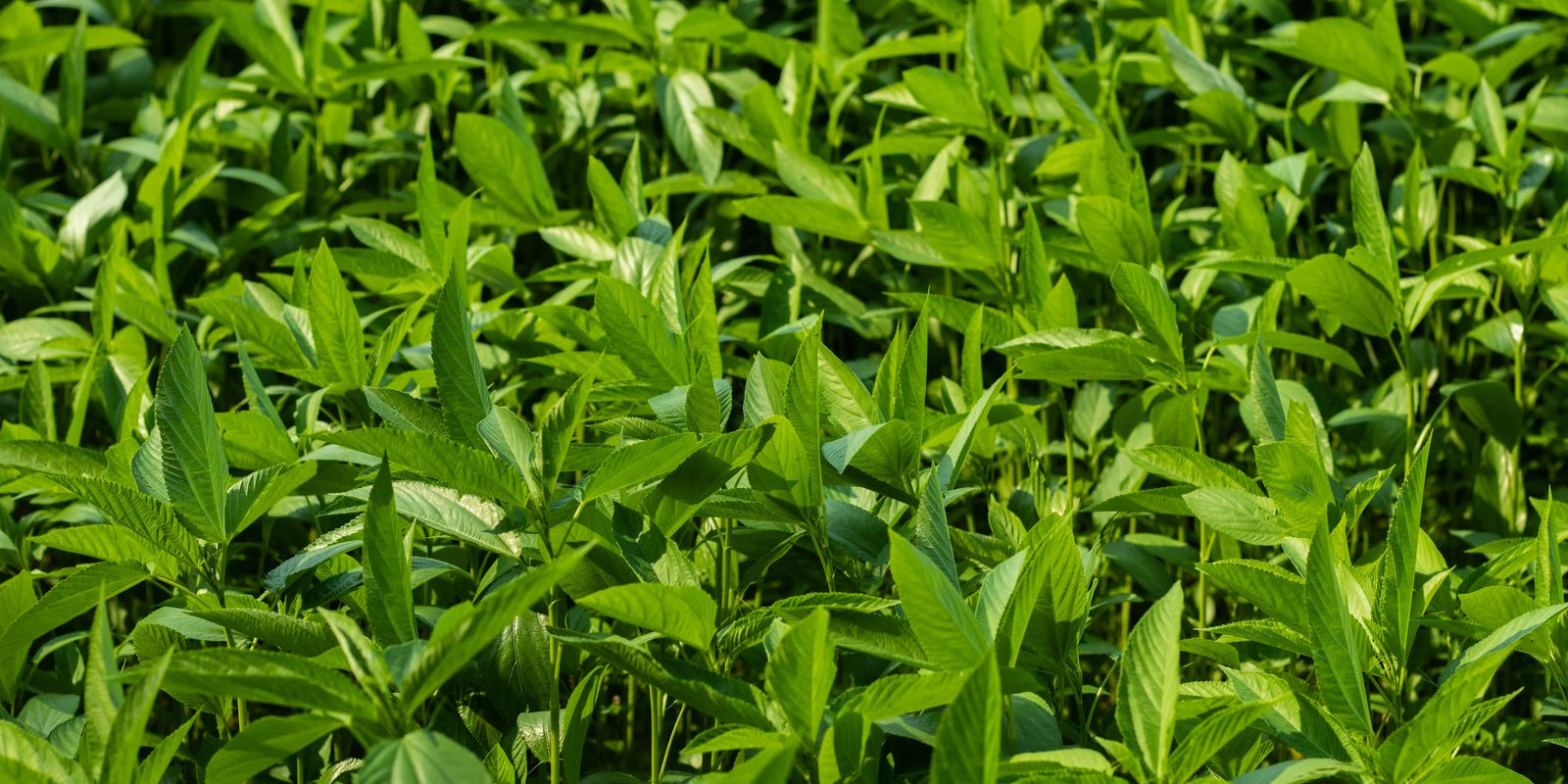
| Sun | Full sun |
|---|---|
| Water | Steady; established plants handle short dry spells |
| Soil | Rich, free-draining loam, pH 6.0 to 7.0 |
| Feed | Medium; fish and seaweed blend fortnightly |
| Spacing | 15 to 30 cm |
| Depth | Barely covered, 6 mm at most |
| Germination | Soil 18°C or warmer; hard seed lags |
| Harvest | 6 to 8 weeks |
| Container | Yes, 30 cm pot, about 13.5 L |
| Frost | Frost tender; growth stops below 15°C |
| Use | Soups, stews, cooked greens, young leaves raw |
Egyptian spinach (Corchorus olitorius), also sold as molokhia or jute mallow, is a fast, upright annual in the mallow family, Malvaceae. It is grown for its glossy leaves and soft shoot tips, which turn silky and thick when cooked, much like okra. It is no relation of true spinach, and it thrives in the summer heat that sends spinach to seed. The usual mistake is sowing it on spinach's cool-season calendar.
Three mistakes that matter
- Sowing it on the spinach calendar. Autumn and winter sowings stall in the cold, and shortening days push young plants into flower within weeks. Sow from spring into early summer instead, at the soil temperature given in When to plant.
- Burying the seed, or cooking it. The small seed comes up best within 2 cm of the surface, and a long hot soak can cut germination. Barely cover it, and keep any hot water treatment to a few seconds, as set out in Preparing the seed.
- Letting the pods ripen. The seeds hold cardiac glycosides, poisonous to people and animals, and plants left to seed sow themselves freely. Pinch out flower clusters as you pick, and pull plants before the long, ribbed pods turn brown.
When to plant
Soil warmth decides it. Sow outdoors after the last frost, once the soil holds at least 18°C, because growth stops below 15°C. Seed comes up fastest and most evenly in soil near 30°C. Sow a short row every three or four weeks until midsummer for a steady supply of young shoots.
| Zone | Example cities | Sow | Harvest | Notes |
|---|---|---|---|---|
| Tropical | Darwin, Katherine NT; Cairns, Townsville QLD | Sep-Feb | Oct-May | Sow from the wet season build-up in raised beds; dry-season sowings meet short days and flower quickly. |
| Subtropical | Brisbane, Sunshine Coast, Bundaberg QLD; Coffs Harbour, Lismore NSW | Oct-Jan | Dec-May | Sow once the soil holds 18°C; plants flower and slow as autumn days shorten. |
| Arid and semi-arid | Alice Springs NT; Broken Hill NSW; Mildura VIC; Kalgoorlie WA | Oct-Jan | Dec-Apr | Sow after the last frost; mulch well and water deeply through heatwaves until autumn nights cool. |
| Temperate | Sydney, Newcastle, Wollongong NSW; Melbourne, Geelong VIC | Oct-Dec | Dec-Mar | Sydney sows from October; Melbourne, the cold end, waits for Melbourne Cup weekend and warm soil. |
| Mediterranean | Perth, Bunbury WA; Adelaide and the SA coast | Oct-Dec | Dec-Apr | Sow once the soil warms; the heat arrives dry, so mulch thickly and water steadily. |
| Cool and alpine | Hobart TAS; Canberra ACT; Orange, Armidale NSW | Nov-Dec | Jan-Mar | A short, marginal season: raise seedlings indoors, plant out after the last frost, pick before autumn chill. |
At the early edge of a window, start seed in pots under cover and plant out once frosts end. Rows sown late in the window meet shortening days and flower sooner, so pick them young and often.
Site, soil and setup
Give this heat lover the sunniest, most sheltered bed you have, in soil that drains freely.
| Get the bed right | What to do |
|---|---|
| Sun | Full sun; in cooler zones, a warm spot against a north-facing wall |
| Soil | Sandy loam rich in organic matter; it grows poorly on heavy clay |
| pH | 6.0 to 7.0; below that, garden lime or dolomite lime at 100 to 200 g per square metre, 4 weeks ahead |
| Bed preparation | Dig in a 5 cm layer of compost, then rake in pelletised chicken manure at 100 g per square metre at sowing |
| Drainage | Raise the bed where rain pools; young plants do not cope with waterlogging |
| Rotation | Avoid a bed where root-knot nematode damaged a crop within the last year |
Container growing
A pot about 30 cm across holds roughly 13.5 L, enough for one plant, and a 33 cm pot of about 18 L fits two. Fill it with premium potting mix, never garden soil.
- Water: check daily in summer and water whenever the top of the mix feels dry, because pots dry far faster than beds.
- Feed: worm casting liquid diluted to weak tea colour every week or two, or fish and seaweed blend at 25 mL per 9 L fortnightly.
- Position: full sun, in the warmest corner of the patio or courtyard.
Sowing Seeds
Sow direct where the plants will grow, or start seed in pots and plant out once the soil warms.
Preparing the seed
Many seeds carry a hard coat that keeps water out, so a batch can come up slowly and unevenly. To soften it, tie the seed in a cotton cloth and dip it for 5 seconds in water just off the boil. Sow it at once. Rubbing the seed lightly between sheets of fine sandpaper works too. Keep the dip short, since longer heat can cut germination. Only the cloth goes in the water, never your fingers, and keep the jug away from children.
Sowing direct
- Mix the seed with about ten times its volume of dry sand, so it spreads evenly along the row.
- Sow in rows 30 to 50 cm apart and barely cover the seed, no deeper than 6 mm.
- Keep the surface damp: in warm, moist soil seedlings can appear in 2 to 3 days, while hard seed straggles.
- Thin in stages to 15 to 30 cm apart for plants you will pick over many weeks.
Starting in pots and transplanting
Pots give cooler gardens a head start while nights are still cold.
- Sow two or three seeds per small pot of seed-raising mix, and keep the strongest seedling.
- Keep pots somewhere warm and bright, such as a sunny windowsill or a heated mat.
- Harden off (get seedlings used to sun and wind over about a week) once they reach 5 to 10 cm tall.
- Plant out 15 to 30 cm apart after the last frost, and water in with seaweed solution at half strength, 15 mL per 9 L.
Care by growth stage
Warmth and nitrogen decide this crop. Established plants ride out a dry fortnight, but leaf comes fastest with steady water and regular feeding. Weeks count from sowing.
| Stage | Water | Feed | Watch for |
|---|---|---|---|
| Germination, weeks 0 to 2 | Keep the surface damp with a fine spray | None | Patchy emergence from hard seed or cold soil (see When to plant) |
| Seedling and thinning, weeks 2 to 4 | Water whenever the surface starts to dry; never let it waterlog | Seaweed solution at half strength, 15 mL per 9 L, fortnightly from the first true leaves | Seedlings collapsing at soil level; grasshoppers chewing young leaves |
| Leafy growth, weeks 4 to 7 | Deep soaks, roughly 5 to 8 cm a week with rain included; mulch the bed | Fish emulsion at half strength fortnightly, or an all-purpose soluble (NPK 23-4-18 to 27-5-9) fortnightly at the label rate | Fine pale speckling on leaves in hot, dry weather; aphids on shoot tips |
| Picking, weeks 6 to 16 | Keep moisture steady right through picking | Fish and seaweed blend at 25 mL per 9 L fortnightly, or blood meal at 50 to 100 g per square metre after every second cut; the soluble option continues fortnightly | Flower clusters in the leaf joints; wilting on hot afternoons in moist soil |
| Season's end, as days shorten | Keep steady while you still pick | None | Long green pods forming; strip them or pull the plant |
If you prefer a conventional start, mix an all-purpose controlled release granular (NPK around 14-5-10) into the bed at planting instead of the chicken manure.
Pinching and Harvesting
Every cut is also a prune: taking the top of a stem makes the plant send out side shoots. Regular picking keeps it bushy and in leaf.
- Make the first cut once plants reach 30 to 40 cm tall.
- Take shoots 20 to 30 cm long, leaving 10 to 20 cm of stem to branch again.
- Cut again every 2 to 3 weeks as the side shoots lengthen.
- Pinch out the small yellow flower clusters and any young pods as they appear.
- Pull plants that keep flowering hard as autumn days shorten, before any pod browns.
- Put stems carrying pods in the green waste bin, not the compost.
Egyptian spinach self-sows readily, and it has naturalised in the Kimberley and the Top End. It is not a declared weed in Queensland, New South Wales, Victoria, South Australia, Tasmania, the ACT or the Northern Territory. In Western Australia, check its status on the Western Australian Organism List before sowing.
Companion planting
West African growers raise it among okra, watermelon and peanuts, and the same summer company suits an Australian patch.
Grows well with
- Okra, a fellow mallow with the same appetite for heat, full sun and summer water.
- Watermelon, which sprawls over the ground beneath the upright stems.
- Peanuts, low growers that cover the soil between plants.
Keep apart
- Lettuce and other low greens on its sunny side, since plants can reach 1 to 1.5 m and shade them.
- Sweet corn and climbing beans on its northern side, which would shade a crop that needs full sun.
Harvesting Leaves
Start picking 6 to 8 weeks from sowing, once plants stand 30 to 40 cm tall and leafy. Use the cuts set out in Pinching and Harvesting.
- Choose the soft top shoots; the lower stems turn fibrous and tough.
- Drop cut shoots into a bucket of water or wrap them in a damp cloth, because the leaves wilt fast.
- Check every shoot for flowers or pods, and discard any you find.
Picked leaves do not keep long, so pick close to cooking and keep them damp and cool until then. Cook older leaves in soups and stews, where they thicken the broth.
Common problems
Seed slow or patchy. A hard seed coat or cold soil holds it back; see Preparing the seed and When to plant. Read more
Flowering while small. Under short days plants can flower about a month after emerging, so late-summer and tropical dry-season rows bolt (run to flower) early; pick them young.
Growth stalls in autumn. Cooling nights stop growth, as set out in When to plant, and a crop picked hard on hungry soil also slows, so feed after cutting.
Seedlings everywhere next spring. Pods missed the year before have dropped their seed; pull the seedlings young or pot up a few.
Young plants dying in wet ground. Seedlings do not cope with waterlogging, so raise the bed before the summer storms or the wet season arrive.
Pests and diseases
Egyptian spinach is rather resistant to pests and diseases, and most trouble arrives in hot, dry spells or in tired soil.
Two-spotted mite (Tetranychus urticae). Tiny mites suck the leaf undersides, leaving fine pale speckling and, in bad attacks, webbing, worst in hot, dry, dusty weather. Hose the leaf undersides and spray horticultural oil or insecticidal soap in the cool of the day. Read more
Root-knot nematode (Meloidogyne species). Microscopic soil worms knot the roots into galls, so plants wilt in the heat even when the soil is moist. The crop is very susceptible: rotate beds and build organic matter, as set out in Site, soil and setup. Read more
Aphids (family Aphididae). Colonies cluster on soft shoot tips and leaf undersides. Knock them off with a firm jet of water, or spray insecticidal soap, and let ladybirds and lacewings finish the job. Read more
Grasshoppers (order Orthoptera). They chew ragged holes in leaves and can strip seedlings in a dry year. Cover young plants with fine netting when numbers build, and keep surrounding grass short. Read more
Damping off (Pythium and Rhizoctonia species). Seedlings topple from a pinched, water-soaked stem at soil level. Sow into warm soil, water in the morning, and never let pots or beds sit wet. Read more
Prevention first
- Check the leaf undersides and shoot tips weekly, more often in hot, dry spells.
- Water at the base in the morning, so the soil surface dries by evening.
- Rotate beds and dig in compost each season to keep root-knot nematode down.
- Keep plants at the spacing in Sowing Seeds, so air moves between them.
Tips
- In Melbourne and the cool zone, Melbourne Cup weekend in early November is a fair marker for planting out seedlings raised under cover.
- In the tropics, sow as the wet season build-up begins, since the plant performs best in hot, rainy weather.
- Dry surplus leaves in the shade, crumble them into a jar, and use the powder to thicken soups after the plants finish. Dried leaf keeps for at least six months.
Questions
Is Egyptian spinach the same as spinach?
No. Egyptian spinach is Corchorus olitorius, a member of the mallow family and a relative of jute. True spinach is a cool-season crop that runs to seed in heat. Egyptian spinach is the reverse: it needs warm soil and grows through summer, when spinach struggles.
When do you plant Egyptian spinach in Australia?
Sow in spring and early summer, after the last frost, once the soil holds at least 18°C. That means September to February in the tropics, October to January in subtropical and arid gardens, and October to December in the south. Cool zones get a short November to December window.
Are Egyptian spinach seeds poisonous?
Yes. The seeds contain cardiac glycosides, which act on the heart, and cattle have died after eating stems carrying pods. Eat only the leaves and young shoots, never the seeds or seed pods. Pinch out flowers as you pick and keep seeding stems away from children, pets and livestock.
Can you eat molokhia leaves raw?
Young leaves can go raw into salads. Older leaves are better cooked, where they turn silky and thicken soups and stews. Fresh leaves carry oxalate and nitrate, which moderate cooking lowers, so cook them when eating a large serve.
Why is my Egyptian spinach flowering already?
It is a short-day plant, so shortening days trigger flowering, sometimes about a month after the seedlings emerge. Late-summer sowings and tropical dry-season sowings flower soonest. Sow from spring to midsummer, pick often, and pinch out the flower clusters.
Do Egyptian spinach seeds need soaking before sowing?
Not always, but hard seed can come up slowly. Tie the seed in a cotton cloth and dip it in water just off the boil for about 5 seconds, then sow at once. Keep it brief, since longer heat can cut germination.
Grow it
Tap Add beside a size to put it in your cart. You stay on this page.
- Spinach - Egyptian seedsFrom $2.99

More vegetables to sow in October
All vegetables
Amaranth
How to grow leaf amaranth, or Chinese spinach, in Australia: sowing months for six climate zones, warm soil, thinning, picking, pests and cooking the leaves.
| Position | Full sun |
|---|---|
| Depth | 3 to 6 mm |
| Spacing | 15 cm apart |
| First pick | 4 to 8 weeks |

Artichoke
How to grow globe artichokes from seed in Australia: sowing, spacing, feeding, when to cut the buds, cutting back, cardoon, and sowing months for every zone.
| Position | Full sun |
|---|---|
| Depth | 10 mm |
| Spacing | 1 to 1.5 m apart |
| First pick | About 42 to 57 weeks |

Bean
How to grow beans in Australia: sowing months by climate zone, bush and climbing types, low-nitrogen feeding, watering, picking pods, plus bean fly and rust.
| Position | Full sun, at least six hours |
|---|---|
| Depth | 25 to 30 mm |
| Spacing | Bush 10 to 15, climbing 15 to 20 cm |
| First pick | 7 to 14 weeks |

Beetroot
How to grow beetroot in Australia: sowing months for all six climate zones, thinning the seed clusters, steady watering, harvest size and the pests that matter.
| Position | Full sun or part shade |
|---|---|
| Depth | 10 to 20 mm |
| Spacing | 10 cm apart after thinning |
| First pick | 7 to 12 weeks |