
How to Grow Moringa in Australia
Sow moringa in warm weather, once the soil holds about 25°C and nights stay above 15°C. Soak the seed for 24 hours and sow it 1 to 2 cm deep in deep pots or warm soil. Give it full sun and free-draining soil, feed it lightly, and prune it hard each year so the leaves and pods stay within reach.
| Sun | Full sun, warm and sheltered |
|---|---|
| Water | Moist while young; drought tolerant once established |
| Soil | Free-draining; slightly acidic to neutral |
| Feed | Light: compost, occasional fish and seaweed blend |
| Spacing | 80 cm to 2.5 m |
| Depth | 1 to 2 cm |
| Germination | 7 to 21 days at 25 to 30°C |
| Harvest | Leaf tips once the tree is about 1.3 m |
| Container | Yes: 50 L pot, 50 cm across |
| Frost | Tender; may reshoot from the base |
| Use | Cooked leaves, flowers and young pods |
Moringa (Moringa oleifera, family Moringaceae), the drumstick tree, is a fast-growing tropical tree raised from seed for its feathery leaves and long young pods. It is also called horseradish tree, but it is no relation of the horseradish grown for its root. It thrives in the warm north and grows as a summer pot plant further south. The usual mistake is sowing before the nights warm up.
Three mistakes that matter
- Sowing before the nights warm up. Moringa seed needs warmth day and night, and cold nights stop germination even after a warm day. Wait until nights stay above 15°C, or start the seed indoors on a heat mat (see When to plant).
- Planting where water lies. Moringa copes with drought far better than with wet feet, and roots left sitting in waterlogged soil rot. Choose a free-draining site, raise the bed in high-rainfall districts, and let potted plants dry out between waterings.
- Letting it grow into a tree. In a warm garden an unpruned seedling can grow 3 to 4 m in its first year, lifting every leaf out of reach. Pinch the tips early and cut it back each year (see Pruning and Coppicing).
When to plant
Sow once the soil holds about 25°C and the nights stay above 15°C. Where spring nights are still cold, start seed indoors on a seedling heat mat set to 25 to 28°C. Keep the heat on until seedlings are about 10 cm tall. One sowing is enough where winters are frost free, because each tree crops for years.
| Zone | Example cities | Sow | Harvest | Notes |
|---|---|---|---|---|
| Tropical | Darwin, Katherine NT; Cairns, Townsville QLD; Broome WA | Sep-Mar | Leaves all year | Sows any month, best Sep to Mar. Raise seed in pots in the wet. WA rates Kimberley weed risk high. |
| Subtropical | Brisbane, Sunshine Coast, Bundaberg QLD; Coffs Harbour, Lismore NSW | Sep-Mar | Nov-Jun | Start Sep and Oct sowings on a heat mat; sow direct from Nov, once nights stay warm. |
| Arid and semi-arid | Alice Springs NT; Broken Hill NSW; Mildura VIC; Kalgoorlie WA | Oct-Jan | Dec-Apr | Cold spring nights follow hot days, so start pots indoors in Oct. Winter frost cuts trees back. |
| Temperate | Sydney, Newcastle NSW; Melbourne, Geelong VIC | Oct-Jan | Jan-Apr | Use a heat mat until nights warm; Sydney can sow direct from late Nov. Grow in a pot in Melbourne. |
| Mediterranean | Perth, Bunbury WA; Adelaide and the SA coast | Oct-Jan | Jan-Apr | Perth can sow direct from Nov; Adelaide needs a heat mat until mid Nov. Shelter from wet, cold winters. |
| Cool and alpine | Hobart, Launceston TAS; Canberra ACT; Ballarat VIC; Orange NSW | Nov-Dec | Jan-Mar | Difficult. Sow indoors on a heat mat, grow in a pot and keep it under cover all winter. |
Site, soil and setup
Give moringa the warmest spot you have: full sun, shelter from cold and drying winds, and soil that drains freely. It grows in sandy, loamy and even clay soils, provided they drain.
It prefers slightly acidic to neutral soil and tolerates a pH of 5 to 9. Left alone it can reach 6 to 15 m, so plant it on the southern side of the vegie patch, clear of other beds.
| Step | Product and rate | When |
|---|---|---|
| Improve drainage in high-rainfall districts | Plant on a raised mound or bed of free-draining soil | Before planting |
| Add organic matter | Compost, a 5 cm layer dug into the top soil | Before planting |
| Correct very acid soil, only if it tests below pH 5 | Garden lime, 100 to 200 g per square metre | 4 weeks before planting |
| Feed the planting hole | Worm castings, a handful per hole | At planting |
| Mulch | Compost, a 5 cm layer kept clear of the stem | After planting |
Moringa is a permanent planting, so it sits outside the crop rotation. See what to do when soil will not drain if water pools after rain.
Moringa has escaped from gardens in northern Australia, where its winged seed travels on wind and floodwater. No state or territory declares it, but plant it well away from bushland and watercourses.
| State or territory | What the weed lists say about Moringa oleifera |
|---|---|
| Queensland | Not prohibited or restricted matter under the Biosecurity Regulation. Naturalised in north Queensland, including Cape York, Torres Strait islands and Townsville, and rated a minor weed by Biosecurity Queensland's risk assessment. |
| Northern Territory | Not on the declared weeds list. Herbarium records from the north may refer only to planted trees. |
| Western Australia | Permitted (section 11) on the Western Australian Organism List. Naturalised in the Kimberley, Pilbara and Carnarvon districts. The state's environmental weed risk rating is high for the Kimberley, where use is not recommended, and low for the Pilbara, Gascoyne and south-west. |
| New South Wales | Not among the weeds listed on NSW WeedWise. |
| Victoria | Not on the declared noxious weeds list. |
| South Australia | Not a declared plant, and not on the list of plants prohibited from sale. |
| Tasmania | Not on the declared weeds index. |
| Australian Capital Territory | Not a declared pest under the Biosecurity (Pests) Declaration 2025, and not notifiable or prohibited biosecurity matter. |
Container growing
Where winters bring frost, grow moringa in a pot that can move under cover. Use a pot of at least 50 L and 50 cm across, filled with a quality potting mix. Happy Valley Seeds offers one line, Moringa Tree seeds, so pruning keeps a potted tree to size.
- Water deeply and let the excess drain away freely, then wait until the top 15 to 20 cm of mix has dried.
- Feed with fish and seaweed blend at 25 mL per 9 L every fortnight while the tree is in active summer growth.
- Stand the pot in full sun against a north-facing wall, out of cold wind.
- Move it into a bright, frost-free spot before autumn nights turn cold, and water sparingly over winter.
Sowing Seeds
Soak the seed, then sow it in deep pots or straight into warm soil where the tree will grow.
Preparing the seed
Soak the seed in warm water for 24 hours before sowing to speed germination (see soaking and other seed treatments). Sow fresh seed: germination falls from around 80 percent to about half after a year of storage. Seed rarely survives two years.
Starting under cover
- Sow one or two seeds 1 to 2 cm deep in a deep pot of free-draining seed-raising mix.
- Keep the mix warm (see When to plant); seedlings usually appear in 7 to 21 days.
- In hot weather, set pots in half shade until the seedlings emerge.
- Keep the mix moist but never soggy, because cold, wet mix invites damping off (seedlings collapsing at soil level).
- Snip out the weaker seedling if two come up.
Sowing direct
In the tropics and warm subtropics, sow two seeds at each spot in warm soil and keep the stronger seedling. Space trees 80 to 140 cm apart for a low, pruned leaf hedge, or about 2.5 m apart where they will grow taller for pods.
Planting out
- Harden off seedlings first (accustom them to outdoor sun and wind over about a week).
- Plant out once nights stay above 15°C.
- Set each plant at the depth it grew in its pot, disturbing the taproot as little as possible.
- Water in with seaweed solution at half strength (15 mL per 9 L).
Care by growth stage
Warmth and drainage decide how well moringa grows; feed it lightly, in warm months only.
| Stage | Water | Feed | Watch for |
|---|---|---|---|
| Seedlings in pots, from sowing to planting out | Keep the mix moist but never soggy | Seaweed solution at half strength (15 mL per 9 L) every fortnight from the first true leaves | Damping off; cold nights stalling growth |
| First summer in the ground | Water deeply and regularly through the first year or so, until the tree is established | Worm casting liquid, diluted to weak tea colour, every fortnight | Wilting in hot, drying wind; aphids on soft tips |
| Established tree, warm months | Water deeply in long dry spells; older trees rely mostly on rain | Pelletised chicken manure, 100 g per square metre once in mid-season | Whitefly under leaves; caterpillars stripping shoots |
| Picking season | Keep watering steady so new shoots stay soft and tender | Potted trees only: fish and seaweed blend, as in Container growing | Tough, slow growth in dry soil |
| Cool or dry season rest | Water sparingly; cold, wet roots rot | None until new growth starts | Leaf drop, which is normal; frost on soft stems |
If growth stalls in poor soil, scratch a light dose of all-purpose controlled release granular (NPK around 14-5-10) into the soil in spring.
Pruning and Coppicing
Pruning turns a lanky tree into a leaf crop, and moringa regrows fast from every cut. Coppicing (cutting a tree back hard so it sends up many new shoots from low down) keeps the whole plant within arm's reach.
- Snap off the growing tips once the young tree is about 1 to 1.3 m tall, so it branches.
- Alternatively, cut the young stem at 60 cm, then cut the new branches again at about 1 m once they regrow.
- Each year in the cool season, cut an established tree back to 1.2 to 2 m.
- Cut potted trees back in winter so they shoot again in spring.
- After frost, wait for new shoots, then cut back to live wood; trees often reshoot from the trunk or from the ground.
- Put prunings in the green waste bin, never in bushland, because cut branches can take root.
Companion planting
Moringa casts light shade that suits some crops in hot weather and robs others of sun.
Grows well with
- Lettuce and other leafy greens, which appreciate its light shade through a hot summer.
- Okra and other heat lovers that share its warm, sunny, free-draining site.
Keep apart
- Tomatoes and other sun-hungry crops, which a tall moringa shades if they grow on its southern side.
- Kang kong and other crops grown in wet soil, because moringa roots rot where water lies.
- Pawpaw and guava in the tropics, common hosts of spiralling whitefly, which also feeds on moringa.
Harvesting Leaves and Pods
Pick leaves from the first pruning onward, and pick pods while they are young, green and slender.
- Snap off soft shoot tips with their young leaves; regular picking keeps the tree bushy.
- Strip the small leaflets from the stalks in the kitchen and discard the tough stalks.
- Pick flower sprays as they open, for cooking.
- Cut pods young, before they swell and toughen; larger pods hold green seeds that can be cooked like peas.
- Remove any pods you will not use before they ripen and split, so the winged seed cannot spread.
Use fresh leaves soon after picking, or dry the leaflets in the shade and store them in a sealed, dark container. The leaves are cooked into dhal, curries and soups, and young pods much like green beans.
Common problems
Seeds do not come up. Cold nights and cold mix are the usual cause, and seed older than two years is rarely alive (see When to plant). Read more
Leaves yellow and fall in autumn. Moringa sheds its leaves in cool or dry seasons and regrows as the weather warms, so wait before giving up on it.
Blackened, limp stems after a cold night. Frost has killed the soft growth, and the tree usually reshoots from the trunk or the ground (see Pruning and Coppicing). Read more
Wilting while the soil is wet. Waterlogged roots are rotting, so improve the drainage or move the plant into a pot.
No flowers or pods yet. Seed-grown trees usually begin flowering between about 8 months and 2 years old, so a young tree simply needs time.
Pests and diseases
Moringa has few serious pests or diseases, and most trouble comes from sap suckers and caterpillars in warm weather.
Spiralling whitefly (Aleurodicus dispersus). Tiny white adults and waxy spiral egg trails appear under the leaves in coastal Queensland and the Top End, worst in the dry season. Hose or wipe off early infestations; insecticidal soap with horticultural oil, sprayed on both sides of the leaves as the label directs, may also help. Report it elsewhere on 1800 084 881, the Exotic Plant Pest Hotline, and check the rules before moving plants out of Queensland. Read more
Moringa moth (Noorda blitealis). Recorded in Western Australia and the Northern Territory; overseas its caterpillars strip trees bare. Pick these and any other caterpillars off by hand and cut back badly eaten shoots, which regrow quickly.
Aphids (family Aphididae). Aphids cluster on soft shoot tips and leave sticky honeydew behind. Hose them off, or outside hot weather spray soapy water or horticultural oil as its label directs. Read more
Prevention first
- Check under the leaves each week in warm, dry weather, when whitefly numbers build.
- Avoid broad-spectrum sprays, which kill the tiny parasitic wasps that control spiralling whitefly; see attracting beneficial insects.
- Cut out heavily infested tips and put them in the general waste, not the compost.
- Smear a band of petroleum jelly around the trunk to stop ants farming aphids for honeydew.
Tips
- To replace an old tree, take a cutting 45 to 100 cm long and 4 to 10 cm thick from the previous year's woody growth. Dry it in the shade for three days, then plant it. Cutting-grown trees have shorter roots, so seedlings suit windy sites better.
- Let chooks roam under an established tree: a Fremantle grower's chickens eat insect pests and add manure. Keep them away from young seedlings.
- Leave a few flower sprays for honey bees, which visit moringa for nectar over a long season.
Questions
Can you grow moringa in Melbourne or other cold areas?
Yes, as a summer pot plant. Start seed indoors on a heat mat and grow the tree in a pot of at least 50 L. Move it under cover before autumn nights turn cold. Frost kills soft growth, and cold, wet roots rot.
How long do moringa seeds take to germinate?
Usually 7 to 21 days, faster in warm mix. Soak the seed in warm water for 24 hours and sow it 1 to 2 cm deep. Keep the mix at 25 to 30°C day and night. Cold nights stop germination, and seed over two years old rarely comes up.
How do you keep a moringa tree small?
Prune it hard and often. Snap off the growing tips at about 1 to 1.3 m so it branches. Each year in the cool season, cut the tree back to 1.2 to 2 m. It reshoots quickly, and regular leaf picking keeps it bushy.
Is moringa a weed in Australia?
It is not declared in any state or territory, but it has naturalised in north Queensland and northern Western Australia. Western Australia rates its weed risk high in the Kimberley. Keep it away from bushland and watercourses, and remove pods before they ripen.
Can you eat moringa root like horseradish?
No. The root bark contains alkaloids, including the toxic moringinine, so leave the roots alone. The leaves, flowers and young pods are the parts eaten. Food Standards Australia New Zealand has not approved moringa as a food for sale, so eating home-grown moringa is a personal decision.
Why is my moringa losing its leaves?
Moringa sheds its leaves in cool or dry weather and regrows as it warms. If stems turn black and limp after a cold night, frost has killed them, so wait for new shoots and cut back to live wood. Wilting in wet soil points to rotting roots.
Grow it
Choose a size to add it to your cart. You stay on this page.
- Moringa Tree seedsOut of stock

More vegetables to sow in September
All vegetables
Amaranth
How to grow leaf amaranth, or Chinese spinach, in Australia: sowing months for six climate zones, warm soil, thinning, picking, pests and cooking the leaves.
| Position | Full sun |
|---|---|
| Depth | 3 to 6 mm |
| Spacing | 15 cm apart |
| First pick | 4 to 8 weeks |

Artichoke
How to grow globe artichokes from seed in Australia: sowing, spacing, feeding, when to cut the buds, cutting back, cardoon, and sowing months for every zone.
| Position | Full sun |
|---|---|
| Depth | 10 mm |
| Spacing | 1 to 1.5 m apart |
| First pick | About 42 to 57 weeks |

Beetroot
How to grow beetroot in Australia: sowing months for all six climate zones, thinning the seed clusters, steady watering, harvest size and the pests that matter.
| Position | Full sun or part shade |
|---|---|
| Depth | 10 to 20 mm |
| Spacing | 10 cm apart after thinning |
| First pick | 7 to 12 weeks |
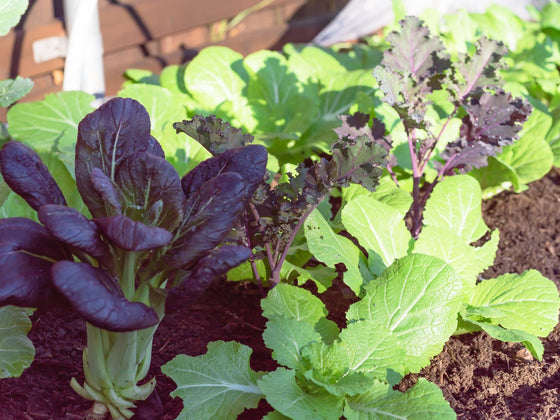
Bok Choy
How to grow bok choy and pak choi in Australia: sowing months for all six climate zones, spacing by type, netting out caterpillars and stopping early bolting.
| Position | Full sun, afternoon shade when hot |
|---|---|
| Depth | 5 mm |
| Spacing | 15 to 30 cm by type |
| First pick | 6 to 8 weeks from sowing |