
How to Grow Mustard in Australia
Mustard greens are a fast cool-season leaf crop for fertile, well-drained soil and steady water. Sow direct about 5 mm deep from autumn to spring in the south, and through the dry season in the tropics. Thin to 20 to 45 cm by type, or sow thickly for baby leaf. Pick outer leaves from about four weeks, before heat sends plants to seed.

| Sun | Full sun to part shade |
|---|---|
| Water | Steady moisture; never let the bed dry |
| Soil | Fertile, well-drained, pH 6.0 to 7.5 |
| Feed | Light; fish and seaweed blend fortnightly |
| Spacing | 20 to 45 cm by type |
| Depth | About 5 mm |
| Germination | 7 to 14 days; soil 10 to 35°C |
| Harvest | 3 to 8 weeks; stem mustard about 17 weeks |
| Container | Yes, 25 cm pot, about 8 L |
| Frost | Frost tolerant; curled types hardiest |
| Use | Raw baby leaf, stir-fries, soups, pickles |
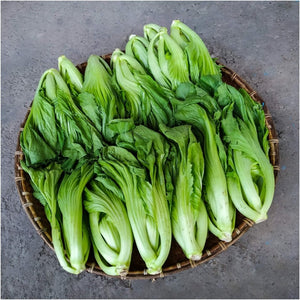
Mustard (Brassica juncea), also called mustard greens, leaf mustard or Indian mustard, is a fast leafy annual in the cabbage family, Brassicaceae. It is grown for its peppery leaves, thick midribs and, in one group, a swollen edible stem. It crops within weeks through the cool months in every Australian zone, in forms from frilled green salad leaves to deep purple giants.
Three mistakes that matter
- Sowing into summer heat. Hot weather sends mustard quickly to seed, and the leaves turn fierce and bitter. Sow from autumn to spring at the times in When to plant.
- Watering only now and then. Water stress makes the leaves harsh and unpleasantly hot, and it hastens flowering. Water before the surface dries, mulch with straw, and keep growth fast.
- Leaving the leaves to grow old. Pungency builds as leaves age, so a row left too long turns tough and harsh. Start picking outer leaves from about four weeks, and sow a short row every two to three weeks rather than one big row.
When to plant
Mustard seed germinates in soil from about 10°C to 35°C, but plants grow best in mild weather of 15°C to 20°C. Above about 25°C they often turn bitter or bolt (flower early). That makes mustard an autumn to spring crop in the south and a dry-season crop in the tropics.
| Zone | Example cities | Sow | Harvest | Notes |
|---|---|---|---|---|
| Tropical | Darwin, Katherine NT; Cairns, Townsville QLD; Broome WA | Mar-Aug | Apr-Oct | Sow through the dry season; wet-season rows grow fast but turn hot and bolt early. |
| Subtropical | Brisbane, Bundaberg QLD; Coffs Harbour, Lismore NSW | Feb-Sep | Mar-Nov | Winter gives the mildest leaves; summer sowings need shade and run to seed quickly. |
| Arid and semi-arid | Alice Springs NT; Broken Hill NSW; Mildura VIC; Kalgoorlie WA | Mar-Sep | Apr-Nov | Skip the summer heat; mulch well and shelter rows from drying wind. |
| Temperate | Sydney, Newcastle, Wollongong NSW; Melbourne, Geelong VIC | Feb-May and Aug-Oct | Mar-Jul and Sep-Dec | Autumn rows are mildest and longest standing; spring rows bolt sooner as days warm. |
| Mediterranean | Perth, Bunbury WA; Adelaide and the SA coast | Mar-Aug | Apr-Oct | Sow as autumn cools; winter rain carries the crop, and late rows bolt once dry heat arrives. |
| Cool and alpine | Hobart, Launceston TAS; Canberra ACT; Orange NSW | Feb-Apr and Sep-Oct | Mar-Jun and Oct-Dec | Canberra sows late summer into autumn; spring rows go in once hard frosts ease. |
For late sowings that run into warming weather, 'Greenwave' and 'Broad Leaf' are slow to bolt. For early sowings in frosty districts, choose a curled type, which handles frost better than smooth-leaved ones. A hard freeze can still damage the leaves, so cover rows with frost cloth on the coldest nights.
Site, soil and setup
Mustard wants fertile soil that holds moisture yet drains freely, because fast, unchecked growth keeps the leaves mild.
| Get the bed right | What to do |
|---|---|
| Sun | Full sun in autumn and winter; afternoon shade for late spring and early autumn sowings |
| Soil | Work in compost 5 cm deep, or well-rotted cow or horse manure 5 to 10 cm deep, 4 to 6 weeks before sowing |
| pH | 6.0 to 7.5; below 6.0, spread garden lime or dolomite lime at 100 to 200 g per square metre a month before sowing |
| Drainage | A raised bed or mound on heavy clay, since mustard needs well-drained soil |
| Base feed | Blood and bone at 100 to 150 g per square metre at sowing in poor soil; a fertile, composted bed needs nothing more |
| Old urban soil | Mustard readily takes up heavy metals, so where lead or other contamination is possible, grow it in a raised bed of fresh soil or in pots |
| Rotation | Not where cabbage-family crops grew in the last three years, because white rust and clubroot survive in soil and old plant debris |
Test before liming: see soil pH explained for how to read and adjust it.

Container growing
A pot at least 25 cm wide and 23 cm deep, about 8 L, grows a steady supply of baby leaf. Use a premium potting mix rather than garden soil. Sow a type that is good cut young, such as 'Wasabina', 'Red Giant' or 'Lime Streaks'.
- Water: feel the mix each day and water once the top turns dry.
- Feed: fish and seaweed blend at 25 mL per 9 L, fortnightly from the first true leaves.
- Position: full sun in the cool months; move the pot into afternoon shade as the weather warms.
Sowing Seeds
Most mustard is sown straight into the bed, with punnets as the fallback when the space is still occupied.
Sowing direct
- Sow about 5 mm deep into damp, raked soil, in rows 30 to 45 cm apart.
- For baby leaf, scatter seed thickly along a wide band and skip thinning.
- For full plants, sow a seed every few centimetres and thin later: see Thinning.
- Seedlings usually emerge in 7 to 14 days if the surface stays moist.
- Once seedlings stand, tuck a thin straw mulch between the rows.
Starting in punnets
Cells suit the big types such as gai choy, which go in at wide spacing anyway.
- Sow two or three seeds per cell of seed-raising mix, at the same depth, and keep the strongest.
- Plant out when seedlings are 5 to 10 cm tall, usually 4 to 6 weeks after sowing.
- Harden off (give seedlings a week of gradually longer spells outdoors) before they go in.
Mustard types
| Type | Leaf and use | Growing notes | Varieties |
|---|---|---|---|
| Curled and frilled | Frilled or serrated green leaves, mostly hot raw and milder cooked | The hardiest in frost; thin to at least 20 cm for large leaves | 'Southern Giant Curled', 'Greenwave', 'Chirimen Hakarashi', 'Wasabina', 'Lime Streaks' |
| Red and purple | Red to purple leaves, hot in 'Red Giant' and mild in 'Japanese Giant Garnet' | Colour deepens as the weather cools; 25 to 30 cm apart ('Japanese Giant Garnet' 30 to 45 cm), or cut as baby leaf | 'Red Giant', 'Osaka Purple', 'Japanese Giant Garnet' |
| Broadleaf and gai choy | Broad leaves on thick midribs, for stir-fries, soups and pickling | Big plants, 30 to 45 cm apart; 'Broad Leaf' is slow to bolt | 'Gai Choy (Swatow)', 'Broad Leaf', 'Chinese Broadleaf (Chinese Celery)', 'Yanagawa Takana', 'Chinese Shuidong' |
| Stem mustard | Swollen, tuber-like stem base, peeled and cooked or pickled; young leaves too | A long crop of about 115 to 120 days; 30 cm apart | 'Tsa Tsai Round' |
| Ethiopian mustard (Brassica carinata) | Tender, gently savoyed dark green leaves, milder than leaf mustard | Grown the same way; eaten in salads or as a cooked green | 'Ethiopian (Texsel Greens)' |
| Other species in the range | 'Tender Green' and 'Yukina Savoy' are usually classed as Brassica rapa and are mild; 'Black' is Brassica nigra, grown mainly for seed | Sow and space like leaf mustard; 'Black' self-sows freely | 'Tender Green', 'Yukina Savoy', 'Black' |

Care by growth stage
Week numbers run from sowing, and picking begins before plants reach full size.
| Stage | Water | Feed | Watch for |
|---|---|---|---|
| Germination, weeks 0 to 2 | Mist or sprinkle gently so the top stays moist | None | Snails and slugs on emerging seedlings; in autumn and winter, vegetable weevil (Listroderes difficilis) larvae chewing seedlings at night |
| Seedling and thinning, weeks 2 to 4 | Water as soon as the surface loses its damp look | Seaweed solution at half strength, 15 mL per 9 L, fortnightly from the first true leaves | Aphid colonies under the leaves; crowded rows |
| Leafy growth and first picks, weeks 4 to 6 | Soak deeply whenever the top few centimetres dry | Fish and seaweed blend at 25 mL per 9 L, fortnightly | Holes in leaves; small yellow eggs and green caterpillars underneath |
| Full-size picking, week 6 onwards | Hold moisture even until the last picking | Fish emulsion at half strength, fortnightly, while picking continues | White blisters under leaves; a flower stalk rising |
If growth stalls in poor soil, a light dose of all-purpose controlled release granular (NPK around 14-5-10) scratched into the soil can help. Morning watering lets foliage dry by nightfall, which helps keep white rust away.

Thinning
Crowded rows hold damp air around the leaves, which invites disease; thin in stages and put the pulled seedlings in the salad bowl.
- Start thinning as soon as you can grip a seedling, and pull the whole plant.
- Finish curled and red types at 20 to 30 cm, and broadleaf types and 'Japanese Giant Garnet' at 30 to 45 cm.
- Where roots tangle with a keeper, snip the surplus with scissors rather than pulling it.
- Pull off older yellowing leaves as they appear.
- Pinch out a rising flower stalk to gain a little more picking time.
Companion planting
Grows well with
- Dill, whose flowers feed the parasitic wasps that attack cabbage white caterpillars.
- Onions, whose narrow leaves take little light from the row.
- Dwarf beans, low plants that leave light for the row.
- Beetroot, a low root crop that shares the space without crowding the leaves.
Keep apart
- Cabbage, broccoli, kale and other cabbage-family crops, which share caterpillars, aphids and white rust.
- Tomatoes and climbing beans, tall warm-season crops that throw shade across mustard sown beside them.
Harvesting Leaves
Start picking outer leaves about four weeks after sowing, once plants stand 10 to 15 cm tall. Baby leaf can be cut from about three weeks.
- Snip the outer leaves and let the inner ones grow on.
- For baby leaf, cut the whole row just above the soil.
- Once a flower stalk rises, cut the tender shoots and buds and cook them like broccolini.
- Lift stem mustard once the stem base has swollen, then peel it and cook or pickle it.
Refrigerate mustard greens as soon as they are picked. In cold, humid storage near 0°C they last one to two weeks.
Young leaves bring heat to a salad, and older ones suit stir-fries, soups and curries, where cooking softens the bite. Many types are also pickled. Pickle only by a tested method, such as CSIRO's preserving advice, because vegetables kept without enough acid can carry botulism.
Common problems
Early flowering. Plants throw up a leafy stalk topped with yellow buds, and new leaves come small and sharp. Heat, dry soil and age set it off, and the fix is in Three mistakes.
Leaves too hot to eat raw. Heat, dry soil and age raise the bite: see Three mistakes, and cook the older leaves.
Holes in the leaves. Green droppings point to caterpillars, and a silver slime trail to snails or slugs: see Pests and diseases.
Seedlings everywhere next season. Plants left to ripen pods self-sow freely, 'Black' most of all, so cut flower stalks before the pods dry.
Pests and diseases
Mustard is bothered by few pests, and those below are the ones that do real damage. Use only sprays and baits labelled for the pest on leafy or brassica vegetables, and keep to any withholding period before picking.
Cabbage white butterfly (Pieris rapae) and diamondback moth (Plutella xylostella). Their green caterpillars chew holes in the leaves, and diamondback caterpillars drop on a silk thread when touched. Check leaf undersides, squash eggs and caterpillars, and spray a product based on Bacillus thuringiensis if numbers build. Fine insect mesh keeps both off where they are bad. Read more
Turnip aphid (Lipaphis pseudobrassicae) and cabbage aphid (Brevicoryne brassicae). Dense colonies under the leaves suck sap, curling and yellowing them, and cabbage aphids wear a whitish, powdery coat. A firm jet of water or insecticidal soap clears most colonies, and ladybirds and lacewings help keep numbers down. Read more
Common garden snail (Cornu aspersum) and grey field slug (Deroceras reticulatum). They graze seedlings and tender leaves overnight, most of all after rain. Go out with a torch after dark when it is damp, and use only an iron-based bait if one is needed. Read more
White rust (Albugo candida). Shiny white blisters form under the leaves, with yellow patches above, in cool weather with heavy dew; Indian mustard is among its worst-hit hosts. Remove affected leaves, water in the morning and rotate beds.
Downy mildew (Hyaloperonospora parasitica). A fluffy white mass of spores grows under seed leaves and young leaves, with black speckling and puckering above, but no blisters. Seedlings in the cooler months suffer most. Keep air moving between plants and pull out badly infected seedlings. Read more
Clubroot (Plasmodiophora brassicae). Plants yellow, wilt and stunt, and a lifted root shows swollen galls. Spores can last up to 20 years in soil, and warm, acid, wet ground suits them. Where it is known, lime to pH 7.0 to 7.5, improve drainage and keep brassicas out of that bed for at least five years.
Prevention first
- Winter rows in the south usually see few caterpillars; in the tropics and arid zone, cool-season rows still need close checks.
- Check leaf undersides weekly for eggs, caterpillars and aphids.
- Clear cabbage-family weeds such as wild radish and turnip weed, which shelter caterpillars and aphids.
- Rotate beds away from cabbage-family crops, as set out in Site, soil and setup.
Tips
- Indian mustard is the most studied biofumigant (a crop dug in to suppress soil disease). Grow a bed to early flowering, 8 to 12 weeks, then chop and dig it in: see brassica biofumigation. Skip it in soil with clubroot, which brassica cover crops can worsen.
- Rows sown around Anzac Day in southern gardens grow into cooling weather and usually stand well through winter.
- Leave a plant or two to flower at the end of the season, because bees and hoverflies visit the yellow flowers.
Questions
Why is my mustard going to seed so quickly?
Heat, dry soil and age all push mustard to flower. Sow from autumn to spring, or through the dry season in the tropics, and keep the soil evenly moist. Give late sowings afternoon shade and choose a slow-bolting type. Once a stalk rises, pick hard and cook the tender flower shoots.
When should I plant mustard greens in Australia?
Sow when the weather is mild, ideally 15°C to 20°C. Most southern gardens sow from late summer into autumn, with a second window in spring. Subtropical gardens sow from February to September, and tropical gardens through the dry season.
Is mustard greens the same plant as mustard seed?
Largely, yes. Leaf mustard is Brassica juncea, and its seed makes brown mustard. Black mustard, Brassica nigra, is grown mainly for seed and gave the condiment its start. Leaf types are bred for their foliage, so grow those for greens.
How do I make mustard greens less spicy?
Pick them young, grow them in cool weather and water steadily, because heat, drought and age all raise the bite. Cooking softens the heat further. Milder choices include 'Ethiopian (Texsel Greens)', 'Tender Green' and 'Yukina Savoy'.
Can I grow mustard greens in a pot?
Yes. An 8 L pot, at least 25 cm wide and 23 cm deep, grows plenty of baby leaf in premium potting mix. Sow thickly and cut young. Water as soon as the top of the mix dries, and feed fish and seaweed blend at 25 mL per 9 L fortnightly.
Can you eat mustard flowers?
Yes. The tender flower shoots and buds of a bolting plant are good eating, cooked like broccolini, and the yellow flowers can garnish a salad. Pick them before the pods form.
Grow it


More vegetable guides
All vegetables
Amaranth
How to grow leaf amaranth, or Chinese spinach, in Australia: sowing months for six climate zones, warm soil, thinning, picking, pests and cooking the leaves.
| Position | Full sun |
|---|---|
| Depth | 3 to 6 mm |
| Spacing | 15 cm apart |
| First pick | 4 to 8 weeks |

Artichoke
How to grow globe artichokes from seed in Australia: sowing, spacing, feeding, when to cut the buds, cutting back, cardoon, and sowing months for every zone.
| Position | Full sun |
|---|---|
| Depth | 10 mm |
| Spacing | 1 to 1.5 m apart |
| First pick | About 42 to 57 weeks |

Bean
How to grow beans in Australia: sowing months by climate zone, bush and climbing types, low-nitrogen feeding, watering, picking pods, plus bean fly and rust.
| Position | Full sun, at least six hours |
|---|---|
| Depth | 25 to 30 mm |
| Spacing | Bush 10 to 15, climbing 15 to 20 cm |
| First pick | 7 to 14 weeks |

Beetroot
How to grow beetroot in Australia: sowing months for all six climate zones, thinning the seed clusters, steady watering, harvest size and the pests that matter.
| Position | Full sun or part shade |
|---|---|
| Depth | 10 to 20 mm |
| Spacing | 10 cm apart after thinning |
| First pick | 7 to 12 weeks |