
How to Grow Leeks in Australia
Sow leek seed 5 to 10 mm deep in trays when your zone's window opens. Plant seedlings out 4 to 10 weeks later, at pencil thickness. Drop each into a hole 15 cm deep, 15 cm apart in rows 30 cm apart, in full sun and rich, free-draining soil. Keep them moist, feed fortnightly, mound soil around the stems and lift from about 14 weeks.

| Sun | Full sun, open position |
|---|---|
| Water | Steady; keep evenly moist through harvest |
| Soil | Deep, rich, free-draining, pH 6.0 to 7.0 |
| Feed | Moderate; liquid feed fortnightly through growth |
| Spacing | 15 cm, rows 30 cm |
| Depth | 5 to 10 mm |
| Germination | 10 to 14 days; soil 8°C to 30°C |
| Harvest | 14 to 26 weeks |
| Container | Deep pot, 40 cm wide, about 28 L |
| Frost | Frost hardy; stands in the ground |
| Use | Stems and leaves cooked; baby leeks whole |
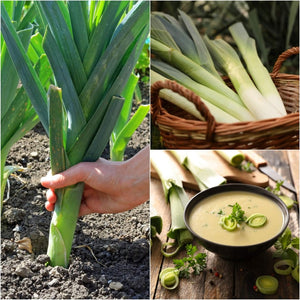
Leek (Allium ampeloprasum, leek group) belongs to the onion family, Amaryllidaceae, and is grown for its thick, mild stem and edible leaves. It stands in the bed for months, dug as the kitchen needs it, from the tropical dry season to a frosty Ballarat July. The white part is what most gardeners fall short on, because it only grows long where the stem is kept in the dark.
Three mistakes that matter
- Planting seedlings at the surface. A leek set shallow grows a short white stem that turns green above the soil. Drop each seedling into a hole 15 cm deep and mound soil around it as it grows: see Hilling and Mounding.
- Letting the bed go dry or hungry. Leeks take three to six months from sowing, and a long dry or unfed stretch can leave thin, disappointing stems. Keep the soil moist and feed fortnightly: see Care by growth stage.
- Planting where onions or garlic just grew. Thrips and rust carry over on old plants, volunteers and debris from the last onion-family crop. Give the bed a break of two to three years: see Site, soil and setup.
When to plant
Leek seed germinates in soil from about 8°C to 30°C. Plants grow best at about 13°C to 24°C, so summer heat and winter cold set the calendar more than soil warmth. Sow a small batch every month or so through your window for a steady supply.
| Zone | Example cities | Sow | Harvest | Notes |
|---|---|---|---|---|
| Tropical | Darwin, Katherine NT; Cairns, Townsville QLD; Broome WA | Apr-May | Aug-Oct | Sow in trays as the dry season starts and plant out by June; lift before the wet season build-up. |
| Subtropical | Brisbane, Bundaberg QLD; Coffs Harbour, Lismore NSW | Jan-Mar and Aug-Sep | May-Sep and Dec-Mar | Autumn sowings grow through the mild winter and are usually the surer crop; August sowings mature in summer. |
| Arid and semi-arid | Alice Springs NT; Broken Hill, Dubbo NSW; Mildura VIC; Kalgoorlie WA | Feb-Apr and Jul | Jun-Jan | Autumn sowings suit best; plant July trays out in August or September and mulch deeply before summer heat. |
| Temperate | Sydney, Newcastle, Wollongong NSW; Melbourne, Geelong VIC | Jul-Mar | Nov-Sep | Sow small batches for leeks most of the year; July sowings go in trays, not the open bed. |
| Mediterranean | Perth, Bunbury WA; Adelaide and the SA coast | Aug-Feb | Dec-Aug | Perth gardens plant seedlings out from January to April; keep summer sowings mulched, shaded and watered. |
| Cool and alpine | Hobart, Launceston TAS; Canberra ACT; Ballarat VIC; Orange NSW; Stanthorpe QLD | Aug-Jan | Dec-Aug | Start August sowings in trays under cover; hardy types stand through frosty winters. |
At the cool end of a window, a seedling heat mat under the tray speeds germination. Shelter early trays on cold nights, because a cold spell can make young leeks bolt (run to flower) later.
Site, soil and setup
| Get the bed right | What to do |
|---|---|
| Sun | Full sun in an open position |
| Soil | Deep, fine and loose; dig in a 5 cm layer of compost, or 5 to 10 cm of well-rotted cow or horse manure 4 to 6 weeks before planting |
| pH | 6.0 to 7.0, ideally 6.5 to 7.0; below 6.0, dolomite lime or garden lime at 100 to 200 g per square metre, 4 weeks before planting |
| Drainage | Essential; on clay, plant along raised rows or in a raised bed |
| Base feed | Blood and bone at 100 to 150 g per square metre raked in at planting, or a controlled release all-purpose granular (NPK around 14-5-10) mixed in |
| Rotation | No onions, garlic, chives or leeks in the bed for the past two to three years |
Never dig in fresh manure at planting. After a hungry crop such as potatoes or brassicas, use less manure, because the soil still holds some of the feed.
Container growing
A pot about 40 cm wide and at least 30 cm deep, around 28 L, grows four or five full-sized leeks. Fill it with a quality vegetable potting mix. Potting mix can carry Legionella bacteria, so wet it down, wear gloves and a P2 mask, and wash your hands after handling it. The compact 'American Flag' suits a pot best, and the early 'Bulgarian Giant' frees the pot sooner. Any variety can be grown as baby leeks, set 10 cm apart and pulled young.
- Water whenever the top few centimetres of mix dry out, which can mean daily in hot, windy weather.
- Feed seaweed solution at half strength, 15 mL per 9 L, fortnightly for the first month. Then switch to fish and seaweed blend at 25 mL per 9 L, fortnightly.
- Or mix a controlled release granular for containers into the potting mix at planting.
- Stand the pot in full sun, and top it up with mix as the stems lengthen to blanch them.
Sowing Seeds
Most gardeners raise leeks in trays and plant them out deep; sowing direct works too but gives shorter white stems.
| Store variety | What sets it apart | Grow it for |
|---|---|---|
| 'Bulgarian Giant' | Medium to early maturing, long cylindrical stem, light green leaves | An earlier harvest |
| 'American Flag' | Compact, hardy plants about 40 cm tall, grey-green leaves; 120 to 155 days | Pots and small beds |
| 'Giant Musselburg' | Very cold hardy; stems 22 to 35 cm long and 5 to 7 cm across | Standing through frosty winters |
| 'Carentan' | Old French leek, thick white shanks, dark blue-green leaves, very cold tolerant | Winter harvests in cool districts |
| 'Elephant' | Large, thick, tender stems | Big stems for the kitchen |
| Heirloom Mix | Five of these varieties mixed at random in one packet | A spread of harvest from one sowing |
The 'Elephant' leek is a true leek grown from seed. It is not elephant garlic, which grows from cloves.
Starting in trays
- Sow 5 to 10 mm deep in seed-raising mix, in punnets or a tray.
- Keep the mix moist in a sunny spot; seedlings show in 10 to 14 days.
- Grow them on for 4 to 10 weeks, until they are 10 to 20 cm tall and about as thick as a pencil.
- Harden them off first (a week or so of longer spells outdoors each day, which toughens them for the open bed).
Sowing straight into the bed skips transplanting. The seedlings look like fine grass and are easy to lose among weeds, so mark the row.
Sowing direct
- Draw a drill about 5 mm deep, with rows 30 cm apart, and sow thinly.
- Keep the surface damp until the seedlings show.
- Thin to 15 cm apart and replant the thinnings elsewhere or eat them.

Planting out
Pull the seedlings apart gently and trim the roots to about 2.5 cm, which makes them easier to drop into place. Space them 15 cm apart in rows 30 cm apart, or 45 cm apart where soil will be drawn up from between the rows. Then choose a method.
| Method | How | Suits |
|---|---|---|
| Dibber holes | Push a dibber or broom handle 15 cm deep, making a hole 3 to 5 cm wide. Drop in one seedling and fill the hole with water, not soil; watering fills it gradually | The longest white stems with the least digging |
| Trench | Dig a trench 8 to 10 cm deep, or as deep as 20 to 25 cm. Lay the seedlings along it, cover the roots and a little stem, and fill the trench as they grow | Long rows and heavier soils |
Water in with seaweed solution at half strength, 15 mL per 9 L.
Care by growth stage
Water and feed through the long middle stretch decide the crop (see Three mistakes that matter). Weeks count from sowing and stretch in cold districts.
| Stage | Water | Feed | Watch for |
|---|---|---|---|
| Tray seedlings, weeks 0 to 10 | Keep the mix moist, never soggy, with a gentle spray | Seaweed solution at half strength, 15 mL per 9 L, fortnightly from the first true leaf; conventional option, none needed | Damping off (seedlings rotting and collapsing at soil level) in cold, wet mix |
| Settling in, weeks 4 to 14 | Water every few days until new leaves show; keep the dibber holes moist | Seaweed solution at 30 mL per 9 L, fortnightly; conventional option, the controlled release granular from planting covers this stage | Snails and slugs on young leaves; weeds crowding the rows |
| Main growth, weeks 14 to 20 | Deep soaks whenever the top few centimetres dry; water the soil, not the leaves | Fish and seaweed blend at 25 mL per 9 L fortnightly, plus pelletised chicken manure at 100 g per square metre once; conventional option, an all-purpose soluble powder (NPK around 23-4-18 to 27-5-9) at the label rate, fortnightly | Thrips silvering the leaves; aphids at the leaf bases; rust; purple oval spots on the leaves (purple blotch, Alternaria porri) |
| Thickening and harvest, week 20 on | Keep watering evenly right through harvest | Fish and seaweed blend at 25 mL per 9 L fortnightly; conventional option, the all-purpose soluble as above | A flower stalk in the centre; yellowing plants that pull free with white fluff at the base; stunted, wilting plants with a pink or yellow-brown rot at the base (Fusarium foot rot) |
Mulch with straw once the plants are established, keeping it a little back from the stems. Weed by hand, because a hoe near the rows nicks the stems.

Hilling and Mounding
Hilling blanches the stem (keeps it from the light), which makes the white part longer, sweeter and more tender. Start once plants are about 15 cm tall and repeat every few weeks as the stems thicken.
- Draw soil or compost up around each stem, stopping below the point where the leaves fan out.
- Add a few centimetres at a time rather than one deep mound.
- For the cleanest stems, slip a collar over each plant. A length of pipe, a tubestock pot with its base cut out or a milk carton all work.
- Mound soil and mulch higher around hardy varieties left to stand through a frosty winter.
Companion planting
Leeks are slim and upright, so good neighbours stay low and share none of their diseases.
Grows well with
- Carrot, whose fine leaves cast little shade on the leek row.
- Lettuce, quick and low, which is cut well before the leeks need the room.
- Radish, pulled within weeks from the gaps between young leeks.
Keep apart
- Onions, garlic and chives, which share white rot, rust and thrips.
- Climbing beans, whose tall frames shade the row over a leek's long season.
- Pumpkin and other sprawling vines, which smother the rows and bury the hills.
Harvesting Stalks
Start lifting leeks once the stems are thick enough to be worth having, usually 14 to 26 weeks from sowing.
- Lift every second leek young as a baby leek, and leave the rest to grow larger.
- Loosen the soil beside each plant with a fork and ease it up, rather than pulling on the leaves.
- Take only what the kitchen needs; hardy types hold in the ground through cold weather without going woody.

Once lifted, they hold their best flavour in the fridge for 7 to 10 days. Soil works in between the layers, so trim the roots and wash each stem thoroughly. Slice the white and pale green part into soups, quiches and braises, and chop the tender green leaves finely. Keep trimmings and leftovers away from dogs and cats, because the onion family is toxic to them.
Common problems
Flower stalks. A cold spell can trigger bolting, and the stem turns tough and fibrous as the stalk grows. Remove the stalk as soon as it shows and use the leek promptly.
Grit between the layers. Soil mounded too high or too fast falls into the fan of leaves and works down inside (see Hilling and Mounding).
Seedlings lying flat. Seedlings laid in a trench lie over after planting. They straighten up within a few days as they reach for the sun, so leave them be.
Patchy germination. Old seed and cold, wet mix are common causes; leek seed keeps about two years in a cool, dry place. Read more
Pests and diseases
Leeks are fairly trouble free, and most damage in Australian gardens comes from sap-suckers, snails and two onion-family diseases. Use only sprays labelled for the pest on leeks, and keep to any withholding period on the label.
Onion thrips (Thrips tabaci). Tiny insects about 1.5 mm long suck the leaf cells empty, leaving silvery-white patches. They also spread iris yellow spot virus, which infects leeks in Australia and can mark the leaves with diamond-shaped spots. Spray insecticidal soap or horticultural oil, repeating several times, and pull the weeds that shelter them. Read more
Onion aphid (Neotoxoptera formosana). Dark red to black aphids crowd the leaves, and heavily infested plants can yellow and collapse. Ladybirds, hoverflies and lacewings usually keep them down; spray insecticidal soap early if numbers climb. Read more
Onion rust (Puccinia allii). Bright orange or dark brown bumps form along the leaf veins, and badly infected leaves die. It spreads on wind and rain splash (see Prevention first). It must be reported in Western Australia, where it is not known to occur.
White rot (Sclerotium cepivorum). Plants yellow and wilt, with fluffy white growth and tiny black seed-like specks on the base. The specks can survive in soil for as long as 20 years. Lift and bin sick plants, and grow no onion-family crop in that bed again.
Garden snail (Cornu aspersum). Snails and slugs make a mess of the foliage, especially on young plants. Set shallow dishes of beer between the rows as traps. Read more
Prevention first
- Raise your own seedlings from seed, so white rot does not arrive in bought soil.
- Clean soil off boots and tools after working in a bed that has shown white rot.
- Look over the leaves and leaf bases often, so thrips and aphids are dealt with early.
- Avoid heavy nitrogen and crowding, which both make rust worse.
Tips
- Pick a few outer leaves from young plants for the kitchen; the leek underneath carries on growing.
- Cook the tightly closed flower buds of a bolting leek lightly, like a green vegetable, before they open.
- Leave one or two leeks to flower in their second year. The flower heads draw beneficial insects, and the seed can be saved once the black seeds show.
Questions
When should I plant leek seeds in Australia?
It depends on your zone. Tropical gardens sow in April and May, and subtropical gardens January to March and again in August and September. Arid gardens sow February to April and in July. Temperate gardens sow July to March, Mediterranean gardens August to February, and cool gardens August to January.
How do I get long white stems on my leeks?
Keep the stem in the dark. Plant each seedling into a hole about 15 cm deep, or into a trench you fill as it grows. Once plants are about 15 cm tall, draw soil up around the stems every few weeks, stopping below the leaves. A collar of pipe or a bottomless pot also works.
How long do leeks take to grow from seed?
Usually 14 to 26 weeks from sowing, depending on the variety and the season. Seedlings spend 4 to 10 weeks in the tray before planting out. Baby leeks can be pulled much earlier, and mature leeks hold in the ground through cold weather.
Why has my leek grown a flower stalk?
It has bolted, usually after a cold spell. The stem turns tough and fibrous as the stalk grows. Cut the stalk off as soon as you see it and use the leek soon. The closed flower buds are good lightly cooked.
Can I grow leeks in a pot?
Yes. A pot about 40 cm wide and 30 cm deep, around 28 L, holds four or five full-sized leeks. Compact 'American Flag' suits pots well, or grow any variety as baby leeks 10 cm apart. Water whenever the top of the mix dries and feed fortnightly.
Is the Elephant leek the same as elephant garlic?
No. The 'Elephant' leek is a leek variety grown from seed for its thick stems. Elephant garlic belongs to the same species but is grown from cloves for its large, mild heads.
Grow it



More vegetable guides
All vegetables
Amaranth
How to grow leaf amaranth, or Chinese spinach, in Australia: sowing months for six climate zones, warm soil, thinning, picking, pests and cooking the leaves.
| Position | Full sun |
|---|---|
| Depth | 3 to 6 mm |
| Spacing | 15 cm apart |
| First pick | 4 to 8 weeks |

Artichoke
How to grow globe artichokes from seed in Australia: sowing, spacing, feeding, when to cut the buds, cutting back, cardoon, and sowing months for every zone.
| Position | Full sun |
|---|---|
| Depth | 10 mm |
| Spacing | 1 to 1.5 m apart |
| First pick | About 42 to 57 weeks |

Bean
How to grow beans in Australia: sowing months by climate zone, bush and climbing types, low-nitrogen feeding, watering, picking pods, plus bean fly and rust.
| Position | Full sun, at least six hours |
|---|---|
| Depth | 25 to 30 mm |
| Spacing | Bush 10 to 15, climbing 15 to 20 cm |
| First pick | 7 to 14 weeks |

Beetroot
How to grow beetroot in Australia: sowing months for all six climate zones, thinning the seed clusters, steady watering, harvest size and the pests that matter.
| Position | Full sun or part shade |
|---|---|
| Depth | 10 to 20 mm |
| Spacing | 10 cm apart after thinning |
| First pick | 7 to 12 weeks |